Jordan 1–3 Argentina: Messi Scores in Seven Consecutive World Cups and Argentina Finish Group J Unbeaten — But Jordan’s Mousa Al-Tamari Earns the Night’s Defining Subplot
The Jordan vs Argentina group finale in Dallas was never in doubt from the moment Lo Celso curled in a free-kick inside fifteen minutes — but when Messi entered and made history, and then Jordan became the first team to score against Argentina at World Cup 2026, the evening delivered exactly the texture that Matchday 3 deserved
Result: Jordan 1–3 Argentina Venue: AT&T Stadium, Arlington, Texas Date: Saturday, June 27, 2026 | Group J, Matchday 3
Goals:
- Giovanni Lo Celso ~15′ (Argentina)
- Lautaro Martínez ~30′ pen (Argentina)
- Mousa Al-Tamari ~55′ (Jordan)
- Lionel Messi ~80′ (Argentina)
THE CONTEXT BEFORE KICK-OFF
The facts were already written when these two sides walked out at AT&T Stadium. Argentina had six points, Group J won, a Round of 32 place booked in Miami against Cape Verde. Jordan had zero points, two defeats, and the confirmed status of World Cup debutants who were making their final appearance in the 2026 tournament.
Lionel Scaloni had already confirmed that Messi would begin from the bench. This was not a slight against Jordan — it was the pragmatic decision of a coach who understands that managing a 39-year-old genius through a World Cup requires careful stewardship, and whose only real objective on this particular evening was to give minutes to squad players who needed rhythm and to bring Messi on for a cameo if circumstances demanded it.
What nobody had explicitly accounted for was that circumstances would unfold in exactly the way that gave Messi his stage. Or that Jordan — eliminated, without consequence — would find in that freedom the ability to do something no team had managed in Argentina’s previous two World Cup matches: score a goal.
THE FIRST HALF — ARGENTINA’S DEPTH PUT ON SHOW
Scaloni’s rotated starting lineup was a statement of squad quality in the most straightforward sense. Without Messi, without the automatic presence that bends matches around his gravity, Argentina still found the net twice before the half-hour mark, and the goals came from players who had been waiting for exactly this kind of opportunity.
Giovanni Lo Celso — a technically exceptional midfielder who has spent much of his career operating in the shadow of more celebrated teammates — stepped up in Messi’s absence and delivered a moment of genuine class. A free-kick, left-footed, curled over the wall and into the top corner. It was the kind of set-piece delivery that is occasionally attributed to circumstance and occasionally to quality. This was quality. The keeper did not move.
Lautaro Martínez added the second from the penalty spot in the 30th minute after a foul on Álvarez inside the box. The Inter Milan striker — who had scored twice in Argentina’s opening two matches before this tournament began — sent the goalkeeper the wrong way and converted with the composure of a man who scores penalties so routinely that their difficulty has ceased to register. It was his first-ever World Cup goal, and he marked it with the understated celebration of someone who expects more to follow.
Jordan, to their credit, did not retreat. Jamal Sellami’s side pressed Argentina’s high line with genuine intent, and Nizar Al-Rashdan — the tournament’s most underreported individual story, a player who had scored in both previous Group J matches — continued to ask questions of a Romero-led defence that was operating without its customary urgency.
THE MOMENT THAT CHANGED EVERYTHING — AL-TAMARI
The subplot arrived exactly when it should have: with the match apparently settled, with the Argentina substitutions being shuffled, with the crowd in Dallas beginning to warm for the inevitable Messi entrance. Jordan were awarded a set-piece on the edge of the penalty area, and from the resulting move, Musa Al-Tamari — a substitute, a player whose name most of the watching world was learning for the first time — turned home a low cross from Haddad with a decisive, technically clean finish.
1-2. Jordan had scored against Argentina. In the World Cup. At a moment when the Argentinan defensive concentration had fractured slightly in the awareness that Messi was warming up on the touchline and the match was effectively over.
The significance was real: Jordan became the very first team to breach the defending champions’ defence in this year’s tournament. Argentina had been impenetrable in their previous two group matches. It took a World Cup debutant, playing their final match of the tournament, to find the net against the best defensive structure in Group J.
The goal also answered a different kind of question about Jordan’s World Cup debut. They scored in all three matches. They pressed every team they faced. They gave an account of themselves — against Argentina, Algeria, and Austria — that would have been almost unimaginable from a nation that had never previously qualified for the World Cup.Messi World Cup Goals: Every Goal, Every Record and Every Defining Moment From 2006 to 2026
MESSI ENTERS — AND MAKES HISTORY AGAIN
The crowd had been restless for the Messi entrance since the half-time whistle. When it came — around the 60th minute, replacing Lo Celso as Scaloni simultaneously brought on Alexis Mac Allister and Thiago Almada — AT&T Stadium gave the kind of sustained standing ovation that only a few players in the history of the sport have ever generated simply by walking onto a pitch.
He found his rhythm quickly, as he always does. The touches were crisp, the movement intelligent, the vision operating at a frequency the rest of the pitch cannot quite access. Jordan’s defence tracked him intensely — the knowledge of what he is capable of is now universal after his hat-trick against Algeria and brace against Austria — but tracking Messi and stopping Messi are different challenges.Messi vs Ronaldo: The Definitive Statistical Comparison — Every Number, Every Record, One Verdict
Twenty minutes after entering, Messi received the ball from Mac Allister on the left side of the penalty area, spotted the angle, and curled a free-kick that bent low around the wall and into the bottom corner. The keeper was rooted. The stadium was not.
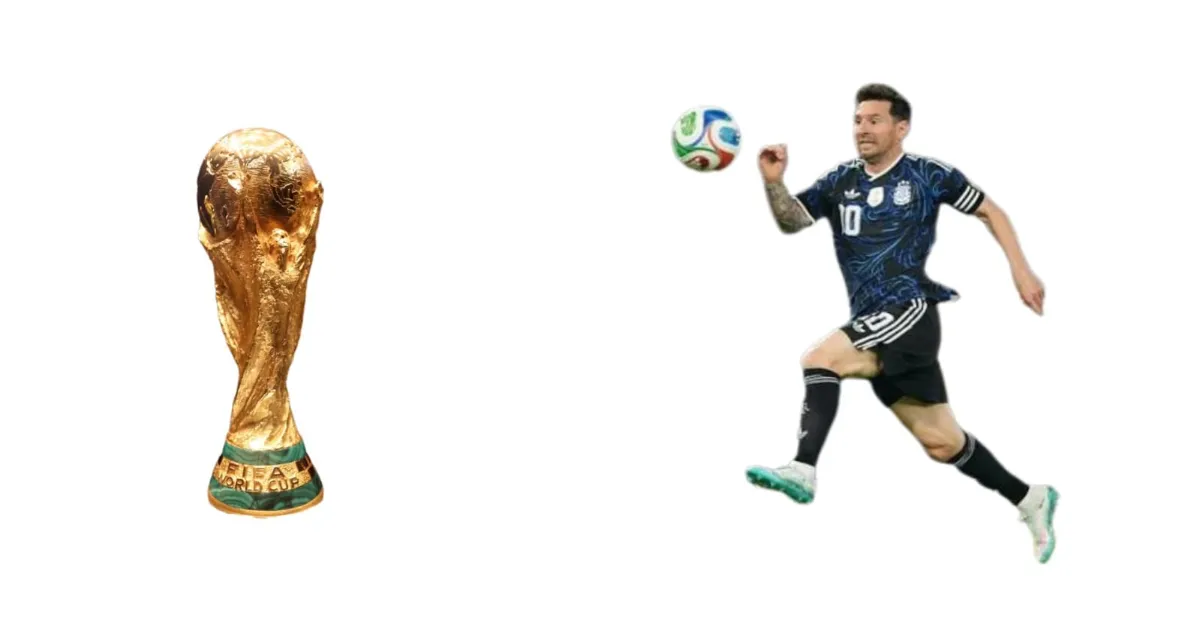
And in that moment, Lionel Messi became the first player in the history of the sport to score in seven consecutive World Cup tournaments. He had scored in 2006, 2010, 2014, 2018, 2022, and at this tournament against Algeria and Austria. And now Jordan. Seven. A number that belongs to a category of records that people will cite in football history debates for as long as the sport exists.
THE FINAL WHISTLE AND WHAT IT LEAVES BEHIND
Argentina win Group J with maximum points — nine from nine across three matches, seven goals scored, one conceded (Jordan’s goal being the only breach of their defence across the group stage). They advance to the Round of 32 to face Cape Verde in Miami on July 3. It is the next step in what Scaloni’s squad genuinely believes can be a second successive world title.
But the evening in Dallas belongs to multiple stories. Lo Celso, who delivered a first-half masterclass when given space to lead. Lautaro, who scored his first World Cup goal with characteristic precision. Messi, who will not stop until the trophy is in his hands or the tournament forces him to stop. And Jordan — a nation that arrived in North America as tournament debutants and leave it having scored in every match, having pressed every opponent, and having given the Group J competition a dignity and competitive spirit it would have lacked without them.
Al-Tamari scored to pull a goal back, making Jordan the very first team to breach the defending champions’ defense in this year’s tournament. It is a small sentence that carries large meaning — not because it changes anything about the scoreline, but because it confirms that Jordan belonged here.
Argentina’s Round of 32: vs Cape Verde, Thursday July 3, Miami
▪️▪️ Follow us on Facebook ▪️▪️
About the Author