 A COMPLETE GUIDE TO THE 16 FIFA WORLD CUP 2026 STADIUMS
When the final whistle blows on the night of July 19, 2026, and the confetti rains down from the rafters of MetLife Stadium, it will mark the end of a 39-day journey that cut across three nations, 16 stadiums, and tens of millions of passionate football fans. The 2026 FIFA World Cup is not simply the largest tournament in the sport’s history — it is the most architecturally ambitious. From the ancient volcanic soul of Estadio Azteca, whose legacy stretches back over half a century, to the gleaming $5.5 billion technological marvel of SoFi Stadium in Inglewood, California, these venues represent the full spectrum of what football infrastructure can be.
NBA Schedule 2026-27: Christmas Day Rivalries, Ring Night and the Games to Watch
The Fastest NBA Players Ever, Ranked
This is your complete guide to every stadium hosting the 2026 FIFA World Cup — ranked, analyzed, and judged on what matters most: capacity, character, atmosphere, and their role in shaping the tournament’s historic narrative.
THE OPENING ACT: WHERE IT ALL BEGINS
Estadio Azteca — Mexico City, Mexico
FIFA Tournament Name: Mexico City Stadium | Capacity: 87,500 | Opened: 1966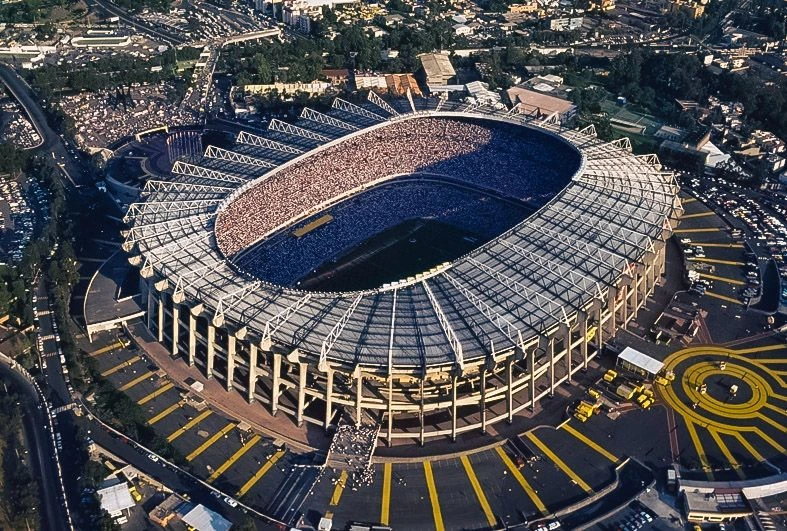
No stadium on the planet carries a resume quite like the Azteca. On June 11, 2026, when Mexico takes the field against South Africa in the tournament’s opening match, this cathedral of football will make history for the third time — becoming the only stadium in the world to host World Cup matches across three separate tournaments, having previously served as host in 1970 and 1986.
But the numbers alone don’t do justice to what the Azteca represents. This is the ground where Pelé lifted his third World Cup with Brazil in 1970. It is the exact patch of turf where Diego Maradona, in June 1986, scored both the infamous “Hand of God” goal and the magnificent “Goal of the Century” against England — two moments that remain the most debated and celebrated in all of football history. The Azteca is the only stadium on Earth to have hosted two separate men’s FIFA World Cup Finals.
The Mexican government undertook a significant renovation ahead of 2026, and the stadium — home to Club América and Cruz Azul, as well as the Mexican national team — will host five total matches including a Round of 32 clash. Its altitude, its history, and its fiercely passionate crowds make the Azteca one of the most intimidating arenas any visiting team could encounter. There is simply no substitute for standing in the Azteca when 87,000 Mexican fans are in full voice. The opening ceremony will take place here, setting the tone for what promises to be the most spectacular World Cup ever staged.
THE FINAL DESTINATION: WHERE CHAMPIONS ARE CROWNED
MetLife Stadium — East Rutherford, New Jersey
FIFA Tournament Name: New York New Jersey Stadium | Capacity: 78,576 | Opened: 2010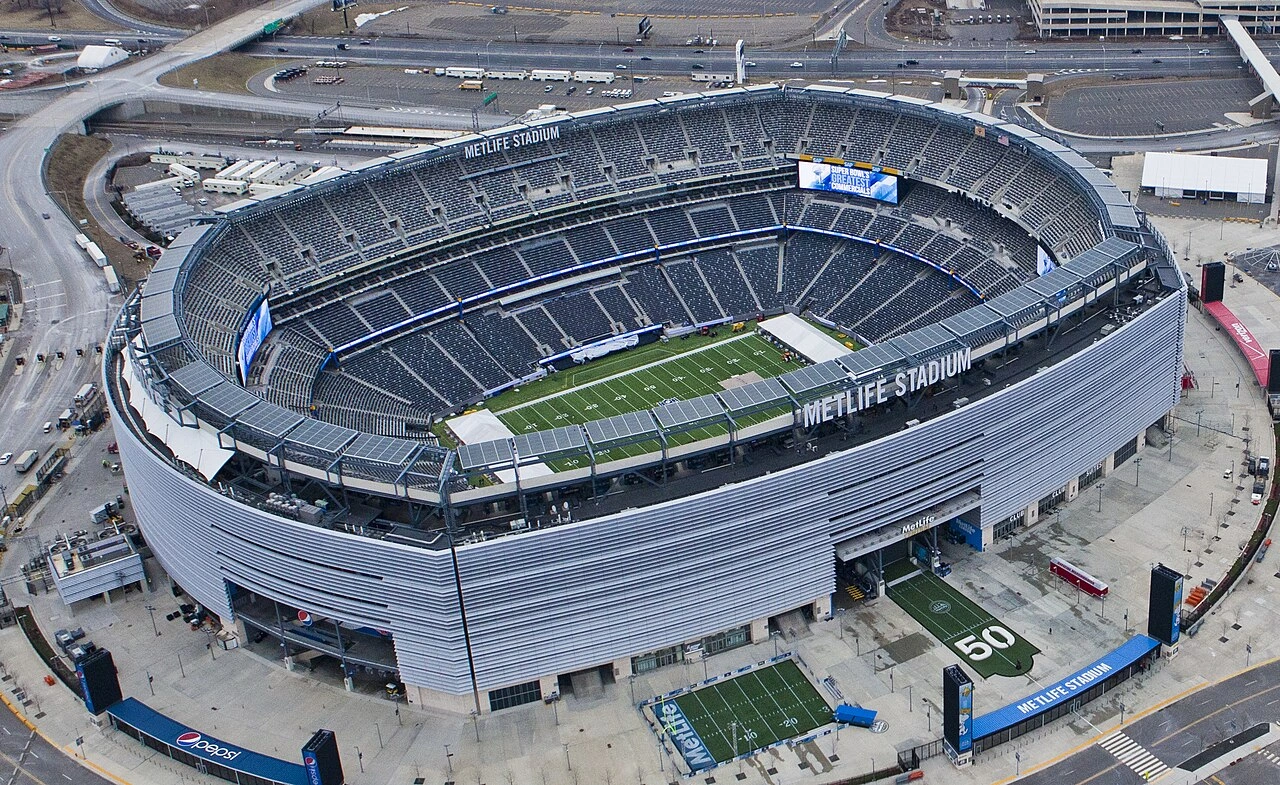
On February 4, 2024, FIFA made the announcement that confirmed what many had long suspected: MetLife Stadium, sitting just ten miles west of Midtown Manhattan in the New Jersey Meadowlands, would host the 2026 World Cup Final on July 19. The selection came as a genuine surprise to some — AT&T Stadium in Dallas had been widely rumored as the frontrunner — but FIFA’s choice sent an unmistakable message: the final belongs to the world’s media capital.
MetLife Stadium has been home to the New York Giants and New York Jets of the NFL since it opened in 2010, and for the World Cup, FIFA will temporarily remove the MetLife branding and refer to it as “New York New Jersey Stadium,” in line with the organization’s sponsorship policies. The venue underwent specific modifications for the tournament, including the removal of 1,740 corner seats to widen the playing surface to FIFA specifications.
The stadium will host eight total matches during the tournament, including group stage games on June 13 (Brazil vs. Morocco), June 16 (France vs. Senegal), and the Final on July 19. That last match will also be historic for another reason: FIFA has confirmed the first-ever halftime show in World Cup history, curated by Coldplay’s Chris Martin and Global Citizen, with multiple artists set to perform during an extended break. A simultaneous takeover of Times Square in New York City will turn the entire region into a global celebration.
THE SEMI-FINAL ARENAS: PENULTIMATE GLORY
AT&T Stadium — Arlington, Texas
FIFA Tournament Name: Dallas Stadium | Capacity: 92,967 | Semi-Final 1: July 14, 2026
By raw capacity, AT&T Stadium is the undisputed king of the 2026 World Cup. The home of the Dallas Cowboys is not merely the largest venue in the tournament — it is, at full expansion, potentially the largest indoor sporting venue on the planet. The Cowboys invested up to $350 million in World Cup upgrades, with the design firm HKS raising the playing surface and upgrading the already legendary center-hung HDTV video board, which hangs above the pitch like a low-flying spacecraft.
The stadium’s retractable roof and full climate control are essential in the brutal Texas summer heat, where temperatures outside can exceed 100 degrees Fahrenheit in July. AT&T Stadium will host nine total matches — more than any other venue in the tournament — including the first semi-final on July 14. With Argentina playing two of their three group-stage games here, the venue is expected to generate some of the tournament’s most electric atmospheres even before the knockout rounds begin.
Mercedes-Benz Stadium — Atlanta, Georgia
FIFA Tournament Name: Atlanta Stadium | Capacity: 75,000 | Semi-Final 2: July 15, 2026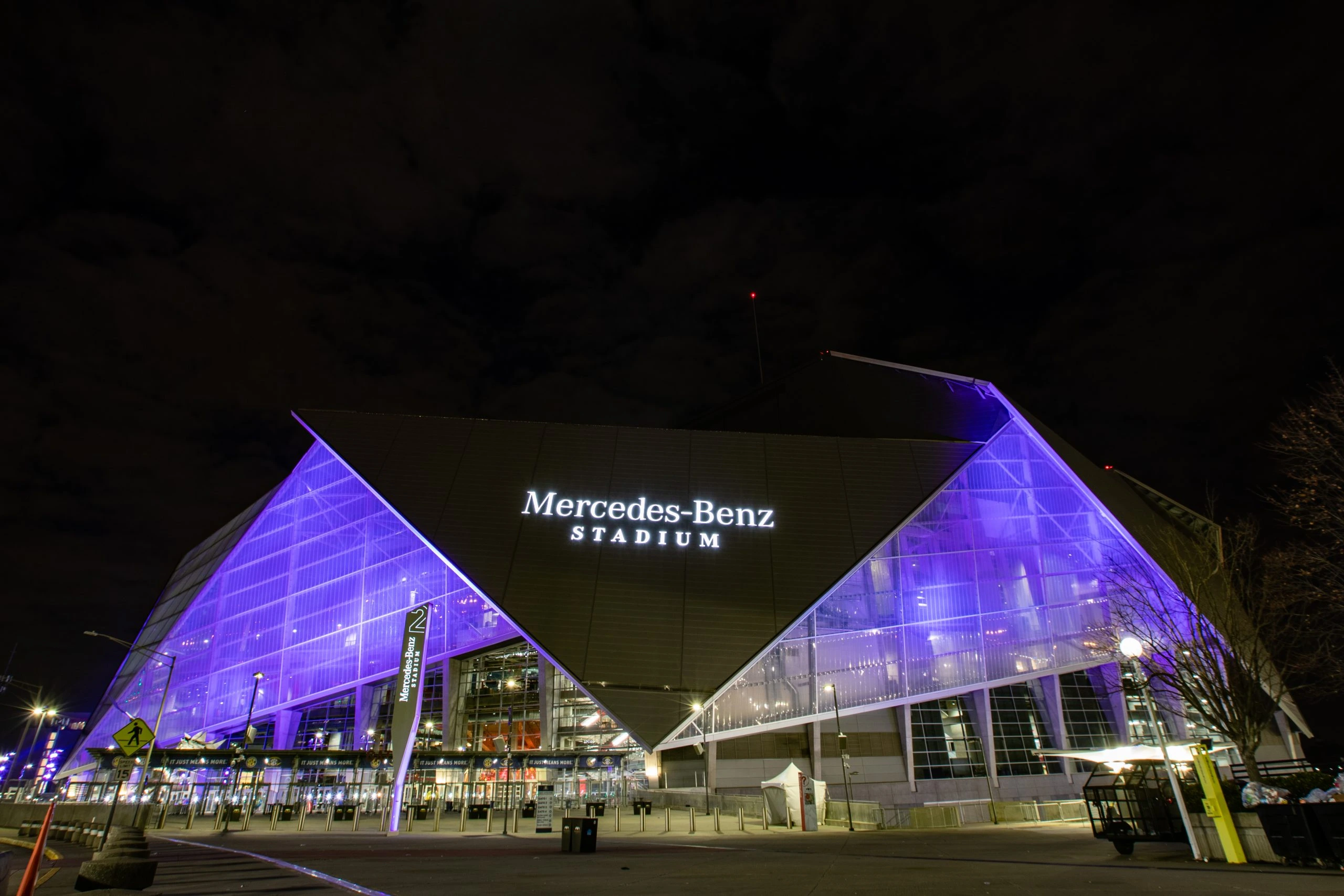
If AT&T Stadium is football’s equivalent of a great warship, Mercedes-Benz Stadium is its architectural art installation. Opened in 2017 at the heart of downtown Atlanta, this venue is widely regarded as one of the most innovative sports arenas ever constructed. Its signature feature is a retractable roof inspired by the aperture of a camera lens — eight panels that open and close like a mechanical flower, framing the sky above the pitch in a way that no other stadium in the world can replicate.
Home to both the NFL’s Atlanta Falcons and MLS’s Atlanta United, Mercedes-Benz Stadium also boasts a 58-foot-by-1,100-foot circular LED scoreboard suspended around the roof’s perimeter. The stadium features wide concourses, diverse food options, and a glass wall that opens to allow fresh air when the roof is retracted. Atlanta will host eight matches in total, culminating in the second semi-final on July 15. The city’s rapidly growing soccer culture, combined with the venue’s jaw-dropping design, makes this one of the most anticipated stops on the entire tournament calendar.
THE BRONZE FINAL VENUE
Hard Rock Stadium — Miami Gardens, Florida
FIFA Tournament Name: Miami Stadium | Capacity: 65,000 | Bronze Final: July 18, 2026
Hard Rock Stadium brings something to the World Cup that no other North American venue quite matches: pure tropical energy. The home of the Miami Dolphins sits in the sun-drenched expanse of South Florida, where the intersection of Latin American, Caribbean, and American football cultures creates a matchday atmosphere that vibrates with unique intensity. A $500 million renovation in 2016 added a dramatic roof canopy, new seating, and party terraces that have since become some of the most sought-after spots in American sport.
The stadium already hosts the F1 Miami Grand Prix and the Miami Open tennis tournament, demonstrating its versatility as a world-class event venue. For the World Cup, it will stage the bronze medal final on July 18 — the consolation match between the two semi-final losers — and also host a quarterfinal. In Miami’s World Cup summer, with an expected influx of fans from across Latin America, this stadium may well deliver the tournament’s most festive and colorful experience outside of Mexico City.
THE ATMOSPHERE CONTENDERS: STADIUMS THAT ROAR
Arrowhead Stadium — Kansas City, Missouri
FIFA Tournament Name: Kansas City Stadium | Capacity: 76,000 | Includes: Quarter-Final
The numbers are official, certified, and extraordinary: Arrowhead Stadium holds the Guinness World Record for the loudest crowd roar at any outdoor sports venue on the planet. The home of the Kansas City Chiefs — whose fanbase is among the most rabidly devoted in American sport — is the oldest stadium in the tournament, having opened in 1972, but its acoustic design has never been surpassed. The stadium was specifically built to trap and amplify crowd noise, wrapping fans tightly around the field in a bowl that channels sound downward rather than dispersing it into the open air.
Kansas City will host six matches, including a quarterfinal on July 11. With the city’s growing soccer culture — Sporting KC and KC Current both call the region home — and a fan atmosphere that has broken decibel records during NFL regular season games, this venue is the dark horse candidate for the tournament’s most memorable atmosphere. Several football analysts have noted that playing an elimination game at Arrowhead, in front of a capacity crowd that literally shook the ground, would be unlike anything most international players have ever experienced.
Lumen Field — Seattle, Washington
FIFA Tournament Name: Seattle Stadium | Capacity: 65,123 | Includes: Group Stage, Round of 16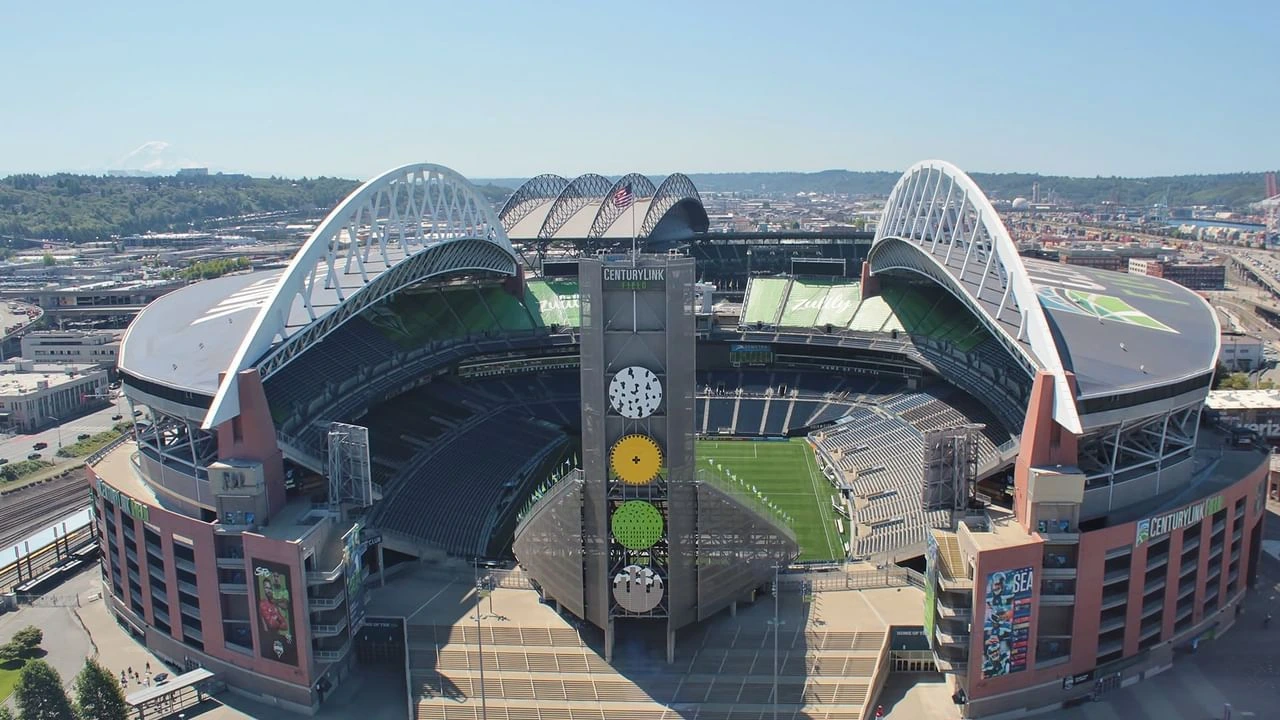
Lumen Field in Seattle is another stadium globally renowned for its crowd noise. Shared by the NFL’s Seattle Seahawks and MLS’s Seattle Sounders FC, this compact venue funnels fan energy with remarkable intensity. Seattle boasts one of the most passionate soccer cultures in the United States, built over decades by a Sounders fanbase whose tifos, chants, and march-to-the-match traditions have long been the envy of clubs across the continent. For any visiting national team, playing in Seattle will feel like a genuine road game.
Lincoln Financial Field — Philadelphia, Pennsylvania
FIFA Tournament Name: Philadelphia Stadium | Capacity: 65,827 | Includes: Group Stage, Round of 16
Philadelphia is legendary in American sports for the ferocity and passion of its fans, and Lincoln Financial Field — home of the NFL’s Eagles — shares that identity. The city’s intense European immigrant history, with large populations of Italian, Irish, and Portuguese descent, means that any match involving those nations here will generate the kind of partisan atmosphere more commonly associated with Champions League knockout nights in Europe.
THE TECHNOLOGICAL SHOWCASES
SoFi Stadium — Inglewood, California
FIFA Tournament Name: Los Angeles Stadium | Capacity: 69,650 | Includes: Group Stage, Quarterfinal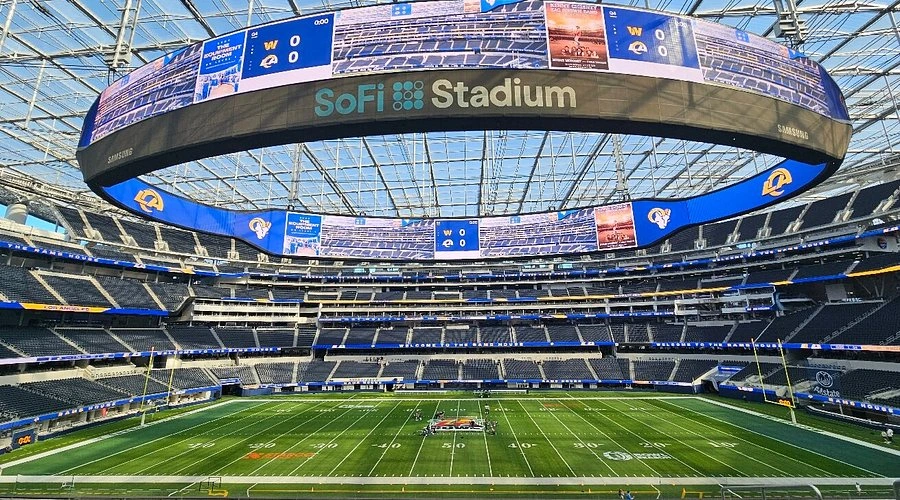
At a construction cost of $5.5 billion, SoFi Stadium is not merely the most expensive venue in the 2026 World Cup — it is the most expensive stadium ever built anywhere in the world. Opened in 2020, the home of the Los Angeles Rams and Chargers sits beneath a translucent ETFE canopy that filters sunlight without fully enclosing the bowl, and its signature dual-sided “Halo Board” — a massive oval video screen suspended above the field — is one of the great spectacles in modern sport.
The U.S. Men’s National Team will open their World Cup campaign here against Paraguay on June 12, which will make SoFi the setting for one of the tournament’s most emotionally charged early matches. The stadium will host eight matches and a quarterfinal, and it will also host the 2027 Super Bowl. For sheer visual drama, there may be no more photogenic venue in the entire tournament.
NRG Stadium — Houston, Texas
FIFA Tournament Name: Houston Stadium | Capacity: ~72,000 | Includes: Group Stage, Knockout Rounds
NRG Stadium holds a specific piece of NFL history: it was the first stadium in the league to install a retractable roof, pioneering the concept of climate-controlled football. The home of the Houston Texans now brings that same protection to World Cup fans in a city where summer heat is a genuine logistical challenge. Houston will host seven matches.
THE HISTORIC MEXICAN VENUES
Estadio BBVA — Monterrey, Mexico
Capacity: 53,500 | Includes: Group Stage, Round of 32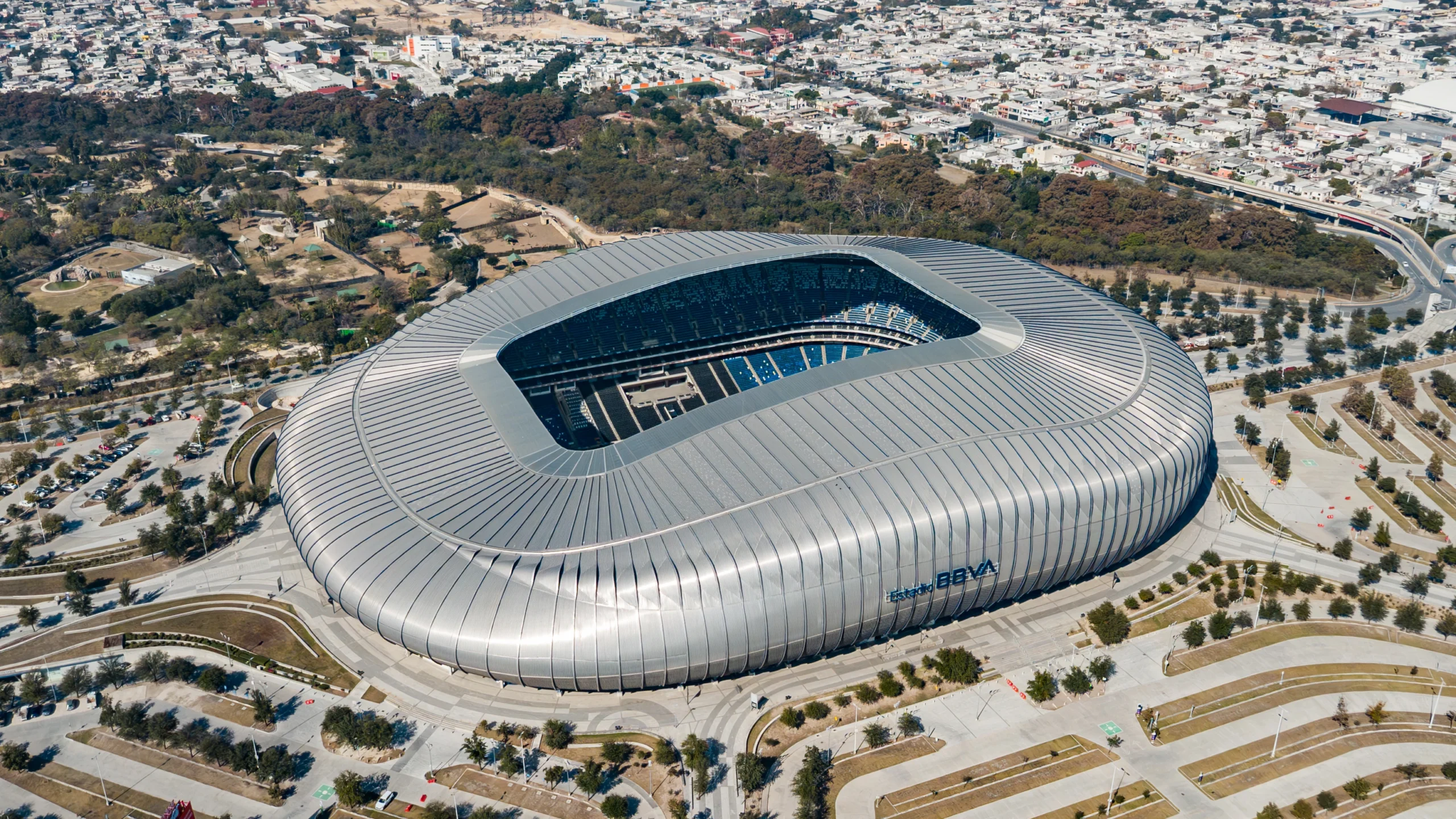
Monterrey’s Estadio BBVA is one of the most visually striking modern stadiums in Latin America, designed with the dramatic backdrop of the Cerro de la Silla mountain visible from the stands. Its urban, industrial aesthetic and passionate Norteño fanbase create a fierce atmosphere for visiting teams.
Estadio Akron — Guadalajara, Mexico
Capacity: ~48,000 | Includes: Group Stage, Round of 32
Guadalajara, widely regarded as the cultural heart of Mexico, brings the home of mariachi music, tequila, and one of the country’s most storied football clubs to the World Cup stage. Estadio Akron previously hosted the final of the 2010 Copa Libertadores and will offer some of the most affordable ticket prices in the tournament, making it a prime destination for fans seeking the pure essence of Mexican football culture.
THE CANADIAN VENUES
BC Place — Vancouver, British Columbia
Capacity: ~54,000 | Includes: Group Stage, Round of 16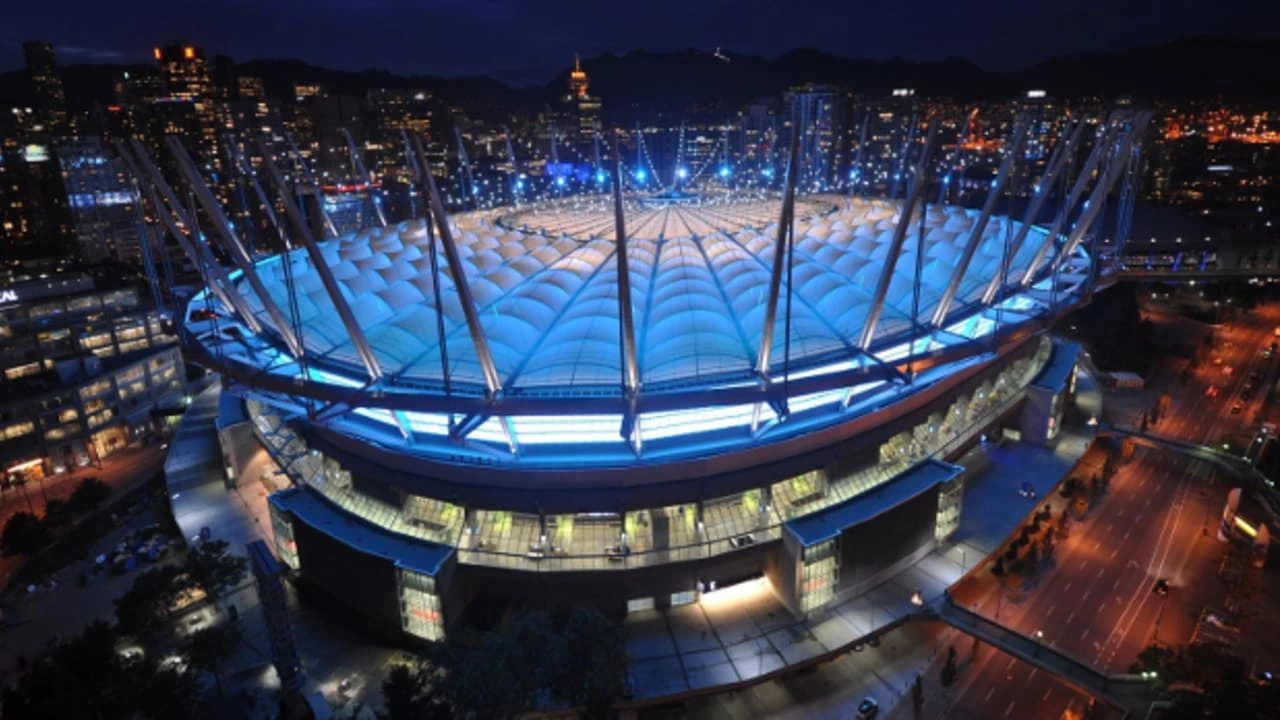
Vancouver’s BC Place, with its retractable roof and climate control, brings a Pacific Northwest sensibility to the tournament. The city’s diverse, multicultural population and its long embrace of international football make it one of the more globally minded host cities on the entire map.
BMO Field — Toronto, Ontario
Capacity: 45,736 | Canada’s Inaugural Venue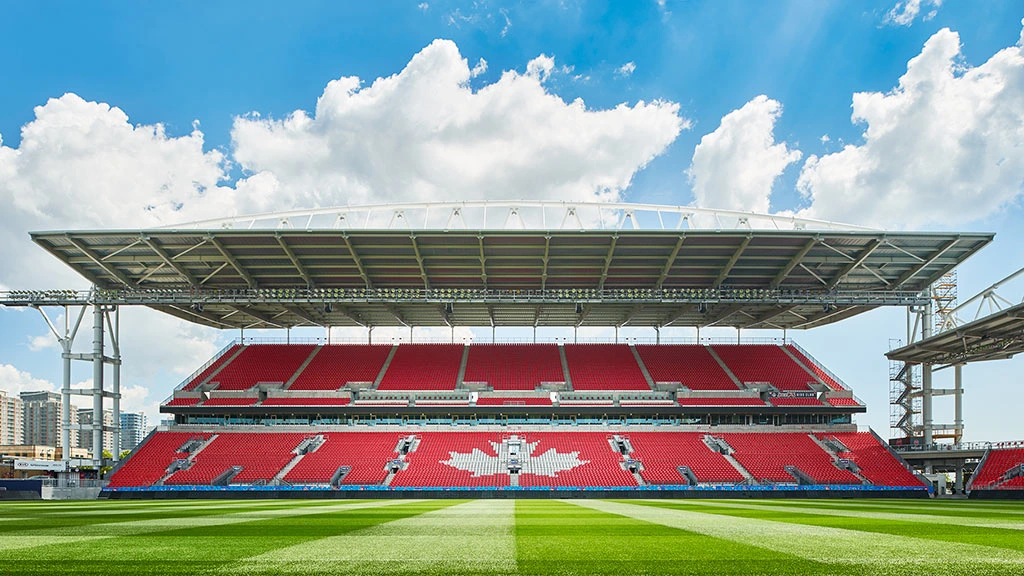
Toronto’s BMO Field is the smallest venue in the tournament and required a significant expansion from its original 30,000-seat capacity to meet FIFA’s minimum requirement of approximately 40,000. But for Canada, this is deeply personal. Canada’s inaugural World Cup match on home soil will take place at BMO Field — the home of Toronto FC — before the team travels west to BC Place for subsequent group matches. For a nation hosting its first World Cup in a co-host capacity, that first whistle at BMO Field will be one of the tournament’s most emotional moments.
THE BIG PICTURE
What the 2026 FIFA World Cup has assembled in these 16 venues is genuinely unprecedented. For the first time, every quarterfinal match onward will be played on American soil. Three of the four semifinal-or-later venues — MetLife, AT&T, and Mercedes-Benz — rank among the finest event stadiums in the Western Hemisphere. The inaugural match is set for the most historically significant football ground in the Americas. And the final will take place in the shadow of New York City, with an audience projected to be among the largest in the history of televised sport.
From the thunder of Arrowhead to the cosmic glow of SoFi’s Halo Board, from the hand-of-God ghosts haunting the Azteca to the virgin ambitions of BMO Field — these are the 16 stages of the world’s greatest football tournament. Let the show begin.
The 2026 FIFA World Cup runs from June 11 to July 19, 2026, across 16 stadiums in the United States, Mexico, and Canada.
PSG v Arsenal: How Paris Won the Champions League Final on Penalties
About the Author




9 thoughts on “The Grandest Stages on Earth: Every FIFA World Cup 2026 Stadium Ranked and Revealed”