Iran FIFA World Cup 2026 : Inside the 10-Point Ultimatum That’s Shaking Global Football
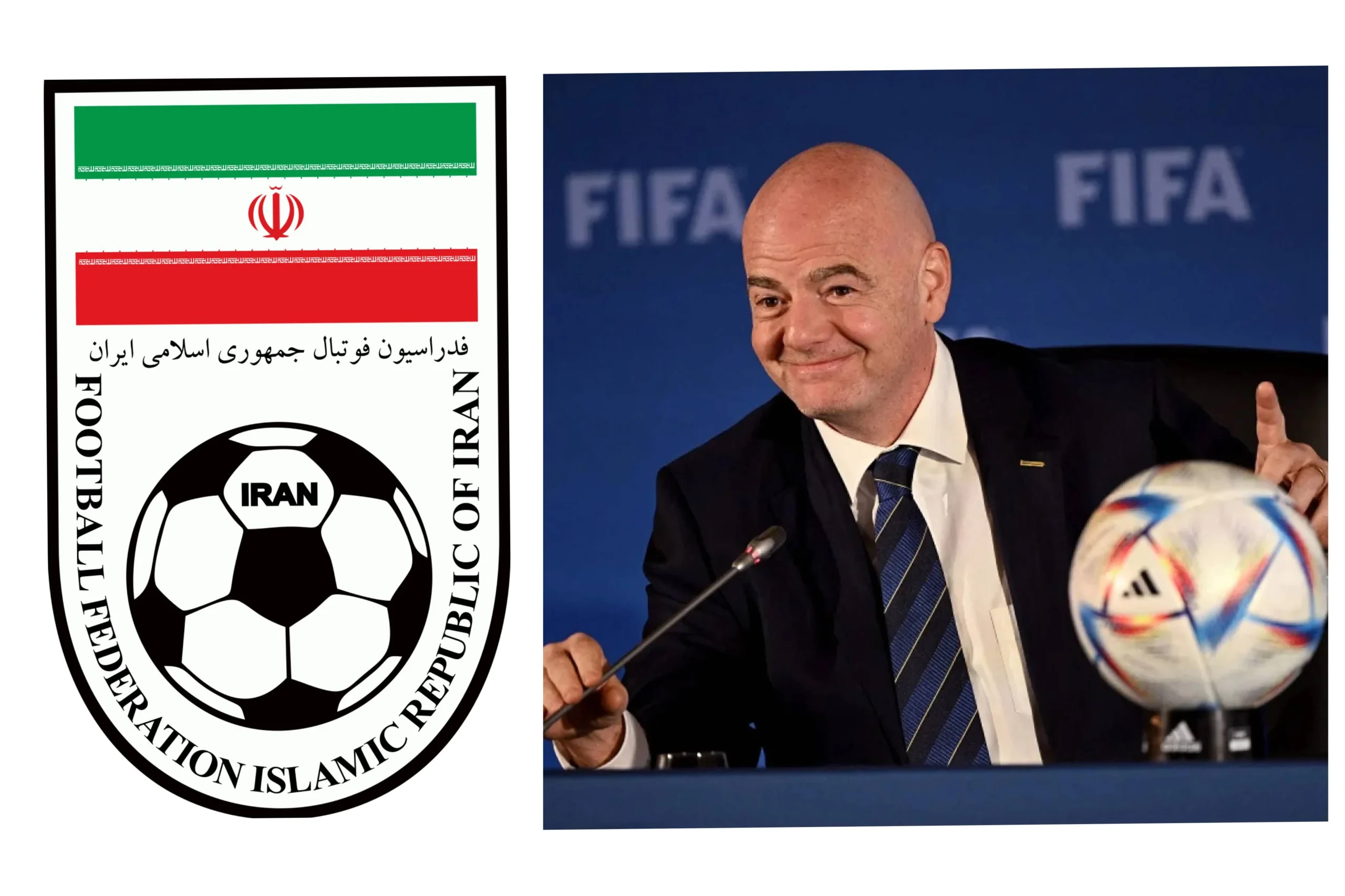
When the FIFA World Cup 2026 kicks off on American soil next month, 48 nations will take to the pitch in what promises to be the biggest, most-watched sporting event in human history. But one team’s mere presence — or absence — threatens to overshadow everything: Iran.
This isn’t just a sports story. It’s a geopolitical earthquake wrapped in football boots.
Less than five weeks before kickoff, the Football Federation of the Islamic Republic of Iran (FFIRI) dropped a bombshell that reverberated from Tehran to Washington: Iran will play in the 2026 FIFA World Cup — but only if the tournament’s host nations meet a formal 10-point ultimatum covering visas, security, national dignity, and the treatment of officials linked to the Islamic Revolutionary Guard Corps (IRGC). The Iran FIFA World Cup 2026 saga has become the defining political drama of the tournament before a single ball has been kicked.
How We Got Here: War, Sanctions, and a Visa Denied at 35,000 Feet
The road to this standoff began on February 28, 2026, when the United States and Israel launched military strikes on Iran, triggering a fragile ceasefire that has held — barely. That conflict threw Iran’s World Cup participation into serious doubt overnight. Citizens of the Islamic Republic are subject to travel restrictions imposed by the Trump administration, and the U.S. and Canada both designate the IRGC — Iran’s powerful military branch — as a foreign terrorist organization.
The crisis exploded into full public view when Mehdi Taj, president of the Iranian Football Federation, was denied entry into Canada while traveling to Vancouver for the FIFA Congress. His visa was revoked mid-flight — a diplomatic humiliation that Canada’s immigration minister later confirmed was due to Taj’s alleged ties to the IRGC. Iranian football officials, coaches, and players who completed mandatory military service in the IRGC — a requirement for virtually all Iranian men — suddenly found themselves classified as potential security threats by two of the three nations hosting the World Cup.
FIFA Secretary-General Mattias Grafstrom responded swiftly, sending a formal letter to the FFIRI expressing regret and inviting Iranian officials to Zurich on May 20 for emergency talks on World Cup preparations. FIFA President Gianni Infantino — who had personally entered the Iranian national team’s dressing room after a match to promise them a place at the tournament — went on record at the FIFA Congress to reaffirm that Iran would play their group-stage matches as originally scheduled on U.S. soil.
But Team Melli and its federation weren’t ready to simply take FIFA’s word for it.
Iran’s 10-Point Ultimatum: “No Retreat From Our Beliefs”
On Saturday, May 9, the FFIRI released a landmark statement that pulled no punches:
“We will definitely participate in the 2026 World Cup, but the hosts must take our concerns into account. We will participate in the World Cup tournament, but without any retreat from our beliefs, culture, and convictions.”
The statement also fired a direct challenge at the geopolitical forces at play: “No external power can deprive Iran of its participation in a cup to which it has qualified with merit.”
Federation President Mehdi Taj laid out Iran’s formal demands — a sweeping 10-point ultimatum addressed to the host governments and to FIFA itself. The conditions at the heart of the Iran World Cup participation debate include:
- Unconditional visa access for all players, technical staff, officials, journalists, and supporters — with no discrimination based on prior military service.
- Taj specifically named captain Mehdi Taremi and veteran defender Ehsan Hajsafi — both of whom completed mandatory IRGC military service — as individuals who must be granted entry without complications.
- Full respect for Iran’s national flag and anthem at all matches, without interruption or protest interference.
- Restriction of flags in stadiums to the official national flags of the two competing teams only — a direct response to fears that anti-Iranian protest flags could be displayed during matches.
- High-level security guarantees at airports, hotels, training facilities, and transportation routes to and from stadiums hosting Iranian matches.
- No immigration interrogation of Iranian journalists and fans after their visas have been issued.
- Diplomatic protections for all Iranian officials throughout the duration of their stay in North America.
- Media access guarantees for Iranian press corps covering Team Melli’s campaign.
- A formal written commitment from FIFA backing these conditions as binding on the host nations.
- A dedicated FIFA liaison to handle any incidents involving the Iranian delegation in real time during the tournament.
The conditions were described by observers as an “all-or-nothing proposition” that directly tests the hosting agreements between FIFA and the United States. If the ultimatum is not met, Iran has reportedly explored options including seeking arbitration through the Court of Arbitration for Sport (CAS) and even organizing a counter-tournament.The Grandest Stages on Earth: Every FIFA World Cup 2026 Stadium Ranked and Revealed
The Iran Perspective: Dignity, Sovereignty, and 80 Million Fans
For Iran, the stakes of the 2026 FIFA World Cup go far beyond football. Team Melli — the national team — carries the weight of 80 million Iranians on its shoulders, many of whom have endured years of international isolation, economic sanctions, and geopolitical uncertainty. Football is one of the few arenas where Iranians can take collective pride on the world stage, and the thought of being excluded from it by the very nation that struck their country militarily is a wound that runs deep.
“The Iranian national team is not just a football squad — it is a symbol of our national identity,” one Iranian football analyst told state media. “To be told that our captain, Mehdi Taremi, might not get a visa to play in a tournament his country qualified for legitimately? That is not just a sporting insult. It is a political one.”
The Iran FIFA World Cup 2026 situation is also deeply personal for the players themselves. Taremi, the Inter Milan striker and one of Asia’s finest footballers, completed his mandatory military service as required by Iranian law — the same law that governs every Iranian male citizen. His IRGC military service was not a political choice; it was a legal obligation. The FFIRI’s position is clear: penalizing players for fulfilling their civic duty under Iranian law is discriminatory and a violation of sport’s foundational principle of political neutrality.
The federation’s concern extends beyond players to coaches, medical staff, journalists, and the hundreds of thousands of Iranian fans who dream of traveling to the United States to see their team compete. Many of those fans hold Iranian passports that are subject to the Trump administration’s travel restrictions — making their entry into the United States far from guaranteed even with a World Cup ticket in hand.
Iran’s football federation has also raised concerns about the safety of its delegation in the current political climate. With the United States having engaged Iran militarily as recently as February 2026, Iranian officials argue that enhanced security guarantees are not a luxury — they are a minimum requirement for the safety of their athletes and staff.
At its core, Iran’s 10-point ultimatum is a declaration that the Islamic Republic refuses to be treated as a second-class participant at a tournament it earned the right to attend. The federation’s message is unambiguous: Iran will come to the 2026 FIFA World Cup with its head held high, or it will not come at all.
FIFA’s Dilemma: Political Neutrality Meets Legal Reality
For FIFA, the Iran World Cup participation crisis represents perhaps its most delicate balancing act since the organization’s founding. Gianni Infantino has built his presidency on the promise that football unites the world — that the sport transcends politics, borders, and conflict. The 2026 FIFA World Cup was supposed to be the crowning achievement of that vision: a 48-team tournament spread across three nations, celebrating the global game like never before.
Now, that vision is threatened by a standoff between two countries that are, technically, in a post-ceasefire period following active military conflict.
FIFA’s legal obligations are clear: under its hosting agreements, the United States, Canada, and Mexico are required to guarantee visa access and equal treatment for all qualified national teams and their delegations. The principle of political neutrality is enshrined in FIFA’s statutes. Any participating nation must be treated the same as any other — regardless of diplomatic relations, military history, or political classification.
But the practical reality is far more complicated. The United States’ designation of the IRGC as a foreign terrorist organization is a matter of domestic law — not FIFA policy. U.S. Secretary of State Marco Rubio has stated publicly that Iranian footballers are welcome in the United States but warned that individuals with documented IRGC ties may still face entry restrictions. That position puts FIFA in an almost impossible position: how do you guarantee equal treatment when the host nation’s own laws create an unequal playing field?
FIFA has reportedly been lobbying the U.S. government behind the scenes to provide what insiders describe as a “diplomatic carve-out” — a special exemption for World Cup participants that would allow Iranian players and officials to enter regardless of IRGC-related flags in the visa system. The U.S. State Department is understood to be reviewing individual applications, but has resisted providing a blanket waiver, with officials stating that “the integrity of our border security and legal designations remains a priority, even during international sporting events.”
The stakes for FIFA are enormous. If Iran withdraws — or is effectively forced out — it would be a catastrophic embarrassment for the organization, a black mark on the United States as a host nation, and a story that would dominate headlines for years. It would also set a dangerous precedent: that geopolitics can determine which qualified nations get to play in the World Cup.
To its credit, FIFA has moved quickly to de-escalate. The scheduled Zurich meeting on May 20 is being positioned as a critical moment — a chance to resolve the visa and security disputes before they become irresolvable. FIFA has also firmly rejected Mexico’s offer to host Iran’s three group-stage matches on Mexican soil — a logistically creative but diplomatically loaded suggestion that FIFA judged would only deepen the political narrative around Team Melli’s participation.
For now, FIFA’s official position remains what Infantino declared at Congress: Iran will play. The matches will proceed as scheduled. The World Cup will be for everyone.
Group G: Iran’s Campaign on the Field
Amid all the political noise, it is easy to forget that Iran’s Team Melli is a genuine footballing force that earned its World Cup spot with real quality on the pitch.
Drawn into Group G, Iran faces:
- 🇳🇿 New Zealand — June 15, Los Angeles (SoFi Stadium)
- 🇧🇪 Belgium — June 21, Seattle (Lumen Field)
- 🇪🇬 Egypt — June 26, Seattle (Lumen Field)
Iran’s base during the tournament will be Tucson, Arizona — a detail that itself carries symbolic weight, given that the team will be training and living in the United States amid an active diplomatic standoff with that very country.
On paper, Group G gives Iran a realistic shot at advancing to the knockout rounds. Belgium, ranked among Europe’s top sides, will be the group’s standout challenge. But New Zealand and Egypt represent games that Iran, with its talented squad, can genuinely target for points. Captain Mehdi Taremi — the striker at the center of the visa controversy — has been one of Europe’s most effective forwards this season with Inter Milan. If he gets to the tournament, expect him to be a major force.
Iran qualified for the 2026 FIFA World Cup through Asian qualifying, with Taremi scoring a crucial late equalizer against Uzbekistan that secured the team’s berth. The qualification was the product of genuine footballing merit — and that merit, the FFIRI insists, must be honored.
Italy Waiting in the Wings? The Replacement Rumor
Adding yet another layer of intrigue to the Iran FIFA World Cup 2026 saga, reports emerged in recent days that FIFA was being asked to consider replacing Iran with Italy — a nation that failed to qualify through normal UEFA qualifying — should Iran withdraw or be barred from entry.
Italy’s football federation has since publicly rejected any such proposal, stating that it would not participate in the tournament under those circumstances. FIFA has not commented directly on the replacement speculation. But the mere fact that the discussion is happening speaks to how serious the uncertainty around Iran’s participation remains.
What Happens Next?
The timeline is tight. The May 20 Zurich meeting between FIFA and Iranian football officials is the next critical checkpoint. If that meeting produces concrete written guarantees — on visas, security, and the treatment of IRGC-linked individuals — Iran’s participation in the 2026 FIFA World Cup should be secured.
If it doesn’t, the world faces the extraordinary spectacle of a qualified nation being effectively excluded from the sport’s greatest tournament — not because of anything that happened on a football pitch, but because of the decisions made in war rooms and immigration offices.
For the millions of Iranian football fans around the world, for the players who trained for years to earn this moment, and for the ideal of sport as a force that transcends politics, the hope is that football wins.
The clock is ticking. The World Cup starts June 11.
About the Author



1 thought on “Iran World Cup Participation Could Become FIFA’s Biggest Challenge Yet”