Football’s New Global Race: Ticket Sales and Streaming Comparison of EPL, MLS, SPL and ISL
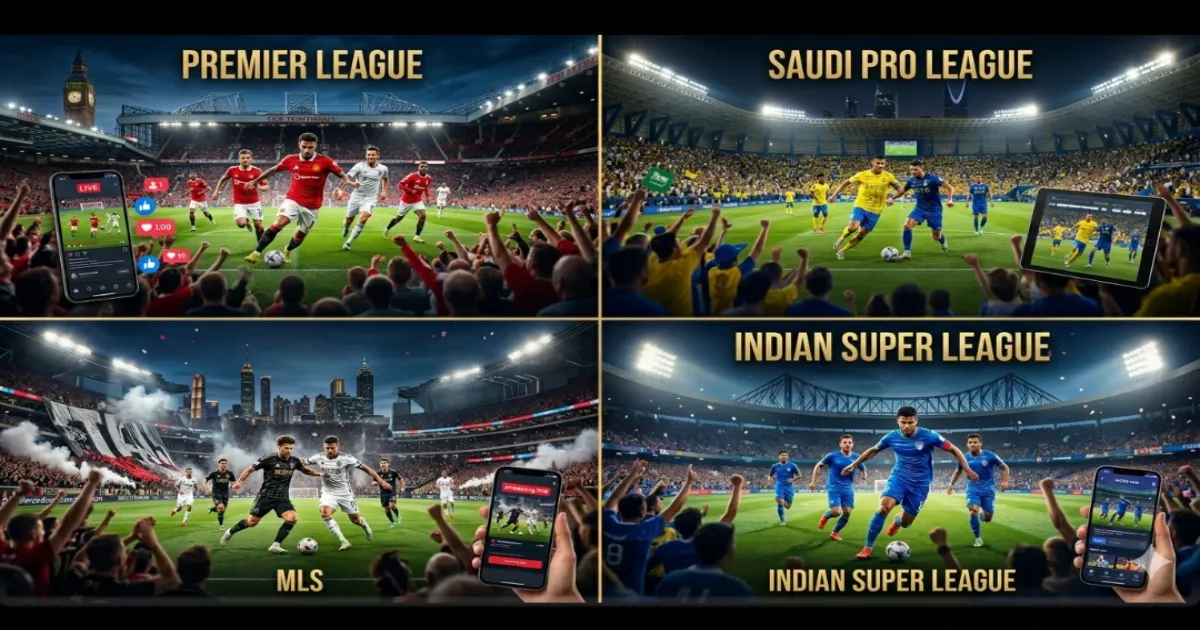
Global football has transformed into a digital entertainment business where stadium attendance and online viewership define a league’s commercial power. While the English Premier League continues to dominate world football financially, emerging leagues such as the Saudi Pro League (SPL), Major League Soccer (MLS), and Indian Super League (ISL) are rapidly expanding their audiences through aggressive broadcasting deals, star-player signings, and streaming partnerships.
LaLiga 2026/27 Schedule: Fixtures, Dates & Times
Premier League 2026/27 Schedule: This Week and Next Week
This comparison examines how these four leagues perform in ticket sales, match attendance, television reach, and online streaming popularity in 2025 and beyond.
The Evolution and History of Leagues
Premier League and its Popularity
The Premier League was founded in 1992 after clubs from England’s First Division broke away from the Football League to maximize television revenue. Over three decades, the league evolved into the world’s richest and most-watched football competition. Clubs such as Manchester United, Liverpool FC, and Arsenal FC helped expand its global reach through massive international broadcasting deals.
Today, the Premier League broadcasts in over 180 countries and attracts billions of viewers annually. Its popularity is driven by elite competition, historic rivalries, packed stadiums, and strong digital engagement.
Saudi Pro League: Rise to Global Attention
The Saudi Pro League began in 1976 but gained unprecedented international attention after Saudi Arabia’s Public Investment Fund heavily invested in football in 2023. The arrivals of global stars like Cristiano Ronaldo, Karim Benzema, and Neymar transformed the league into a global media product.
The league’s strategy focuses heavily on international broadcasting expansion and digital reach rather than immediate stadium dominance. Broadcast partnerships now extend to more than 180 countries.
MLS History and Expansion in North America
Major League Soccer was established in 1996 following the United States’ successful hosting of the 1994 FIFA World Cup. Initially struggling for mainstream relevance, MLS steadily grew through franchise expansion, soccer-specific stadiums, and youth development.
The league entered a new era after the signing of Lionel Messi by Inter Miami CF in 2023. MLS experienced explosive digital growth through its partnership with Apple TV, making streaming central to its future business strategy.
Indian Super League: Craze of football in India
The Indian Super League launched in 2014 to professionalize football in India and attract younger audiences beyond cricket. The league introduced franchise-style football featuring international players and coaches alongside Indian talent.
Despite competing against cricket’s dominance, the ISL has developed loyal regional fan bases in cities such as Kolkata, Kochi, Bengaluru, and Goa. Clubs like Mohun Bagan Super Giant and Kerala Blasters FC regularly produce strong attendance figures and social media engagement.
Ticket Sales and Stadium Attendance Comparison
Premier League Dominates Matchday Revenue
The Premier League remains unmatched in ticket revenue generation. England’s top clubs generate enormous income from sold-out stadiums and premium hospitality packages.
Saudi Arabia Gears Up to Host AFC Asian Cup 2027 With Massive Football Ambitions
Recent UEFA financial data revealed that Premier League clubs increased ticket revenues significantly in 2025. Arsenal earned an average of £89 per fan per match, while Liverpool generated approximately £120 million in ticket income.
High attendance remains a defining strength of the league. Stadiums like Old Trafford, Anfield, and Emirates Stadium consistently operate near full capacity.
Why Premier League Ticket Sales Lead:
- Historic fan culture
- Large stadium capacities
- Expensive hospitality packages
- Strong tourism demand
- Global club brands
MLS Shows Strong Stadium Growth
MLS has emerged as one of the strongest attendance leagues globally. Several clubs regularly attract crowds exceeding 20,000 spectators per game.
The 2025 MLS Cup final attracted a sellout crowd of 21,550 at Chase Stadium, while over 20,000 fans attended a separate viewing event in Vancouver.
Although average attendance slightly declined in 2025, MLS still maintains impressive numbers compared to many European and Asian leagues.
The “Messi effect” significantly boosted ticket demand across the league, with Inter Miami matches frequently becoming premium-priced events.
Saudi Pro League Attendance Still Developing
Despite major investment and superstar arrivals, Saudi Pro League attendance remains inconsistent.
Community-reported attendance data from the 2024–25 season indicates league averages around 8,300 fans per match, with clubs like Al Ittihad and Al Ahli drawing significantly larger crowds.
While international attention increased dramatically after Cristiano Ronaldo’s arrival, local stadium culture and long-term fan engagement are still developing compared to Europe and North America.
However, Saudi Arabia’s football strategy appears focused more on global visibility and media rights growth than immediate ticket-sale dominance.
Indian Super League Faces Infrastructure Challenges
The Indian Super League continues to grow but remains far behind Europe and MLS in overall attendance numbers.
According to FootyStats, average attendance during the 2025 season stood at roughly 7,287 spectators per game.
Clubs with passionate regional support, including Mohun Bagan and East Bengal, regularly outperform league averages. However, inconsistent infrastructure, scheduling issues, and cricket competition limit nationwide growth.
Still, ISL attendance remains respectable considering football’s developing ecosystem in India.
Online Viewership and Streaming Comparison
Premier League Leads Global Television Audience
The Premier League is still the world’s most-watched domestic football league.
Massive international television agreements with broadcasters such as Sky Sports, NBC Sports, and Star Sports allow the league to reach audiences across Asia, Europe, Africa, and North America.
The league benefits from:
🔸Established international fan bases
🔸Strong social media presence
🔸Consistent match quality
🔸Prime broadcasting slots
Premier League highlights dominate YouTube, TikTok, Instagram, and streaming platforms worldwide.
MLS Experiences Streaming Boom Through Apple TV
MLS has become one of football’s most digitally innovative leagues due to its exclusive partnership with Apple.
The 2025 MLS Cup generated over 4.6 million viewers across platforms and achieved record social engagement.
League playoff matches averaged roughly 711,000 viewers globally, representing significant year-over-year growth.
Commissioner Don Garber also revealed MLS streams averaged approximately 120,000 unique viewers per match on Apple TV during 2025.
Lionel Messi’s arrival dramatically accelerated MLS digital popularity, especially among younger streaming audiences.
Saudi Pro League Expands Through International Broadcast Deals
Saudi Pro League online growth has accelerated rapidly thanks to global distribution agreements.
The league announced partnerships with ESPN, DAZN, Fox Sports, and YouTube to distribute matches in over 180 countries. Officials claimed the league attracted more than 230 million viewers during the previous season.
Social media engagement also surged following high-profile player transfers, with clips involving Cristiano Ronaldo consistently generating massive global traffic.
However, analysts still debate whether this viewership growth can be sustained long term after the novelty factor fades.
Indian Super League Relies on Digital Growth in India
ISL’s online strategy focuses heavily on streaming platforms and mobile audiences.
The league’s latest media agreement with FanCode marks a major shift toward digital-first football broadcasting in India.
Unlike the Premier League and MLS, ISL depends largely on domestic audiences rather than international viewers. Nevertheless, India’s enormous smartphone market creates long-term growth potential for football streaming.
The challenge remains converting social media engagement into sustained television ratings and stadium attendance.
Which League Is Winning the Football Business Race?
Premier League Still Leads Overall
The Premier League remains the clear leader in:
🔸Ticket revenue
🔸Match attendance
🔸Global television reach
🔸Commercial sponsorships
🔸International fan engagement
No other league currently matches its financial scale or worldwide popularity.
MLS Is Winning the Digital Streaming Battle
MLS has positioned itself as football’s most forward-thinking streaming league. Its Apple TV partnership, Messi-driven audience growth, and younger fan demographic make it highly attractive for future digital expansion.
MLS may not yet rival Europe financially, but its streaming-first strategy could shape football broadcasting globally.
Saudi Pro League Is Growing Through Star Power
Saudi Pro League growth depends heavily on superstar influence and government-backed investment.
The league has achieved rapid global awareness, but attendance and grassroots fan culture still lag behind more established competitions.
Its long-term success will depend on maintaining audience interest beyond marquee signings.
Indian Super League Represents Long-Term Potential
ISL remains a developing football product with enormous demographic opportunity. India’s population, mobile internet penetration, and youth audience provide massive long-term upside.
However, infrastructure investment, grassroots development, and consistent broadcasting quality will be crucial for future growth.
Final Verdict
The football industry is no longer measured solely by trophies and stadiums. Ticket sales, digital streaming, and global audience engagement now define the true power of a league.
The Premier League remains the undisputed global leader, MLS is emerging as the digital innovator, the Saudi Pro League is rapidly expanding through investment and superstar appeal, and the Indian Super League continues building a long-term football ecosystem in one of the world’s largest markets.
As streaming platforms increasingly shape sports consumption, the competition between these leagues will become even more intense over the next decade.
About the Author


4 thoughts on “Premier League vs MLS vs Saudi Pro League vs ISL 2026: Full Comparison of Fans, Tickets & Streaming”