 The Deals That Changed Football: History’s Greatest Transfers of all time
Tracing the deals that repeatedly rewrote the record books and reshaped how the world’s biggest clubs do business.
A single transfer can reshape a club’s entire trajectory, redefine a league’s competitive balance, or, in a handful of cases, fundamentally alter how the football transfer market itself operates. This is the story of football’s greatest and most consequential transfers, tracing how the sport’s record fee has repeatedly been shattered across the decades, and what each landmark deal reveals about the era it happened in.
Messi Retires: Inside the Rise, Falls, and Redemption of a Legend
Thiago Messi: Club Career, Playing Style, Lifestyle and Future Prospects
Cristiano Ronaldo Jr.: Club, Lifestyle, Career and Future Prospects
Pelé to the New York Cosmos (1975)
Pelé never left Brazilian club Santos during his playing prime, making his eventual 1975 move to the New York Cosmos of the North American Soccer League less a conventional transfer and more a cultural event designed explicitly to grow football’s profile in the United States. The deal, reportedly worth several million dollars across contracts, endorsements, and business arrangements, brought the greatest player of his generation to American shores at the tail end of his career, instantly transforming the Cosmos into a genuine cultural phenomenon and drawing crowds far beyond what American soccer had previously managed to attract. While the NASL itself collapsed within a decade, Pelé’s Cosmos move remains one of the most historically significant transfers in the sport precisely because of what it represented rather than its footballing impact alone, an early, imperfect preview of football’s eventual, much later successful expansion into the American sporting landscape.
Diego Maradona to Napoli (1984)
Maradona’s 1984 transfer from Barcelona to Napoli, for a then-world record fee, brought the most gifted player of his generation to a club that had never previously won a Serie A title and existed in the considerable shadow of Italian football’s traditionally dominant northern clubs. What followed was one of the most transformative individual impacts any transfer has ever produced, with Maradona single-handedly dragging Napoli to two Scudetti and a UEFA Cup title across the following several years, a level of individual influence on a previously unsuccessful club that remains a frequently cited benchmark whenever football writers discuss a single player’s capacity to change an entire institution’s fortunes.
Zinedine Zidane to Real Madrid (2001)
Real Madrid’s 2001 signing of Zinedine Zidane from Juventus, for a then-world record fee, marked the beginning of club president Florentino Pérez’s ambitious Galácticos policy, an approach built explicitly around signing one global superstar per year regardless of squad balance or positional need. Zidane’s individual brilliance, most memorably his stunning left-footed volley in the 2002 Champions League final, justified the transfer on pure footballing merit, even as the broader Galácticos strategy that followed produced a mixture of genuine continental success and periods of surprising underachievement given the sheer accumulated star power involved.
David Beckham to Real Madrid (2003)
Beckham’s 2003 move from Manchester United to Real Madrid, continuing the Galácticos project, represented a different kind of landmark transfer, one driven as much by commercial and marketing considerations as pure footballing logic. Beckham’s enormous global brand recognition, cultivated through both his footballing career and his broader celebrity profile, helped accelerate Real Madrid’s transformation into arguably the most commercially valuable football club on the planet, demonstrating decisively that a transfer’s value could extend well beyond a player’s direct on-pitch contribution into genuine global marketing and merchandise revenue, a lesson other major clubs would increasingly factor into their own transfer strategies in the years that followed.
Cristiano Ronaldo to Real Madrid (2009)
Real Madrid’s 2009 signing of Cristiano Ronaldo from Manchester United, for a fee that shattered the existing world transfer record, marked the beginning of what would become one of the most statistically dominant individual spells in club football history. Ronaldo’s nine seasons at the club produced a level of sustained goalscoring output that redefined expectations for what an elite forward’s individual output could look like, directly powering Real Madrid’s remarkable run of four Champions League titles in five seasons between 2014 and 2018. The transfer also intensified the emerging rivalry between Ronaldo and Barcelona’s Lionel Messi, setting up the decade-long individual duel that would come to define an entire era of Spanish football and global football discourse more broadly.
Neymar to Paris Saint-Germain (2017)
Few single transfers have reshaped the football market quite as dramatically as Neymar’s 2017 move from Barcelona to Paris Saint-Germain, a deal that, more than seven years later, still stands as the most expensive transfer in football history. The fee, roughly double the previous world record, sent shockwaves through the entire football economy, forcing clubs across Europe to reassess what genuine superstar-level transfers might realistically cost going forward. The deal also directly triggered UEFA’s eventual introduction of stricter Financial Fair Play enforcement mechanisms, as regulators grew increasingly concerned about state-backed clubs using their financial resources to fundamentally distort the broader transfer market in ways that threatened competitive balance across European football.
Kylian Mbappé to Real Madrid (2024)
Mbappé’s eventual 2024 move to Real Madrid, arriving as a free transfer following the expiration of his PSG contract, represented an entirely different kind of landmark deal, one built around the strategic value of patient contract management rather than a record-breaking transfer fee. By allowing his PSG contract to run down rather than force an earlier, fee-generating transfer, Mbappé secured personal terms, including a substantial signing bonus, reportedly worth considerably more than what a conventional transfer fee negotiation might have allowed him to command directly, a savvy approach to free agency that several other top players have since sought to replicate when navigating their own eventual contract situations at major European clubs.
Erling Haaland to Manchester City (2022)
Haaland’s 2022 move from Borussia Dortmund to Manchester City, secured through a release clause structured specifically to be triggered at a pre-agreed, relatively modest fee compared to the striker’s overall market value, demonstrated the growing sophistication of modern transfer negotiations, where clubs increasingly build specific release clause mechanisms directly into contracts years in advance rather than relying purely on open-market negotiation once a player becomes available. Haaland’s subsequent goalscoring form at City, including a Premier League single-season scoring record in his debut campaign, quickly justified the move as one of the most efficiently negotiated transfers of the modern era relative to the player’s actual output.
Ronaldo and Messi’s Late-Career Moves
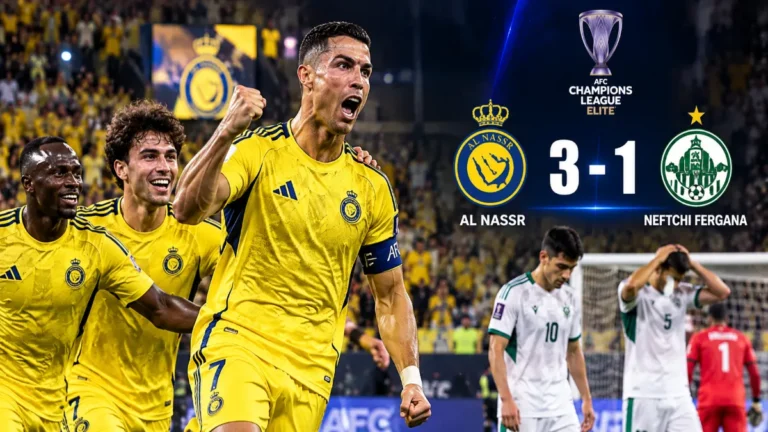
The respective late-career transfers of Cristiano Ronaldo to Saudi Arabia’s Al-Nassr in 2023 and Lionel Messi to Major League Soccer’s Inter Miami in the same year represent a genuinely new category of landmark transfer, one built around the growing financial and commercial power of leagues outside football’s traditional European power centers. Both moves, while occurring well past each player’s individual prime, generated enormous commercial and broadcast interest for their respective new leagues, demonstrating that a single global superstar’s transfer could meaningfully accelerate an entire league’s international profile and commercial growth in ways that extended well beyond the specific matches either player personally featured in.
What These Transfers Reveal About the Market’s Evolution
Tracing this history of landmark transfers reveals a clear pattern in how the underlying motivations behind football’s biggest deals have shifted over time. The sport’s earliest record transfers, Maradona’s move to Napoli chief among them, were driven overwhelmingly by pure footballing considerations, a club’s direct pursuit of a player’s on-pitch ability. The Galácticos era introduced commercial and marketing value as an increasingly significant factor alongside footballing merit, a trend that reached its logical extreme with Neymar’s world-record PSG move, driven substantially by a state-backed club’s broader geopolitical and commercial ambitions rather than pure squad-building logic alone.
More recently, the market has grown considerably more sophisticated in how it structures deals, from Haaland’s pre-negotiated release clause to Mbappé’s strategic use of free agency, reflecting increasingly professionalized player representation and contract negotiation on the players’ side of the table. Meanwhile, the emergence of Saudi Arabia’s Pro League and Major League Soccer as genuine destinations for superstar-level transfers, even in the twilight of a player’s career, suggests football’s transfer market is continuing to globalize in ways that would have seemed unlikely even a decade ago.
Why These Deals Still Matter
Beyond their immediate footballing impact, each of these landmark transfers offers a genuine window into the specific commercial, political, and competitive pressures shaping football during its particular era. Pelé’s Cosmos move captured American football’s earliest, ultimately premature attempt at mainstream relevance. The Galácticos era captured football’s growing recognition of a superstar’s commercial value beyond pure sporting output. Neymar’s PSG transfer captured the emergence of state-backed clubs willing to disregard conventional transfer market logic entirely in pursuit of broader strategic ambitions. And the recent moves to Saudi Arabia, MLS, and the increasingly sophisticated contract structures surrounding players like Haaland and Mbappé, capture a transfer market that continues to evolve in ways that extend well beyond simply which club is willing to pay the largest fee. Understanding these landmark deals, in other words, means understanding not just football’s greatest individual transfers, but the broader forces that have continually reshaped the sport’s economics across nearly half a century of football history.
The Bosman Ruling: A Transfer That Wasn’t
No history of football’s transfer market would be complete without mentioning a legal case rather than a single player deal. Belgian footballer Jean-Marc Bosman’s 1995 legal victory against his club RFC Liège, upheld by the European Court of Justice, fundamentally rewrote the rules governing player contracts and transfers across the entire European Union, establishing that out-of-contract players had the right to move to a new club without a transfer fee being paid, and that quotas limiting the number of foreign EU players a club could field were illegal under EU labor law. The ruling’s impact on the transfer market proved every bit as significant as any individual record-breaking deal, since it fundamentally shifted negotiating leverage toward established players nearing the end of their contracts, a dynamic Mbappé would go on to exploit so effectively nearly three decades later during his own eventual move to Real Madrid.
The Bosman ruling also directly accelerated the trend toward clubs offering increasingly lucrative long-term contracts specifically to prevent star players from ever reaching free agency in the first place, since losing a top player for no fee represented a genuinely catastrophic financial outcome under the new rules. That defensive contract strategy, still standard practice across the modern game, traces its origins directly back to a single Belgian footballer’s legal battle over his own right to leave a club whose contract had already expired, a reminder that some of football’s most consequential transfer-market shifts have come from courtrooms rather than negotiating tables.
The Rise of the Modern Super-Agent
Alongside the escalating transfer fees themselves, the growing sophistication and influence of player agents represents its own significant thread running through this history. Figures like Jorge Mendes and Mino Raiola built career-defining reputations by negotiating some of the exact landmark transfers detailed above, often securing personal terms, image rights arrangements, and structured bonus payments for their clients that proved just as financially significant as the headline transfer fee itself. This growing agent influence has increasingly shifted negotiating power away from clubs and toward star players and their representatives, a dynamic clearly visible in how deals like Mbappé’s free transfer to Real Madrid or Haaland’s pre-negotiated release clause were structured to maximize player leverage rather than simply reflecting a club’s willingness to pay whatever fee was demanded.
How Transfer Fees Compare Across Eras
Comparing transfer fees directly across different decades requires accounting for both general football-market inflation and the broader economic conditions of each era, since a record fee that seemed extraordinary at the time can look comparatively modest once adjusted for the sport’s overall commercial growth. Maradona’s 1984 move to Napoli, while a genuine world record at the time, represented a far smaller fee in absolute terms than any of the deals commanding headlines in the 2010s and 2020s, reflecting just how dramatically football’s overall broadcast and commercial revenue has grown across the intervening four decades. Even accounting for that broader financial inflation, however, certain deals, Neymar’s PSG move chief among them, still stand out as genuine market-distorting outliers rather than simply reflecting the sport’s gradual, steady commercial growth, a reminder that not every record transfer fee tells the same underlying economic story.
The Deals Still to Come
Given how consistently football’s transfer record has been broken across the past several decades, from Maradona’s relatively modest 1984 fee through to Neymar’s still-standing 2017 record, it seems likely that the sport’s biggest transfer will eventually be surpassed again, whether through a conventional record-breaking fee, an increasingly creative free-agency structure like Mbappé’s, or an entirely new market dynamic driven by leagues outside football’s traditional European power centers. Whatever form the next truly landmark transfer eventually takes, this history suggests it will likely reveal just as much about football’s broader commercial and competitive priorities at that moment as each of the deals detailed here has revealed about the specific era it happened in, and given how unpredictable nearly every previous record-breaking shift has proven to be, from a Belgian courtroom battle to a Qatari-backed transfer fee that doubled the existing record overnight, there’s little reason to expect that pattern of surprise to change anytime soon.
▪️▪️ Follow us on Facebook ▪️▪️
From Legend to Lightning Rod: Why Messi Is Being Criticized Now
World Cup Retirement: Ronaldo, Neymar and the Legends Saying Goodbye
About the Author