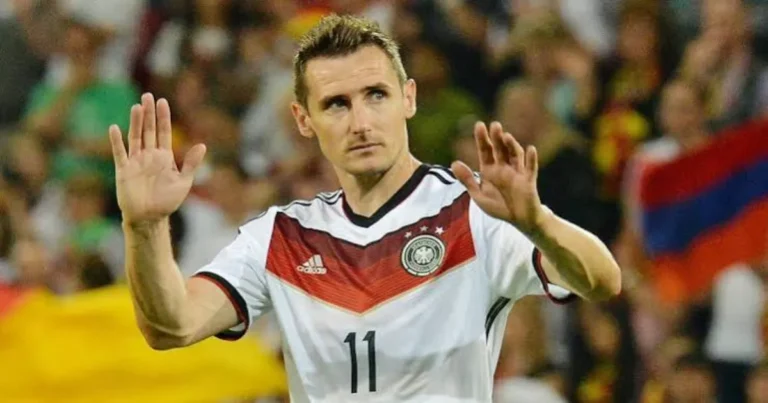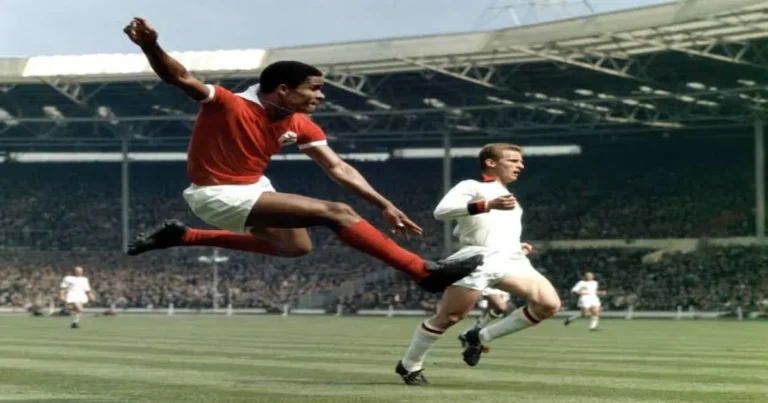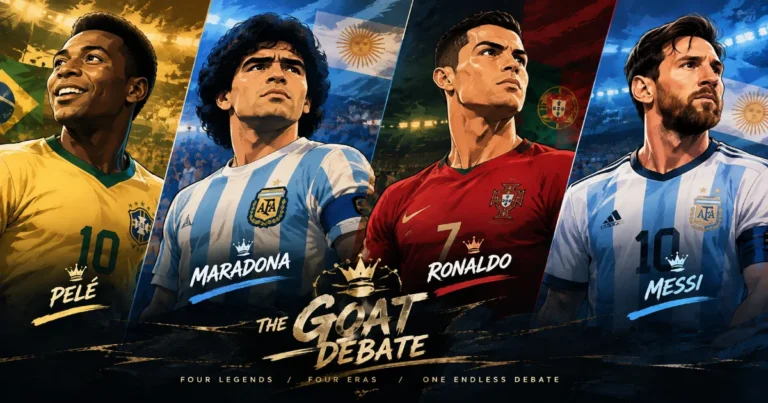
A tearful exit against Spain closes the book on Ronaldo’s World Cup career without the one trophy that eluded him, leaving fans, teammates and a nation to reckon with what comes next after Cristiano Ronaldo Retirement.
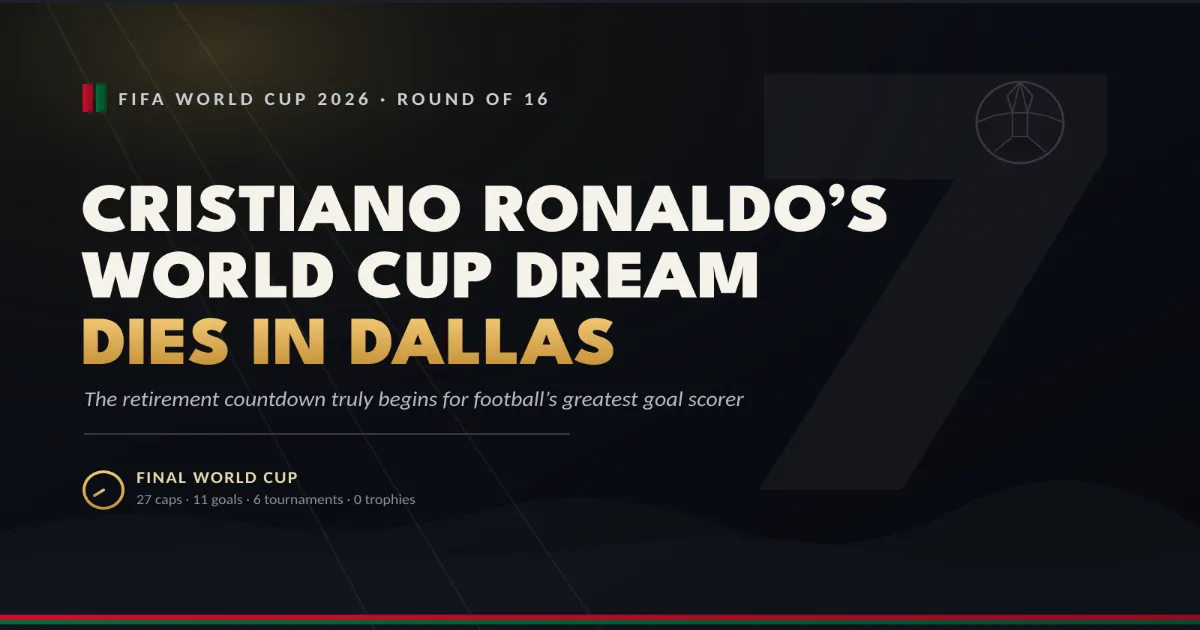
Cristiano Ronaldo’s World Cup story has reached its final chapter. Portugal’s 1–0 defeat to Spain in the Round of 16 in Dallas ended the 41-year-old forward’s sixth and final World Cup appearance, bringing an emotional close to a tournament journey that began two decades ago.
Cristiano Ronaldo Jr.: Club, Lifestyle, Career and Future Prospects
Ronaldo had already confirmed before the tournament that the 2026 World Cup would be his last. However, his international future beyond the tournament remained less certain. After Portugal’s elimination, he again refused to make an immediate decision about whether he would continue playing for the national team.What Cristiano Ronaldo Doesn’t Have: The One World Cup Trophy That Couldn’t Define His Greatness
Cristiano Ronaldo Jr.: Club, Lifestyle, Career and Future Prospects
Thiago Messi: Club Career, Playing Style, Lifestyle and Future Prospects
A World Cup Career That Spanned Six Tournaments
Ronaldo’s World Cup journey began in Germany in 2006, when he was still establishing himself as one of Europe’s most exciting young attackers.
Twenty years later, he walked off the field in Dallas having competed at six World Cups — an extraordinary achievement that places him among the most experienced players in tournament history.
His World Cup story included spectacular goals, unforgettable performances and difficult exits. There were also moments when it appeared his international career might already be over, particularly after Portugal’s quarterfinal defeat to Morocco in 2022.
Instead, Ronaldo returned for one final campaign.
The 2026 tournament gave him another opportunity to play on football’s biggest stage, and he made history again. He became the first player to score at six different World Cups, adding another remarkable record to a career already filled with them.
Portugal’s Defeat to Spain Ends the Dream
Portugal entered the knockout match against Spain with genuine hopes of progressing further.
The game was extremely tight, with neither side able to establish consistent control for long periods. Spain eventually found the breakthrough when Mikel Merino scored in stoppage time, sending Portugal out and ending Ronaldo’s World Cup career at the same time.
The final whistle produced an emotional scene.
Ronaldo appeared visibly upset as he acknowledged Portugal supporters and embraced teammates. For a player who had spent so much of his life competing at World Cups, the realization that there would be no seventh tournament was difficult to hide.
Spain’s victory was not simply another knockout result. It marked the end of an era for Portugal.
Ronaldo Has Already Confirmed This Was His Last World Cup
There is an important distinction between Ronaldo’s World Cup retirement and his retirement from international football altogether.
Before the tournament, Ronaldo made clear that the 2026 edition would be his final World Cup. That decision means the next global tournament in 2030 will take place without him.
But Ronaldo has not committed to immediately ending his Portugal career.
Following the defeat to Spain, he indicated that he did not want to make a rushed decision about what happens next. His comments suggested that he wants time to reflect before deciding whether to continue representing Portugal in other competitions.
That leaves the door open to a possible international farewell at another stage, although nothing should be treated as confirmed until Ronaldo himself makes that decision.
Why Cristiano Ronaldo Retirement Is Now a Major Question
For several years, retirement speculation followed Ronaldo everywhere.
His age naturally became part of the conversation, but his performances repeatedly delayed the inevitable. Even at 41, he continued to score for Portugal and remained one of the most recognizable players in world football.
The 2026 tournament therefore represented something different.
For the first time, the question was no longer whether Ronaldo could reach another World Cup. He had already said that he could not.
The question became what his football life looks like after the World Cup.
That is why the phrase Cristiano Ronaldo retirement has become such a major talking point following Portugal’s elimination.
The World Cup Trophy Remains the Missing Prize
Ronaldo’s career has produced almost every major individual achievement imaginable.
He has won domestic league titles, Champions League trophies, European championships, international silverware and countless individual awards.
Yet the World Cup remained outside his collection.
Portugal’s best World Cup performance during Ronaldo’s career came in 2006, when the team reached the semifinals. In the tournaments that followed, Portugal repeatedly fell short of the final stages.
The 2026 tournament represented his final opportunity to change that history.
Spain ended that possibility.
It is an unfortunate conclusion for a player who spent more than 20 years trying to reach the summit of international football.The Weirdest Football Superstitions Even Messi, Ronaldo and Neymar Swear By
More Than Just Goals and Records
It is easy to measure Ronaldo’s career through statistics.
Goals, appearances, trophies and records dominate discussions about his place in football history.
But his influence on Portugal extends beyond numbers.
Before Ronaldo’s generation, Portugal had never won the European Championship. His career helped transform the national team into a consistent contender at major international tournaments.
Portugal eventually won Euro 2016 and later added Nations League success.
Ronaldo was central to that transformation.
His leadership, ambition and relentless pursuit of improvement helped establish expectations that did not previously exist around Portuguese football.
What Happens to Ronaldo After the World Cup?
The immediate future is much easier to understand than the long-term one.
Ronaldo remains an active professional footballer and is expected to continue his club career with Al Nassr.
That means the Spain defeat should not automatically be interpreted as the end of Ronaldo’s playing career.
Instead, it represents the end of one particular part of it: his World Cup journey.
There is still football ahead.
The biggest uncertainty concerns how long Ronaldo wants to continue playing and whether he eventually decides to end his international career completely.
He has repeatedly emphasized that he wants to make major decisions on his own terms.
Could Ronaldo Play for Portugal Again?
That remains one of the most interesting questions.
Ronaldo has not ruled out continuing with Portugal after the World Cup. At the same time, his age and the emergence of a new generation will inevitably influence the team’s future.
Portugal has talented players who will increasingly take greater responsibility, including attacking stars capable of carrying the team into the next international cycle.
The transition will therefore happen regardless of Ronaldo’s decision.
If he remains available, his experience could still be valuable. If he retires from international football, Portugal will begin one of the biggest transitions in its modern history.
Either way, his influence will remain.
The End of an Extraordinary World Cup Era
Ronaldo’s final World Cup ended with disappointment rather than celebration.
There was no semifinal run like 2006, no dramatic deep tournament journey and no chance to lift the trophy that had escaped him throughout his career.
Instead, there were tears in Dallas and an uncertain future.
Yet that ending should not overshadow what came before it.
From the 21-year-old winger who appeared at his first World Cup in 2006 to the 41-year-old veteran who returned for his sixth tournament in 2026, Ronaldo’s World Cup career lasted longer than most professional careers themselves.
He scored, created, competed and repeatedly returned when many expected him to step away.
Now, for the first time, the decision really belongs to him.
Cristiano Ronaldo’s Next Chapter
The most important thing about Ronaldo’s retirement conversation is that retirement has not necessarily arrived yet.
His World Cup career is over, but his football career continues.
He still has the opportunity to play for his club, compete for more trophies and potentially represent Portugal again if he chooses to do so.
Eventually, however, every great career reaches its final whistle.
For Ronaldo, that moment will be judged not by one defeat in Dallas but by everything that came before it.
Six World Cups. Two decades of international football. A collection of records that may stand for generations.
The World Cup trophy was the one prize he could never claim.
But the legacy Cristiano Ronaldo leaves behind is far larger than that missing medal.
15 Champions League Players to Watch in 2026/27: Superstars & Young Guns
Champions League 2026/27 Schedule: Fixtures, Dates & Times
▪️▪️ follow us on facebook ▪️▪️
About the Author