 Messi’s World Cup Record Streak: The Goals, Appearances and Historic 2026 Run
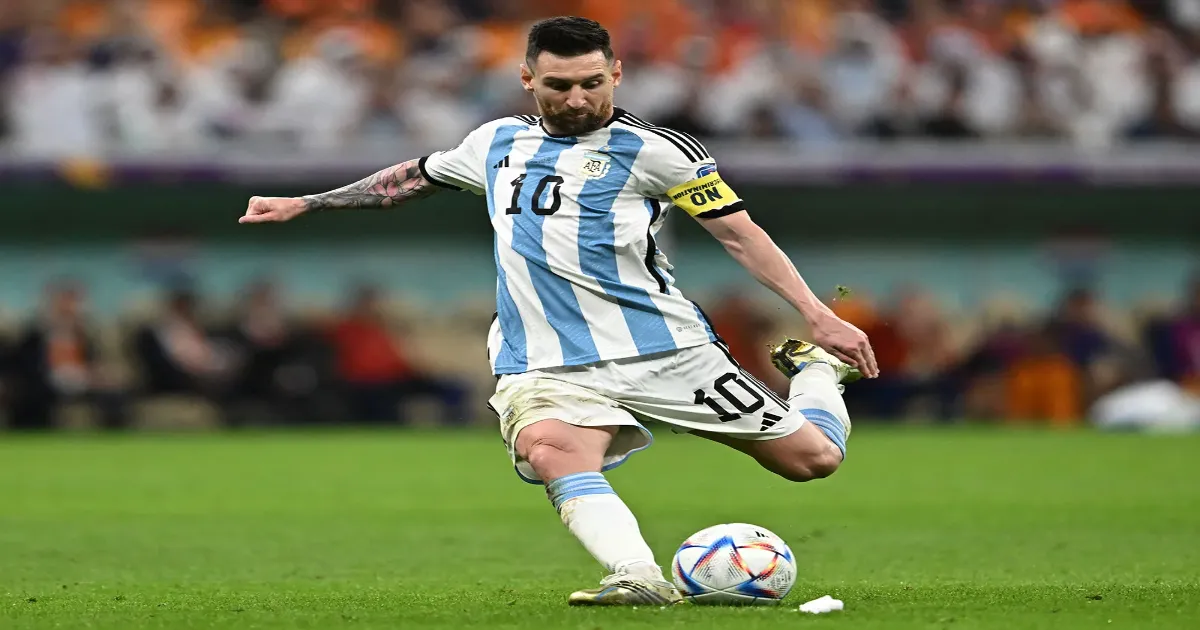
Lionel Messi’s 2026 World Cup campaign added another extraordinary chapter to one of football’s greatest international careers. At 39, Messi entered what became his sixth and final World Cup with a collection of records already attached to his name. By the time Argentina’s tournament ended, his legacy had grown even further.
The most remarkable achievement was his scoring streak. Messi became the first player in World Cup history to score in nine consecutive matches, extending a run that began during Argentina’s triumphant 2022 campaign and continued throughout the 2026 tournament.
The achievement was not simply about longevity. Messi continued producing decisive moments at an age when most elite players have already left international football behind.
Thiago Messi: Club Career, Playing Style, Lifestyle and Future Prospects
Argentina’s Rebuild After Messi Begins Now
How Spain Stopped Lionel Messi | StrikerReport
Messi’s World Cup Scoring Streak Reaches Nine Matches
Before 2026, the longest scoring streak in World Cup history stood at six consecutive matches. France’s Just Fontaine achieved the feat during the 1958 tournament, while Brazil’s Jairzinho matched it in 1970.
Messi had already joined that exclusive group during Argentina’s 2022 World Cup campaign.
He then went beyond it in 2026.
Messi scored in Argentina’s group-stage finale against Jordan, extending his scoring run to seven consecutive World Cup appearances. He followed that with another goal against Cape Verde in the Round of 32, taking the streak to eight.
His goal against Egypt in the Round of 16 pushed the sequence to nine consecutive World Cup matches.
That made Messi the outright record holder for consecutive World Cup appearances with a goal, moving three matches beyond the previous six-match benchmark.
What makes the achievement particularly remarkable is that the streak spans two World Cups rather than occurring entirely inside one tournament.
Fontaine’s six-match streak came during France’s extraordinary 1958 campaign. Jairzinho’s six came during Brazil’s victorious 1970 tournament. Messi’s nine, however, stretched from Argentina’s 2022 title-winning run into the 2026 competition.
Messi’s World Cup Goal Record
Messi also finished the 2026 World Cup as the tournament’s all-time leading scorer.
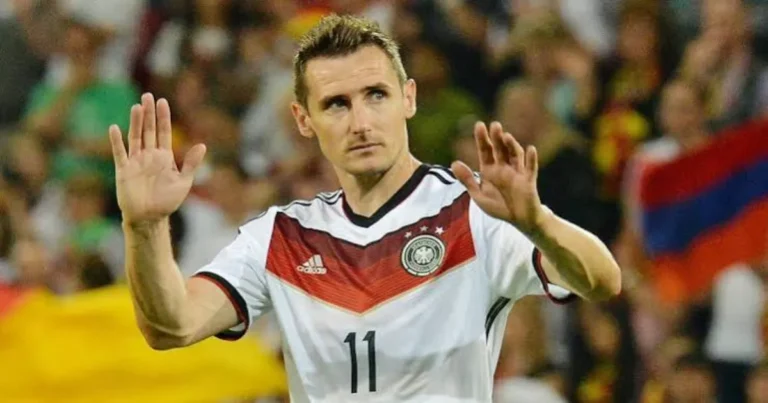
Before the competition began, he had already established himself among the greatest World Cup goalscorers ever. His continued scoring pushed him beyond Miroslav Klose’s previous benchmark of 16 goals.
Messi finished the tournament with 21 World Cup goals, giving him a five-goal advantage over Klose.
The gap is significant because World Cup opportunities are limited. Players generally receive only four or five tournaments during their careers, making Messi’s six-tournament scoring longevity exceptionally difficult to reproduce.
The all-time leaderboard now reads:
| Rank | Player | Country | World Cup Goals |
|---|---|---|---|
| 1 | Lionel Messi | Argentina | 21 |
| 2 | Miroslav Klose | Germany | 16 |
| 3 | Ronaldo Nazário | Brazil | 15 |
| 4 | Gerd Müller | West Germany | 14 |
| 5 | Just Fontaine | France | 13 |
Messi’s five-goal advantage over Klose means his record is likely to remain one of the most difficult World Cup scoring marks to break.
Messi’s Single-Tournament Scoring Mark
Messi’s 2026 tournament also produced one of the highest scoring totals ever recorded by an Argentine player at a single World Cup.
His eight goals drew him level with Guillermo Stábile’s legendary total from the inaugural 1930 tournament.
Stábile scored eight times in 1930, when the World Cup consisted of only 13 participating teams and Argentina played four matches.
Messi reached the same total across the much larger modern tournament, making the comparison between eras difficult but historically significant.
Brazilian striker Ademir’s nine goals from the 1950 World Cup remain another important benchmark for South American players.
The Knockout-Stage Scoring Record
Messi’s consistency becomes even more impressive when the competition is narrowed to knockout football.
The knockout stage provides almost no room for error. Teams become more conservative, defensive structures become tighter and every mistake can end a tournament.
Lionel Messi World Cup 2026 Inspiration: The Legacy That Inspired a Generation
Messi vs Yamal: One Last Master Against Football’s Future
Yet Messi established a record by scoring in six consecutive World Cup knockout-stage matches.
The sequence stretches across Argentina’s 2022 triumph and the 2026 tournament.
Before Messi, Hungary’s György Sárosi and Brazil’s Vavá had recorded five-match knockout scoring streaks across different World Cups.
Messi moved beyond both.
Messi’s World Cup Appearance Record
Goals were only part of Messi’s statistical dominance.
He also finished 2026 as the player with the most World Cup appearances in history.
Messi surpassed Lothar Matthäus’ previous record during the tournament and finished with 31 World Cup appearances.
His six World Cup appearances also underline the extraordinary length of his international career.
Messi first appeared at a World Cup in 2006 as a teenager. Twenty years later, he was still playing on the world’s biggest football stage.
The appearance leaderboard following the 2026 tournament:
| Rank | Player | Country | Appearances |
|---|---|---|---|
| 1 | Lionel Messi | Argentina | 31 |
| 2 | Cristiano Ronaldo | Portugal | 25 |
| 2 | Lothar Matthäus | Germany | 25 |
| 4 | Miroslav Klose | Germany | 24 |
| 5 | Paolo Maldini | Italy | 23 |
Messi’s advantage at the top is substantial, particularly considering that Ronaldo and Matthäus both required lengthy international careers to reach 25 appearances.
Six World Cups: Messi’s Extraordinary Longevity
Messi’s World Cup career now spans:
- 2006 — Germany
- 2010 — South Africa
- 2014 — Brazil
- 2018 — Russia
- 2022 — Qatar
- 2026 — North America
Across those six tournaments, Messi experienced almost every possible emotion.
There was the excitement of a teenage debut in 2006.
There were disappointing exits in 2010 and 2018.
There was the heartbreak of the 2014 final defeat to Germany.
There was the disappointment of Argentina’s early elimination in 2018.
Then came redemption in Qatar in 2022, when Messi finally lifted the World Cup after Argentina defeated France in the final.
The 2026 tournament therefore represented something different. It was not about proving that Messi could win the World Cup anymore. That had already been accomplished.
Instead, it became the final chapter of his World Cup statistical legacy.Messi to Saka: Every Hat-Trick Scored at FIFA World Cup 2026
Messi Versus Klose: Two Different Models of World Cup Greatness
Miroslav Klose’s previous scoring record was built around remarkable tournament consistency.
The German striker appeared at four World Cups between 2002 and 2014 and scored at every tournament.
Messi’s record has been built differently.
Rather than maximizing goals during a small number of tournaments, he combined longevity, playmaking and scoring across six separate World Cups.
Klose finished with 16 goals.
Messi finished with 21.
That difference reflects not only Messi’s scoring ability but also his extraordinary ability to remain internationally relevant for two decades.
The Messi and Mbappé Record Battle
If any active player has the profile to eventually challenge Messi’s World Cup scoring record, it is Kylian Mbappé.
Mbappé has already established himself as one of the most prolific World Cup scorers of his generation, while his age gives him the opportunity to participate in several more tournaments.
But Messi’s 21-goal benchmark represents an enormous challenge.
To catch him, a future player would need to combine elite scoring numbers with exceptional longevity and remain healthy enough to participate in multiple World Cups.
Even a striker capable of scoring five goals per tournament would need several tournaments to close the gap.
That is what makes Messi’s record so formidable.
Why Messi’s Records Are So Difficult to Break
The World Cup does not provide players with many opportunities.
Unlike club football, where a prolific striker can play 50 or 60 matches in a season, international players have only a limited number of World Cup fixtures.
A player also needs to qualify for multiple tournaments.
Then comes the challenge of remaining in the national team.
Finally, the player needs to score consistently.
Messi managed to combine all four.
He remained Argentina’s key player across six World Cups, while continuing to contribute goals and assists well into his late thirties.
That combination may be the most difficult part of his legacy to reproduce.
Messi’s Final World Cup Legacy
Messi’s World Cup career ultimately became much more than a collection of numbers.
He won the tournament.
He won the Golden Ball.
He became Argentina’s all-time World Cup scoring leader.
He became the tournament’s all-time leading scorer.
He became the player with the most World Cup appearances.
And in 2026, he established the longest scoring streak in World Cup history.
His six-tournament journey also transformed the narrative surrounding his international career.
For years, critics pointed toward the lack of a World Cup title. After Qatar 2022, that argument disappeared.
By 2026, the conversation was no longer about what Messi had failed to achieve.
It was about how many records he could leave behind.
The Lasting Significance of Messi’s World Cup Record Streak
Messi’s World Cup Record Streak ultimately became one of the defining statistical achievements of his international career. Scoring in nine consecutive World Cup matches, while simultaneously holding the tournament’s appearance and career-goals records, illustrates an extraordinary combination of talent, consistency and longevity.
The streak began in one World Cup and continued into another, surviving four years, different opponents and the natural decline that normally accompanies a player’s late career.
At 39, Messi finished his World Cup journey having moved the statistical boundaries of the tournament once again.
His records will eventually be challenged. Football always produces another generation of extraordinary players.
But breaking what Messi established in 2026 will require far more than scoring goals.
It will require a player capable of remaining elite, healthy and decisive across multiple World Cups — and then finding the net again and again when the entire football world is watching.
That is why Messi’s final World Cup record book may remain untouched for generations.
Cristiano Ronaldo Jr.: Club, Lifestyle, Career and Future Prospects
🔹🔹 Follow Us on Facebook 🔹🔹
About the Author


1 thought on “Messi’s World Cup Record Streak: Nine Straight Matches and the Milestones Still Falling”