MEXICO CITY — The whistle blows on June 11 at the Estadio Azteca, and 87,000 souls roar as Mexico face South Africa to open the 2026 FIFA World Cup. It is not merely a football match. It is a reckoning.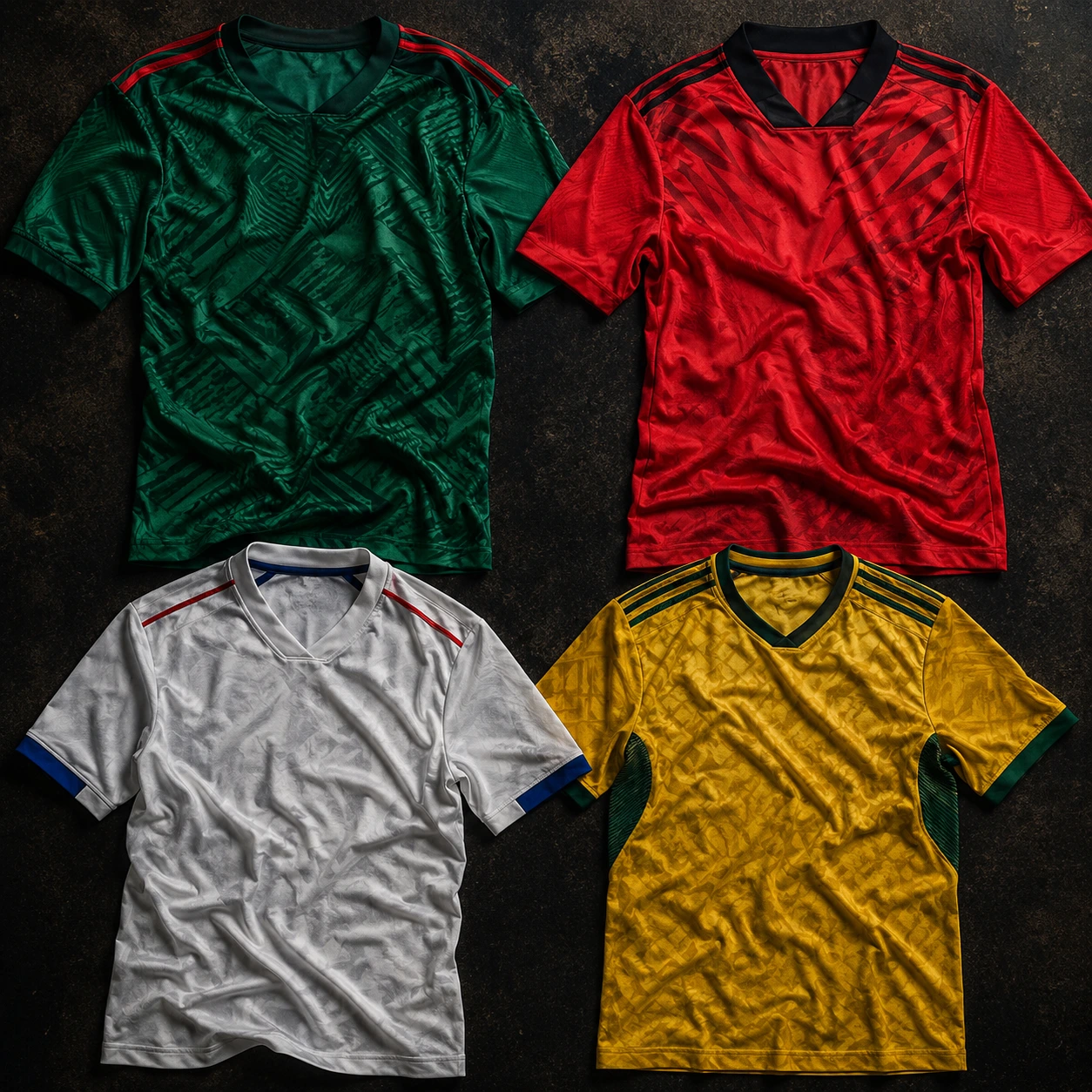
Sixteen years after South Africa hosted the World Cup and drew 1-1 with Mexico in the tournament’s famous opening game, the two sides meet again — this time with El Tri as a co-host, carrying the dreams of an entire continent on their backs. Group A FIFA World Cup 2026 is the first chapter of the most expanded World Cup in history, and from the very first kick, it promises theatre.
The group features four nations with radically different stories: Mexico, the co-host desperate to finally break past the round of 16 after seven consecutive failures; South Korea, potentially in the twilight of Son Heung-min’s World Cup career; Czechia, a European qualifier who got here through two penalty shootouts in five days; and South Africa, the continent’s proud returnee making their first World Cup appearance in 16 years.
Mexico: Home Is Everything — and That’s the Problem
Javier Aguirre has managed Mexico three times. He has seen the highs and the lows. But nothing in his career has prepared him — or the country — for what awaits this summer.
The numbers tell a damning story. Mexico have reached the round of 16 in seven consecutive World Cups and exited each time. El quinto partido — the fifth match, the quarterfinal — has become Mexican football’s white whale. Now, with a home crowd, home altitude, and home emotion, the expectation is not merely to progress. It is to go further than any Mexican team has gone since 1986.
Aguirre has done genuine work to rebuild the squad after the disarray of Qatar. Back-to-back CONCACAF titles, including the Nations League in March 2025 and the Gold Cup in July, gave the team belief. A 0-0 draw with Portugal at the reopened Azteca in March 2026 — achieved without striker Santiago Gimenez and several other starters — showed defensive resilience that hadn’t been seen from Mexico in years.
The attack centers on Raúl Jiménez and Hirving Lozano, veterans who know what is at stake. Edson Álvarez anchors the midfield. Guillermo Ochoa, ageless and theatrical, commands the goal. But the real question is whether Mexico can handle the psychological pressure of playing every group game as a must-win occasion while their opponents remain loose and dangerous.
Verdict: Mexico are the heavy favorites to win the group — but pressure is a currency that devalues quickly in tournament football.
South Korea: One Last Ride for a Generation
When Son Heung-min walks onto the pitch in Guadalajara on June 11 against Czechia, he will almost certainly be playing in his final World Cup. The captain, who has scored 54 goals for his country, carries the emotional weight of Korean football’s greatest generation.
But Son is not alone. Lee Kang-in of PSG brings creativity and an eye for goal — 30 goals in 28 international matches — while Kim Min-jae of Bayern Munich provides the defensive backbone that coach Hong Myung-bo depends upon. Hong, a legendary former captain himself, has built this squad around tactical discipline, going unbeaten through Asian qualifying and topping their group with 22 points and a +17 goal differential.
MLS 2026: Season Preview, Top Players & Why Soccer Is Exploding in America
South Korea’s method is defined and repeatable: defensive compactness, pressure on the ball in midfield, and rapid transitions that expose tired fullbacks. They will not outpossess Mexico. They will not try to. What they will do is wait, defend with organization, and punish mistakes — a style that has carried them to the Round of 16 in three of the past six World Cups.
The Mexico vs. South Korea clash on Matchday 2, set for June 18 at Estadio Akron in Guadalajara, could functionally decide who tops the group. The Taeguk Warriors are priced at +400 to win Group A — but their record in high-stakes matches suggests that number underestimates them considerably.
Verdict: South Korea are the most likely team to finish second, and a legitimate threat to go deeper if they survive the group.
Czechia: Shootout Survivors With a Plan
No team in Group A arrived at the 2026 FIFA World Cup by a stranger route. Czechia qualified through two penalty shootouts in five days — beating Ireland and then Denmark in the UEFA playoffs — and did so under a 74-year-old coach, Ivan Hasek, who took the job just days before those matches began.
What those playoff nights revealed, though, was not a team running on luck. Czechia scored more set-piece goals than any other European nation across the entire qualifying cycle — eight in total. When the pressure was maximum, they found a way to score from corners, free kicks, and dead-ball situations. Defender Ladislav Krejci’s equalizing headers and Patrik Schick’s composure from the penalty spot were not accidents. They were the expression of a tactical system built around exactly those moments.
Patrik Schick remains one of the most clinical strikers in international football when fit. Tomas Soucek brings physicality and leadership in midfield. Matej Kovar, now at PSV Eindhoven, was the hero of qualifying with his penalty saves and projects as one of the better goalkeepers in the group stage.
Coach Hasek has settled into either a 4-2-3-1 or 3-4-2-1 depending on the opponent, with Soucek as the engine and Schick as the focal point. They do not play beautiful football. They play winning football. And in a group without a generational powerhouse, that can be enough.
Verdict: Czechia are the dark horse of the group — disciplined, dangerous at set pieces, and perfectly capable of catching South Korea or Mexico on an off day.
South Africa: Africa’s Wild Card
South Africa have not appeared at a World Cup since they hosted the tournament in 2010. Their return — and the fact that they return to face the same opponent, Mexico, in a tournament opener — carries a symmetry that feels almost scripted.
Coach Hugo Broos has spent four years building something coherent. Ronwen Williams is a world-class goalkeeper. Teboho Mokoena anchors the midfield with intelligence and range. Oswin Appollis and Relebohile Mofokeng provide wide energy and pace that can trouble any defensive structure. Lyle Foster leads the line.
Bafana Bafana’s strength lies in their counter-attacking structure and their ability to exploit space immediately after winning possession. They are not a team that will come to Azteca and dominate territory. But they are a team that can absorb pressure, stay organized, and punish a single lapse of concentration.
South Africa enter as the group’s likely bottom finishers at +1600 odds — but in an expanded 48-team tournament where the eight best third-placed teams advance, even a couple of draws could be enough to extend their campaign.
Verdict: South Africa will not win the group. But they can spoil a result for any of the other three, and in a tight table, that spoiler role can reshape everything.
Group A FIFA World Cup 2026
| Matchday | Date | Match | Venue |
|---|---|---|---|
| MD1 | June 11 | Mexico vs. South Africa | Estadio Azteca, Mexico City |
| MD1 | June 11 | South Korea vs. Czechia | Estadio Akron, Guadalajara |
| MD2 | June 18 | Czechia vs. South Africa | Mercedes-Benz Stadium, Atlanta |
| MD2 | June 18 | Mexico vs. South Korea | Estadio Akron, Guadalajara |
| MD3 | June 24 | Czechia vs. Mexico | Estadio Azteca, Mexico City |
| MD3 | June 24 | South Africa vs. South Korea | Estadio BBVA, Monterrey |
Head-to-Head History at a Glance
The history between these four nations adds texture to what’s coming. Mexico have beaten South Korea twice at World Cups — 3-1 in 1998 and 2-1 in 2018 — though their most recent meeting in 2025 ended 2-2. Mexico and Czechia’s World Cup history is famously peculiar: Czechoslovakia scored after just 15 seconds in 1962 — the second-fastest goal in World Cup history — only for Mexico to recover and win 3-1. South Africa and Mexico’s last competitive meeting was that 1-1 draw in the 2010 opening game, a result that still lives in South African football memory.
South Africa and South Korea have only met three times, most recently a 2-1 South Korean win in a 2016 friendly. This is the first time South Korea and Czechia have ever faced each other. The Estadio Azteca may feel like familiar turf for Mexico — but the opposition know enough about this stage to cause discomfort.
The Bigger Picture: What Does Group A Tell Us About This World Cup?
The 2026 FIFA World Cup is the first to feature 48 teams. That means 12 groups instead of eight, a new Round of 32, and a tournament that expands the margins for underdogs. The top two teams from each group advance automatically, as do the eight best third-placed finishers — meaning a team can finish third in Group A and still be alive heading into the knockout stages.
That format change hangs over every game in this group. A third-place team that accumulates six points from three matches could advance. A team that beats a co-host in the opener could set off a chain reaction that reshapes qualification. South Africa, in theory, could lose to Mexico and still qualify. Czechia could win the group. Any of these outcomes is mathematically live.
What makes this group compelling is not that it contains the best teams in the tournament — it doesn’t. What makes it compelling is that no team in it can afford to be complacent, and no team in it is guaranteed anything.
🏁 Final Prediction
1️⃣ Group Winner: Mexico
2️⃣Runner-Up: South Korea
3️⃣Dark Horse: Czechia
4️⃣Wildcard Warning: South Africa
The Azteca will open this World Cup louder than almost any stadium on earth. Mexico will manage the group. But the margin between second and third in this group may come down to a single goal, a single set piece, or a single moment of individual brilliance. In Group A of the 2026 FIFA World Cup, anything less than full focus — from any team — will cost dearly.
Analysis by StrikerReport.com. Odds and match data sourced from trusted platforms as of May 2026. Spot an error? Let us know.Follow us on Facebook
About the Author