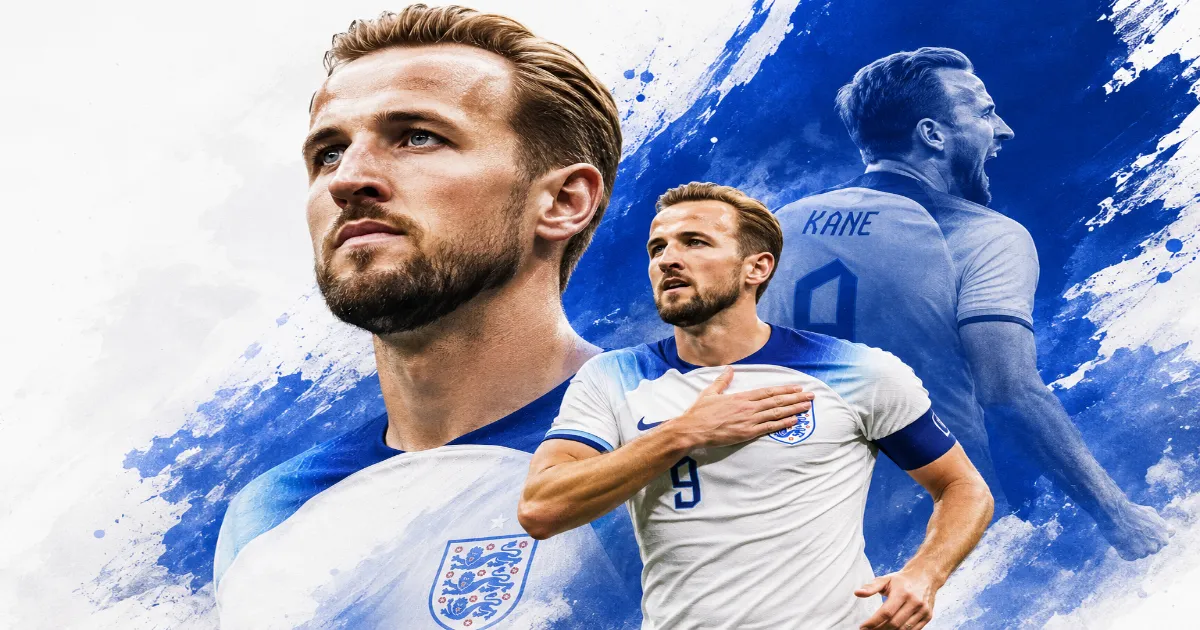
Harry Kane: Career, Records, 2026 World Cup Performance and What Comes Next
Few careers in modern football tell a story quite like Harry Kane’s. Released by Arsenal’s academy as a boy, sent on four loan spells before establishing himself at Tottenham, and criticised for years for producing goals without trophies, Kane eventually reinvented himself in Germany.
At Bayern Munich, the England captain transformed the narrative around his career. The goals continued, the trophies finally arrived, and Kane became one of the most productive strikers of his generation.
15 Champions League Players to Watch in 2026/27: Superstars & Young Guns
LaLiga 2026/27 Schedule: Fixtures, Dates & Times
His 2026 FIFA World Cup campaign added another chapter. England reached the semifinals before losing 2-1 to eventual champions Argentina, then defeated France 6-4 in a spectacular bronze-medal match to finish third — England’s best World Cup finish since 1966.
Now, with the 2026 World Cup over, Kane’s attention turns back to Bayern Munich and the 2026-27 season, where Bundesliga success, the DFB-Pokal and especially the Champions League remain major targets.
Early Life and the Long Road Through Loan Spells
Harry Edward Kane was born on 28 July 1993 in Walthamstow, London. He began playing football at Ridgeway Rovers before joining Arsenal’s academy, where he was eventually released. He later spent time in Watford’s youth system before making his way to Tottenham Hotspur.
Kane’s route to first-team football was anything but straightforward.
He was loaned to Leyton Orient, Millwall, Norwich City and Leicester City before finally establishing himself at Tottenham. That journey is an important part of his career because Kane was not an overnight superstar. He repeatedly had to prove that he belonged at the highest level.
His development was gradual, but once the breakthrough came, his goalscoring numbers became extraordinary.
Tottenham Hotspur: Becoming a Club Legend
Kane established himself as a regular Tottenham first-team player during the 2014-15 season. From that point, he developed into one of the Premier League’s most reliable goalscorers.
He won the Premier League Golden Boot twice, became Tottenham’s all-time leading scorer and eventually finished his Spurs career with 280 goals in 435 appearances across all competitions.
He also helped Tottenham reach the 2019 Champions League final, although Spurs lost 2-0 to Liverpool.
The biggest missing piece was silverware.
Despite scoring at an extraordinary rate for almost a decade, Kane left Tottenham without a major trophy. That became one of the defining debates surrounding his career.
Bayern Munich: The Trophy Era Begins
In August 2023, Kane moved to Bayern Munich, ending his long association with Tottenham.
The move immediately changed the expectations surrounding his career.
In his first Bundesliga season, Kane scored 36 goals in 32 appearances and won the European Golden Shoe. He also scored eight goals in the Champions League.
The trophies eventually followed.
Kane won the Bundesliga title with Bayern in 2024-25 and followed it with another Bundesliga championship in 2025-26. He also continued to dominate the individual scoring charts, demonstrating that moving into his thirties had done little to reduce his effectiveness.
By August 2026, Kane had reportedly scored 146 goals in 147 appearances for Bayern, including 98 Bundesliga goals in 94 matches. His contract with Bayern runs until 2027, although speculation about his long-term future continues.
The Champions League, however, remains the major prize missing from his club collection.
England Captain and All-Time Record Goalscorer
Kane made his senior England debut in March 2015 and scored only 79 seconds after coming off the bench against Lithuania.
He became England captain in 2018 and eventually overtook Wayne Rooney to become the national team’s all-time leading goalscorer.
By the 2026 World Cup, Kane had moved beyond 80 senior international goals, establishing a record that could remain difficult for future England forwards to challenge.
His international career has now included four major tournament cycles, with his World Cup record becoming one of the strongest individual records in English football.
Harry Kane’s World Cup Performance
Kane’s World Cup story began at Russia 2018.
2018 World Cup: Golden Boot Winner
At just 24, Kane captained England at the 2018 World Cup in Russia.
He scored six goals, including a hat-trick against Panama, and won the Golden Boot as England reached the semifinals.
England ultimately lost to Croatia in extra time, but the tournament established Kane as one of the world’s elite strikers.
2022 World Cup: Goals and the France Penalty
Four years later in Qatar, Kane scored twice.
His goals included a crucial strike against Senegal in the round of 16, but the tournament is remembered for the quarterfinal against France.
Kane scored from one penalty but missed another late in the match as England were eliminated 2-1.
That penalty became one of the most painful moments of his international career.
2026 World Cup: Six Goals and England’s Best Finish Since 1966
The 2026 World Cup became another major chapter in Kane’s international career.
He opened England’s campaign with two goals against Croatia, including a retaken penalty after his first attempt was saved.
He then scored a header against Panama before producing one of the tournament’s defining individual performances against Congo DR.
With England facing the danger of a shock elimination, Kane scored twice in ten minutes, both headers, to turn the match around.
He subsequently scored the decisive penalty against Mexico in the round of 16 as England progressed to the quarterfinals.
Those performances took Kane to six goals at the 2026 World Cup and his career World Cup total to 14 goals. His Panama goal also moved him beyond Gary Lineker as England’s leading World Cup goalscorer.
England eventually lost 2-1 to Argentina in the semifinal. Kane and Jude Bellingham were then rested for the third-place playoff, where England defeated France 6-4 in Miami.
The victory gave England their best World Cup finish since winning the tournament in 1966 and their best-ever finish on foreign soil. (
Although Kane did not add to his scoring total in the bronze-medal match, his six-goal tournament represented one of the strongest individual World Cup campaigns of his career.
Kane’s World Cup Record at a Glance
2018: 6 goals, Golden Boot, semifinal
2022: 2 goals, quarterfinal
2026: 6 goals, semifinal, England finished third
Career World Cup goals: 14
England’s all-time World Cup leading scorer
2018 World Cup Golden Boot winner
His 14 World Cup goals place him among the most prolific scorers in tournament history.
Records at a Glance
Kane’s career résumé now includes:
Tottenham’s all-time leading goalscorer: 280 goals
England’s all-time leading goalscorer
England’s all-time leading World Cup goalscorer
14 World Cup goals
2018 World Cup Golden Boot
Multiple Premier League Golden Boots
European Golden Shoe winner
Back-to-back Bundesliga titles with Bayern Munich
Bundesliga top scorer across his first two seasons at Bayern
Fastest player to reach ten Bundesliga hat-tricks
More than 20 Champions League goals for both Tottenham and Bayern
One of England’s most prolific international goalscorers
Kane’s Playing Style and Reinvention
What separates Kane from many traditional number nines is the evolution of his game.
Early in his Tottenham career, he was primarily a penalty-box striker and target man. His finishing, movement and aerial ability made him extremely difficult to defend.
Over time, however, Kane developed into a much more complete forward.
He began dropping deeper, connecting midfield with attack, creating chances for teammates and effectively operating as a playmaker while still maintaining elite goalscoring numbers.
At Bayern, that combination has become one of his greatest strengths.
He can score with either foot, attack crosses, finish from distance, hold the ball up, take penalties and create opportunities for teammates.
His headers at the 2026 World Cup against Panama and Congo DR demonstrated that his aerial ability remains one of his most dangerous weapons.
Inspiration for the Next Generation
Kane’s career is particularly inspiring because his rise was not straightforward.
He was released by Arsenal.
He endured four loan spells.
He spent years at Tottenham without winning a major trophy.
He faced repeated criticism over whether individual statistics could compensate for the absence of silverware.
Instead of allowing those setbacks to define him, Kane continued improving.
His move to Bayern finally brought the trophies that had been missing from his résumé. His story demonstrates that development does not always happen at the same speed for every player.
For young footballers, Kane’s career offers a valuable lesson: patience, professionalism and continuous improvement can eventually overcome a difficult start.
What’s Next for Harry Kane?
The next stage of Kane’s career is already taking shape.
At Bayern Munich, his immediate focus is the 2026-27 season.
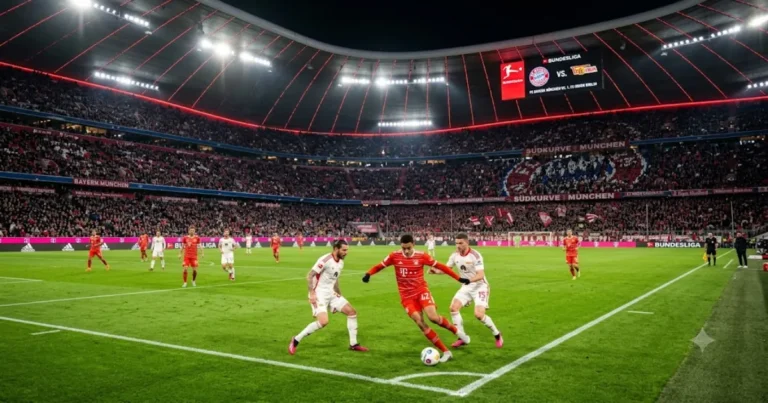
Bayern’s 2026-27 campaign includes the Bundesliga, DFB-Pokal, Champions League and domestic Supercup. The club’s official schedule lists the Bundesliga title defence, DFB-Pokal fixtures and Champions League campaign among its major competitions.
Kane returned to Bayern training in August after England’s World Cup run and is preparing for the new campaign.
Bundesliga 2026-27
The Bundesliga remains Kane’s most immediate competition.
Bayern are defending their league title, while Kane will once again be expected to lead the attack and challenge for another scoring crown.
The club’s official schedule has Bayern’s Bundesliga campaign beginning at home against VfB Stuttgart on 28 August 2026.
Another Bundesliga Golden Boot would further strengthen Kane’s already extraordinary record in Germany.
Champions League 2026-27
The Champions League is arguably the biggest target of Kane’s next season.
Despite winning domestic trophies with Bayern, he has not yet lifted the European Cup.
That is the obvious missing trophy in his collection.
His Champions League goalscoring record is already elite, but a Champions League triumph would change the way his career is discussed.
For Kane, Bayern’s European campaign could therefore be more important than another individual scoring award.
DFB-Pokal
The German Cup is another opportunity.
Kane has already won Bundesliga titles with Bayern, but success in the DFB-Pokal would add another domestic trophy to his collection.
Bayern’s 2026-27 DFB-Pokal campaign is scheduled to begin against SV Wehen Wiesbaden.
The Franz Beckenbauer Supercup
Bayern’s 2026-27 competitive campaign also includes the Franz Beckenbauer Supercup against Borussia Dortmund, another opportunity for Kane to add silverware..
Will Harry Kane Stay at Bayern Munich?
Kane’s future will be one of the major storylines surrounding his career over the next year.
His Bayern contract expires in 2027, which means the club will eventually have to decide whether to extend his stay or consider his future.
There has also been speculation linking him with a potential move away from Germany, including interest from Saudi Arabia.
However, Kane has recently indicated that he is comfortable at Bayern and that his previous desire to return to the Premier League has become less urgent.
That makes the 2026-27 season particularly significant.
If Kane continues scoring at his current rate, Bayern will have a strong reason to keep him beyond 2027.
What Is Next for Kane With England?
The 2026 World Cup may have been Kane’s final World Cup appearance.
He will be 36 by the time the 2030 tournament arrives, making another World Cup campaign considerably more difficult, even with modern sports science and Kane’s exceptional fitness record.
For now, however, his international career continues.
After England’s third-place finish in 2026, the next major international cycle will build toward the UEFA European Championship 2028.
The bigger question will be whether Kane remains England captain and first-choice striker through that cycle.
His experience, leadership and goalscoring record make him an obvious candidate, although England’s younger attacking generation will increasingly challenge for minutes.
The Final Chapter Has Not Arrived Yet
At 33, Kane is no longer the young striker who broke through at Tottenham.
But his performances in Germany and at the 2026 World Cup suggest that his decline is not yet the dominant story.
Instead, Kane continues to evolve.
He has gone from an academy release to a Premier League legend, from a Tottenham superstar without trophies to a Bundesliga champion, and from a talented England striker to the country’s all-time leading goalscorer.
His 2026 World Cup campaign added six more goals and another historic milestone, while England’s third-place finish gave the captain his country’s best World Cup result in 60 years.
Now the focus shifts back to Bayern Munich.
Another Bundesliga title, a DFB-Pokal triumph and, above all, a Champions League victory could define the final phase of Kane’s club career.
And if he eventually leaves Bayern in 2027, he may do so with very few meaningful achievements left to chase.
The goals have never stopped.
The trophies have finally arrived.
And Harry Kane still has time to add another chapter.
🔹🔹 follow us on facebook 🔹🔹
About the Author