Iran vs New Zealand Match Analysis: FIFA World Cup 2026 Group G – Iran 2-2 New Zealand
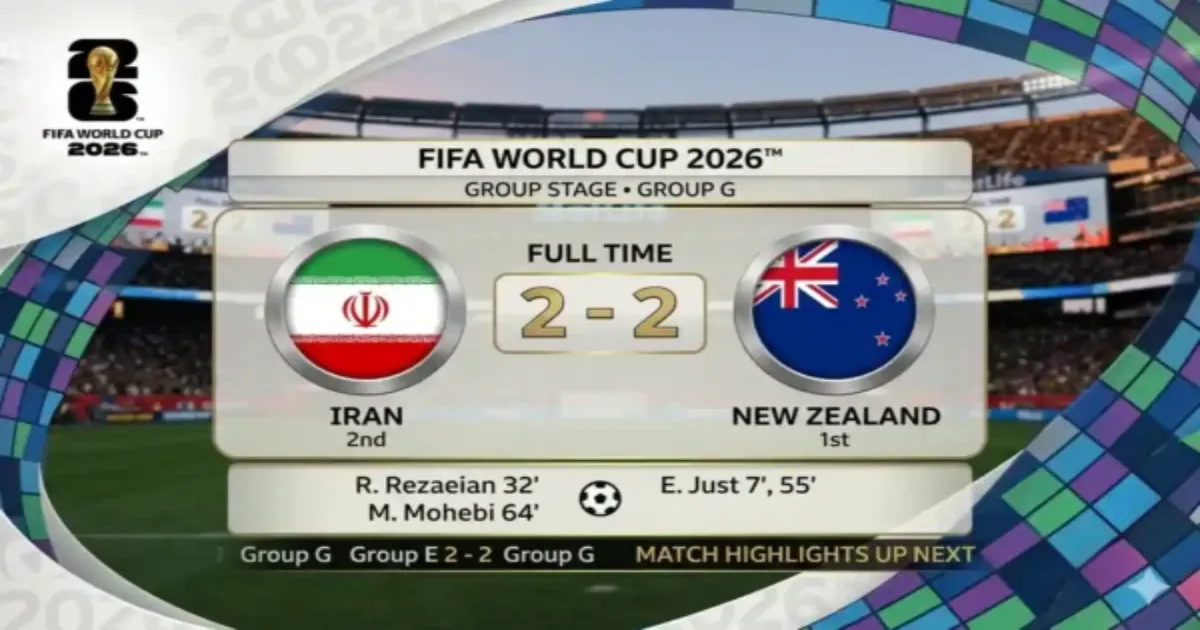
The FIFA World Cup 2026 delivered another captivating contest on Monday night as Iran and New Zealand battled to a dramatic 2-2 draw in their opening Group G fixture at Los Angeles Stadium. In a match that featured momentum swings, attacking football, and moments of individual brilliance, both nations left the field believing they could have claimed all three points.VAR Decisions That Changed the Tournament: The Full Story
World Cup 2026 VAR Controversy: Red Cards, Reversed Bans, and FIFA’s Biggest Decisions
New Zealand twice took the lead through an outstanding brace from Elijah Just, but Iran responded on both occasions through experienced captain Ramin Rezaeian and winger Mohammad Mohebbi. The result mirrored the earlier Group G encounter between Belgium and Egypt, which also ended in a draw, leaving all four teams level on one point after the first round of matches.
For Iran, the match demonstrated the resilience and experience that have made them one of Asia’s most consistent World Cup participants. For New Zealand, it was evidence that the Oceania representatives belong on football’s biggest stage after producing one of their strongest World Cup performances in modern history.
Fast Start Shocks Iran
The opening exchanges suggested Iran would control proceedings. Amir Ghalenoei’s side entered the tournament with greater World Cup experience and a squad featuring several players accustomed to competing at the highest levels of European and Asian football.
However, New Zealand stunned their opponents inside the opening minutes.
Chris Wood, the experienced captain and Premier League veteran, showcased exactly why he remains the focal point of the All Whites attack. Holding up play effectively, Wood created space before providing the platform for Elijah Just to strike. The winger finished confidently to hand New Zealand an early advantage and silence a large section of Iranian supporters in attendance.
The goal transformed the complexion of the match.
Instead of settling into a cautious rhythm, New Zealand gained confidence and began pressing higher up the pitch. Iran suddenly found themselves forced to chase the game, a situation they had hoped to avoid in what many viewed as their most winnable fixture in Group G.
Iran’s Midfield Takes Control
After the early setback, Iran gradually began asserting control through midfield.
Saeid Ezatolahi and Saman Ghoddos increased the tempo of Iran’s passing, while Mehdi Taremi dropped deeper to link play and create overloads between the lines. The Porto striker’s movement caused significant problems for New Zealand’s defensive structure.
Iran’s tactical adjustment proved effective.
Instead of relying solely on direct service into the box, Team Melli began attacking through the wide areas. Their full-backs pushed forward aggressively, stretching the New Zealand defense and creating opportunities for crosses into dangerous areas.
The pressure eventually paid off.
Veteran captain Ramin Rezaeian arrived at the perfect moment to convert Iran’s equalizer in the 32nd minute. The goal was a reward for Iran’s growing dominance and ensured the sides entered halftime level despite New Zealand’s dream start.
At 1-1, the match felt delicately poised. Iran appeared to have regained momentum, but New Zealand had already shown they possessed enough attacking quality to threaten on the counterattack.
Elijah Just Produces a Career-Defining Performance
If there was one player who elevated himself onto the global stage during this encounter, it was Elijah Just.
The New Zealand winger delivered arguably the finest performance of his international career. His movement, pace, and composure consistently troubled Iran’s backline throughout the evening.
Early in the second half, Just struck again.
Capitalizing on another well-constructed attacking move, he restored New Zealand’s lead and completed a memorable brace. The goal represented a historic achievement for New Zealand football and highlighted the growing quality within Darren Bazeley’s squad.
For a nation still searching for its first World Cup victory, the prospect of defeating one of Asia’s strongest teams suddenly became very real.
New Zealand’s bench erupted in celebration, while Iran faced another significant psychological test.
Experience Helps Iran Fight Back
One of the defining characteristics of successful tournament teams is their ability to respond under pressure.
Iran demonstrated precisely that quality.
Rather than panicking after falling behind for a second time, they continued executing their game plan. Their passing remained patient, and their attacking structure stayed organized.
The equalizer eventually arrived through Mohammad Mohebbi.
The move encapsulated Iran’s persistence and tactical discipline. Rezaeian, already on the scoresheet himself, delivered an excellent ball into a dangerous area, allowing Mohebbi to finish and bring Team Melli level at 2-2.
The goal shifted momentum once again.
Iran sensed an opportunity to complete the comeback, while New Zealand suddenly found themselves defending deeper than they had for much of the match.
Tactical Battle: Contrasting Approaches
One of the most fascinating aspects of this encounter was the contrast in tactical styles.
Iran preferred structured possession.
Their attacks were built through patient circulation of the ball, with Taremi frequently dropping into deeper positions to facilitate progression through midfield. The Iranian full-backs pushed high, creating width and allowing attacking midfielders to drift inside.
New Zealand adopted a more direct approach.
Wood served as the central reference point, winning aerial duels and bringing teammates into play. The All Whites looked particularly dangerous during transitions, where Just’s pace created opportunities behind Iran’s defensive line.
Both strategies proved effective.
Iran enjoyed longer spells of possession and territorial dominance, but New Zealand generated several of the game’s clearest opportunities through quick attacking transitions.
The balance between these approaches helped create an entertaining contest that remained open until the final whistle.
Defensive Questions Remain
While both teams will be pleased with aspects of their attacking play, neither coaching staff will be entirely satisfied with the defensive performance.
Iran conceded twice from situations they would normally expect to manage more effectively.
The communication between central defenders occasionally appeared uncertain, particularly when dealing with New Zealand’s direct balls toward Wood and runners arriving from deeper positions.
New Zealand also displayed vulnerabilities.
Their defensive line struggled to contain Iran’s movement around the penalty area, while Rezaeian and Mohebbi found space too easily during crucial moments.
These defensive concerns will require immediate attention given the challenges awaiting both sides in the remainder of Group G.
Chris Wood’s Influence Beyond Goals
Although Elijah Just earned the headlines, Chris Wood’s contribution deserves equal recognition.
The veteran striker may not have found the net himself, but his influence was enormous.
Wood’s physical presence occupied Iran’s defenders throughout the match. His hold-up play allowed New Zealand to relieve pressure, while his intelligent movement created opportunities for teammates.
The assist for Just’s opening goal showcased the qualities that have made him one of New Zealand’s most important players for more than a decade.
As the tournament progresses, Wood’s leadership and experience could prove invaluable for a squad aiming to make history.
What the Result Means for Group G
The draw leaves Group G perfectly balanced.
Following Belgium’s 1-1 draw against Egypt earlier in the day, all four teams have one point after their opening matches. That scenario ensures every remaining group game carries enormous significance.
Iran will next face Belgium in what could be a defining encounter for their knockout-stage ambitions. The challenge will be considerable, but the character shown against New Zealand suggests they possess the mentality required for high-pressure occasions.
New Zealand, meanwhile, take on Egypt knowing a victory could place them in a strong position to challenge for qualification.
The expanded World Cup format increases the possibility of third-placed teams advancing, meaning every point remains valuable. Neither side damaged their qualification hopes, but both missed an opportunity to take early control of the group.
Key Takeaways
For Iran, the biggest positive was resilience.
Twice they fell behind, and twice they responded. In tournament football, that mentality can often be the difference between elimination and progression. The performances of Rezaeian, Mohebbi, and Taremi provide reasons for optimism moving forward.
For New Zealand, the match represented a statement.
Many observers viewed the All Whites as outsiders entering the tournament. Their display against Iran challenged that perception. Elijah Just emerged as a potential breakout star, while the collective performance reinforced coach Darren Bazeley’s belief that his team can compete with established football nations.
Ultimately, a draw was a fair outcome.
Iran controlled significant portions of possession and demonstrated superior experience in key moments. New Zealand, meanwhile, produced dangerous attacking football and twice earned the lead through their enterprise and execution.
Neither side secured the victory they desired, but both delivered a performance that suggests Group G could become one of the most competitive and unpredictable groups at the FIFA World Cup 2026.
As the tournament moves forward, this 2-2 thriller may be remembered not simply as an entertaining draw, but as the match that revealed just how open the battle for qualification in Group G truly is.
FIFA World Cup 2026 Group H: Spain’s Crown to Lose as Cape Verde, Saudi Arabia, and Uruguay Lurk
🔹🔹 Follow us on Facebook 🔹🔹
About the Author


1 thought on “Iran vs New Zealand: 2-2 Thriller as Both Teams Fight for a Crucial World Cup Point”