 Bundesliga from 1963 to Today
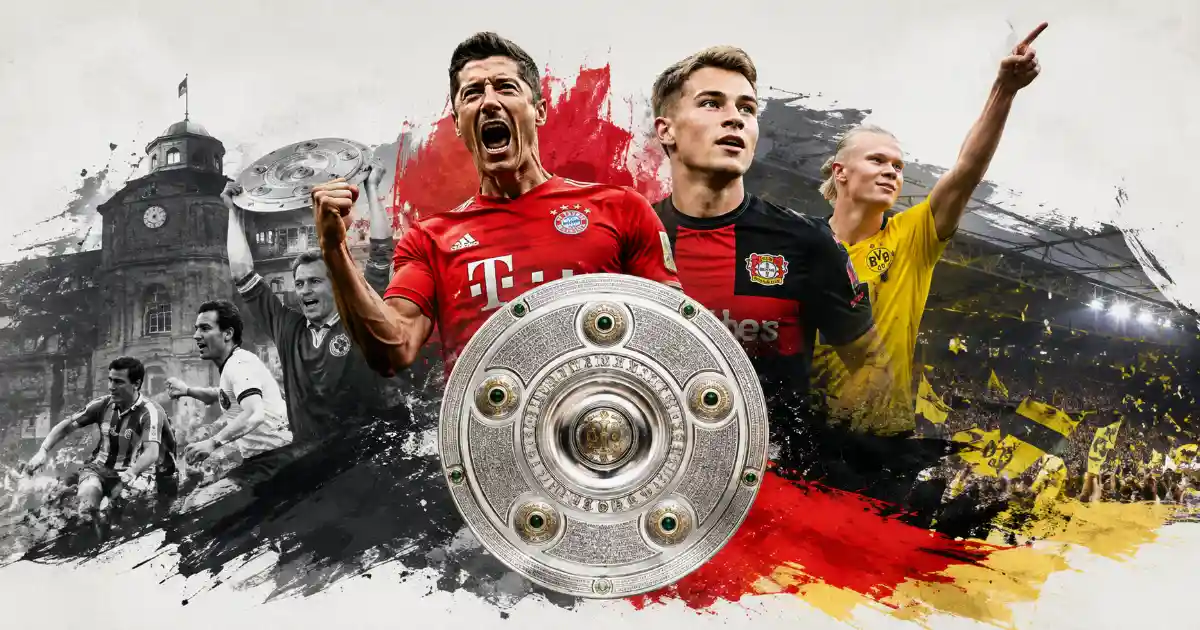
Germany was, remarkably, one of the last major footballing nations in Europe to establish a unified national top-flight league, only launching the Bundesliga in 1963, well over half a century after England’s Football League had already been running. That late start hasn’t stopped the competition from becoming one of the most distinctive and, by several measures, most sustainably run leagues in world football, defined by a unique fan-ownership model, the continent’s highest average attendance figures, and a level of Bayern Munich dominance that remains the league’s single most persistent storyline more than six decades later.
A Late but Deliberate Founding
Before 1963, German football operated through a patchwork of regional Oberligen, regionally organized top divisions that crowned their own separate champions before a national playoff determined an overall German champion each season. This fragmented structure increasingly frustrated German football’s governing body, particularly as West Germany’s national team success, including the country’s shock 1954 World Cup triumph, highlighted a growing gap between the national team’s competitive quality and the comparatively disorganized structure of the country’s actual domestic club competition. The German Football Association formally voted to establish a unified national league in 1962, with the Bundesliga launching its inaugural season in 1963 featuring 16 clubs selected from the strongest regional Oberligen sides, with 1. FC Köln claiming the league’s first-ever championship.
Building the 50+1 Ownership Model
Perhaps the single most distinctive and consequential feature of Bundesliga history is the league’s unique ownership structure, commonly known as the 50+1 rule, which requires that a football club’s members retain majority voting control over their own club, preventing any single external investor from assuming outright ownership control regardless of how much capital they might be willing to invest. This structure, formalized as German football’s clubs gradually professionalized their commercial operations through the 1990s and 2000s, was designed explicitly to preserve clubs’ connection to their local fan membership base and prevent the kind of purely profit-driven ownership takeovers that have become increasingly common across other major European leagues in recent decades.
The rule hasn’t applied uniformly across every Bundesliga club, however, with several notable historical exceptions carved out for clubs whose current corporate ownership structure predated the rule’s formal establishment or met specific longstanding investment criteria. Bayer Leverkusen’s ownership by pharmaceutical giant Bayer AG and Volkswagen’s ownership of VfL Wolfsburg both trace back to a “grandfather clause” recognizing decades of continuous, pre-existing corporate investment in those specific clubs. RB Leipzig’s ownership structure, built around energy drink company Red Bull, has proven considerably more contentious, with the club navigating around the traditional membership voting requirement through an unusually restrictive paid membership scheme that critics have long argued violates the spirit, if not the strict technical letter, of the 50+1 principle, a debate that continues to generate genuine tension within German football’s broader fan and administrative community.
Bayern Munich’s Enduring Dominance
No single institution has shaped Bundesliga history more thoroughly than Bayern Munich, whose sustained success across the league’s entire six-decade existence stands as one of the most complete single-club domestic dominances anywhere in European football. Bayern claimed their 34th Bundesliga championship, and 35th German top-flight title overall counting titles won before the league’s 1963 founding, during the 2025-26 season, clinching the title with four matches still remaining following a decisive 4-2 victory over VfB Stuttgart. That triumph also saw Bayern break their own single-season goalscoring record, finishing the campaign with 122 league goals, powered significantly by English striker Harry Kane’s 36-goal season, itself a new Bundesliga individual scoring benchmark for Kane’s own Bundesliga career.
Bayern’s dominance hasn’t gone entirely unchallenged throughout the league’s history, however, and several significant periods of genuine competitive disruption have punctuated their otherwise near-constant presence at the top of German football. Borussia Mönchengladbach’s remarkable 1970s side won five Bundesliga titles during that single decade, briefly establishing a genuine rival dynasty built around fast, attacking football that stood in direct contrast to Bayern’s more clinically efficient approach during the same era.
Bayer Leverkusen’s Unbeaten Interruption
The most significant recent disruption to Bayern’s dominance arrived during the 2023-24 season, when Bayer Leverkusen, managed by Xabi Alonso, completed an entire Bundesliga campaign without losing a single match, a genuinely historic achievement that finally ended Bayern’s run of eleven consecutive league titles. Leverkusen’s unbeaten title, built around a fluid, aggressive pressing system and a squad featuring emerging stars like Florian Wirtz, was widely celebrated as proof that Bayern’s financial and structural advantages, while considerable, weren’t entirely insurmountable given the right combination of tactical innovation and squad development. That celebration proved relatively short-lived, however, as Bayern reclaimed the title immediately the following season in 2024-25, and again in 2025-26, restoring the pattern of near-total Bayern dominance that has otherwise characterized the overwhelming majority of Bundesliga history since the club’s rise to prominence in the late 1960s and early 1970s.
The Matchday Experience That Sets Germany Apart
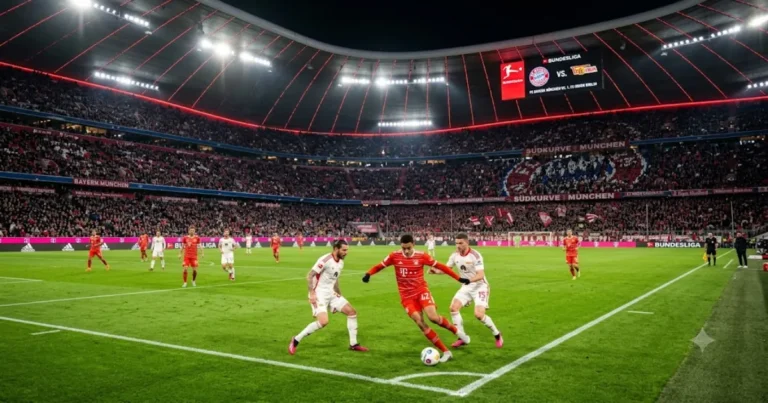
Beyond the title races themselves, the Bundesliga has built a distinctive global reputation around its matchday atmosphere and fan culture, consistently posting the highest average attendance figures of any football league in the world, a status closely tied to the league’s continued preservation of significant standing terrace sections at most stadiums, in contrast to the all-seated stadium requirements that English and several other European leagues have mandated in the decades since the Hillsborough disaster. Borussia Dortmund’s Signal Iduna Park, home to the famous “Yellow Wall” standing terrace capable of holding over 25,000 fans in a single continuous stand, has become one of the most celebrated single sections of any stadium anywhere in world football, frequently cited by international observers as one of the most intimidating and passionate single-stand atmospheres the sport has to offer.
This emphasis on affordable, accessible matchday attendance extends to ticket pricing policy as well, with German clubs generally maintaining considerably lower average ticket prices than their counterparts in the Premier League or La Liga, a direct consequence of the 50+1 ownership structure’s emphasis on member and fan interests over pure profit maximization, even as this pricing approach has occasionally been cited by financial analysts as one factor limiting Bundesliga clubs’ overall matchday revenue compared to leagues charging considerably higher ticket prices for comparable fixtures.
RB Leipzig and the Limits of Rapid Ascent
RB Leipzig’s remarkable rise from a fifth-division club in 2009 to Bundesliga regulars and Champions League contenders within less than a decade represents one of the most rapid institutional transformations in modern European football history, achieved through Red Bull’s substantial financial investment in facilities, scouting, and player recruitment. That rise has remained persistently controversial within German football culture specifically because it appeared to sidestep the collaborative, membership-driven ethos the 50+1 rule was originally designed to protect, with rival fan groups across the league frequently staging protests during matches against Leipzig specifically targeting the club’s ownership structure and rapid, capital-driven ascent through the football pyramid. Leipzig’s continued competitiveness at the top of the Bundesliga table, including sustained Champions League qualification throughout the 2020s, has ensured this tension between traditional German football culture and modern commercial investment remains a persistent, unresolved storyline running through recent Bundesliga history.
A League Still Balancing Tradition and Commerce
More than six decades after its comparatively late 1963 founding, the Bundesliga occupies a genuinely distinctive position among Europe’s major football leagues, having built a reputation for financial sustainability, passionate and affordable matchday attendance, and a fan-ownership model that has largely, if imperfectly, resisted the kind of pure external capital takeovers increasingly common elsewhere in European football. Bayern Munich’s continued, near-total domestic dominance, briefly interrupted but never genuinely threatened by Leverkusen’s historic unbeaten campaign, remains the league’s central and most persistent storyline, even as the broader structural tensions between the 50+1 rule’s traditional membership principles and the commercial ambitions of clubs like RB Leipzig continue to shape ongoing conversations about German football’s future direction. Whatever the outcome of those unresolved structural debates, the Bundesliga’s distinctive combination of sporting history, ownership philosophy, and matchday culture continues to set it apart from every other major European league, a distinctiveness that traces directly back to the deliberate, carefully considered choices made when the competition was first established well over sixty years ago.
How the Bundesliga’s Financial Model Differs From Its Rivals
Beyond the 50+1 ownership rule itself, the Bundesliga has historically maintained a considerably more conservative overall financial culture than several of its major European rivals, with German clubs generally operating under stricter internal debt and spending guidelines enforced through the Deutsche Fußball Liga’s own licensing system. This licensing process requires clubs to demonstrate genuine financial viability before being permitted to compete in the league each season, a structural safeguard that has historically helped the Bundesliga avoid the kind of high-profile insolvency crises that have periodically affected clubs in Italy, Spain, and England over the past several decades. That financial conservatism has occasionally been cited as a contributing factor in Bundesliga clubs’ comparatively more restrained transfer market activity relative to their Premier League counterparts specifically, even as Bayern Munich’s own spending power, bolstered by the club’s outsized domestic revenue advantage, has remained largely unaffected by this broader leaguewide financial caution.
This emphasis on financial sustainability extends to how German clubs generally approach stadium ownership and infrastructure investment as well, with the majority of Bundesliga clubs owning their own stadiums outright rather than relying on municipal or third-party ownership arrangements common elsewhere in Europe, giving German clubs greater long-term control over matchday revenue streams and infrastructure development decisions than many of their continental counterparts currently enjoy.
The National Team Connection
Bundesliga history has also remained closely intertwined with the fortunes of Germany’s national team throughout the league’s six-decade existence, with the domestic competition’s overall health and tactical development frequently cited as a direct contributing factor in the national team’s periodic cycles of international success and disappointment. Germany’s disappointing performance at Euro 2000, where the national team failed to advance past the group stage, directly triggered a sweeping overhaul of the country’s youth academy and coaching development structure, a reform effort explicitly coordinated between the German Football Association and the Bundesliga’s member clubs that eventually produced the talented generation of players who would go on to win the 2014 World Cup, a squad built substantially around Bundesliga-developed talent including Thomas Müller, Toni Kroos, Manuel Neuer, and Mario Götze.
That direct pipeline between Bundesliga youth development and national team success has remained a persistent point of pride within German football’s broader institutional culture, frequently cited by football administrators in other countries studying how a domestic league’s structural priorities can meaningfully shape a national team’s longer-term competitive trajectory, even as more recent German national team struggles at the 2018 and 2022 World Cups have prompted renewed internal debate about whether that same developmental pipeline still functions as effectively as it did during the previous decade’s period of sustained success.
Looking Toward the Bundesliga’s Next Chapter
As the Bundesliga moves further into its seventh decade of existence, the league continues to face genuine structural questions about how to balance its traditional membership-driven ownership philosophy against the growing commercial pressures facing every major European league, from broadcast rights competition to the increasing financial gap separating a handful of Champions League-caliber clubs from the rest of the division. Bayern Munich’s continued, largely uncontested domestic dominance, briefly disrupted but never genuinely threatened long-term by Leverkusen’s historic 2023-24 campaign, suggests that gap shows few signs of narrowing organically within the league’s current structure. Whether the Bundesliga’s distinctive ownership model and financial conservatism continue to serve the league well as European football’s broader financial landscape keeps evolving, or whether growing competitive and commercial pressures eventually force further structural reform, remains one of the more significant open questions shaping German football’s next chapter, one that will likely continue generating genuine debate among fans, clubs, and administrators alike for years to come.
A Model Other Leagues Continue to Study
The Bundesliga’s specific combination of fan ownership, financial discipline, and matchday accessibility has increasingly become a reference point for football administrators and supporter groups in other countries frustrated with the trajectory of their own domestic leagues, particularly amid growing concerns elsewhere in Europe about state-backed ownership, unsustainable debt levels, and rapidly rising ticket prices pricing out traditional working-class fan bases. Supporter movements in England, in particular, have periodically pointed to the 50+1 rule as a potential model for reforming Premier League club ownership, even as the practical and legal challenges of retrofitting such a structure onto leagues that have operated under entirely different ownership norms for decades make any direct adoption of the German model considerably more complicated than simple admiration for its outcomes might suggest.
That ongoing international interest in the Bundesliga’s structural approach, regardless of whether it ever translates into concrete reform elsewhere, speaks to just how significant German football’s specific institutional choices have become within the broader global conversation about football governance, financial sustainability, and the balance between commercial ambition and fan ownership, more than sixty years after those choices were first made when the league launched back in 1963.
▪️▪️ Follow us on Facebook ▪️▪️
Manchester United vs Ipswich Town: Can the Tractor Boys Repeat 1997 History?
15 Champions League Players to Watch in 2026/27: Superstars & Young Guns
About the Author