 Inside the Indian Super League: From Glitzy Experiment to National Institution
How a glitzy, star-studded experiment grew into India’s genuine top-flight football institution, culminating in East Bengal’s emotional 2025-26 title
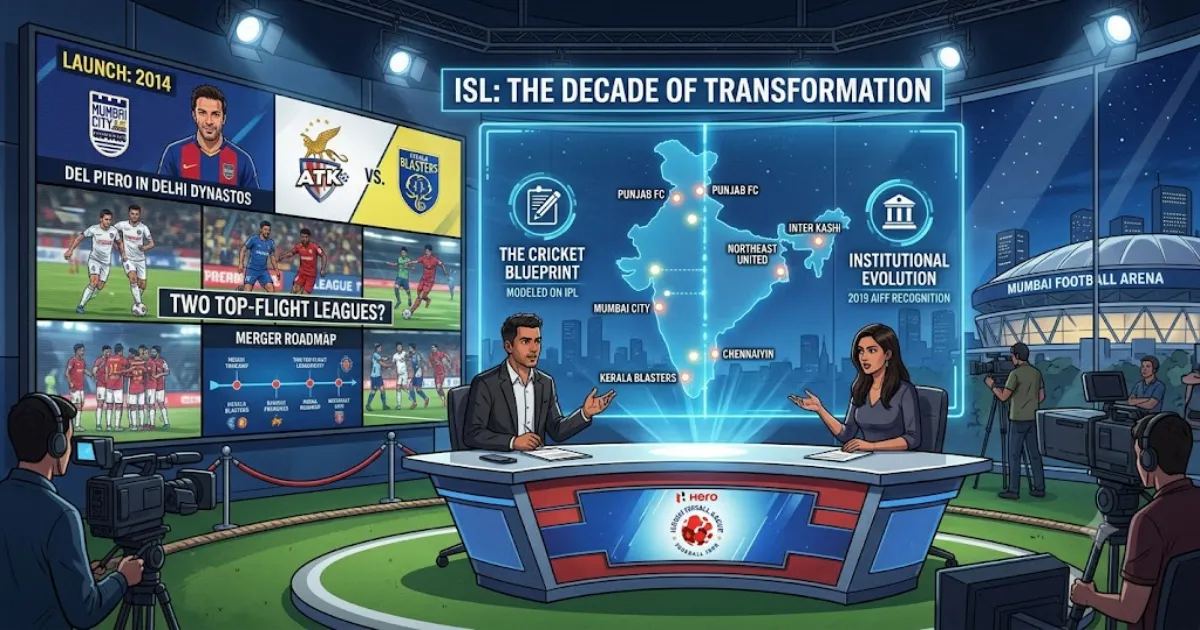
When the Indian Super League launched in 2014, it looked, by design, more like a glitzy entertainment product than a conventional football competition, built around aging international stars and a franchise structure borrowed directly from Indian cricket’s wildly successful Premier League model. More than a decade later, the ISL has evolved into something considerably more substantial: India’s genuine top-flight football institution, one that delivered one of its most emotionally significant title races yet in the 2025-26 season, when East Bengal finally ended a 22-year wait for a national championship. This is the story of how that transformation happened.
Born From a Cricket Blueprint
The Indian Super League’s founding in 2013, with its inaugural season launching in 2014, was a deliberate commercial venture led by IMG-Reliance in partnership with India’s national broadcaster, explicitly modeled on the format and marketing approach that had made the Indian Premier League cricket competition such an enormous commercial success. Rather than building slowly around existing football institutions, the ISL launched with eight entirely new franchises based in major Indian cities, many backed by prominent figures from Indian cricket and Bollywood, a deliberate strategy to leverage star power and existing celebrity fan bases well beyond football’s own, at the time considerably more modest, domestic following.
To generate immediate interest and credibility, the league’s early seasons prominently featured aging but still recognizable international stars nearing the end of their playing careers, including Alessandro Del Piero, David Trezeguet, and Nicolas Anelka, alongside experienced international coaches like Marco Materazzi and Zico taking on managerial roles. This approach drew inevitable comparisons to Major League Soccer’s own earlier Designated Player strategy and even the North American Soccer League’s star-driven 1970s experiment, using recognizable global names to build immediate mainstream attention in a market where football had long existed in the considerable shadow of cricket’s dominant national popularity.
An Uneasy Coexistence With India’s Traditional League
The ISL’s launch created a genuinely awkward structural problem for Indian football’s existing competitive hierarchy. India already had an established top-flight league, the I-League, featuring clubs with considerably deeper historical roots, including Kolkata giants East Bengal and Mohun Bagan, both founded in the early twentieth century and carrying passionate, generations-deep fan bases built on one of Asian football’s fiercest and most historic rivalries. For several years following the ISL’s 2014 launch, India effectively operated two separate top-flight competitions simultaneously, creating genuine confusion about which league actually represented the country’s top domestic tier and complicating the national team’s own player development pathway.
That structural ambiguity was eventually resolved when the All India Football Federation, working with the Asian Football Confederation, formally recognized the ISL as India’s top domestic division starting with the 2019-20 season, relegating the I-League to a second-tier feeder competition with a formal promotion and relegation pathway connecting the two leagues. This restructuring gave the ISL genuine institutional legitimacy beyond its initial commercial, made-for-television origins, while also finally bringing India’s traditional football powers, including East Bengal and Mohun Bagan, into the same top-flight competition the league’s newer, more commercially driven franchises had been playing in from the very beginning.
The Rise of Mohun Bagan and a Modern Powerhouse
Once India’s traditional clubs entered the ISL structure, one institution in particular quickly established itself as the league’s dominant modern force. Mohun Bagan, competing under various naming arrangements tied to sponsorship agreements, became the ISL’s most consistently successful club through the first half of the 2020s, winning back-to-back titles in the 2023-24 and 2024-25 seasons, becoming the first club to successfully defend an ISL championship in the competition’s history. That sustained success built on the club’s already considerable historical prestige as one of India’s most decorated football institutions, adding a new era of ISL-specific silverware to a trophy cabinet already among the deepest in the country.
East Bengal’s Long-Awaited Return to the Summit
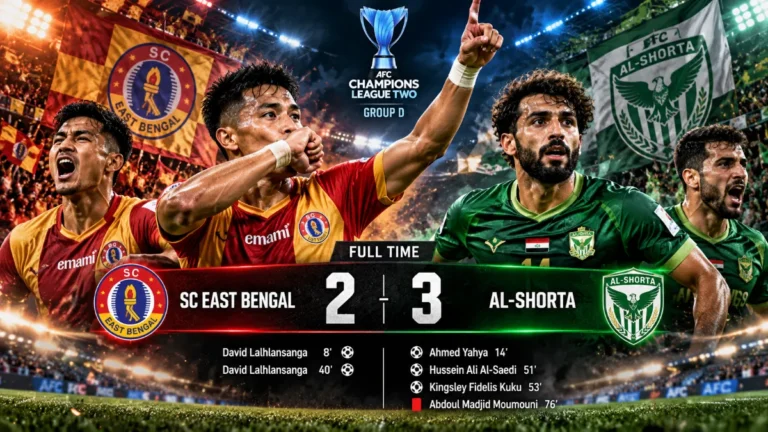
Mohun Bagan’s sustained modern dominance made their fiercest historical rival’s eventual breakthrough all the more emotionally significant when it finally arrived. East Bengal, one of Kolkata’s two legendary football institutions and Mohun Bagan’s rival in one of Asian football’s oldest and most passionately contested derbies, had gone 22 years without winning a national league championship of any kind heading into the 2025-26 season, a genuinely painful drought for a club with such deep historical standing in Indian football. The 2025-26 title race delivered a fittingly dramatic conclusion to that long wait, with East Bengal securing the championship on the season’s final day through a 2-1 victory over Inter Kashi, edging out Mohun Bagan on the very same afternoon their fiercest rivals had also won their own final match, setting up a nerve-shredding, simultaneous title-deciding finish between India’s two most storied football clubs.
The emotional scenes following East Bengal’s title confirmation, with the club’s passionate supporters describing decades of accumulated frustration finally released in a single unforgettable evening, underscored just how significant the ISL’s gradual integration of India’s traditional football powers had become for the competition’s broader legitimacy and emotional resonance with the country’s most historically rooted football communities, a stark contrast to the league’s more commercially manufactured, celebrity-driven origins just over a decade earlier.
Growing Pains Behind the Scenes
The ISL’s growth hasn’t been entirely smooth, and the 2025-26 season itself was shaped significantly by genuine institutional turbulence away from the pitch. Ongoing disputes between the All India Football Federation and Football Sports Development Limited, the league’s commercial rights holder, over the terms of their long-term master rights agreement created significant uncertainty in the months leading up to the season, ultimately delaying the campaign’s start and compressing the schedule into a considerably shorter format than in previous years. That governance dispute, unfolding alongside the AIFF’s broader implementation of a revised constitution under India’s National Sports Governance Act, added genuine institutional uncertainty to a season that nonetheless still managed to deliver one of the competition’s most dramatic and emotionally resonant title races to date.
Expanding Beyond the Metro Cities
Beyond the elite competition for the championship itself, the ISL’s broader structural growth has included the establishment of formal promotion and relegation pathways connecting the top flight to India’s lower-tier competitions, including the Indian Football League, which itself underwent restructuring in recent seasons to create clearer championship and promotion pathways for smaller regional clubs. The emergence of state-specific competitions like Super League Kerala, drawing genuinely significant attendance figures in their own right, further illustrates how football’s growing domestic infrastructure in India now extends considerably beyond the ISL’s original eight-city franchise model, suggesting a broader, more organically developing football culture taking root across multiple regions of the country rather than remaining concentrated purely within the ISL’s most commercially prominent markets.
A League Still Finding Its Identity
More than a decade after its cricket-inspired, celebrity-driven launch, the Indian Super League occupies a genuinely unique position among the world’s developing football leagues, part commercial entertainment product, part increasingly legitimate top-flight competition now home to some of Asian football’s most historic institutions. The league’s evolution, from aging international stars serving primarily as attention-grabbing marketing tools toward genuine title races between clubs carrying over a century of accumulated football history and passionate supporter culture, mirrors broader questions facing several other emerging football markets around the world about how to balance short-term commercial spectacle against longer-term, organically developed footballing legitimacy and grassroots fan investment.
East Bengal’s emotional 2025-26 triumph, arriving amid genuine institutional turbulence and immediately following their fiercest rival’s own sustained period of dominance, offers a compelling recent illustration of how far that balance has shifted since the league’s earliest seasons. What began as a deliberately manufactured spectacle designed to import football glamour through fading international stars has increasingly become a genuine stage for South Asian football’s own deepest historical rivalries and most passionately invested fan communities, a transformation that suggests the Indian Super League’s next decade may look considerably more rooted in organic football culture than its glitzy, cricket-inspired origins a little over ten years ago might once have suggested.
The Broadcast Strategy Behind the League’s Growth
Much of the ISL’s sustained commercial viability traces directly back to its broadcast partnership strategy, an area where the league’s cricket-inspired origins proved genuinely advantageous rather than simply a marketing gimmick. Star Sports’ involvement from the league’s earliest seasons brought considerable production value and marketing expertise honed through decades of cricket broadcasting experience, helping the ISL establish a level of broadcast polish and mainstream sports media presence that several other emerging football leagues around the world have historically struggled to achieve during their own early years. The league’s current broadcast arrangement with Sony Sports Network and streaming platform FanCode continues this emphasis on maximizing accessible viewership across India’s large and increasingly digitally connected sports-watching population, a strategy that has helped the ISL build a considerably larger domestic broadcast audience than the I-League ever achieved during its own decades as India’s primary top-flight competition before the ISL’s eventual rise to prominence.
Foreign Talent’s Evolving Role
The nature of foreign player involvement in the ISL has shifted considerably since the league’s early reliance on aging global superstars serving primarily marketing functions. Contemporary ISL squads increasingly feature foreign players recruited specifically for genuine footballing contribution and long-term squad building, rather than pure name recognition and box-office draw, with several clubs building sustained success around foreign attacking talents who deliver consistent goalscoring output across multiple seasons rather than serving primarily as short-term commercial attractions. This shift reflects a broader maturation in how ISL clubs approach roster construction, treating the league increasingly as a genuine competitive football product requiring sustained tactical and personnel planning rather than a one-off entertainment spectacle built around temporary star power alone.
At the same time, questions about the balance between foreign player recruitment and Indian domestic talent development remain a persistent and important thread in ongoing conversations about the league’s long-term impact on Indian football specifically. The Indian national team’s own performances haven’t yet fully reflected the kind of dramatic improvement some had hoped the ISL’s professionalization and increased investment might eventually produce, a gap that continues to generate genuine debate among Indian football administrators, coaches, and fans about whether the league’s current structure adequately prioritizes pathways for young domestic players to develop into genuine first-team contributors at the country’s biggest, most well-resourced clubs.
What the Kolkata Rivalry Means for the League’s Future
East Bengal and Mohun Bagan’s continued, deeply rooted rivalry offers perhaps the clearest evidence of the ISL’s successful transition from manufactured spectacle to genuine footballing institution. Few fixtures anywhere in Asian football carry the same depth of generational, community-rooted passion as the Kolkata Derby, and the ISL’s ability to successfully incorporate that century-old rivalry into its modern competitive structure, culminating in the genuinely dramatic, simultaneous title-deciding finish of the 2025-26 season, suggests the league has moved well beyond its original identity as a purely commercial vehicle borrowed from cricket’s playbook.
Whether other ISL clubs, particularly the league’s newer, more explicitly commercially founded franchises without comparable decades of accumulated local history, can build anything approaching that same level of organic community investment remains one of the more interesting open questions facing Indian football’s continued development. For now, though, East Bengal’s emotional 2025-26 triumph stands as compelling evidence that the ISL has successfully created space for India’s deepest football traditions to thrive within its modern competitive structure, even as the league continues navigating genuine institutional growing pains behind the scenes.
The Road Ahead for Indian Football
Looking beyond the 2025-26 season’s dramatic conclusion, the ISL’s next chapter will likely be shaped significantly by how effectively the league resolves the kind of governance tensions between the AIFF and its commercial rights holder that disrupted the most recent campaign’s scheduling and format. A league still working through fundamental questions about its long-term commercial structure, even as it delivers increasingly compelling on-field storylines, faces a genuinely delicate balancing act in the years ahead, one that will likely determine whether the ISL can sustain the kind of institutional stability needed to keep attracting the level of foreign investment, broadcast revenue, and international player interest that has fueled its growth over the past decade.
There’s also the broader question of what continued success might mean for Indian football’s long-term competitiveness on the international stage, an outcome that remains the ultimate measure by which many Indian football stakeholders will judge the ISL’s overall project, regardless of how commercially successful or emotionally compelling any individual title race turns out to be. Whether the league’s continued maturation, from its glitzy cricket-inspired origins toward the kind of genuine, historically rooted competition on display during East Bengal’s title run, eventually translates into a stronger, more competitive Indian national team remains the defining question that will likely shape how this entire era of Indian football history is ultimately remembered, both by the millions of fans who have watched the league grow and by the football administrators still working to build its long-term institutional foundation.
▪️▪️ Follow us on Facebook ▪️▪️
LaLiga Players to Watch in 2026/27: Superstars, New Signings & Young Guns
The Full History of World Cup Golden Boot Winners, From Stábile to Mbappé
About the Author