Ligue 1 2025-26 Season Review: PSG’s Dominance and the Teams That Pushed Them
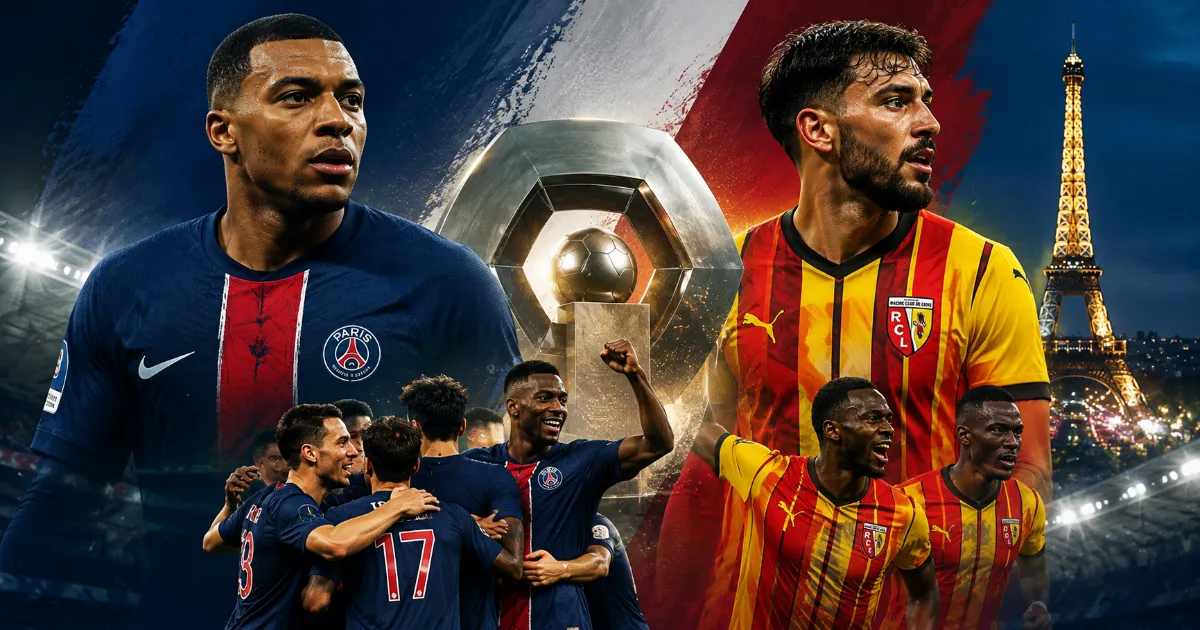
Paris Saint-Germain claimed a record-extending 14th Ligue 1 title in 2025-26, their fifth consecutive championship, a result that on the surface looks like a continuation of the club’s now-familiar domestic dominance. Beneath that familiar outcome, however, this campaign told a genuinely different story from the one-sided procession PSG produced the previous season, with RC Lens mounting the most serious sustained title challenge any club has managed against Paris in years.
Messi Retires: Inside the Rise, Falls, and Redemption of a Legend
A Title Race That Actually Felt Like One
The contrast with PSG’s previous campaign could hardly have been starker. In 2024-25, PSG had romped to the title with a 19-point cushion over second-placed Marseille, a margin that left little genuine suspense once the season reached its final months. The 2025-26 race, by contrast, remained competitive deep into the spring, with Pierre Sage’s RC Lens refusing to relent even as PSG’s superior squad depth and continental commitments might have suggested a challenge was unlikely to be sustained across a full campaign.
PSG ultimately confirmed the title with a game to spare, sealing the championship away at Lens’s own Stade Bollaert-Delelis, a fittingly dramatic venue for the moment given how directly Lens had pushed the eventual champions across the preceding months. Khvicha Kvaratskhelia opened the scoring before a stoppage-time goal from Ibrahim Mbaye confirmed the result, a 2-0 win that meant PSG needed only a draw to guarantee the trophy but delivered a considerably more emphatic statement instead. It marked the first time since Lille’s shock 2021 title run that any club had managed to make PSG’s path to the championship feel genuinely uncertain for such an extended stretch of the season.
From 1963 to Bayern’s 34th Title: The Full Bundesliga Story
From Near-Collapse to World Cup 2026 Host: The Full History of MLS
A Historic Year of Silverware
PSG’s domestic triumph arrived as part of an extraordinary broader run of success across the 2025 calendar year, one that saw the club collect six separate trophies in total, a genuine sextuple spanning two different Ligue 1 campaigns, back-to-back UEFA Champions League triumphs, the UEFA Super Cup, the Trophée des Champions, and, for the first time in the club’s history, the FIFA Intercontinental Cup, secured on penalties against Brazilian side Flamengo in December 2025. PSG’s Champions League defense proved every bit as dramatic as their domestic title race, ultimately retaining the trophy with a penalty shootout win over Arsenal in Budapest, with Vitinha named Man of the Match in a final that went to extra time before being settled from the penalty spot.
That combination of sustained continental success and a genuinely contested domestic title race makes PSG’s 2025-26 campaign one of the more complete seasons any European super-club has produced in recent memory, even if the club’s relatively early Coupe de France exit, eliminated in the round of 32, offered one rare blemish on an otherwise near-flawless year of collected silverware.
The Surprising Identity of the Golden Boot Winner
One of the more unexpected storylines of the season involved the league’s individual scoring race, which PSG’s own attacking players didn’t ultimately win. Esteban Lepaul finished as Ligue 1’s top scorer with 21 goals, a genuinely significant achievement for a player operating outside the traditional super-club spotlight that has increasingly dominated most major European scoring charts in recent seasons. PSG’s own leading league scorer, Bradley Barcola, finished considerably further back with 11 goals, a reflection of Luis Enrique’s continued preference for distributing PSG’s attacking output across multiple players rather than relying on a single focal-point striker, a tactical approach that has defined much of the club’s recent European success even as it occasionally means PSG’s individual players miss out on the league’s most prominent scoring accolades.
The Fight for Europe
Beyond PSG and Lens at the very top of the table, the battle for the league’s remaining European qualification places produced its own genuine drama across the season. Lille and Lyon joined PSG and Lens in securing Champions League qualification, continuing Lille’s recent run of consistent European qualification under a well-regarded coaching setup that has made the club one of the division’s most reliable performers outside the traditional Paris-Marseille-Monaco hierarchy. Marseille and Rennes secured Europa League qualification, while Monaco’s own campaign, despite falling short of Champions League qualification for the first time in several seasons, still delivered a Conference League place to close out a season that fell short of the club’s own typically higher domestic ambitions.
Relegation and the Season’s Toughest Campaigns
At the bottom of the table, Nantes and Metz both suffered relegation back to Ligue 2, with Metz enduring a particularly brutal campaign that included a 22-match winless run, one of the longest such streaks recorded in a single Ligue 1 season in recent memory. Nice’s own difficult stretch, including a six-match losing run at one stage of the campaign, offered a reminder that even historically stable top-flight clubs remain vulnerable to sustained poor form across a demanding 38-match Ligue 1 season.
A Season of Statistical Extremes
The 2025-26 campaign also produced several individually memorable results that captured the scale of quality gap between the division’s strongest and weakest sides. Lille’s 7-1 demolition of Lorient stood as the season’s most one-sided away result, while PSG’s own 5-0 wins over both Rennes and Marseille underlined the club’s continued capacity for ruthless home dominance even during a season defined more by their title race with Lens than by individual blowout scorelines. Strasbourg and Monaco’s wild 5-4 finish on the season’s final day provided a fitting, high-scoring conclusion to a campaign that saw goals flow more freely across the division as a whole, with the league’s overall goals-per-match average climbing compared to recent previous seasons.
What Do Professional Footballers Actually Eat? A Complete Nutrition Guide
15 Champions League Players to Watch in 2026/27: Superstars & Young Guns
What This Season Revealed About Ligue 1’s Competitive Balance
Taken as a whole, the 2025-26 campaign offered a genuinely encouraging sign for Ligue 1’s broader competitive health, an area the league has faced persistent criticism over in recent years given PSG’s overwhelming financial advantage over the rest of the division. Lens’s sustained challenge, built on considerably more modest resources than PSG’s own state-backed spending power, demonstrated that smart coaching and squad cohesion could still meaningfully disrupt what had increasingly looked like a foregone conclusion heading into each new Ligue 1 season. Whether Lens, Lille, or another emerging challenger can build on this campaign’s genuine competitiveness into a sustained multi-season title push remains one of French football’s most interesting open questions heading into the following campaign, particularly given PSG’s continued status as reigning European champions and the resource advantage that status brings with it heading into yet another demanding season across multiple competitions simultaneously.
Lens’s Season Deserves Its Own Recognition
While the headline result once again saw PSG lift the trophy, Pierre Sage’s Lens produced a campaign genuinely worthy of standalone recognition regardless of the final outcome. Operating with a fraction of PSG’s financial resources, Lens built their challenge on defensive organization, a settled core squad, and Sage’s own increasingly well-regarded tactical setup, a formula that had already delivered strong European qualification results in previous seasons before finally translating into a genuine, sustained title push during 2025-26. That the club came as close as it did to unseating a PSG side that would go on to win the Champions League in the same season speaks to just how well-drilled and resilient Lens’s campaign proved to be across a full 38-match season, even in a division where financial disparity between the very top and the rest of the table remains as pronounced as almost anywhere in European football.
Luis Enrique’s Continued Squad Management
PSG’s own domestic title, arriving alongside their European triumph, also reflected Luis Enrique’s continued success managing an enormous, talent-rich squad across an exhausting multi-competition campaign. His willingness to rotate the team’s attacking responsibilities, reflected clearly in Barcola’s relatively modest 11-goal league tally despite starting regularly throughout the season, allowed PSG to maintain freshness across a calendar year that ultimately produced six separate trophies. That squad management approach, prioritizing collective distribution of goalscoring responsibility over reliance on a single individual talisman, has become one of the defining tactical hallmarks of Enrique’s tenure at the club, and the 2025-26 season’s combination of continental and domestic success offered perhaps the clearest validation yet of that broader philosophy.
Looking Ahead
With PSG once again crowned champions but facing a genuinely proven challenger in Lens for the first time in several seasons, Ligue 1 enters its next campaign with more competitive intrigue at the top of the table than French football has enjoyed in some time. Whether that renewed competitiveness proves to be a lasting shift in the league’s broader balance of power, or simply a single strong season from an unusually well-organized Lens side, will likely become considerably clearer once the following campaign gets underway and the two clubs, along with the rest of the division’s chasing pack, discover whether 2025-26’s genuine title race was the beginning of something sustained or a rare, one-off disruption to PSG’s now-familiar Ligue 1 dominance.
🔹🔹 Follow us on Facebook 🔹🔹
About the Author