 World Cup 2026 Prize Money Explained
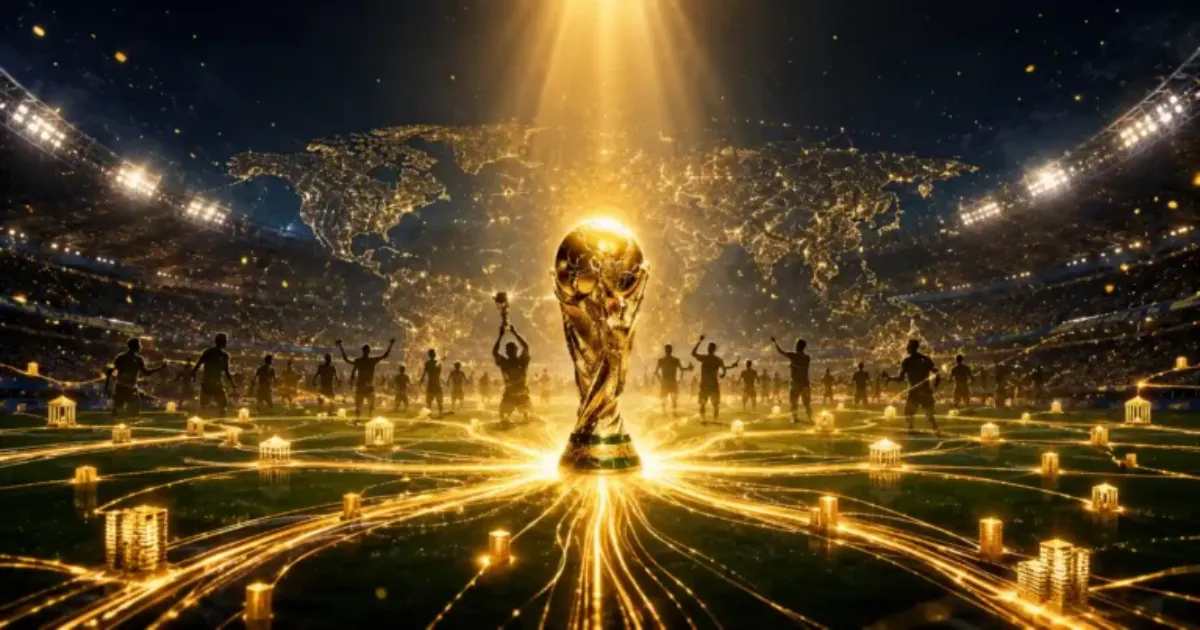
The 2026 FIFA World Cup has the largest prize pool in the history of team sport. That is not a hyperbolic marketing claim — it is simply what happens when you take the world’s most-watched sporting event, expand it to 48 teams for the first time, host it across three nations with the largest sports media markets on the planet, and add nearly a century’s worth of compound growth in global broadcasting revenue.
LaLiga 2026/27 Schedule: Fixtures, Dates & Times
Premier League 2026/27 Schedule: This Week and Next Week
NBA Schedule 2026-27: Christmas Day Rivalries, Ring Night and the Games to Watch
The number is $871 million. And understanding what that number means — where it comes from, how it’s divided, who actually receives it, and what the winning players personally take home — requires unpacking several different layers of how football’s financial architecture actually works.
Here is the complete, verified breakdown of the 2026 World Cup prize money.
The Headline: What the Winner Gets
The FIFA World Cup 2026 champion will receive $50 million in prize money.
This is the single largest prize ever awarded to the winner of any football competition in history, and an increase of $8 million over the $42 million Argentina received for winning the 2022 World Cup in Qatar.
To put that $50 million in perspective:
- It represents a 19% increase on the 2022 winner’s prize
- It is more than double the $24 million Spain received for winning the 2010 World Cup
- France received $38 million for winning the 2018 World Cup in Russia
- Argentina received $42 million for winning Qatar 2022
Each World Cup cycle has seen the winner’s prize grow substantially, reflecting football’s expanding global commercial footprint. The trajectory shows no sign of slowing.
The Total Pot: $871 Million
FIFA’s total financial distribution for the 2026 World Cup — officially confirmed at the FIFA Council’s 36th meeting in Vancouver, Canada, on April 28, 2026 — stands at $871 million.
This represents a 65% increase over the $440 million distributed at Qatar 2022. It is broken down across several distinct components, each serving a different purpose within FIFA’s financial distribution framework.
Component 1: Performance-Based Prize Money — $655 Million
The largest component of the total is the performance-based prize pool: $655 million, distributed among the 48 participating nations according to how far they progress in the tournament. This is a 50% increase on the $440 million performance pool at Qatar 2022.
Component 2: Qualification Money — $10 Million Per Team ($480 Million Total)
Every nation that qualified for the 2026 World Cup receives $10 million simply for qualifying, regardless of tournament performance. This is an increase from the $9 million paid to each qualified team at Qatar 2022 and is intended to reward the investment of time, resources, and development that qualification requires — and to make the financial impact of World Cup qualification meaningful even for nations that exit in the group stage.
Component 3: Preparation Fee — $2.5 Million Per Team ($120 Million Total)
In addition to the qualification payment, every participating team receives $2.5 million in preparation money before the tournament begins. This is paid upfront and is specifically designated to cover costs associated with pre-tournament camps, training facilities, travel, and squad preparation. It was increased from $1.5 million at Qatar 2022 — FIFA cited the additional complexity and expense of travelling between three host nations (USA, Canada, Mexico) as a reason for the increase.
Component 4: Delegation and Ticketing Subsidies — $16 Million+
A further $16 million has been designated to cover participating delegation costs and team ticketing allocations — the logistical and accommodation expenses associated with bringing 48 national teams, their staff, and their official support groups to a tournament spread across North America.
Round-by-Round Breakdown: What Every Stage Earns
The performance-based prize money is awarded as a single payment based on the stage at which a team is eliminated — not as a cumulative total across stages. Each team receives one fixed payment corresponding to their final tournament position.
| Tournament Stage | Prize Money Per Team |
|---|---|
| Group Stage elimination (16 teams) | $9 million |
| Round of 32 elimination (16 teams) | $11 million |
| Round of 16 elimination (8 teams) | $15 million |
| Quarter-final elimination (4 teams) | $19 million |
| Fourth place | $27 million |
| Third place | $29 million |
| Runner-up | $33 million |
| Winner / Champion | $50 million |
Source: FIFA Official Council Decision, revised April/May 2026.
The Guaranteed Minimum: Every Team Gets At Least $12.5 Million
One of the most significant — and often underreported — aspects of the 2026 prize structure is the guaranteed minimum payout for every participating nation.
Regardless of tournament performance, every team that qualified for the 2026 World Cup is guaranteed to receive at least $12.5 million in total FIFA payments. This is calculated as:
- $10 million in qualification money
- $2.5 million in preparation fees
This means that even the 16 nations who exit in the group stage walk away with $12.5 million minimum — the $9 million performance payment plus $2.5 million preparation fee, plus the $10 million qualification money they received before the tournament started.
For nations outside the traditional football powers — for a team like Curaçao, making their World Cup debut and facing Germany 7-1 in their opening match — receiving $12.5 million from FIFA represents a transformative financial injection for their national football infrastructure.
The minimum payout at Qatar 2022 was $10.5 million. The 2026 increase to $12.5 million reflects both the expanded financial pool and FIFA’s stated intention to make qualification financially meaningful for a broader range of federations.
The New Payout Tier: The Round of 32
One aspect of the 2026 prize money structure that doesn’t exist in any previous World Cup edition is the Round of 32 payout tier.
Because the tournament expanded from 32 to 48 teams for the first time, an additional knockout round was created — the Round of 32 — that sits between the group stage and the traditional Round of 16. Teams that advance from the group stage but fall in the Round of 32 receive $11 million in performance-based prize money, plus their $2.5 million preparation fee, for a combined total of $13.5 million.
This is exactly $2 million more than a pure group-stage exit earns in performance-based prize money — a seemingly small difference that FanDuel analysts note “can be transformative for national football development programs” in nations operating on tighter budgets.
Comparing to Other Sports: How Does $871 Million Stack Up?
The 2026 World Cup’s $871 million total distribution — nearly double Qatar 2022’s $440 million — makes it the largest prize pool in the history of team sport.
- NBA Championship: Teams do not receive a centralised prize fund from the league; individual player shares through salary structures are separate
- Super Bowl: Winning teams receive a trophy and ring; players receive a bonus typically around $150,000-$180,000 each
- ICC Cricket World Cup 2023: Total prize fund of $10 million
- UEFA Champions League 2025-26: Total distribution approximately €2.5 billion, but spread across all competing clubs across an entire season
The World Cup’s concentrated, single-tournament, winner-takes-the-large-share format makes the champion’s $50 million the single largest payment to a winner in the history of organised team sport.
Crucially: Who Actually Gets the Money?
This is the question most football fans ask and the one most media coverage fails to answer clearly. The prize money is paid directly to national football federations — not to individual players.
FIFA transfers the funds to the participating Member Associations (national federations). What happens to the money after that — how much flows to the players, the coaching staff, the federation infrastructure — is entirely the decision of each individual national association.The Best Football Boots of All Time, Ranked
What do the players actually receive?
Player bonuses from World Cup prize money vary enormously by nation and are determined through separate negotiations between national associations and their player unions or representative groups.
As a reference point: France reportedly offered their players approximately $586,000 each if they won the 2022 World Cup — a significant individual payment, but a small fraction of the $38 million prize their federation received. National team contracts and individual player bonuses are the primary mechanism through which players benefit financially from World Cup success.
The remainder of the prize money is typically allocated toward:
- National football federation operating costs
- Youth development programs
- Infrastructure and facility investment
- Coaching and staff remuneration
- Future tournament qualification campaigns
For many lower-ranked nations, World Cup prize money represents the single largest financial injection their football program receives in a four-year cycle.
What Does It Cost the Winner to Get There?
While FIFA’s prize money is substantial, winning the World Cup is also expensive. National associations incur significant costs across the qualification campaign and the tournament itself:
- Travel and accommodation across a multi-week tournament in three host nations (USA, Canada, Mexico)
- Extended pre-tournament training camps
- Medical staff, sports science, coaching infrastructure
- Player release fees to clubs (partially offset by FIFA’s Club Benefits Programme)
FIFA separately operates a Club Benefits Programme (CBP) — a $355 million fund distributed to clubs for releasing players during the tournament. This is the mechanism through which clubs like Bayern Munich, Manchester City, and Real Madrid are compensated for having their players unavailable during the World Cup period.
The Historical Growth of the Winner’s Prize
| Tournament | Host | Winner | Prize Money |
|---|---|---|---|
| 2002 | South Korea/Japan | Brazil | $5 million |
| 2006 | Germany | Italy | $20 million |
| 2010 | South Africa | Spain | $24 million |
| 2014 | Brazil | Germany | $35 million |
| 2018 | Russia | France | $38 million |
| 2022 | Qatar | Argentina | $42 million |
| 2026 | USA/Canada/Mexico | TBD | $50 million |
The winner’s prize has grown tenfold since 2002 — a reflection of football’s transformation from a widely popular sport into the world’s dominant global entertainment product.
Final Word: The Number Behind the Numbers
Whoever lifts the trophy at MetLife Stadium in East Rutherford, New Jersey, on July 19, 2026, will have their federation receive $50 million in performance-based prize money, on top of the $12.5 million in qualification and preparation payments already received before a ball was kicked.
That total — approximately $62.5 million in combined FIFA financial distributions for winning the tournament — is the largest ever paid to any winner of any football competition in history.
But beyond the financial figure, the prize money reflects something more fundamental: football’s unparalleled status as the world’s game. No other sport mobilises 48 nations, 508 million ticket requests, and the genuine collective attention of the entire planet simultaneously.
The $871 million is proof of that. The $50 million winner’s prize is its most visible symbol.
▪️▪️Follow us on Facebook ▪️▪️
About the Author