Portugal vs Croatia Preview: The World Cup 2026’s Most Emotionally Charged Knockout Fixture Is Also Its Most Tactically Fascinating — and Toronto Will Witness Something That Will Not Happen Again
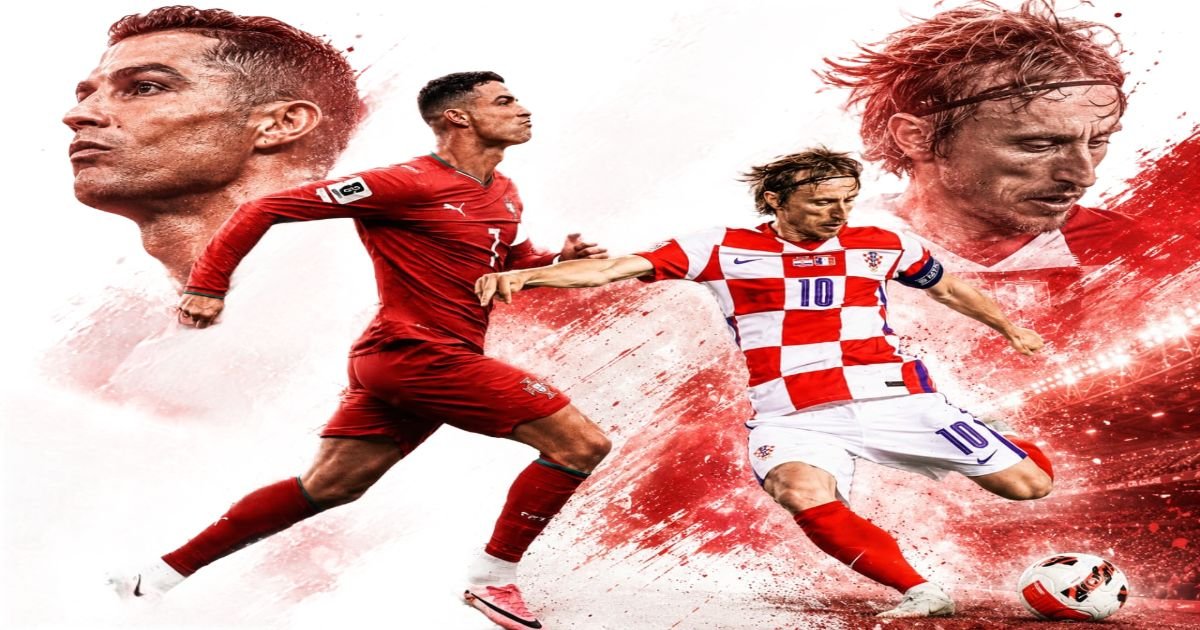
Portugal vs Croatia at BMO Field brings together the tournament’s most debated individual selection choice in Ronaldo and the most admired 40-year-old in world football in Modric — former Real Madrid teammates, now opponents in a World Cup knockout match for the first time, with one guaranteed to play their final-ever knockout game on July 2PSG v Arsenal: How Paris Won the Champions League Final on Penalties
Cristiano Ronaldo Jr.: Club, Lifestyle, Career and Future Prospects
Thiago Messi: Club Career, Playing Style, Lifestyle and Future Prospects
📍 VENUE & KICKOFF TIMES
| Territory | Time | Date |
|---|---|---|
| 🏟️ Toronto, Canada (ET / Local) | 4:30 AM ET | Friday, July 3 |
| 🇨🇦 Canada (ET) | 4:30 AM ET | Friday, July 3 |
| 🇬🇧 United Kingdom (BST) | 9:30 AM BST | Friday, July 3 |
| 🇮🇳 India (IST) | 2:00 PM IST | Friday, July 3 |
| 🇵🇹 Portugal (WEST) | 8:30 AM WEST | Friday, July 3 |
| 🇭🇷 Croatia (CEST) | 9:30 AM CEST | Friday, July 3 |
| 🌐 UTC | 08:30 UTC | Friday, July 3 |
Venue: BMO Field, Toronto, Ontario, Canada Capacity: ~30,000 | Surface: Grass Winner faces: Spain or Austria in Round of 16, Arlington, Texas (July 6)
WHEN TEAMMATES BECOME OPPONENTS
There is a photograph somewhere — from the Bernabéu press conferences, the Champions League medal ceremonies, the quiet celebrations after El Clásico victories — of Cristiano Ronaldo and Luka Modrić standing together in white, wearing the same badge, representing the same institution. In those years, between 2013 and 2018, they were on the same side. They knew each other’s movements, each other’s tendencies, each other’s preferred moments to receive the ball and the specific kind of pass each needed to maximise their own quality.
On July 2 at BMO Field in Toronto, they will stand on opposite sides of a World Cup knockout fixture for the first time in their lives. Ronaldo at 41, Modrić at 40, the two most decorated outfield players of the modern tournament era, will play a football match that one of them will lose — and for at least one of them, the loss will be the last competitive act of an extraordinary international career.
Portugal vs Croatia is not merely a Round of 32 fixture at the expanded World Cup. It is, in the most genuine sense, a generational farewell that happens to carry the full weight of competitive consequence. It is also, when you strip away the biographical and emotional scaffolding, a genuinely interesting tactical contest between two European sides with deep knockout experience and specific, well-defined structural challenges.
PORTUGAL’S GROUP STAGE — THE TALENT THAT HASN’T YET BEEN FULLY UNLOCKED
Group K Results:
| MD | Opponent | Score | Portugal Scorers |
|---|---|---|---|
| 1 | DR Congo | 1–1 D | Joao Neves (early) |
| 2 | Uzbekistan | 5–0 W | Ronaldo ×2 (6′, 39′), Nuno Mendes, Joao Neves, others |
| 3 | Colombia | 0–0 D | — |
Points: 5 | GF: 6 | GA: 1 | GD: +5 | Group K Runners-Up
The three-match arc of Portugal’s group campaign tells a story that has become familiar to Roberto Martínez’s side — a frustrating draw against a well-organised African side, a clinical demolition of a technically limited opponent, and then a flat, possession-heavy stalemate against the group’s most organised European opponent. Against Uzbekistan, when the opposition defence was sufficiently exposed to allow Portugal’s attacking quality to function at full speed, the result was a 5-0 win featuring five different scorers, Ronaldo’s record-breaking brace, and the kind of collective performance that made them look like genuine title contenders.
Against DR Congo and Colombia, the picture was entirely different. The goalless draw with Colombia particularly left a strange taste. Portugal had more possession, more passes, more territory — and zero shots on target of consequence. Roberto Martínez watched his most talented squad in years generate nothing from everything they controlled.
The Portugal question entering this knockout match is not whether they have the quality to beat Croatia. They clearly do. The question is whether Martínez can unlock the tactical structure that converts Portugal’s undeniable individual quality into the kind of collective output that tournament-quality opponents respect.
Star Players:
Cristiano Ronaldo — 41 years old, 10 World Cup goals across six consecutive tournaments, and the only player in history to score in six different World Cup competitions. His brace against Uzbekistan in the 6th and 39th minutes made him the first player ever to score in six different World Cup editions. Against Uzbekistan’s open defensive structure, Ronaldo was the Ronaldo that supporters remember from his peak: decisive, composed, clinical. Against DR Congo and Colombia, where the defensive shape was more compact and the creative service less reliable, he was peripheral. The question of whether Ronaldo starts against Croatia, and whether he scores, is the match’s defining narrative pressure point. Cristiano Ronaldo scored twice at this tournament and remains Portugal’s primary focal point in attack. His record at major tournaments speaks for itself.
Bruno Fernandes — Portugal’s creative driver and the midfield presence around whom Martínez’s system functions most fluently. When Fernandes is finding pockets of space, playing forward quickly, and connecting the midfield to the forward line, Portugal’s attack has a fluency that the group stage only occasionally displayed. Against Croatia’s midfield structure — Modrić and Kovačić providing the defensive screen — Fernandes’ ability to operate in the spaces between Croatia’s lines will be the fundamental creative challenge of the match.The Fastest NBA Players Ever, Ranked
Who Is Gianluigi Buffon? The Journey of Italy’s Legendary Goalkeeper
Joao Neves — 21 years old, already with a World Cup goal to his name after his early strike against DR Congo, and the midfield player who may hold the most tactical influence of anyone in the fixture. His pressing intensity, his ball-carrying through Croatian lines, and his ability to win the ball high and supply forward passes quickly are the specific qualities that can deny Modrić the time and space he needs to control this match’s tempo. If Neves wins his midfield duel against Modrić, Portugal win this match with something to spare.
Rafael Leão — Portugal’s widest attacking threat and the player Croatia’s right defensive corridor must specifically contain. His pace in transition from left wide and his directness when running at Josip Stanišić represent Portugal’s most dangerous open-play attacking dimension outside of Ronaldo’s penalty-area presence. Nuno Mendes at left-back — who also scored in the group stage — overlaps aggressively to create the two-versus-one that Leão and Mendes have developed over multiple Portugal squads.
Diogo Costa — the goalkeeper whose six saves against Colombia in the group stage constitute the match’s defining individual defensive performance of the entire round. His distribution and shot-stopping under pressure give Portugal a defensive platform that the 2022 tournament’s goalkeeper entirely failed to provide.
Knockout Strategy: Martínez must solve the Colombia problem — the tactical question of how to break down a compact defensive shape when Portugal have the ball and the territory but lack the incisive final pass. Against Croatia’s 4-2-3-1 or 4-3-3 shape, the solution runs through Leão’s direct running creating openings in behind, Fernandes finding Ronaldo’s runs in the box, and Neves winning possession high enough to create short counter-attacks before Croatian defenders can reset. A cautious Portugal — the one that drew 0-0 with Colombia — will find this considerably more difficult than it should be. An aggressive Portugal — the one that scored five against Uzbekistan — should have too much.
CROATIA’S GROUP STAGE — THE TOURNAMENT VETERANS FIND THEIR RHYTHM
Group L Results:
| MD | Opponent | Score | Croatia Scorers |
|---|---|---|---|
| 1 | England | 2–4 L | (multiple) |
| 2 | Panama | 1–0 W | Budimir |
| 3 | Ghana | 2–1 W | Sučić 31′, Vlašić 83′ (Modrić corner assist) |
Points: 6 | GF: 5 | GA: 5 | GD: 0 | Group L Runners-Up
Croatia’s group campaign has its own three-match narrative arc — and unlike Portugal’s, it runs toward improvement rather than stagnation. The 4-2 defeat to England was a sobering first match: Tuchel’s side exposed the specific defensive vulnerabilities in Croatia’s transition shape that a high-quality, fast-transitioning opponent can exploit. But the response was instructive. A 1-0 win over Panama provided stability. A 2-1 win over Ghana — featuring Modrić’s corner delivery that Vlašić headed home in the 83rd minute, followed by Modrić himself tracking back in stoppage time to prevent a Ghanaian equaliser — confirmed that the 2018 runners-up and 2022 third-place team have lost none of their tournament intelligence.
Croatia reached the knockout stage the harder way, losing 4-2 to England before grinding out back-to-back wins over Panama and Ghana. Zlatko Dalic’s side are well-versed in knockout football, having reached the semi-finals or beyond at each of their last three World Cup appearances. They will not be overawed by the occasion.
Star Players:
Luka Modrić — 40 years old, 200-plus international appearances, 2018 Ballon d’Or winner, World Cup finalist and twice World Cup bronze medallist. In the Ghana match, he provided the corner delivery that assisted Vlašić’s winning goal, then tracked back in stoppage time at 40 years old to prevent Ghana’s equaliser. That combination — the creative contribution and the defensive recovery — is Modrić distilled. He is, at this stage of his career, less the player who runs past opponents and more the player who controls games with a frequency and precision that makes the team around him function two levels above its individual capacity. Croatia are unlikely to outgun Portugal. But they can make Portugal defend uncomfortable spaces, and Modrić’s capacity to find those spaces with a single pass remains exceptional. This is not nostalgia. It is context. Modrić carries the memory of everything Croatia have become since 2018: stubborn, elegant, defiant, rarely finished when the match seems to be slipping away.
Mateo Kovačić — the midfield partner who provides the physical intensity and pressing efficiency that allows Modrić’s conserved energy to be deployed more selectively. Kovačić won the ball high against Ghana repeatedly, and against Portugal’s attacking midfield, his ability to press Fernandes and disrupt the creative supply chain between midfield and forward line is Croatia’s most important defensive mechanism.
Andrej Kramarić — Croatia’s most reliable goalscorer in this squad and their primary forward threat in transitional moments. His movement in and around the penalty area, his finishing composure, and his ability to arrive into the box from deeper positions make him the specific player that Portugal’s centre-back partnership of Ruben Dias and Gonçalo Inácio must track from the moment he receives the ball in the final third.
Joško Gvardiol — the left-back-turned-centre-back whose physical presence and aerial dominance have been Croatia’s defensive foundation. His ability to read crosses, win headers, and defend one-on-one against direct wingers makes him the player who will be specifically tested by Leão’s pace from Portugal’s left. Gvardiol at Manchester City has spent the past year defending against the world’s best forwards. He is equipped for this specific challenge. Whether Croatia’s wider defensive shape provides sufficient support when Gvardiol is beaten is the more relevant question.
Croatia’s Knockout Strategy: Dalic will set Croatia in their familiar compact 4-2-3-1, invite Portugal into possession, and use Modrić and Kovačić’s midfield screen to compress the space between Portugal’s midfield and forward line. The objective is to keep the match goalless until the first set-piece opportunity — Croatia’s delivery from dead balls, specifically Modrić’s corners and free-kick delivery, represents their most reliable route to goal against a well-organised opponent. A 0-0 at half-time with a Kramarić counter-attack or a set-piece goal in the second half is Croatia’s most realistic path to an upset. Portugal vs Croatia has the look of a cagey, evenly matched contest in which neither defence is watertight and neither attack is flowing.
THE BROADER QUESTION — CAN MARTÍNEZ FINALLY SOLVE THE RIDDLE?
Portugal’s group stage left a strange taste. They have the technical security of Vitinha, the carrying power of Joao Neves, the width of Pedro Neto, the finishing instincts of Gonçalo Ramos and the gravity of Ronaldo. Nuno Mendes gives them elite power from full-back. Diogo Costa gives them calm behind the defence. And yet Portugal’s group stage left a strange taste.
Against organised opponents — DR Congo, Colombia — Portugal generated possession without conversion. The problem is not talent. It is structure. Martínez’s system, when opposed by sides willing to sit compact and frustrate, has not found the mechanism to generate the incisive forward pass that creates genuine goalscoring opportunities from inside the box.
Croatia are exactly the kind of opponent that can turn a knockout match into a slow tactical argument. If Portugal are flat again, Croatia have the patience and midfield craft to make them suffer.
But Portugal’s ceiling is higher. Ronaldo’s factor — even at 41, even when peripheral — is a constant tilt toward the unexpected. Bruno Fernandes, when fully engaged, is one of the most creative midfielders in European football. And Leão versus Stanišić, running at pace from wide left with Mendes overlapping, creates the specific kind of wide overload that Croatia’s right side has historically found difficult to contain.
PREDICTION
PREDICTED SCORE: Portugal 2–1 Croatia Ronaldo scores — because this is a World Cup knockout match, and Ronaldo scores in World Cup knockout matches. Kramarić equalises from a Modrić delivery, because Croatia always score from something Modrić creates. Leão produces the decisive moment late, because his pace is the one quality Croatia’s structure cannot solve by committee. Portugal advance with difficulty. Croatia exit having reminded the world, one final time, why their tournament run from 2018 to 2026 represents the most remarkable national football achievement of the modern era.
Portugal’s Round of 16: vs Winner of Spain vs Austria, Sunday July 6, Arlington, Texas
FINAL GROUP STAGE RECORDS
| Team | P | W | D | L | GF | GA | GD | Pts |
|---|---|---|---|---|---|---|---|---|
| Portugal (Group K Runners-Up) | 3 | 1 | 2 | 0 | 6 | 1 | +5 | 5 |
| Croatia (Group L Runners-Up) | 3 | 2 | 0 | 1 | 5 | 5 | 0 | 6 |
From Roberto Carlos to Messi: Ranking the Best Free Kicks in History
Erling Haaland Baby Names Peru: Why Hundreds of Newborns Are Being Named After the Norway Star
In His Own Words: 10 Kylian Mbappe Quotes That Define the Man Behind the Myth
▪️▪️ Follow us on Facebook ▪️▪️
About the Author