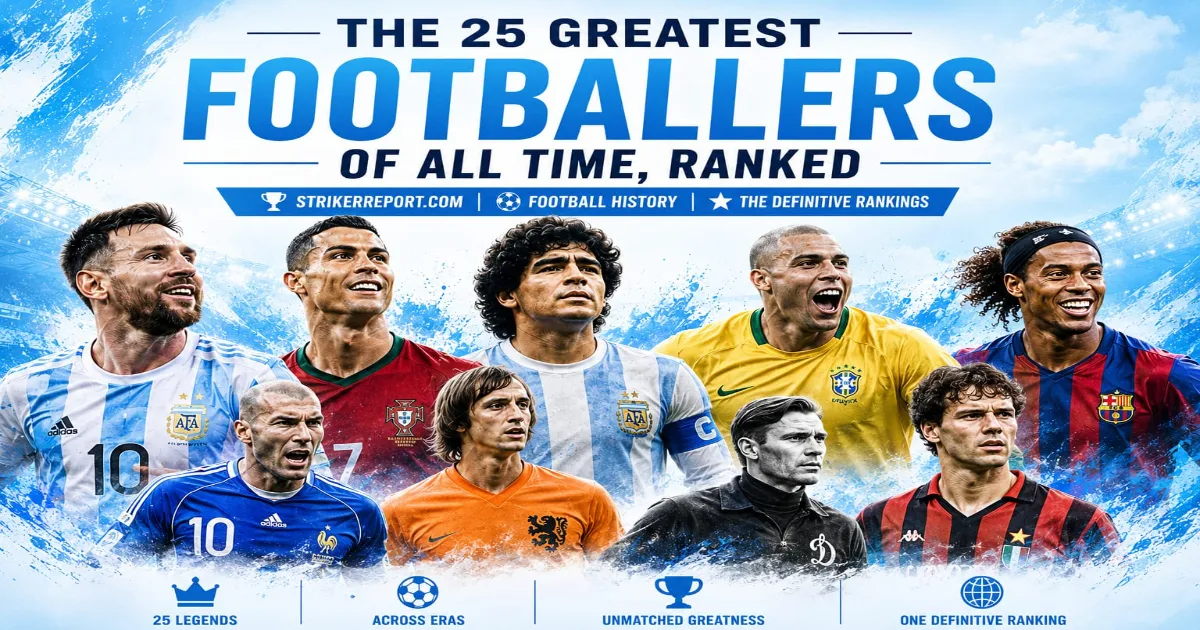
The 25 Greatest Footballers of All Time, Ranked
StrikerReport.com | Football History | The Definitive Rankings
There is no objectively correct answer to football’s oldest argument. Eras don’t translate cleanly. Pitches, tactics, fitness science, broadcast scrutiny, and the sheer physicality of the modern game have all transformed so completely across a century of organised football that comparing a 1950s inside-forward to a 2020s false nine requires equal parts statistical analysis and historical imagination.
But the argument is also one of football’s great pleasures — and as professional analysts, we owe readers a serious, defensible attempt rather than a shrug. This ranking weighs peak quality, longevity, trophies won, individual influence on matches that mattered most, and the broader historical impact each player had on how the sport itself evolved.
Here are the 25 greatest footballers of all time, ranked.
25. Franz Beckenbauer
Era: 1960s-1980s | Country: West Germany
“Der Kaiser” did not simply play sweeper — he reinvented it, pioneering the attacking libero role that redefined what a defender could contribute going forward. Two World Cups as captain and manager respectively (1974, 1990) make him one of only three men to win the World Cup in both capacities.
24. George Best
Era: 1960s-1970s | Country: Northern Ireland
Pure footballing genius undermined by circumstance — a generational talent who never played at a World Cup because Northern Ireland never qualified during his prime. His dribbling and instinctive brilliance at Manchester United remain the standard against which British wing play is still measured.
23. Roberto Carlos
Era: 1990s-2000s | Country: Brazil
The most influential attacking full-back of his generation, redefining what was tactically possible from the left-back position. His combination of explosive pace, ferocious shooting power, and defensive solidity at Real Madrid established a template that modern full-backs still chase.
22. Paolo Maldini
Era: 1980s-2000s | Country: Italy
The defensive standard. Twenty-five years at AC Milan’s elite level, seven Serie A titles, five Champions League trophies, and a reputation for never once being booked for a reckless tackle across an entire career built on positioning rather than physicality.
21. Andrés Iniesta
Era: 2000s-2020s | Country: Spain
The quietest genius on this list. Iniesta’s World Cup 2010 final winner against the Netherlands secured Spain’s only World Cup, but his true legacy is technical: the most complete embodiment of tiki-taka’s philosophical ideal, operating in spaces no defender could anticipate.
20. Xavi Hernández
Era: 2000s-2010s | Country: Spain
The conductor of the most influential possession-football era the sport has seen. Xavi’s passing range, tempo control, and footballing intelligence at Barcelona and Spain transformed how an entire generation of coaches thought about midfield play.
19. Eusébio
Era: 1960s-1970s | Country: Portugal
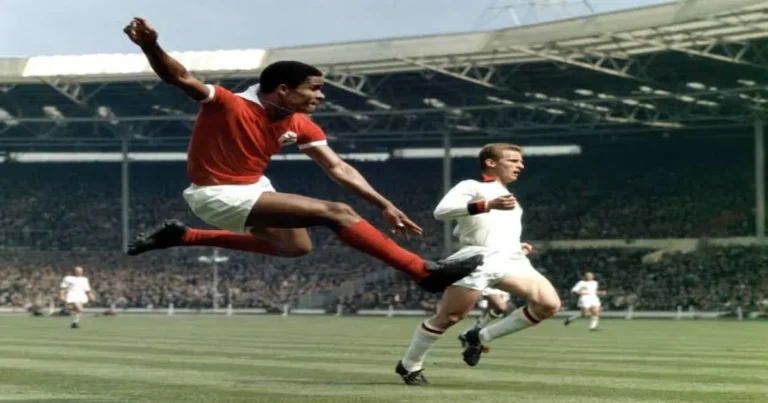
The Black Panther’s nine goals at the 1966 World Cup remain one of the great individual tournament hauls in history. His combination of pace, power, and clinical finishing made him Europe’s most feared striker through the 1960s, and Portugal’s first global football icon.
18. Garrincha
Era: 1950s-1960s | Country: Brazil
Brazil never lost a match in which both Pelé and Garrincha played. His dribbling, built on a physical asymmetry from childhood polio that should have been a disability, instead became an unplayable weapon that bewildered defenders across two World Cup-winning campaigns.
17. Marco van Basten
Era: 1980s-1990s | Country: Netherlands
Career cut tragically short by injury, but his peak remains among the highest the sport has produced — three Ballon d’Ors, a Euro 1988-winning volley still shown as the standard for technical finishing, and a brief but utterly dominant AC Milan period.
16. Gerd Müller
Era: 1960s-1970s | Country: West Germany
Der Bomber’s goalscoring statistics remain almost unbelievable by modern standards — 68 goals in 62 caps for West Germany, including the decisive winner in the 1974 World Cup final. His positional instinct inside the penalty area has rarely, if ever, been matched.
15. Luka Modrić
Era: 2000s-2020s | Country: Croatia
The 2018 Ballon d’Or winner who broke the Messi-Ronaldo duopoly through sheer sustained excellence. His Real Madrid Champions League dominance and his leadership of Croatia to a World Cup final represent one of the great late-career peaks in football history.
14. Romário
Era: 1980s-2000s | Country: Brazil
A goalscoring instinct so refined it bordered on the supernatural. His 1994 World Cup performance — the tournament’s outstanding player as Brazil claimed their fourth title — combined with extraordinary career goal totals across Brazil, the Netherlands, and Spain place him among the purest finishers the sport has produced.
13. Ronaldinho
Era: 1990s-2010s | Country: Brazil
For a period in the mid-2000s, Ronaldinho was simply the best and most entertaining footballer alive — back-to-back Ballon d’Ors, a Champions League title, and a Barcelona team built fundamentally around his improvisational genius. He made football look like joy made physical.
12. Kylian Mbappé
Era: 2010s-Present | Country: France
A World Cup winner at 19, a World Cup Final hat-trick scorer at 23, and the player most consistently compared to peak Ronaldo Nazário for explosive pace combined with clinical finishing. His career is still being written, and the trajectory suggests he finishes considerably higher than this on future versions of this list.
11. Karim Benzema
Era: 2000s-2020s | Country: France
Often underrated relative to his contemporaries, Benzema’s 2021-22 season — a Ballon d’Or, a Champions League title secured almost single-handedly through a string of knockout-round hat-tricks — represents one of the great individual seasons in the modern game.
10. Ronaldo Nazário
Era: 1990s-2000s | Country: Brazil
“O Fenômeno” — the phenomenon — at his pre-injury peak combined pace, power, and technical finishing in a way few players before or since have matched. His redemption arc, scoring twice in the 2002 World Cup final four years after the unexplained collapse of 1998, remains one of football’s great comeback stories.
9. Zinedine Zidane
Era: 1990s-2000s | Country: France
Footballing elegance personified. Two goals in the 1998 World Cup final, a stunning volley in the 2002 Champions League final, and a career that combined technical sophistication with the kind of big-match composure that defines genuine greatness — even with the infamous exception of his 2006 final headbutt.
8. Alfredo Di Stéfano
Era: 1940s-1960s | Country: Spain/Argentina
The player many football historians consider the most complete footballer ever to play, contributing across every phase of the game for Real Madrid’s five consecutive European Cup wins from 1956-1960 — a dynasty built fundamentally around his all-action brilliance.
7. Michel Platini
Era: 1970s-1980s | Country: France
Three consecutive Ballons d’Or (1983-85) and a Euro 1984 campaign in which he scored nine goals in five matches — a tournament-dominance level that remains unmatched. His combination of vision, technique, and goalscoring from midfield set the standard for the playmaking role.
6. Johan Cruyff
Era: 1960s-1980s | Country: Netherlands
The philosophical father of modern football. Total Football’s on-pitch embodiment, three Ballons d’Or, and a subsequent coaching career at Barcelona that directly produced the tiki-taka philosophy and the entire Messi-era Barcelona dynasty. His influence on how football is taught and played globally may exceed any player on this list.
5. Zico
Era: 1970s-1980s | Country: Brazil
The “White Pelé” never won a World Cup but is consistently rated among the very greatest by those who watched him closely — extraordinary technical ability combined with one of the most natural goalscoring instincts ever seen from a midfield position.
4. Lev Yashin
Era: 1950s-1970s | Country: Soviet Union
The only goalkeeper ever to win the Ballon d’Or (1963) — and the only goalkeeper who needs to feature on any serious greatest-ever list. His shot-stopping, command of his area, and tactical innovation as a sweeper-keeper decades ahead of the position’s modern evolution earn his inclusion among football’s all-time elite.
3. Cristiano Ronaldo
Era: 2000s-Present | Country: Portugal
Five Ballons d’Or, the all-time leading men’s international goalscorer, five Champions League titles, and a physical longevity that has carried his elite output into his forties — at the 2026 World Cup, he became the first player to score at six different editions of the tournament. His combination of raw goalscoring volume and sustained excellence across two decades places him among the very pinnacle of the sport’s history.
2. Diego Maradona
Era: 1970s-1990s | Country: Argentina
The 1986 World Cup remains the single greatest individual tournament performance in football history — both the Hand of God and the Goal of the Century arriving in the same match, against the same opponent, within four minutes of each other. Maradona’s combination of dribbling genius, vision, and his sheer capacity to win matches almost single-handedly places him at the summit of football’s pantheon, even accounting for the controversies that shadowed his career.
1. Lionel Messi
Era: 2000s-Present | Country: Argentina
A record eight Ballons d’Or. The all-time leading goalscorer in the history of the Ballon d’Or era’s primary statistical databases. A World Cup title finally secured in 2022, completing a trophy collection that addresses the one previous gap in his legacy, followed by a first-ever World Cup hat-trick at the age of 38 during the 2026 tournament. Messi’s combination of technical perfection, longevity at the very highest level across nearly two decades, sustained statistical dominance, and the manner in which he has redefined the limits of what a footballer’s body and mind can sustain make him, by the consensus of nearly every serious football analyst, the greatest footballer the sport has ever produced.
The Full Ranking: Quick Reference
| Rank | Player | Country | Era |
|---|---|---|---|
| 1 | Lionel Messi | Argentina | 2000s-Present |
| 2 | Diego Maradona | Argentina | 1970s-1990s |
| 3 | Cristiano Ronaldo | Portugal | 2000s-Present |
| 4 | Lev Yashin | Soviet Union | 1950s-1970s |
| 5 | Zico | Brazil | 1970s-1980s |
| 6 | Johan Cruyff | Netherlands | 1960s-1980s |
| 7 | Michel Platini | France | 1970s-1980s |
| 8 | Alfredo Di Stéfano | Spain/Argentina | 1940s-1960s |
| 9 | Zinedine Zidane | France | 1990s-2000s |
| 10 | Ronaldo Nazário | Brazil | 1990s-2000s |
| 11 | Karim Benzema | France | 2000s-2020s |
| 12 | Kylian Mbappé | France | 2010s-Present |
| 13 | Ronaldinho | Brazil | 1990s-2010s |
| 14 | Romário | Brazil | 1980s-2000s |
| 15 | Luka Modrić | Croatia | 2000s-2020s |
| 16 | Gerd Müller | West Germany | 1960s-1970s |
| 17 | Marco van Basten | Netherlands | 1980s-1990s |
| 18 | Garrincha | Brazil | 1950s-1960s |
| 19 | Eusébio | Portugal | 1960s-1970s |
| 20 | Xavi Hernández | Spain | 2000s-2010s |
| 21 | Andrés Iniesta | Spain | 2000s-2020s |
| 22 | Paolo Maldini | Italy | 1980s-2000s |
| 23 | Roberto Carlos | Brazil | 1990s-2000s |
| 24 | George Best | Northern Ireland | 1960s-1970s |
| 25 | Franz Beckenbauer | West Germany | 1960s-1980s |
A Note on Methodology
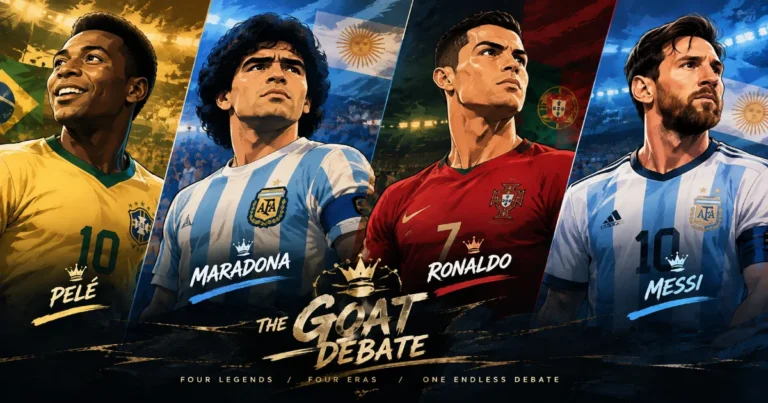
Rankings of this nature inevitably involve subjective weighting between statistical dominance, trophy success, peak quality versus longevity, and a player’s broader influence on the sport’s tactical evolution. Pelé, widely regarded as among the very greatest to play the game, is deliberately excluded from this specific ranking exercise due to the well-documented limitations in verifiable match footage and statistical record-keeping from his playing era, which makes direct comparative analysis against modern players methodologically inconsistent — a decision that will understandably provoke disagreement, and is offered with full transparency rather than as a dismissal of his legacy.
The debate, as always, continues. That is precisely the point.
About the Author