How Do Football Academies Work? Developing the Next Generation
A step-by-step breakdown of how football academies scout, coach, and mentor young players on their journey from local trials to the professional game.
Every star player currently gracing a Champions League final, a World Cup opening match, or a Saturday afternoon in the Premier League started somewhere far less glamorous: a muddy training pitch, a Tuesday evening session after school, a coach with a clipboard trying to figure out whether an eight-year-old has “something.” Football academies are the machinery behind almost every professional career in the modern game, yet most fans have only a vague sense of how they actually operate. This piece breaks the system down stage by stage — from the first scouting contact to the moment a teenager signs a professional contract — and looks at why the model is both football’s greatest talent factory and one of its most debated institutions.
Cristiano Ronaldo Jr.: Club, Lifestyle, Career and Future Prospects
Thiago Messi: Club Career, Playing Style, Lifestyle and Future Prospects
What Exactly Is a Football Academy?
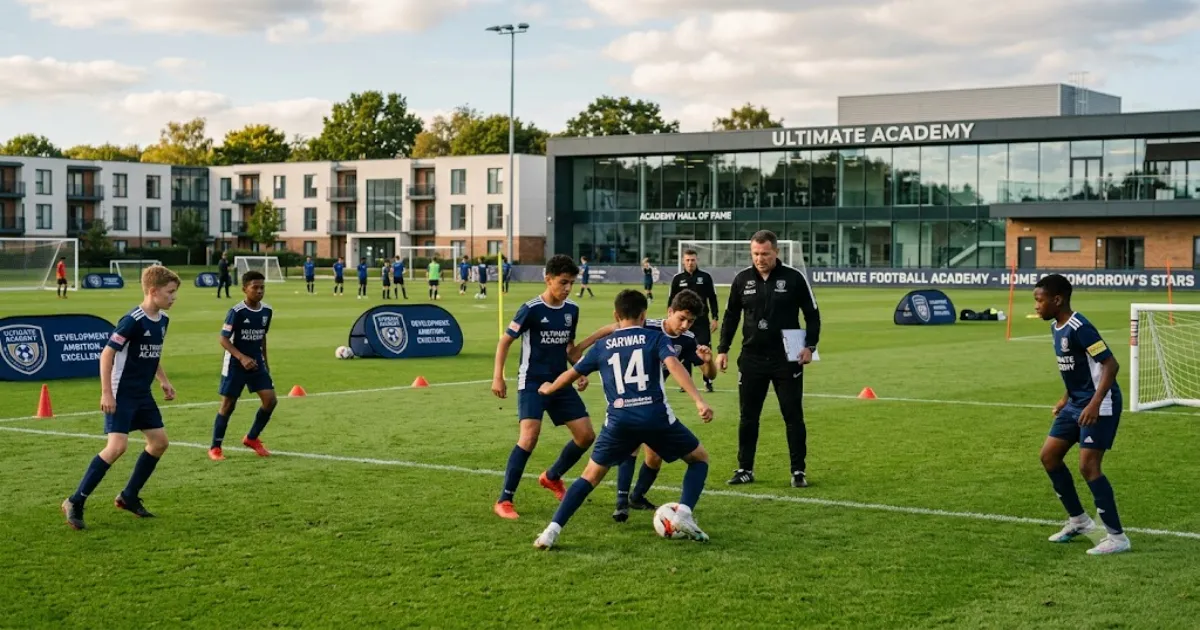
At its simplest, a football academy is a structured youth development system run by a professional club, designed to identify promising young players and guide them through coaching, education, and welfare programs toward the first team or, more realistically for most, toward a professional career somewhere in the game. Academies typically span age groups from as young as five or six all the way up to under-23 level, with players moving through defined age-group teams — under-9s, under-12s, under-16s, under-18s, under-21s or under-23s — each with its own coaching staff, playing philosophy, and development targets.
Academies are not simply smaller versions of the first team. They are long-term investment projects, often running at a financial loss for years before a single player breaks through, justified by the possibility of producing a generational talent, saving tens of millions in transfer fees, or generating profit through future sales. Clubs like Ajax, Barcelona, and Southampton have built entire footballing identities around the strength of their academies, while others use them primarily as a pipeline of sellable assets.
Step One: Scouting and Identification
The academy pathway begins long before a child ever wears a club badge. Professional clubs run extensive scouting networks that monitor grassroots leagues, school tournaments, and regional representative teams, often starting from around age five or six in countries with well-developed systems. Scouts are typically looking for a mix of technical ability, physical attributes, game intelligence, and — increasingly — psychological traits like resilience and coachability, since technical skill at age eight is a poor predictor of professional potential on its own.
Most young players are invited to a series of trial sessions before being offered a place. Clubs are careful, at least in theory, not to promise too much too soon; reputable academies present these early years as development opportunities rather than professional certainties, precisely because the dropout rate later in the process is so high. In England, this recruitment process is shaped heavily by the Elite Player Performance Plan, introduced in 2012, which categorizes academies from Category One down to Category Four based on facilities, coaching qualifications, and player numbers, with Category One status granting clubs the widest recruitment radius and the greatest resources.
Step Two: The Foundation Phase
Once a player joins an academy, usually somewhere between the ages of six and eleven, they enter what is commonly called the foundation phase. The emphasis here is almost entirely on technical development and enjoyment rather than results — small-sided games, ball mastery, and creativity are prioritized over winning trophies, a philosophy heavily influenced by the success of continental academies like Barcelona’s La Masia and the Dutch model pioneered at Ajax. Sessions are typically short, frequent, and varied, with an emphasis on touches per player rather than structured tactics.
This phase also introduces the first layers of academic and welfare support. Reputable academies pair every young player with education officers who monitor school performance, since regulations in most major footballing countries require academies to maintain a player’s schooling alongside their football development. Parents are brought into regular contact with academy staff, and safeguarding policies govern everything from travel arrangements to communication with players.
Step Three: The Youth Development Phase
Between roughly ages twelve and sixteen, players move into the youth development phase, where the intensity increases considerably. Training frequency rises to four or five sessions a week alongside match fixtures, tactical understanding becomes a bigger focus, and physical development — carefully managed to avoid overloading still-growing bodies — enters the picture through sports science and strength and conditioning staff.
This is also the stage at which the academy population begins to thin out. Clubs conduct annual or biannual reviews, and players who are not progressing as hoped may be released, sometimes to smaller clubs’ academies, sometimes out of the system altogether. It is a brutal reality of the model: for every player who eventually breaks into a first team, dozens of former academy prospects will have been let go years earlier, often as teenagers who have known nothing but football since early childhood. Independent research into England’s academy system has repeatedly highlighted this attrition rate, with only a small percentage of academy graduates going on to sign professional contracts, and an even smaller fraction sustaining a long-term career in the professional game.
Step Four: The Professional Development Phase
From around sixteen to twenty-one, players enter the professional development phase, typically represented by under-18 and under-21 (or under-23) squads. This is where football academies start to resemble mini professional environments. Players may sign scholarship or apprenticeship deals, train daily at first-team facilities, and are increasingly exposed to senior coaching staff, sports psychologists, and nutritionists. Loan spells to lower-division or foreign clubs become common at this stage, offering the competitive senior football that academy fixtures alone cannot replicate.
This phase is also where clubs make some of their most consequential decisions. A first professional contract is typically offered around age seventeen, but it is rarely a guarantee of a first-team future. Clubs balance the developmental needs of young players against the short-term pressure to win matches, and the gap between “very good academy player” and “ready for first-team football” is often wider than fans appreciate. Coaches at this level talk constantly about managing expectations — both the player’s own and those of parents who have, understandably, invested years of hope into the process.
The People Behind the Pathway
A modern football academy is a far larger operation than most supporters realize. Beyond coaches, a Category One academy in England, for example, typically employs sports scientists, physiotherapists, academic tutors, psychologists, nutritionists, video analysts, and dedicated player welfare officers, alongside a head of recruitment overseeing the scouting network. This multidisciplinary approach reflects a broader shift in how the game understands development: technical ability alone is no longer considered sufficient, and clubs increasingly treat psychological resilience, adaptability, and off-pitch lifestyle habits as equally important predictors of long-term success.
Parents, too, play a far bigger role than the stereotype of the pushy football dad suggests. Academies generally run structured parent education programs, explaining realistic timelines, the risk of release, and how to support a child’s wellbeing rather than solely their football progress — an acknowledgment that the emotional toll of academy life falls on families as much as on players themselves.
Why the System Is Both Praised and Criticized
Football academies are frequently credited with producing some of the game’s most complete players, and the evidence is compelling. Structured, long-term development programs allow technical and tactical habits to be built over years rather than crammed into a short window, and countries or clubs with strong academy infrastructure — Spain, the Netherlands, and clubs like Barcelona and Ajax historically — have repeatedly produced disproportionate numbers of top-level professionals relative to their size.
At the same time, the model faces persistent criticism. The high release rates raise real questions about the psychological impact on children who are recruited as young as six or seven and then discarded as teenagers, sometimes with limited support in adjusting to life after football. There are also ongoing concerns about international recruitment practices, with wealthier clubs able to sign the most promising young players from smaller academies domestically and abroad, sometimes for compensation fees that critics argue undervalue the years of development already invested by the selling club. Governing bodies including FIFA have introduced regulations attempting to balance player mobility with protections for smaller academies and, in some cases, for the players themselves.
10 Football Academies Worth Knowing
Not all football academies are built the same, but a handful have earned global reputations for consistently producing top-level talent. Here are ten of the most respected academies in the world game:
- La Masia (FC Barcelona, Spain) — Perhaps the most famous academy on the planet, La Masia’s possession-based, technically driven philosophy shaped Lionel Messi, Xavi, Andrés Iniesta, and Pedri, among many others.
- De Toekomst (Ajax, Netherlands) — Home of the influential “Total Football” coaching philosophy, Ajax’s academy has produced generations of Dutch internationals and continues to be a benchmark for developing technically gifted, tactically flexible players.
- Southampton FC Academy (England) — A relatively small Premier League club that has punched far above its weight, developing players including Gareth Bale, Theo Walcott, Luke Shaw, and James Ward-Prowse.
- Manchester City Football Academy (England) — Backed by one of the largest academy investments in the world, the City Football Academy combines cutting-edge sports science with a strong emphasis on technical development from the earliest age groups.
- Real Madrid’s La Fábrica (Spain) — Translating to “the factory,” this academy has a long history of producing homegrown talent, including current stars who have gone on to become first-team regulars at the Santiago Bernabéu.
- AS Monaco Academy (France) — Known for producing and developing generational attacking talent before selling players on for significant transfer fees, Monaco’s academy has become a key pipeline for French football.
- Benfica’s Academy (Portugal) — One of the most productive academies in Europe by transfer value, consistently developing players who move on to top leagues across the continent.
- Sporting CP Academy (Portugal) — A historic pipeline of Portuguese talent, responsible for developing Cristiano Ronaldo in his formative years, among numerous other internationals.
- Borussia Dortmund Academy (Germany) — Renowned for giving young players genuine first-team opportunities earlier than most major European clubs, making it a preferred destination for ambitious teenage talent.
- River Plate Academy (Argentina) — A leading example of South American academy football, with a long track record of developing Argentine internationals who go on to move to major European leagues.
The Road Ahead for Youth Development
As data analytics, sports science, and international scouting networks continue to advance, football academies are likely to become even more sophisticated — and even more competitive to enter. Clubs are investing heavily in biomechanical analysis, GPS tracking, and psychological profiling to identify and develop talent earlier and more precisely than ever before. At the same time, there is growing pressure from players’ unions, researchers, and even some clubs themselves to reform aspects of the system, particularly around release procedures, mental health support, and the balance between football and education for young players who may never make it as professionals.The Next Pulisics: 10 USMNT youth talent Who Could Star at the 2030 World Cup
What remains constant is the fundamental promise that draws millions of children into academy trials every year: that with the right combination of talent, coaching, and opportunity, a local kid with a ball at their feet really can end up playing under the lights of a European final. Football academies exist to make that improbable journey a little less improbable — even if, for the vast majority who enter the system, the destination looks different from the one they once imagined.
Frequently Asked Questions About Football Academies
1. What age can a child join a football academy? Most football academies begin scouting and recruiting players from as young as five or six years old, though the intensity of coaching and competition increases significantly from around age eight or nine onward, as clubs start formalizing age-group squads.
2. Do players get paid at a football academy? Younger academy players typically receive no salary, though clubs may cover travel, kit, and boots. Formal scholarship or apprenticeship agreements, which can include a modest wage, usually begin around age sixteen, with full professional contracts and proper salaries generally offered from seventeen onward.
3. What happens if a player is released from an academy? Released players can trial for other clubs, often at a lower academy category, or continue playing in grassroots, school, or semi-professional football. Reputable academies provide some transitional support, including education records and, in some countries, financial compensation arrangements, though the emotional impact of release remains a significant challenge for many young players.
4. How long does it take to go from academy to first team? There is no fixed timeline. Some exceptional talents break into a first team as teenagers after just a few years in an academy, while most players who do progress spend a decade or more moving through age-group squads before ever appearing in a competitive first-team match, if they make it at all.
5. What percentage of academy players become professionals? Independent studies of major academy systems, including England’s, consistently show that only a small minority of academy players — often cited at around one percent or less — go on to sign a top-flight professional contract, with an even smaller share sustaining a long-term senior career.
6. Can a player join a foreign club’s academy? Yes, though international recruitment of very young players is tightly regulated by bodies like FIFA to prevent exploitation, and most academies also have age restrictions and parental relocation requirements that make international moves for younger children relatively rare compared to domestic transfers.
Messi World Cup Goals Record Hits 12, Passing Pele and Mbappe
Ronaldo World Cup 2026: Six Tournaments, One Missing Trophy, One Last Chance
Erling Haaland World Cup 2026 Journey: Norway’s Return and a New Superstar Era
🔹🔹 follow us on facebook 🔹🔹
About the Author