Zero goals conceded against thirteen scored — Spain vs Belgium is the purest style contrast left in the World Cup 2026 quarterfinals, with a semifinal spot on the line.
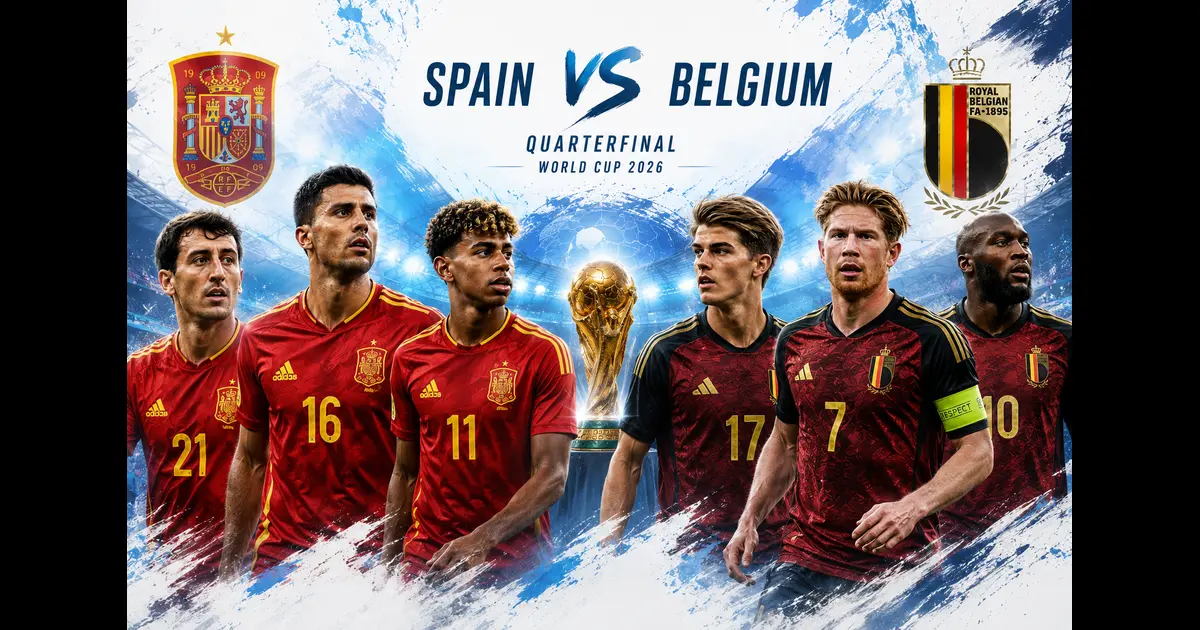 Zero goals conceded against thirteen scored — Spain vs Belgium is the purest style contrast left in the World Cup 2026 quarterfinals, with a semifinal spot on the line.
By StrikerReport Football Desk
Strip away the narratives, the history, and the pre-match noise, and this quarterfinal reduces to one clean statistical contrast that rarely presents itself this cleanly at a World Cup: the tournament’s most impenetrable defense against one of its most productive attacks. Spain have not conceded a single goal across five matches. Belgium have scored thirteen. Something, inevitably, has to give when these two sides meet at SoFi Stadium in Inglewood on Friday.
This is a genuine clash of footballing identities. Luis de la Fuente’s Spain have built their run to the last eight on control, patience, and defensive suffocation — a possession-heavy system designed to strangle opponents of the ball and the space to hurt them. Rudi Garcia’s Belgium, by contrast, have been a far more chaotic, high-variance proposition: capable of both drawing blanks against modest opposition and producing devastating attacking football when their most talented players click into gear simultaneously. Whichever version of Belgium turns up on Friday will determine whether this quarterfinal is a coronation or a genuine contest.
Spain’s Journey: Control, Patience, and a Perfect Defensive Record
Spain arrived at this World Cup among the favorites to go all the way, and nothing that has happened over the past month has done anything to dampen that expectation. Their only blemish across the entire tournament came on matchday one: a goalless draw against Cape Verde that, in hindsight, looks less like a warning sign and more like the one time an opponent managed to fully frustrate Spain’s approach. Since then, De la Fuente’s side have won every single match without conceding — a 4-0 demolition of Saudi Arabia, followed by wins over Uruguay and Austria, and then a nervier round of 16 test against fierce rivals Portugal.
That Portugal match deserves particular attention. Spain went toe-to-toe with a Cristiano Ronaldo side desperate to give their talisman one final World Cup moment, and for long stretches it looked as though the game might be heading toward extra time. Instead, Mikel Merino provided the moment that decided the tie, scoring a stoppage-time winner that sent Spain through 1-0 and, in the process, brought an emotional close to Ronaldo’s international career. It was Spain’s toughest test of the tournament to that point, and the manner in which they controlled the closing stages while chasing a winning goal spoke to a squad with genuine composure under pressure.
The tournament totals for Spain are extraordinary by any historical standard: four wins from five matches, nine goals scored, only two conceded — and both of those came in that single group-stage exception against Cape Verde. Since that opening match, Spain have gone four straight games without conceding, a run that includes wins over increasingly difficult opposition. Their defensive record is built on more than individual quality; it reflects a settled system in which Rodri’s positional discipline in front of the back four reduces the number of transition opportunities opponents can generate, while a back line built around Pau Cubarsí’s aggressive, proactive defending has repeatedly won the ball back high before danger can develop.
Belgium’s Journey: Inconsistent, But Increasingly Dangerous
Belgium’s path to the quarterfinals has been a far bumpier ride, and one that came uncomfortably close to ending before the knockout rounds even began. Their group stage produced three draws in five attempts — 1-1 against Egypt and 0-0 against Iran among them — results that left Belgium needing a big performance just to guarantee safe passage. They delivered exactly that with a 5-1 rout of New Zealand, the kind of statement win that hinted at the attacking quality still available within this squad even when results elsewhere had been underwhelming.
The knockout rounds have been similarly turbulent. In the round of 32, Belgium found themselves trailing Senegal 2-0 with only five minutes remaining, seemingly out of the tournament, before an extraordinary late fightback forced extra time and ultimately delivered a 3-2 win. It was the kind of result that either signals a team discovering its resilience at exactly the right moment, or a warning sign about a defense that continues to concede late, soft goals under pressure — quite possibly both are true simultaneously.
Whatever the underlying explanation, that Senegal comeback set up Belgium’s most complete performance of the tournament: a 4-1 demolition of co-host United States in the round of 16. Charles De Ketelaere scored twice inside the opening half hour, with Hans Vanaken and Romelu Lukaku each adding a goal of their own, in a display that eliminated the last remaining host nation from the competition and announced Belgium as a team capable of matching anyone on their day. The performance carried extra significance given the controversy that preceded it — a disputed red card suspension involving USA striker Folarin Balogun that had been the subject of political lobbying before FIFA’s disciplinary committee ultimately cleared him to play, adding a layer of drama to an already high-stakes fixture.
The tournament totals for Belgium tell the story of a genuinely two-sided team: one win from three group games followed by two knockout victories, thirteen goals scored across the tournament, but goals conceded in three of their last three matches. It is the profile of a side capable of thrilling, high-scoring football, but one that has not yet found the defensive consistency that Spain have demonstrated throughout.
Tactical Battleground: De Ketelaere’s Movement vs. Cubarsí’s Aggression
The single most instructive tactical thread heading into Friday’s quarterfinal centers on Charles De Ketelaere’s performance against the United States and what it might mean against Spain. Rather than holding a fixed position alongside Belgium’s more orthodox forward options, De Ketelaere repeatedly drifted into the half-spaces between midfield and defense, forcing opposing defenders into an impossible choice: follow him and open space in behind, or hold position and allow him to receive the ball freely between the lines.
That movement places a particular burden on Pau Cubarsí, the young Spanish center-back who has impressed throughout the tournament with a proactive, aggressive defensive style — stepping forward to intercept passes rather than sitting in a passive defensive block. Against a more conventional striker, that aggression has been an asset. Against De Ketelaere’s deliberately ambiguous positioning, every forward step Cubarsí takes carries additional risk: follow too far into midfield, and Kevin De Bruyne and Belgium’s supporting runners gain immediate access to the space vacated behind him.
For Belgium to have any realistic chance of causing an upset, De Ketelaere will likely need to lead the line again, supported by runners capable of converting transition moments into scoring opportunities before Spain can re-establish their defensive shape. Spain’s response will be to lean on their control of possession, reducing the number of transitions Belgium can generate in the first place — a strategy that has worked flawlessly for five matches running.
Chances of Reaching the Semifinal
Statistical models and betting markets are more closely aligned on this fixture than almost any other quarterfinal remaining in the tournament. Analytical projections have put Spain at roughly a 64 percent chance of winning this tie outright, a figure that closely mirrors betting market pricing, which has consistently made Spain the clear favorite throughout the buildup. That alignment reflects a straightforward football truth: when the tournament’s best defense meets one that has leaked goals in three straight matches, the smart money sits with the defense, particularly when that defense is paired with enough attacking quality of its own to make chances count.
Belgium’s path to an upset almost certainly runs through replicating the conditions of their win over the United States — early pressure, quick transitions, and De Ketelaere finding space before Spain settle into their preferred rhythm of controlled possession. The concern for Belgium is that Spain have not faced a defensive test they haven’t eventually solved, and their own defensive record suggests they are far less likely to be caught out in transition than the U.S. side was. Spain enter as deserved favorites, but Belgium’s attacking talent — De Bruyne, Doku, Lukaku, and De Ketelaere in combination — means an upset, while unlikely, remains a live possibility rather than a formality.
Expected Semifinal Opponent
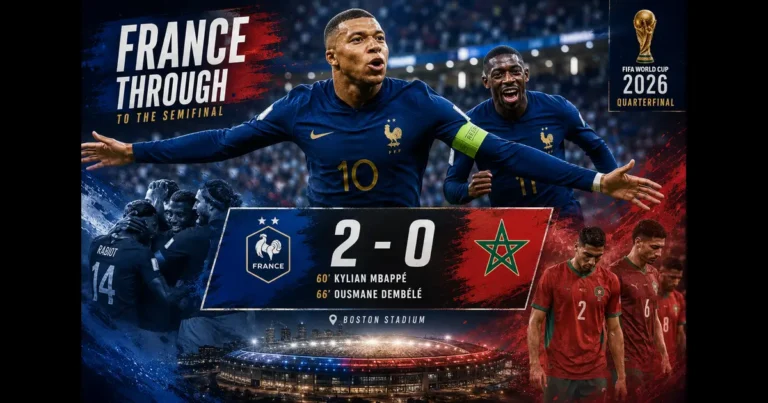
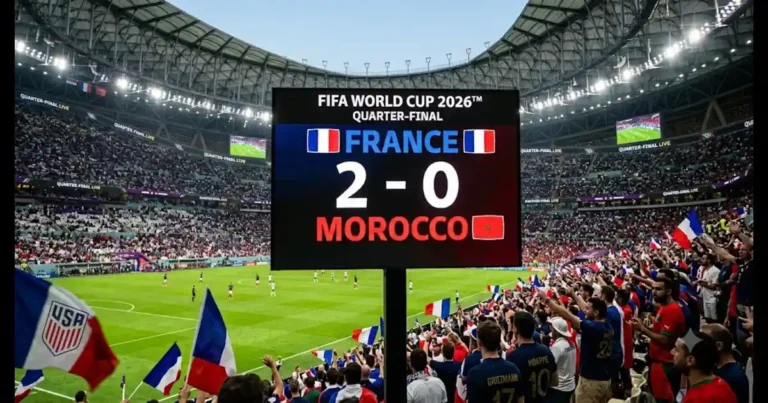
The winner of Friday’s quarterfinal advances to face whoever emerges from Thursday’s France vs Morocco tie, with the semifinal scheduled for Tuesday, July 14, at AT&T Stadium in Dallas. Given France’s status as heavy favorites in that fixture, Spain or Belgium should reasonably expect to face Kylian Mbappé and a French attack that has scored fourteen goals across five matches — a considerably sterner attacking test than either side has faced so far. For Spain in particular, whose defensive record remains untested against attacking talent of Mbappé’s caliber, that potential semifinal represents the first true examination of whether their defensive record can hold against the tournament’s most dangerous individual forward.
Three Best Performers: Spain
1. Mikel Oyarzabal — Spain’s leading scorer this tournament with four goals, Oyarzabal has provided the focal point for Spain’s attack in the continued absence of Álvaro Morata, converting the kind of half-chances that turn tight, controlled matches in Spain’s favor.
2. Rodri — The tempo-setter at the base of Spain’s midfield, Rodri’s positional discipline and distribution have been the foundation underpinning Spain’s remarkable five-game, two-goals-conceded record, dictating the rhythm of matches and denying opponents the transition opportunities they rely on.
3. Lamine Yamal — Electric on the right flank, Yamal’s combination play with Nico Williams on the opposite side has given Spain width and unpredictability that has troubled every defensive shape they have faced, including scoring his first World Cup goal during the group stage.
Three Best Performers: Belgium
1. Charles De Ketelaere — A first-half brace against the United States and the single biggest tactical problem Belgium possess heading into Friday: intelligent, ambiguous positioning that opposing defenders have struggled to solve all tournament.
2. Kevin De Bruyne — Still the creative fulcrum of this Belgian side at 35 years old, De Bruyne remains capable of unlocking even the tightest defenses with a single incisive pass, and Spain’s midfield will need to deny him time on the ball at all costs.
3. Romelu Lukaku — Belgium’s leading scorer with three goals, Lukaku’s movement and physical presence give this attack a hold-up and aerial dimension that pure pace alone cannot provide, offering an outlet when Belgium need to relieve pressure or change the point of attack.
Final Word
Friday’s quarterfinal at SoFi Stadium offers as clean a tactical contrast as this World Cup has produced: a Spanish side that has made a virtue of patience and defensive control against a Belgian team built on moments of individual brilliance and attacking directness. Spain’s unbeaten, defensively flawless run through the tournament makes them deserved favorites, but Belgium’s capacity to produce their best football exactly when it matters most — as they showed against both Senegal and the United States — means this quarterfinal carries more genuine jeopardy than the betting odds alone might suggest. Only one of these two very different footballing philosophies will survive to fight for a place in the World Cup final.
StrikerReport.com will have full match coverage and reaction following the final whistle at SoFi Stadium.
🔹🔹 follow us on facebook 🔹🔹
About the Author