Rodri FIFA World Cup 2026 — The Quiet Architect Who Holds Spain’s World Together
StrikerReport.com — World Cup 2026 Special | By StrikerReport Editorial Team | June 2026
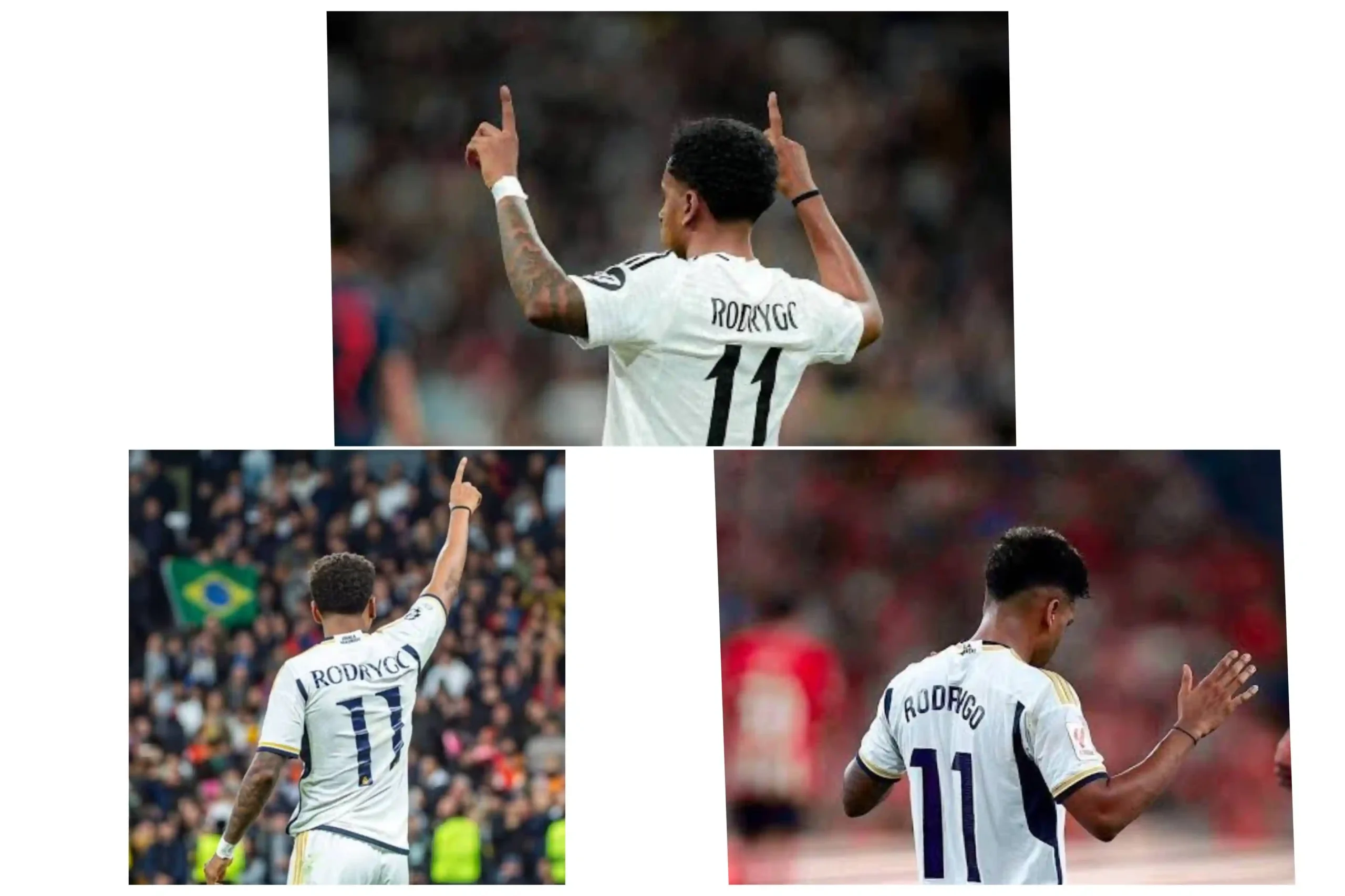
Spain | Defensive Midfielder | Age at WC 2026: 29 | Manchester City | 2024 Ballon d’Or Winner
- 19 career trophies including the Premier League (x4), Champions League, and UEFA Euro 2024
- 2024 Ballon d’Or winner — first Manchester City player and second Spaniard since 1960 to claim the prize
- Pass completion rate consistently above 92% across the Premier League and international football
- Estimated market value: €80 million | Age at World Cup 2026: 29 years old
- First-choice Spain defensive midfielder — the first name on Luis de la Fuente’s teamsheet
Quick Facts — Rodri FIFA World Cup 2026
| Category | Details |
|---|---|
| Full Name | Rodrigo Hernández Cascante |
| Date of Birth | 22 June 1996 |
| Age at World Cup 2026 | 29 years old |
| Nationality | Spanish |
| Height | 1.91 m (6 ft 3 in) |
| Preferred Foot | Right |
| Current Club | Manchester City (Premier League) |
| Jersey Number | #16 |
| Position | Defensive Midfielder / Holding Midfielder |
| Transfer Fee (to City) | €70 million (from Atlético Madrid, 2019) |
| Estimated Market Value | €80 million |
| Contract Until | 2027 |
| @rodrigo_hcascante | |
| Ballon d’Or | Winner — 2024 |
| Net Worth (Est.) | €25–30 million |
Rodri FIFA World Cup 2026 — The Story That Must Be Told
There are players who light up a World Cup with dazzling dribbles and memorable goals. And then there is Rodri. Rodrigo Hernández Cascante does not chase the spotlight — the spotlight, eventually, finds him. Because when the dust settles and the analysts put down their pens, when coaches sit back and search for the single reason their team survived or fell apart, the answer almost always traces back to the man in the holding midfield role. The man from Madrid who grew up in the shadows, worked in the silence of academies, and emerged as the most indispensable footballer on planet Earth heading into the FIFA World Cup 2026.
In a tournament that promises to be the grandest in football history — spread across the United States, Canada, and Mexico with 48 nations, 104 matches, and the largest collective audience the sport has ever seen — Spain will arrive carrying real belief that they can go all the way. And Rodri FIFA World Cup 2026 is not simply a keyword. It is a storyline. It is the narrative of a Ballon d’Or winner who spent the better part of 2024–25 watching football from a hospital bed, who fought his way back from a serious knee injury, who returned to the Manchester City starting eleven with the composure of a man who had always known he would be back — and who now prepares to stand at the centre of the world’s biggest sporting event with Spain’s entire tactical identity resting on his broad shoulders.
No player in this World Cup carries a heavier weight of expectation. And no player in this World Cup is better equipped to handle it.
Biography — From the Streets of Madrid to the World Stage
Rodrigo Hernández Cascante was born on 22 June 1996 in Madrid, Spain. He grew up in the Majadahonda district on the outskirts of the Spanish capital — a suburban town that sits in the shadow of the Bernabéu but has little of Real Madrid’s glamour. His childhood was ordinary in the best possible sense: a middle-class family, a love of football that burned from the first moment he kicked a ball in the neighbourhood, and parents who supported his dream without pushing it beyond what a child could carry.
He started his organised football journey at Rayo Majadahonda, the local club where his under-11 and under-12 teams gave him his first real taste of structured play. Even at that age, those who watched him noted something unusual: he was not the quickest, not the most explosive, but he had a mind for the game that seemed years ahead of his body. He read space, read movement, and seemed to understand football’s geometry at an age when most kids are still learning to keep the ball in bounds.
Atlético Madrid spotted him in 2007 and brought him into their youth academy system. He spent the better part of six formative years there, developing through their renowned cantera and absorbing the defensive discipline that Diego Simeone would later brand into the club’s DNA. But in 2013, Atlético released him — a moment that could have broken a lesser spirit. For Rodri, it became fuel. He moved to Villarreal’s youth setup and completed his development under different philosophies, learning the art of possession and the control of tempo that would define his senior career. He made his first-team debut for Villarreal on 17 December 2015 in a Copa del Rey match against SD Huesca — a quiet cameo that told no great story on the night, but marked the beginning of a journey that would end on football’s grandest stages.
Club Career Highlights — The Making of a Champion
Rodri’s first full senior season at Villarreal in 2017–18 was the year the football world started paying close attention. He made 37 La Liga appearances and showcased a range of passing and positional intelligence that quickly caught the eye of clubs far bigger than the Yellow Submarine. Atlético Madrid, having released him years earlier, came back — this time as suitors rather than judges. The irony was not lost on anyone in Spanish football circles. He joined Atlético for the 2018–19 season and immediately slotted into Simeone’s midfield engine room, helping the club win the UEFA Super Cup and finish runners-up in La Liga.
But it was the summer of 2019 that changed everything. Manchester City, under Pep Guardiola, identified Rodri as the long-term successor to Fernandinho and paid approximately €70 million to bring him to the Etihad. It was a fee that raised a few eyebrows at the time for a defensive midfielder. Five years later, it stands as one of the greatest pieces of business in Premier League history. At City, Rodri was not merely good — he was transformative. The 2020–21 season brought the Premier League title and the League Cup. In 2021–22, another Premier League crown. In 2022–23, the Treble — Premier League, FA Cup, and the UEFA Champions League — in what became one of the most historic campaigns English club football has ever witnessed.
In 2023–24, he delivered perhaps his finest individual campaign, anchoring a City side that won a record fourth consecutive Premier League title while simultaneously leading Spain to EURO 2024 glory. His pass completion rates consistently hovered above 92%, his ball recoveries per game were among the highest in the league, and his ability to dictate tempo meant that City’s attack always had a secure platform to operate from. In October 2024, Rodri was awarded the Ballon d’Or in Paris — becoming only the second Spaniard in history to win the award, after Luis Suárez in 1960, and the first-ever Manchester City player to claim football’s most prestigious individual honour.
The 2024–25 season brought a cruel interruption. A serious knee injury sustained in September 2024 ruled him out for the vast majority of the campaign — and in Rodri’s absence, Manchester City’s defensive midfield looked exposed, their composure frail, their identity somehow less whole. It was the most eloquent possible demonstration of his importance. But Rodri returned in the 2025–26 season with typical understatement, adding minutes carefully, and confirming by the end of the campaign that his quality had not been diminished. He enters World Cup 2026 fully fit, fully motivated, and carrying the weight of a Ballon d’Or on his chest like a quiet badge of purpose.
International Career — La Roja’s Immovable Heartbeat — Rodri FIFA World Cup 2026
Rodri made his senior debut for Spain in 2018 and has since become the undisputed first choice in the holding midfield role for La Roja. He was part of the squad that navigated the EURO 2020 semi-final run, and his presence at the 2022 FIFA World Cup in Qatar — though Spain’s tournament ended painfully in the round of sixteen — underlined how central he had become to the national team’s identity. Spain without Rodri feels fundamentally different. The press is less coordinated, the build-up play less assured, and the defensive structure behind the attack less reliable.
EURO 2024 in Germany was his crowning moment in a Spain shirt. He was exceptional throughout the tournament — commanding the midfield, distributing with intelligence and range, recovering the ball with the efficiency of a machine. He completed 411 of his 439 attempted passes across the tournament, maintaining a pass accuracy of 92.84%. He contributed a goal in the round of sixteen against Georgia and made 33 ball recoveries, four blocks, and five clearances across the competition. He was voted Player of the Tournament — the fourth such honour of that kind in his career — before being forced off at half-time in the final against England with an injury. Spain still won 2–1, courtesy of a late Mikel Oyarzabal goal. But Rodri had already done his work.
Coach Luis de la Fuente has been unequivocal about Rodri’s status: he is the first name on the teamsheet. De la Fuente’s Spain play a dynamic, possession-oriented game that requires a midfield anchor of the highest calibre — someone who can win the ball, distribute it intelligently in tight spaces, and provide the defensive cover that allows Pedri, Gavi, and Fabian Ruiz to express themselves further forward. Rodri is that anchor. He has accumulated more than 50 senior caps and carries into FIFA World Cup 2026 the authority of a Ballon d’Or winner, a European champion, and a player with nothing left to prove — except, perhaps, the one trophy that still eludes him.
Career Timeline — Rodri FIFA World Cup 2026 Journey
📅 2015 — Senior Debut for Villarreal
Rodri made his first-team debut on 17 December 2015 in a Copa del Rey match against SD Huesca. A quiet beginning to a story that would become one of football’s greatest modern narratives. He was patient, composed, and already different from those around him.
📅 2018 — Return to Atlético Madrid — Full Circle
After being released by Atlético’s academy years earlier, Rodri returned to the club as a fully formed senior professional. He helped Atlético win the UEFA Super Cup in 2018 and established himself as one of La Liga’s most impressive midfielders — proving to those who had once let him go that the decision had been a mistake of historic proportions.
📅 2019 — €70 Million Move to Manchester City
Pep Guardiola’s Manchester City paid a then-record fee for a holding midfielder to bring Rodri to the Etihad. The purchase would prove to be transformational for both club and player, redefining what a defensive midfielder could mean to a team playing at the absolute summit of European football.
📅 2023 — The Treble — History with Manchester City
Rodri was the midfield engine behind one of English football’s most historic seasons. City won the Premier League, FA Cup, and UEFA Champions League in 2022–23 — an achievement no English club had ever managed before. Rodri was central to every step, and his performance in the Champions League final against Inter Milan was described by analysts as flawless.
📅 June 2024 — Spain EURO 2024 Champions — Player of the Tournament
At Euro 2024 in Germany, Rodri led Spain to their fourth European Championship with performances of commanding intelligence. He scored in the knockout stages, completed nearly 93% of his passes across the tournament, and won Player of the Tournament before being forced off in the final — which Spain still won 2–1 against England.
📅 October 2024 — The Ballon d’Or — History Made in Paris
Rodri was awarded the 2024 Ballon d’Or in Paris, becoming only the second Spaniard in history and the first-ever Manchester City player to win football’s greatest individual prize. It was a recognition not just of a single season, but of a career built on excellence, sacrifice, and quiet brilliance.
📅 2026 — Rodri FIFA World Cup 2026 — The Final Frontier
Fully recovered from his 2024 knee injury and back to his imperious best for Manchester City in the 2025–26 season, Rodri enters FIFA World Cup 2026 as Spain’s most important player and one of the tournament’s defining figures. The world is watching.
2025–26 Season Statistics — Rodri FIFA World Cup 2026
Club Statistics — Manchester City
| Competition | Apps | Goals | Assists | Avg Rating |
|---|---|---|---|---|
| Premier League 2025–26 | 20 | 1 | 0 | 7.51 |
| FA Cup 2025–26 | 2 | 0 | 0 | 7.3 |
| EFL Cup 2025–26 | 2 | 0 | 0 | 7.2 |
| UEFA Champions League | 4 | 0 | 1 | 7.4 |
| Total 2025–26 | 28 | 1 | 1 | 7.45 |
International Statistics — Spain
| Competition | Apps | Goals | Assists | Pass Acc. |
|---|---|---|---|---|
| WC 2026 Qualifying | 8 | 1 | 2 | 93% |
| UEFA Nations League 2024–25 | 4 | 0 | 1 | 91% |
| EURO 2024 | 6 | 1 | 1 | 92.84% |
| Senior Career Totals | 55+ | 5 | 9 | 92%+ |
Playing Style Breakdown — Rodri FIFA World Cup 2026
1. Defensive Qualities
Rodri’s defensive work is the foundation of everything Spain and Manchester City build. He reads the game with an almost supernatural ability to anticipate danger, positioning his body in passing lanes before an opponent has even decided to play the ball. His tackle success rate is consistently among the highest in the Premier League for central midfielders, and his aerial ability — aided by a frame of 1.91 metres — makes him a dominant force in defensive headers. He does not lunge; he intercepts. He does not chase; he positions. It is the difference between effort and intelligence, and Rodri has always chosen intelligence.
2. Technical Skills and Passing Range
Few midfielders in world football possess the range of passing that Rodri brings to every match. He can play a five-yard square pass with the same precision as a fifty-yard diagonal switch across the pitch. His short passing in tight spaces is exceptionally accurate, which is why Guardiola’s City rely on him to be the pivot in their build-up — the player through whom everything flows. His long-range distribution is a weapon that opens games up completely, setting wide players free behind opposition defensive lines and switching the point of attack before opponents can reorganise.
3. Physical Attributes
Standing at 1.91 metres and weighing 82 kilograms, Rodri is physically imposing for a central midfielder. He uses his body strength intelligently — shielding the ball, winning physical duels, and protecting possession even when pressed hard. His stamina across ninety minutes is exceptional, and his recovery speed, while not electric in a sprinting sense, is more than sufficient for the demands of the holding role. He rarely gets beaten in a physical contest because he rarely lets one develop in the first place.
4. Tactical Intelligence
This is where Rodri transcends statistics. His tactical intelligence is what separates him from every other holding midfielder of his generation. He understands Guardiola’s system at a depth that few players ever achieve — knowing when to press, when to drop, when to hold a high line, and when to cover. He operates as Spain’s tactical brain in the same way: adjusting to the rhythm of each game, managing transitions between attack and defence, and making the collective unit function as a seamless whole. When Rodri is playing well, Spain and City do not feel like they are working hard. They feel inevitable.
5. Areas to Watch / Weaknesses
Rodri is not a goalscorer by trade, and his contribution in front of goal — while not negligible — is limited by the nature of his role. He rarely makes forward runs into the penalty area and does not offer the same attacking threat as a more advanced midfielder. His pace, while adequate, is not exceptional, which means that if an opponent manages to isolate him with a direct runner in behind, there can be exposure. The other area of consideration heading into World Cup 2026 is his fitness management — after a significant knee injury in 2024, the coaching staff will be careful to manage his minutes, particularly in the group stage. A fully fit Rodri across a full tournament is the best possible version of this Spain side.
Skill Ratings — Rodri FIFA World Cup 2026
| Skill | Rating |
|---|---|
| Finishing | 62 / 100 |
| Pace | 70 / 100 |
| Dribbling | 74 / 100 |
| Passing | 95 / 100 |
| Physicality | 86 / 100 |
| Vision | 94 / 100 |
| Movement / Positioning | 97 / 100 |
| Defensive Work | 96 / 100 |
| Leadership | 90 / 100 |
Records & Milestones — Rodri FIFA World Cup 2026
🏆 First Manchester City Player to Win the Ballon d’Or
In October 2024, Rodri became the first player in Manchester City’s history to win the Ballon d’Or — football’s most prestigious individual honour. He was also only the second Spanish male player to claim the prize, after Luis Suárez in 1960, ending a 64-year wait for Spanish football.
🏆 Four Consecutive Premier League Titles
Rodri was central to Manchester City winning four consecutive Premier League titles from 2020–21 through to 2023–24 — an unprecedented achievement in the history of the competition, surpassing the record of three set by Manchester United in the 1990s under Sir Alex Ferguson.
🏆 Euro 2024 Player of the Tournament
At UEFA Euro 2024 in Germany, Rodri won the Player of the Tournament award with a 92.84% pass accuracy, 33 ball recoveries, and a goal in the knockout stages. It was his fourth Player of the Tournament honour across major competitions — a consistency that speaks volumes.
🏆 The Treble — 2022–23 with Manchester City
Rodri played a pivotal role in Manchester City’s historic 2022–23 treble, becoming part of the first English club to win the Premier League, FA Cup, and UEFA Champions League in the same season. His performance in the Champions League final against Inter Milan was described by analysts as a masterclass in positional control.
🏆 Pass Accuracy Record Among Premier League Midfielders
Across multiple Premier League seasons, Rodri has maintained a pass completion rate consistently above 90% — a benchmark that very few central midfielders in the league’s history have achieved with such regularity across the full demands of an elite European schedule.
🏆 Spain’s Unbeaten Record Through EURO 2024
During Spain’s run through EURO 2024 — seven matches, seven victories — Rodri did not lose a single game across a remarkable stretch of performances for La Roja, making Spain the only team in the tournament to go through undefeated.
World Cup 2026 Preview — Can Rodri Lead Spain to Glory? — Rodri FIFA World Cup 2026
Spain arrive at the FIFA World Cup 2026 as genuine contenders, and that assessment is built in no small part on the return of Rodri to full fitness. As one football journalist put it perfectly in the days following Spain’s squad announcement: Rodri is not just Spain’s best player — he is the spine around which everything else is organised. Without him, Spain look ordinary. With him, they look unstoppable. That is the magnitude of his influence, and heading into this tournament, Luis de la Fuente’s squad possesses the kind of depth and quality that can sustain a deep run regardless of individual matchday form.
The attacking weapons at De la Fuente’s disposal are remarkable — Lamine Yamal and Nico Williams on the flanks represent one of the most exciting wide pairings in the tournament, Pedri anchors the advanced midfield play with a maturity that belies his age, and Mikel Oyarzabal leads the line with the composure of a man who has scored winning goals in European finals. But it is the foundation that Rodri provides that makes this team coherent rather than simply talented. Talented teams lose. Coherent teams — teams with a spine, with a brain in midfield, with a player who never panics — win tournaments.
Tactically, Spain under De la Fuente operate in a shape that typically resembles a 4-3-3 or 4-1-4-1 depending on the phase of play. Rodri sits as the single pivot — the deepest midfielder and the player through whom Spain’s build-up is invariably routed. In the defensive phase, he drops between the centre-backs to form a back three, allowing the full-backs to push forward. In the attacking phase, he controls the tempo from deep, always available as the safety valve when the forwards and advanced midfielders encounter pressure. It is a role that demands the highest level of reading and intelligence, and Rodri has demonstrated for years that he is precisely the right man for it.
Spain’s route through the knockout stages, if they advance as expected, could pit them against France, Brazil, or Argentina — opponents whose midfield quality will test Rodri in ways that will make for compelling viewing. The tournament prediction for Spain is a semi-final at minimum, with a realistic case for the final. Whether they go all the way depends, more than any other single factor, on whether Rodrigo Hernández Cascante remains fit and plays at the level the world knows he is capable of.
Head-to-Head: Rodri FIFA World Cup 2026 vs Casemiro (Brazil)
| Attribute | Rodri (Spain) | Casemiro (Brazil) |
|---|---|---|
| Age at WC 2026 | 29 | 34 |
| Club | Manchester City | Manchester United |
| Career Goals (Senior) | 27+ | 55+ |
| World Cup Goals | 1 | 2 |
| Ballon d’Or | Winner (2024) | Not won |
| Pass Accuracy | ~93% | ~88% |
| Market Value (Est.) | €80 million | €15 million |
| Threat Rating | 9.5 / 10 | 8.0 / 10 |
| Career Stage | Peak | Past peak |
The Case for Rodri
At 29, Rodri is at the absolute peak of his powers. He has just won the Ballon d’Or, he has won the Champions League, four Premier League titles, and the European Championship. His passing range, defensive positioning, and tactical intelligence are unmatched in international football at this moment. At this World Cup, he is the most complete holding midfielder in the tournament field — not just technically, but mentally. He has experienced every form of major football pressure and come through it. He does not lose his composure. He does not lose his head. He is, simply, the most complete midfielder of his generation.
The Case for Casemiro
Casemiro has been one of the great defensive midfielders of the past decade. His Champions League record with Real Madrid is extraordinary, and his ability to win the ball in physical duels and protect the backline makes him a constant defensive presence. Brazil’s tactical system is built around his recovery ability, and his experience at the top level — including World Cup campaigns in 2018 and 2022 — makes him a calming presence in high-pressure moments that younger players cannot easily replicate.
Verdict
Rodri wins this comparison in 2026, and it is not particularly close. Casemiro, at 34, is on the descending arc of his career. Rodri, at 29, is at his absolute summit. The Ballon d’Or, the statistical superiority in passing, the peak physical condition, and the sheer weight of what he has already achieved in the past two years all point in the same direction. This is Rodri’s tournament to define.
Fun Facts & Personal Life — The Man Behind the Midfield
Rodri has spoken publicly about his passion for chess. Those who know him well describe a methodical, analytical mind that approaches football problems with the same patience a grandmaster applies to a board game — which perhaps explains why his positioning is always three moves ahead of his opponents on the pitch.
He is a graduate-level student in the academic sense: Rodri holds a degree in business administration, having balanced his academic studies alongside his youth football development in Villarreal. He is widely regarded as one of the most intellectually engaged players in the modern game, and the way he speaks about football — its systems, its psychology, its pressures — reflects an education that goes well beyond the training ground.
Despite winning the Ballon d’Or, Rodri described the award before winning it with characteristic humility. He noted publicly that fans naturally favour goal-scorers and that he understood why a holding midfielder was rarely the most glamorous candidate. That restraint and self-awareness only made the eventual victory feel more earned — and more deserved.
He is close friends with Spain teammates Pedri and Mikel Oyarzabal — a bond formed through years of playing together in qualifying campaigns and major tournaments. The camaraderie within this Spain squad is, according to multiple reports, genuinely warm rather than merely professional, with a group of players who genuinely enjoy each other’s company away from the pitch.
Rodri is known among City’s squad for having no interest in the luxury car culture that characterises so much of Premier League life. He prefers a low-profile lifestyle that keeps him grounded in the values of his upbringing in Majadahonda — the suburban Madrid neighbourhood that produced not a superstar, but something rarer: a champion with perspective.
StrikerReport Verdict — Rodri FIFA World Cup 2026
StrikerReport Rating: 9.6 / 10
There is a reason that when Luis de la Fuente names his Spain lineup for the FIFA World Cup 2026, Rodri’s name goes down first. There is a reason that in his absence across the 2024–25 season, Manchester City looked like a team searching for their heartbeat. There is a reason that when the Ballon d’Or jury sat down in Paris in October 2024, the conversation was not truly a conversation — it was a formality. Because Rodrigo Hernández Cascante has, over the past several years, quietly and without fanfare, become the most important midfielder in world football.
He arrives at World Cup 2026 as a Ballon d’Or winner, a European champion, a four-time Premier League title holder, and a Champions League winner. He arrives fit, focused, and representing a Spain side that could go all the way in the United States, Canada, and Mexico. He does not need the headlines. He does not need the goals-of-the-tournament montages or the viral dribbling clips. He needs the ball at his feet, space to dictate, and the understanding of those around him that when he points, they move.
The FIFA World Cup 2026 is the one trophy missing from a collection that already defines greatness. And in June and July 2026, Rodri will have the opportunity — on football’s biggest stage, in front of the sport’s largest-ever global audience — to complete it. Quiet. Composed. Inevitable. This is Rodri FIFA World Cup 2026. And the world is finally paying attention.
Also read : Pedri FIFA World Cup 2026: Profile, Stats & Career | StrikerReport
Lionel Messi Becomes Billionaire: How the Football Icon Built a $1 Billion Empire
About the Author

2 thoughts on “Rodri FIFA World Cup 2026 — Spain’s Ballon d’Or Warrior Profile, Stats & Preview”