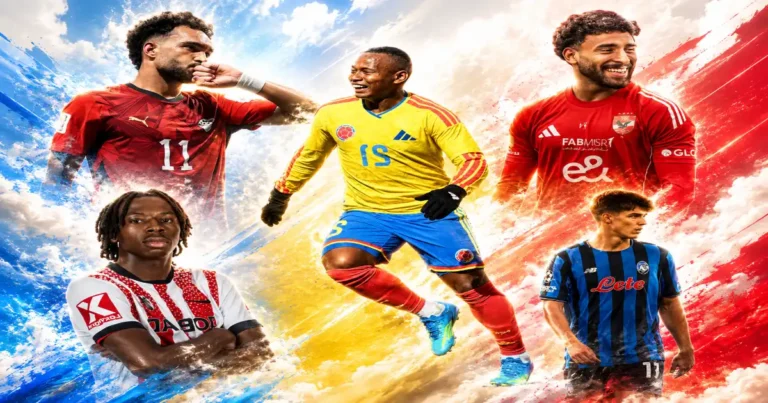
Look past the results and every quarterfinal team incredible story reveals something the scoreline alone could never capture
 Look past the results and every quarterfinal team incredible story reveals something the scoreline alone could never capture
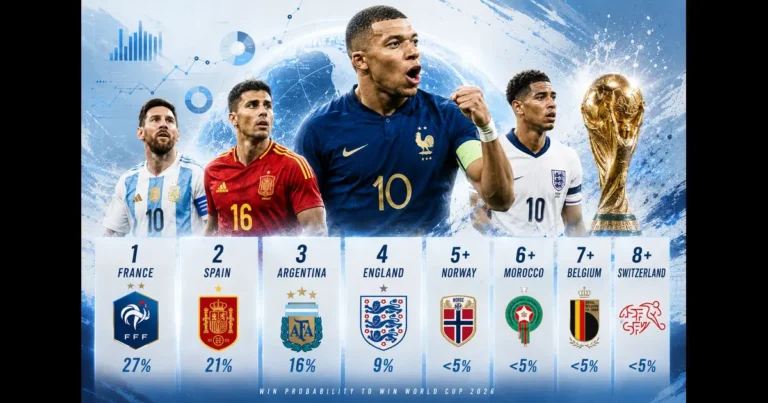
Strip away the tactics boards and the win probabilities for a moment, and what you’re left with at this stage of a World Cup is eight separate stories, each one carrying its own emotional weight, its own history, and its own reason for mattering to the people who’ve been living through it. Some of these are stories of redemption. Some are stories nobody saw coming at all. Every quarterfinal team incredible story deserves to be told on its own terms, because the bracket alone doesn’t come close to capturing what got each of these eight nations here.
Norway: The Story Nobody Saw Coming
Start with the one that still doesn’t feel entirely real. Norway had never reached a World Cup quarterfinal before this tournament, a genuinely startling fact given the country’s footballing pedigree and the individual brilliance of players like Erling Haaland at club level for years. Drawn into a brutal group alongside France, Senegal, and Iraq, Norway did the hard, unglamorous work of beating the teams they were supposed to beat, then produced the shock of the tournament’s knockout rounds, defeating Brazil 2-1 in the Round of 16. Haaland’s tournament-leading goal tally is the headline, but the deeper story is a nation that spent decades as a supporting character in world football finally producing a golden generation deep enough to match its most famous individual talent. Whatever happens against England in the quarterfinal, Norwegian football has already rewritten its own history books this summer.Erling Haaland: The Goal Machine Rewriting Football’s Record Books
Morocco: History, Twice
Morocco’s story carries a different weight, because this isn’t really a surprise anymore, it’s a pattern. Becoming the first African nation to reach back-to-back World Cup quarterfinals is a genuinely historic achievement, one that transforms their unforgettable 2022 semifinal run from a beautiful one-off into the foundation of something sustained. Their 3-0 demolition of co-host Canada in the Round of 16 showcased the same defensive discipline and tactical cohesion that made the 2022 side so beloved, this time delivered by a squad that’s clearly built a genuine footballing identity rather than simply riding a wave of emotion. Azzedine Ounahi’s continued brilliance links this campaign directly to the last one, and Morocco’s story now isn’t just about one magical summer; it’s about proving that summer wasn’t a fluke.Achraf Hakimi FIFA World Cup 2026: Profile, Stats & Career | StrikerReport
Spain: Perfection Without the Fanfare
Every tournament has a team playing brilliantly without anyone quite noticing how brilliant it’s been, and this year that team is Spain. Their story is one of near-total control: unbeaten in 35 straight matches heading into the quarterfinals, a streak tying the longest in the team’s history, and remarkably, they have yet to concede a single goal across this entire World Cup. Their Round of 16 win over Portugal, ending Cristiano Ronaldo’s international career on a stoppage-time Mikel Merino goal, could have been the tournament’s most talked-about result in any other context. Instead, it barely registered against louder storylines elsewhere, which is itself the most interesting part of Spain’s story this summer: a genuinely dominant campaign happening almost entirely outside the spotlight, built around a teenager in Lamine Yamal who somehow still isn’t the headline act despite being one of the most electrifying attacking talents left in the competition.Portugal vs Spain World Cup Report: Merino’s Late Strike Ends Ronaldo’s Career
France: The Redemption of a Nearly Man
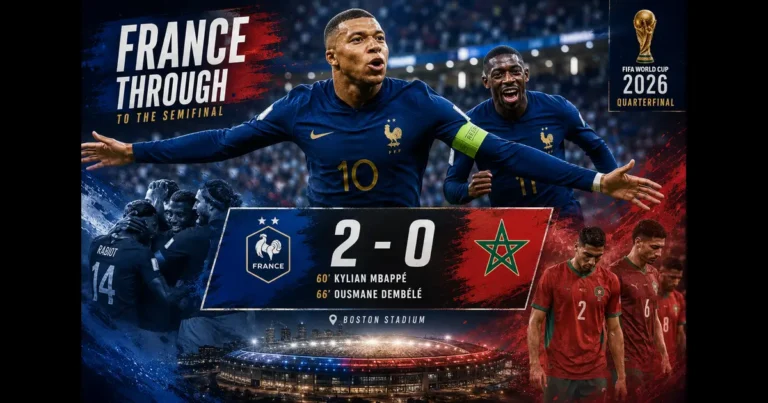
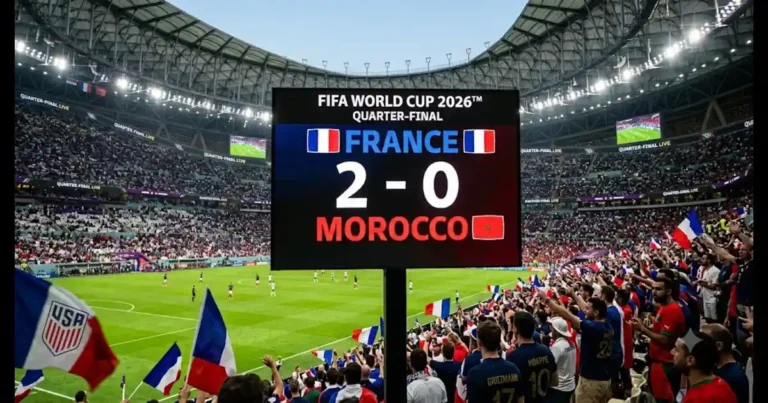
Ousmane Dembélé’s career has been defined, fairly or not, by unfulfilled potential and a reputation for talent that never quite matched its output at the biggest moments. This tournament has quietly rewritten that story. A hat-trick during the group stage, already being referred to in parts of the football media as “Ballon d’Dembélé,” has been central to France’s status as the tournament’s most ruthless attacking side, outscoring opponents 14-2 across their four matches so far. Paired with Kylian Mbappé’s continued brilliance, France’s story this summer isn’t really about a golden generation arriving; it’s about a supporting cast finally delivering alongside a superstar who’s carried undue weight in previous tournaments. Morocco await in the quarterfinal, and France’s story now carries genuine expectation rather than hope.
Belgium: The Generation That Wouldn’t Quite Die
Belgium’s golden generation has been declared finished more times than most football writers can count, and this tournament initially looked like it might finally confirm the obituary. A stuttering group stage, including a deflating draw against Egypt, had Belgian football media bracing for another quiet exit. Then, seemingly overnight, the switch flipped: a 4-1 demolition of co-host USA in the Round of 16, powered by a rejuvenated Charles De Ketelaere, suggested there’s still genuine quality left in this core of players even as the years catch up with some of its longest-serving members. Belgium’s story this summer is one of stubborn refusal, a squad that’s been written off repeatedly finding one more level when the alternative was going home.
England: Consistency as Its Own Kind of Story
It’s easy to overlook a story built on steady progress rather than dramatic transformation, but England reaching a third straight World Cup quarterfinal under Thomas Tuchel deserves real credit. This isn’t a golden generation defined by one transcendent moment; it’s a squad that keeps finding a way through, sometimes unconvincingly, as their Round of 16 win over Mexico demonstrated when they played most of the second half down to ten men after a red card. Jude Bellingham has emerged as the connective tissue holding this campaign together, capable of the individual moments that turn scrappy performances into results. England’s story this summer isn’t about romance. It’s about a squad quietly building the kind of tournament-after-tournament consistency that, eventually, tends to produce a trophy.Harry Kane World Cup Impact: Goals, the Penalty, and England’s Unfinished Story
Argentina: The Farewell Tour Nobody Wanted to End Yet
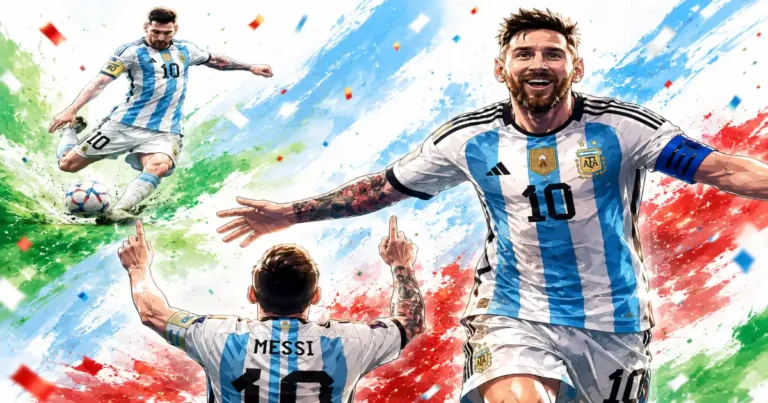
Lionel Messi, at thirty-nine, playing in what’s widely assumed to be his final World Cup, has produced a scoring streak across consecutive tournament matches that’s already the longest in World Cup history. But Argentina’s story this summer very nearly ended in heartbreak rather than history. Trailing Egypt 2-0 with barely ten minutes remaining in the Round of 16, needing three goals in thirteen minutes to survive, Argentina produced one of the great comebacks in tournament history, with Messi’s own equalizer sandwiched between a Cristian Romero header and a stoppage-time winner from substitute-assisted Enzo Fernández. Argentina’s story isn’t one of comfortable dominance; it’s a title defense that’s twice now flirted with disaster, in matches against both Cape Verde and Egypt, and twice found a way through anyway. Whether that pattern holds against Switzerland in the quarterfinal is the question the rest of this tournament still has to answer.Whatever Happens Next, Messi Is Already the Biggest Winner of World Cup 2026
Switzerland: The Quiet Overachievers
There’s no single transcendent superstar driving Switzerland’s story, and that’s rather the point. A nation that hadn’t reached a World Cup quarterfinal since 1954 has gotten here on the back of defensive discipline, goalkeeper Gregor Kobel’s heroics, and a collective willingness to grind out results even when the underlying performance data, as in their penalty shootout win over Colombia, suggested they were the inferior side on the pitch. Missing their own breakout star, Johan Manzambi, for their biggest match in over seven decades only adds to the sense that this Swiss campaign has been built on resilience rather than individual brilliance. Argentina await in the quarterfinal, an enormous step up in class, but Switzerland’s story this summer has already exceeded whatever modest expectations existed before the tournament began.The Statistical Favorite to Win World Cup 2026 Right Now
The Threads That Connect These Eight Stories
Look closely enough at these eight narratives and a few recurring themes emerge, even though the stories themselves are wildly different in tone and substance. Several of these teams, Belgium and England most obviously, are wrestling with questions of consistency versus potential, squads that everyone agrees are talented enough to go further than they have, if only the performances would arrive on a more reliable schedule. Others, Norway and Switzerland, are living through the specific magic of exceeding expectations so thoroughly that the rest of the tournament almost feels like bonus football, every additional match a gift rather than an entitlement. And two of these stories, Argentina and Spain, represent nearly opposite approaches to the same underlying goal: Argentina surviving on the back of moments of individual transcendence in matches that could easily have gone the other way, and Spain achieving the same ultimate position through relentless, almost boring control that never lets a match become close enough to require a miracle in the first place.
Morocco and France, meanwhile, sit at an interesting intersection of history and expectation. Morocco is proving that a single extraordinary tournament run can become a genuine footballing identity rather than a one-off; France is proving that a squad’s most talented individual doesn’t have to carry the weight alone if the rest of the roster finally delivers alongside him. Both are stories about sustainability, about whether a moment of brilliance can become a pattern, just approached from opposite directions.
What Happens to These Stories Next
The quarterfinal round will inevitably end four of these eight stories, at least in terms of this specific tournament, and it’s worth remembering that elimination doesn’t erase what’s already happened. Norway’s historic run to a first-ever quarterfinal remains historic regardless of Saturday’s result against England. Switzerland’s best World Cup showing since 1954 stays remarkable whether or not they find a way past Argentina. Stories in football don’t require a trophy at the end to matter; they require only that something genuinely happened, something that changes how a nation, a generation of players, or a global audience of neutral fans thinks about a team going forward. All eight of these stories have already cleared that bar. The trophy will decide which one gets remembered as a champion’s story. It won’t decide which ones were worth telling in the first place.
Why These Stories Matter More Than the Bracket
It’s tempting, at the quarterfinal stage, to reduce everything to win probabilities and statistical models, and there’s real value in that kind of analysis. But football’s actual appeal has never been purely mathematical. Norway’s improbable rise, Morocco’s sustained excellence, Spain’s quiet dominance, France’s redemption arcs, Belgium’s stubborn refusal to fade, England’s steady consistency, Argentina’s flirtation with disaster, and Switzerland’s overachieving resilience are the reasons casual fans and lifelong supporters alike keep coming back to this tournament every four years. The trophy only goes to one of these eight teams. But every one of them is already leaving this World Cup with a story worth remembering long after the final whistle blows on July 19.
◾◾ follow us on facebook ◾◾
About the Author