 Football’s Richest Stars: Ranking the Highest-Paid Footballers of 2026
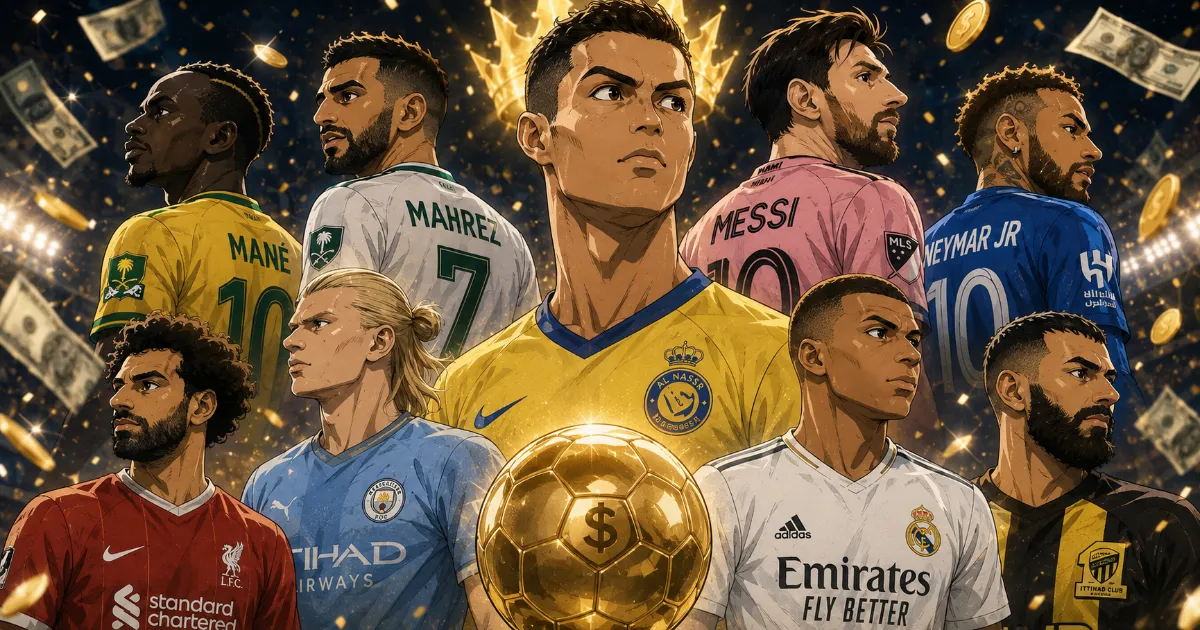
Football has never been richer, and the numbers behind its biggest names prove it. From Cristiano Ronaldo’s Al-Nassr empire to Lionel Messi’s Miami revenue-share and Kylian Mbappé’s Nike-fuelled brand, broadcast deals, sponsorship wars, and the arms race between Europe’s super-clubs and the Saudi Pro League have pushed player earnings into territory that would have seemed absurd a decade ago. Every year, a handful of stars pull away from the pack, not just for what they do on the pitch, but for what they’re worth off it. This is our countdown of the highest-paid footballers in the world right now, ranked by total annual income including salary, bonuses, and commercial deals.
LaLiga 2026/27 Schedule: Fixtures, Dates & Times
Premier League 2026/27 Schedule: This Week and Next Week
NBA Schedule 2026-27: Christmas Day Rivalries, Ring Night and the Games to Watch
Before diving in, it’s worth noting how these figures are built. A player’s on-pitch wage is only one part of the puzzle. Image rights, boot deals, personal sponsorships, and appearance clauses can add tens of millions on top of a base salary. That’s why some names on this list might surprise you if you’re only thinking about weekly wage slips.
10. Sadio Mané (Al-Nassr)
The Senegalese forward closes out our top ten, and his numbers show just how far the Saudi Pro League’s spending now stretches down the squad sheet, not just to the marquee names at the very top. Reports put his annual wage at around €40 million. That’s a figure that would headline almost any other league on earth, yet here it’s barely enough to crack a global top ten.
9. Riyad Mahrez (Al-Ahli)
The former Manchester City winger has quietly become one of the Saudi Pro League’s steadiest earners since his move to Al-Ahli. His annual pay is estimated at roughly €55 million, a number that places him comfortably among the world’s best-paid wingers, even without the global brand deals of some of the names above him.
8. Mohamed Salah (Liverpool)
Salah remains the financial standard-bearer for the Premier League. On top of holding the league’s biggest wage, he’s estimated to add roughly £20 million a year in commercial income, from boot deals to regional sponsorships across the Middle East and Africa, proof that a player doesn’t need to leave Europe to build a nine-figure earnings profile.
7. Erling Haaland (Manchester City)
Manchester City’s Norwegian goal machine keeps climbing this list as his commercial portfolio catches up to his footballing numbers. His total annual earnings, including his Nike partnership and a new contract, are estimated at around €65 to 70 million, making him the highest-earning player still playing his club football in England.
6. Kylian Mbappé (Real Madrid)
Mbappé is the clearest example on this list of a player whose brand outpaces his salary. Despite ranking only fifth among European wage-earners, his total annual income, boosted heavily by his Nike deal, is estimated at around £90 million. It’s a reminder that at the very top of the game, endorsement income can matter more than the number on a weekly wage slip.
5. Karim Benzema (Al-Ittihad)
The 2022 Ballon d’Or winner remains one of Saudi football’s defining earners. His salary at Al-Ittihad is reported at around €100 million a year, a deal that, along with Neymar’s, effectively set the second tier of the Saudi Pro League’s pay scale beneath Ronaldo himself.
4. Neymar (Al-Hilal)
Brazil’s most talked-about superstar of the last decade continues to earn like one of the biggest names in the sport. His Al-Hilal salary is estimated at roughly €100 million annually, matching Benzema and keeping him firmly in the sport’s financial elite even as injuries have limited his time on the pitch.
2. Lionel Messi (Inter Miami)
Messi’s Inter Miami deal is one of the most unusual pay structures in sports, blending a relatively modest MLS salary with revenue-sharing arrangements tied to Apple’s streaming deal and adidas. Forbes has projected his total annual income at around $130 million, a figure that owes far more to his global commercial pull than to his official MLS Players Association salary. It’s enough to place him well clear of the Saudi contingent below him, even if he’s still a distant second to the man at number one.
1. Cristiano Ronaldo (Al-Nassr)
There’s no real debate at the top. Ronaldo’s estimated income over the past 12 months sits at around $300 million, a figure Forbes says ties him with Floyd Mayweather Jr. for the largest single-year haul ever recorded for an athlete. It’s now his sixth time topping football’s earnings ranking, and with a CR7 business empire spanning hotels, fragrances, and fitness sitting on top of his Al-Nassr salary, he remains, by a wide margin, the highest-paid footballer on the planet.
Why These Numbers Keep Climbing
Football’s wage inflation isn’t slowing down, and there are a few clear reasons why. First, broadcast revenue continues to grow even as traditional media consumption shifts, because live sport remains one of the last true appointment-viewing products. Second, state-backed leagues like the Saudi Pro League have fundamentally altered the market by treating marquee transfers as soft-power investments rather than pure football decisions, which means normal financial logic doesn’t always apply. Third, MLS’s Designated Player mechanism has created a uniquely American path for veteran stars to earn enormous commercial income even when their playing wages look modest by European standards.
There’s also the matter of personal branding. Today’s top players are businesses in their own right, often with management teams dedicated entirely to building revenue streams that have nothing to do with match performance. Clothing, media production, restaurants, and equity stakes in tech startups have all become normal parts of a modern superstar’s portfolio.
What This Means for the Sport
Critics argue that this level of spending distorts competition, particularly when state-backed money enters the picture. Others point out that football has always had financial inequality, and that today’s numbers are simply the modern expression of a decades-old dynamic between rich and poor clubs. What’s undeniable is that the highest-paid footballers are no longer defined purely by their transfer fee or weekly wage. They are global commercial entities whose value is calculated across dozens of revenue streams, and that trend shows no sign of reversing anytime soon.
For fans, this financial arms race can feel disconnected from what happens on the pitch. But it also explains why certain transfers happen, why certain leagues suddenly become competitive for talent, and why some players choose commercially advantageous moves over ones that might seem like the “right” footballing decision. Understanding the money behind the sport is increasingly part of understanding the sport itself.
How These Figures Are Actually Calculated
It’s worth being upfront about the murkiness involved in ranking the highest-paid footballers. Unlike publicly traded companies, football clubs rarely confirm exact salary figures, and personal endorsement deals are almost never disclosed in full. Most rankings, including this one, rely on a combination of leaked contract details, agent estimates, sponsorship industry reporting, and financial disclosures where clubs are legally required to publish them, such as certain European clubs with public shareholders.
This means the numbers should be treated as informed estimates rather than verified fact. A player’s actual take-home pay can also differ significantly from headline figures once you account for image rights structured through separate companies, currency fluctuations for players paid in a foreign currency, and tax regimes that vary enormously between countries. A contract that looks enormous on paper in one country might net a player less take-home income than a smaller-looking deal somewhere with a more favorable tax structure, which is part of why some transfers make more financial sense than they initially appear to.
The Regional Shift in Football Wealth
Perhaps the most interesting trend behind this list isn’t any single player’s number, it’s where the money is increasingly coming from. A decade ago, a ranking like this would have been dominated almost entirely by clubs from England, Spain, and to a lesser extent Italy and Germany. Today, Saudi Arabia’s state-backed spending and MLS’s growing commercial machine have fundamentally reshaped where elite footballers can earn the most money, even if the on-pitch quality of those leagues doesn’t yet match Europe’s traditional powers.
This shift matters because it changes the calculus for players nearing the twilight of their careers, and increasingly for players still near their prime. Where a move outside Europe’s top five leagues was once seen purely as a retirement paycheck, it’s now sometimes a genuinely competitive financial decision made by players who could still command a starting role at a major European club. That reshuffling of incentives is likely to keep accelerating as more leagues around the world chase the same commercial playbook.
Looking Ahead
Expect this list to keep shifting year over year, not just because of new contracts, but because of the broader forces reshaping football’s finances: expanding sponsorship categories like crypto and gaming, growing women’s football commercial deals starting to influence broader sponsorship strategy at clubs, and continued uncertainty around how state-backed leagues will evolve their spending models. Whoever tops next year’s list, one thing is certain: the ceiling on what a footballer can earn keeps rising, and shows no obvious sign of a plateau.
🔹🔹 Follow us on Facebook 🔹🔹
About the Author