 From Pyongyang’s 114,000-seat colossus to Camp Nou’s newly expanded 105,000, a fully sourced ranking of the largest stadiums that host football.
Biggest Stadiums in World Football, Ranked by Capacity
Stadium capacity is one of football’s simplest statistics to state and one of its trickiest to compare fairly. Some of the largest venues that regularly host football matches were built primarily for other purposes — cricket, athletics, American football — while others were designed purely for the sport and represent genuine feats of football-specific architecture. This page ranks the largest venues that host football matches today, notes which are purpose-built football stadiums versus multi-sport venues, and tracks the major construction projects still to come.
The GOAT Debate: What the Data Actually Says About Football’s Four Icons
The Current Ranking
| Stadium | City / Country | Capacity | Primary Use |
|---|---|---|---|
| Rungrado 1st of May Stadium | Pyongyang, North Korea | ~114,000 (modern estimate; historically claimed up to 150,000) | Multi-sport; regularly hosts football internationals |
| Camp Nou | Barcelona, Spain | ~105,000 (post-2026 renovation) | Football-specific; home of FC Barcelona |
| Melbourne Cricket Ground | Melbourne, Australia | ~100,000 | Multi-sport (cricket, Australian rules, occasional football) |
| FNB Stadium (Soccer City) | Johannesburg, South Africa | 94,736 | Football-specific; hosted the 2010 World Cup final |
| Wembley Stadium | London, England | 90,000 | Football-specific; England’s national stadium |
| Rose Bowl | Pasadena, USA | ~88,000 | Multi-sport; hosted the 1994 men’s and 1999 women’s World Cup finals |
| Estadio Azteca | Mexico City, Mexico | 87,523 | Football-specific; only stadium to host two men’s World Cup finals (1970, 1986), opening the 2026 tournament |
| MetLife Stadium | East Rutherford, New Jersey, USA | 82,500 | Multi-sport (NFL); hosting the 2026 World Cup final |
| AT&T Stadium | Arlington, Texas, USA | 80,000 (expandable beyond 100,000) | Multi-sport (NFL); largest capacity venue at the 2026 World Cup |
| Grand Stade Hassan II | Benslimane, Morocco | 115,000 (planned) | Under construction; will become the world’s largest football-specific stadium upon completion |
Rungrado 1st of May Stadium: The Long-Standing Giant
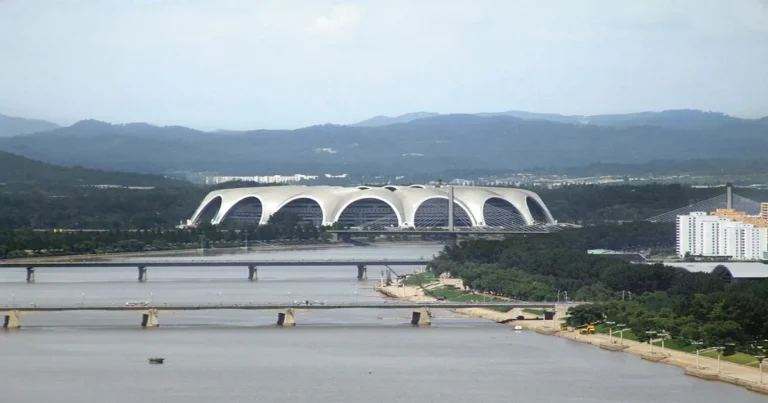
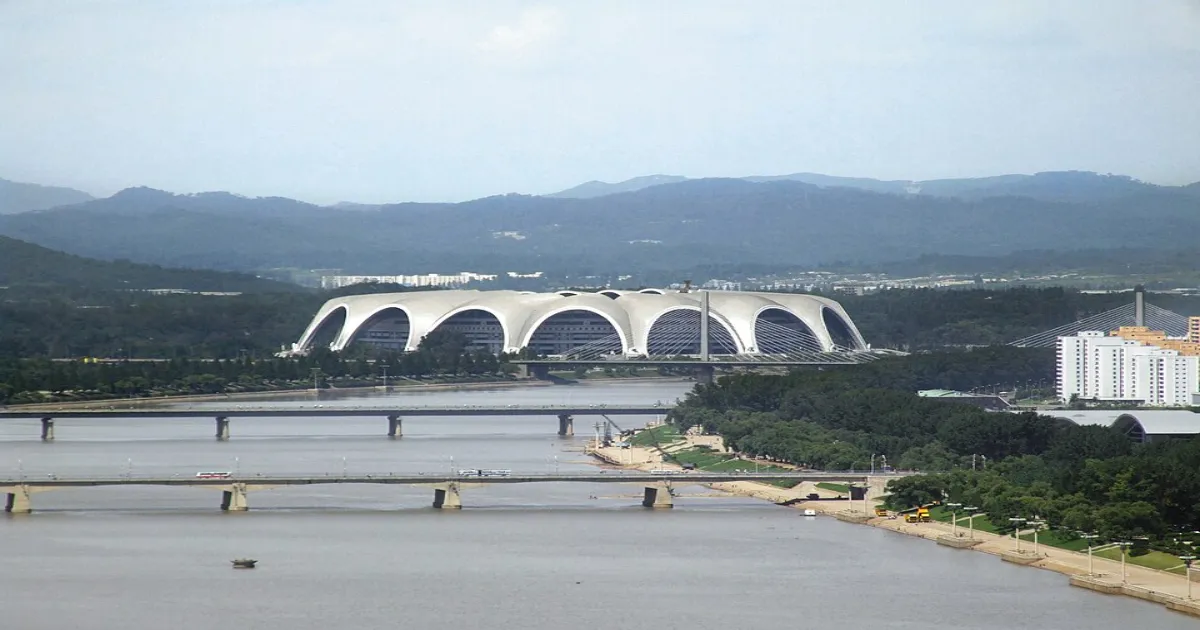
North Korea’s Rungrado 1st of May Stadium in Pyongyang has topped capacity rankings for football-hosting venues for decades, though its exact figure is a genuine point of dispute among stadium researchers. Historical claims have put the stadium’s peak capacity as high as 150,000, largely tied to its use for North Korea’s famous Mass Games and other state-organized spectacles that pack the venue’s standing sections far beyond what modern seated-capacity standards would normally allow. More conservative, modern estimates — closer to what would actually be usable under contemporary seating and safety configurations — place the figure closer to 114,000. Either way, it remains, by a considerable margin, the largest stadium in the world that regularly hosts football matches, including North Korea’s own men’s and women’s international fixtures.
Camp Nou: Europe’s New Benchmark
FC Barcelona’s Camp Nou re-entered the global capacity conversation in a big way following its major renovation project, reopening with an expanded capacity of around 105,000 — comfortably reclaiming its title as the largest football-specific stadium in Europe and pushing it into the global top tier of venues by capacity. Before the renovation, the stadium held approximately 99,354, already the largest in Europe; the expansion project was designed explicitly to extend that lead and give Barcelona a venue capable of generating matchday revenue befitting one of the world’s most commercially significant football clubs. The project also included modernized hospitality and technology infrastructure throughout the stadium, part of a broader trend among Europe’s wealthiest clubs of treating stadium capacity and matchday experience as a direct extension of overall club revenue strategy.
Estadio Azteca: A Stadium Written Into World Cup History Twice Over
Mexico City’s Estadio Azteca holds a genuinely unique distinction: it remains the only stadium in history to have hosted two separate men’s World Cup finals, in 1970 and 1986, each a landmark moment in the tournament’s broader history — Pelé’s Brazil completing their legendary run in 1970, and Diego Maradona’s Argentina lifting the trophy in 1986. With a capacity of 87,523, the Azteca isn’t the largest stadium on this list, but its historical significance arguably exceeds every other venue here, and it added a new chapter to that history by hosting the opening match of the expanded 2026 World Cup, extending its record as the venue with the longest and most storied World Cup hosting history of any stadium on the planet.
FNB Stadium: Africa’s Football Cathedral
Johannesburg’s FNB Stadium, commonly known by its “Soccer City” nickname, holds the distinction of being the largest purpose-built football stadium on the African continent and the venue for the 2010 World Cup final, the first men’s World Cup ever held in Africa. Its distinctive exterior design, inspired by the shape of a traditional African pot known as a calabash, made it one of the most visually distinctive stadiums built for any recent World Cup, and its capacity of 94,736 places it comfortably among the largest football-specific venues anywhere in the world.
The 2026 World Cup’s Largest Venues
The expanded 2026 World Cup, co-hosted across the United States, Mexico, and Canada, brought several enormous dual-use American football stadiums into the global football conversation. MetLife Stadium in New Jersey, home to the NFL’s Giants and Jets, hosted the tournament’s final with a football-configured capacity of 82,500, while AT&T Stadium in Arlington, Texas, home of the Dallas Cowboys, served as the tournament’s single largest-capacity venue, with a base capacity of 80,000 that can be expanded well beyond 100,000 for the biggest occasions. These NFL venues, originally designed for a sport with entirely different field dimensions and sightline requirements, required significant temporary reconfiguration to host football matches, underlining just how differently “capacity” needs to be understood depending on whether a stadium was purpose-built for football or repurposed from another sport entirely.
Wembley: Football’s Spiritual Home, By the Numbers
England’s national stadium, rebuilt and reopened in 2007 on the site of the original Wembley, holds a capacity of 90,000, making it comfortably the largest football-specific stadium in the United Kingdom and one of the largest in the world overall. Its distinctive arch, visible from across much of London, has become as recognizable a symbol of English football as the stadium’s hosting duties for FA Cup finals, England internationals, and major Champions League and Euro fixtures over the years.
Multi-Sport Giants: The Melbourne Cricket Ground and Rose Bowl
Two of the largest venues on this list weren’t built primarily with football in mind at all. The Melbourne Cricket Ground, Australia’s most iconic sporting venue, holds close to 100,000 spectators and primarily hosts cricket and Australian rules football, with occasional football internationals and friendlies taking advantage of its enormous capacity when scheduling allows. California’s Rose Bowl, meanwhile, has a distinguished football pedigree despite being built primarily for college American football, having hosted both the men’s 1994 World Cup final and the women’s 1999 World Cup final — the latter remembered as much for Brandi Chastain’s iconic penalty-clinching celebration as for the stadium’s own record attendance figures that day.
The Future: Grand Stade Hassan II
Looking ahead, Morocco’s Grand Stade Hassan II, currently under construction near Benslimane outside Casablanca, is planned to become the largest football-specific stadium in the world upon completion, with a targeted capacity of 115,000, surpassing even Rungrado’s modern usable estimate. The project is tied directly to Morocco’s co-hosting duties, alongside Spain and Portugal, for the 2030 World Cup, and its completion would mark a genuine shift in the geography of football’s largest venues, bringing the record for the world’s biggest purpose-built football stadium to the African continent for the first time.
Why Comparing These Numbers Fairly Is Genuinely Difficult
Any serious attempt to rank the “biggest” stadiums in football runs into a recurring methodological problem: capacity figures are rarely calculated using identical standards across countries and stadium operators. Some figures represent maximum seated capacity under current safety regulations; others include significant standing-room sections, which several countries, particularly in parts of Europe, still permit for domestic league matches even though they’re prohibited for major international tournaments. Historical claims — like Rungrado’s often-cited 150,000 figure — frequently reflect a stadium’s peak usage for a specific mass event rather than its regular, day-to-day operating capacity for a standard football match. This page uses the most commonly cited modern operating capacity for each venue, while flagging historical or event-specific maximums separately, to keep the comparison as fair and transparent as possible.
A Ranking That Will Keep Shifting
With Camp Nou’s renovation complete, Grand Stade Hassan II under active construction, and several other major venues around the world undergoing periodic capacity expansions tied to major tournament bids, this list is far from static. Expect this page to be updated as new stadiums open, existing venues complete renovation projects, and future World Cup and continental tournament hosts — including the 2030 World Cup across Morocco, Spain, and Portugal — bring new capacity figures into the global conversation over the coming years.
Historic Giants No Longer at Their Original Capacity
Several stadiums that once ranked among the largest football venues in the world no longer hold anything close to their historic peak capacity, typically due to modern safety regulations mandating all-seated configurations following tragedies like the Hillsborough disaster in England. Rio de Janeiro’s Maracanã Stadium, for instance, famously held an official crowd of 173,850 for the decisive 1950 World Cup match between Brazil and Uruguay, with unofficial estimates of the total attendance, including non-ticketed spectators, running considerably higher — still the largest crowd ever recorded for a single football match anywhere in the world. Following multiple renovations, most recently ahead of the 2014 World Cup and 2016 Olympics, the Maracanã’s modern seated capacity sits at a considerably more modest 78,838, a reduction that reflects the broader, near-universal shift across world football toward smaller, fully seated, more heavily regulated stadium configurations since the mid-twentieth century’s era of massive, loosely regulated standing terraces.
Why All-Seater Requirements Reshaped the Global Rankings
The broader shift toward all-seated stadiums, particularly across Europe following the Hillsborough disaster and the subsequent Taylor Report’s recommendations in England, permanently altered how football stadium capacity is calculated and compared globally. Stadiums that once held well over 100,000 standing spectators in earlier decades have, in many cases, seen their official capacity reduced by 20 to 40 percent once converted to fully seated configurations, even without any reduction in the physical footprint of the stadium itself. That regulatory shift is a significant part of why several of the largest stadiums still standing today are located in regions, including parts of Asia, Africa, and Australia, where either standing sections remain more common or stadiums were built more recently with seated capacity as the default design standard from the outset.
Regional Giants Worth Knowing
Beyond the entries in the main table, several other major venues deserve mention for their significant regional standing. India’s Salt Lake Stadium in Kolkata, with a capacity around 85,000, ranks among Asia’s largest football venues and has hosted numerous major domestic and continental fixtures. Malaysia’s Bukit Jalil National Stadium, with a capacity near 87,000, stands as Southeast Asia’s largest football venue and has hosted continental finals and major regional tournaments. Egypt’s Cairo International Stadium and Borg El Arab Stadium both rank among Africa’s largest venues alongside South Africa’s FNB Stadium, reflecting the continent’s own significant investment in large-capacity football infrastructure over the past two decades, often tied directly to hosting duties for the Africa Cup of Nations or other major continental competitions.
The Difference Between Capacity and Atmosphere
It’s worth noting, as a final point of context, that raw seating capacity doesn’t necessarily correlate with a stadium’s reputation for atmosphere or matchday intensity — a distinction covered in more detail on this site’s dedicated stadium atmosphere guides. Several considerably smaller stadiums, including grounds with capacities under 60,000, consistently rank among fans’ favorite matchday experiences specifically because of steep stand angles, minimal distance between supporters and the pitch, and passionate local support that produces a more concentrated, intense atmosphere than some of the larger, more sprawling venues on this capacity-focused list can always replicate. Capacity and atmosphere are related but genuinely distinct measures of what makes a stadium significant within football culture, and this page focuses specifically on the former.
🔹🔹 Follow us on Facebook 🔹🔹
Biggest Wins in Football History: The Most One-Sided Results Ever
About the Author