East Bengal ISL 2026 Champions — At Last
The night sky over Kishore Bharati Krirangan turned red and gold. Scarves flew. Tears streamed. Decades of pain dissolved into one thunderous, cathartic roar. East Bengal Football Club, one of the oldest and most storied names in Indian football, were champions once again — and this time, they had done it on the grandest stage the country’s club football has to offer.
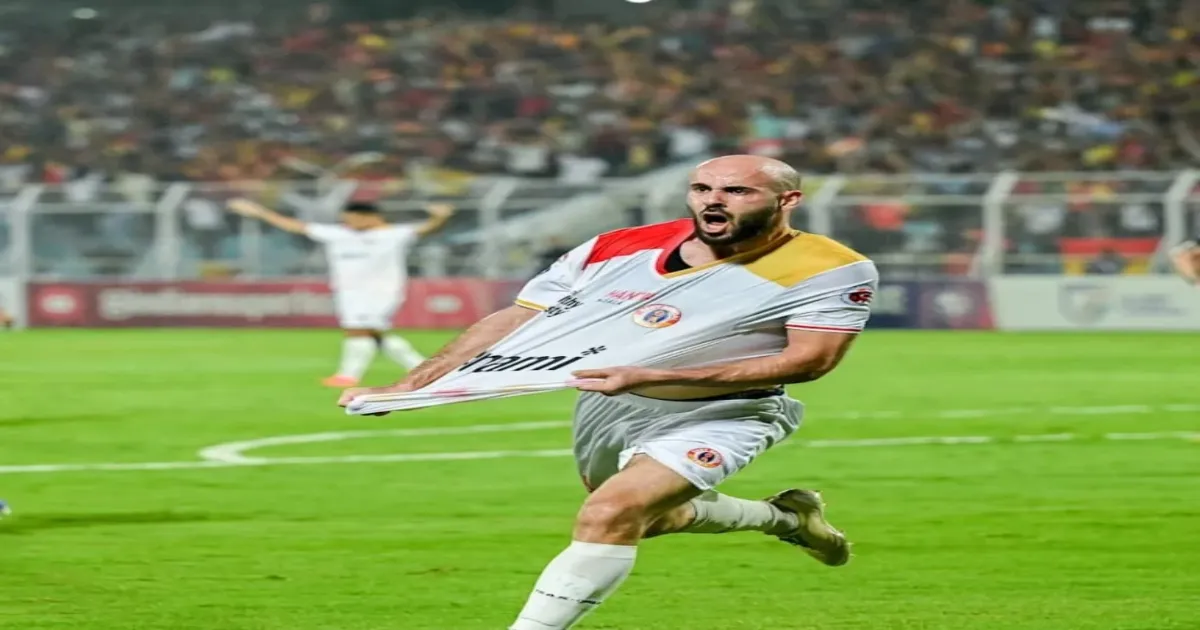
In a nerve-shredding climax to the Indian Super League 2025-26 season, East Bengal defeated Inter Kashi 2-1 on the final day of the campaign to claim their maiden ISL title — and, more meaningfully, their first top-tier national league crown in 22 long years.
NBA Schedule 2026-27: Christmas Day Rivalries, Ring Night and the Games to Watch
Cristiano Ronaldo Jr.: Club, Lifestyle, Career and Future Prospects
From Roberto Carlos to Messi: Ranking the Best Free Kicks in History
A Night That Kolkata Will Never Forget
The match itself was the stuff of football legend. Inter Kashi, showing no signs of being a side playing without a title to their name, drew first blood in the 14th minute. David Munoz floated a long ball into the East Bengal penalty area, and Alfred Planas — timing his run to perfection — struck a magnificent first-time volley that flew past goalkeeper Prabhsukhan Gill and into the net. The stadium fell silent. Nerves gripped the packed stands.
East Bengal responded with purpose, with Youssef Ezzejjari and Miguel Figueira both testing Inter Kashi early on, but the closest the hosts came to an equaliser before the break was a Bipin Singh cross that Ezzejjari somehow sent sailing over the crossbar from close range. Inter Kashi’s goalkeeper Shubham Dhas made several crucial saves, and the Kolkata side trooped into the dressing room at halftime a goal down, the weight of history pressing down on every man in red and gold.
What emerged after the break was a transformed team. Oscar Bruzon’s men, sensing now or never, pushed forward with renewed intensity. The equaliser arrived in the 50th minute through a moment of breathtaking quality. Anwar Ali — better known for his defensive solidity — launched a stunning defence-splitting pass from deep inside his own half. Ezzejjari latched onto it, outpaced Inter Kashi’s marker David Munoz, and, as goalkeeper Dhas rushed out, calmly nutmegged him before rolling the ball into the empty net. Pandemonium.
The stadium found its voice again. And 22 minutes later, it was lifted to the heavens. Bipin Singh delivered a dangerous cross from the right flank, and it was Mohammed Rashid — an unlikely hero — who stretched out a boot to guide the ball into the far corner. 2-1. The bench erupted. Fans vaulted barricades in sheer disbelief.
The final minutes felt like hours. Throughout the country, updates filtered through from Mohun Bagan’s concurrent match against Sporting Club Delhi — the Green and Maroon giants winning 2-1 too, levelling East Bengal on points. But when the final whistle blew at Kishore Bharati, it was East Bengal’s vastly superior goal difference that had settled the argument. The title belonged to the Red and Gold Brigade.
How the Title Was Decided
This season marked a significant structural change in the ISL. For the first time in the league’s history, there were no playoffs or a knockout final to crown the champions. The team topping the league table at the end of the regular season was declared champion — a format common across the world’s elite football leagues.
East Bengal finished the season with 26 points from 13 matches, ahead of a five-team title race that also involved Mohun Bagan Super Giant, Punjab FC, Mumbai City FC, and Jamshedpur FC — all of whom harboured realistic hopes of the title going into the final day. It was one of the most dramatic title finales in ISL history, a true multi-team shootout that kept Indian football fans glued to their screens simultaneously across different venues.
“Ronaldo’s Last Dance? A Complete Tactical Breakdown of FIFA World Cup 2026 Group K”
East Bengal’s campaign was built on the brilliance of Youssef Ezzejjari, the Moroccan forward who was the ISL’s top scorer this season with nine goals (with some reports citing ten across formats). He was duly awarded the Golden Boot. Miguel Figueira claimed the Golden Ball as the competition’s finest player, while Hrithik Tiwari took home the Golden Glove for the best goalkeeper performance of the season. The champion side also earned prize money of ₹1.25 crore — a symbol of the league’s growing professionalism and financial structure.
The Weight of History
For East Bengal’s supporters, this victory carries a significance that goes far beyond football. Founded in 1920, the club is one of India’s oldest and most decorated, with a fanbase numbering in the millions across West Bengal and the broader Indian diaspora. Their rivalry with Mohun Bagan — the Kolkata Derby — is considered the oldest and most passionate club rivalry on the Asian continent.
But East Bengal had been waiting. Their last national league title came in 2003-04, in the era of the National Football League — a seemingly interminable drought that stretched across two decades, through heartbreak, near-misses, financial turbulence, and the upheaval of entering the ISL in 2020. When the full-time whistle sounded on May 21, 2026, the 22-year wait was finally over.
The scenes outside the stadium and across Kolkata were those of a city celebrating a long-deferred dream. Red and gold flares lit up the night. The club’s social media was flooded with messages from fans spanning generations — some who had waited their entire adult lives for this moment.
About the Indian Super League: A League That Changed India’s Football Story
East Bengal’s title triumph is the latest chapter in what has been a remarkable transformation of professional football in India — a transformation with the Indian Super League at its heart.
The Beginning: 2014
The ISL was established in 2013 and launched in 2014, part of a broad initiative to commercialise, modernise, and revitalise football in India. The inaugural season was an immediate success — Atlético de Kolkata won the first championship, but more importantly, the league attracted large crowds, significant television viewership, and a level of mainstream media attention that Indian club football had rarely enjoyed before. Hero MotoCorp signed on as title sponsor for approximately ₹510 million in 2014, a figure they later renewed in 2017 for ₹1.6 billion — a clear sign of the league’s rapidly growing commercial worth.
The ISL was later formally recognised by the Asian Football Confederation (AFC) as India’s top-tier national football league, giving it the continental status that legitimised its standing in the broader world football ecosystem.
Growing the League: Expansion and Integration
The ISL began with eight franchises but wasted no time in broadening its footprint. In 2017, two new clubs — Jamshedpur FC, backed by Tata Steel, and Bengaluru FC — joined the competition, taking the total to ten teams and extending the league’s geographical and corporate reach. East Bengal themselves joined the ISL for the 2020-21 season, elevating the league to 11 clubs and intensifying what was already the most electric club rivalry in Indian football — the Kolkata Derby.
By the 2023-24 season, the ISL had grown to 14 clubs, with Punjab FC earning promotion from the I-League. This expansion reflects not just the league’s growth in size, but the deeper integration of Indian football’s pyramid — something fans and administrators had long called for.
The 2025-26 season, now concluded, was the 12th edition of the ISL and the 30th season of top-tier Indian football overall — a milestone that underscores both the continuity of Indian football’s traditions and the pace of its modern transformation.
Viewership, Attendance, and the Numbers Game
By any commercial metric, the ISL’s growth has been remarkable. The league has consistently broken its own viewership records season on season. ISL 2019-20 alone recorded a 51% growth in viewership, with 168 million live match reach and 28 billion minutes consumed. By the 2020-21 season, viewing minutes had climbed to 3.42 billion in a single campaign — even as that season was played behind closed doors due to the COVID-19 pandemic, without a single paying spectator in the stands.
On the attendance front, the 2017-18 season averaged 14,742 spectators per match across 95 games — totalling over 1.4 million in attendance. The 2024-25 season saw total attendance surge to nearly 1.93 million, a record at the time. The 2025-26 season recorded an average of 8,610 per game in its revised format, with a peak crowd of over 30,000 for the Mohun Bagan vs. Mohammedan Derby. In terms of global reach, the ISL has at various points ranked fifth among football leagues worldwide in terms of average audience per match — a staggering achievement for a league barely a decade old.
Broadcast partners have reflected this growth. The league has been carried by Sony Sports, JioCinema, Disney+ Hotstar, and FanCode — ensuring that matches reach fans on both traditional television and digital streaming platforms across India and beyond.
Developing Indian Football From the Inside
Beyond commercial growth, the ISL’s deeper significance lies in what it has done for Indian football as a sport. The league has attracted international coaches and players who have raised the standard of play and professionalism in the country. At the same time, clubs have been compelled to invest in youth academies and grassroots development, creating structured pathways from junior football to the professional level.
Young Indian players — among them Lallianzuala Chhangte, Akash Mishra, Jeakson Singh, and Sahal Abdul Samad — have risen to prominence partly through the platform the ISL provided. The national team has directly benefited: India’s FIFA ranking has improved, and the country has developed a stronger core of domestically-trained professionals than at any previous point in its football history.
Fan culture, too, has been transformed. The ISL gave Indian football its own identity — its own rivalries, its own matchday traditions, and its own supporter groups, from the West Block Blues (Bengaluru FC) to the Manjapadda (Kerala Blasters) to the East Bengal Ultras and Mariners Base Camp in Kolkata. Where the old National Football League struggled to generate mainstream fan involvement, the ISL has built communities.
Global partnerships have further elevated the technical standard of clubs. The link between Manchester City and Mumbai City FC brought English Premier League coaching methodology to India, while clubs across the league have steadily professionalised their scouting, sports science, and medical setups.
The New Format: A Statement of Maturity
The 2025-26 season’s decision to crown a champion based purely on the league table — rather than through playoffs or a knockout final — is itself a statement of confidence in the ISL’s maturity. It aligns the competition with the format used in La Liga, the Bundesliga, Serie A, and other elite leagues, where sustained consistency across the season is the measure of a champion. In practice, it delivered perhaps the most dramatic title race Indian football has ever seen — five teams in contention on the final day, every result mattering, every goal watched with national intensity.
What Comes Next
East Bengal’s triumph is a validation not just of one club’s perseverance, but of the ISL’s power to give historical clubs the platform to write new chapters. The Red and Gold Brigade, who entered the league as a club fighting to prove their relevance in a new era, leave this season as champions of India.
For the ISL itself, the trajectory is clear. With growing viewership, improving club infrastructure, a maturing fan culture, and increasing international visibility through AFC competitions, the league is no longer just a promising experiment. It is the heartbeat of Indian football — and it is beating louder than ever.
Match Result: East Bengal 2 (Youssef Ezzejjari 50′, Mohammed Rashid 72′) – Inter Kashi 1 (Alfred Planas 14′)
ISL 2025-26 Final Standings: East Bengal FC — Champions (26 points, 13 games)
Individual Awards — Golden Boot: Youssef Ezzejjari | Golden Ball: Miguel Figueira | Golden Glove: Hrithik Tiwari
Thiago Messi: Club Career, Playing Style, Lifestyle and Future Prospects
Yan Diomandé Stats: The Numbers Behind Football’s Hottest Young Winger
🔹🔹🔹 Follow us on Facebook 🔹🔹🔹
About the Author

1 thought on “East Bengal ISL 2026 Champions: Red and Gold End 22 Years of Hurt”