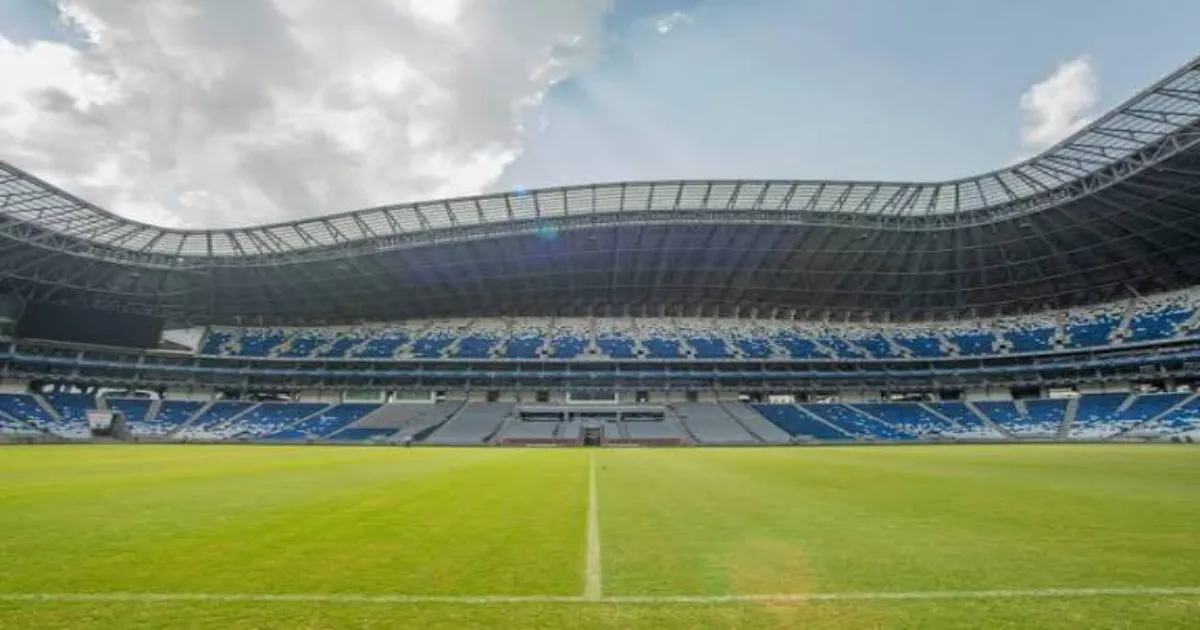
 Monterrey World Cup 2026 — Estadio BBVA, Carne Asada & the Most Photogenic View in Football
Every stadium at this World Cup has its own remarkable view — the Houston skyline, Manhattan towers beyond MetLife, Pacific light through SoFi’s canopy. And then there is Estadio BBVA, where the open south end of the bowl frames, directly behind the goal, the 1,820-metre silhouette of Cerro de la Silla — the mountain whose shape, resembling a horse’s saddle, is the defining symbol of Monterrey.
No other football stadium on earth has a backdrop quite like this.From Tunisia to Spain: Every World Cup 2026 Team Ranked
From Legend to Lightning Rod: Why Messi Is Being Criticized Now
The Architecture Has a Secret
When Estadio BBVA was designed and built between 2012 and 2015 in Guadalupe, on the eastern edge of the Monterrey metropolitan area, the architects made a deliberate choice that separates it from every other modern stadium in Mexico: they left the south end open.
No stand. No screen. No roof. Just an unobstructed opening to the Guadalupe sky and, beyond it, the unmistakeable jagged profile of Cerro de la Silla — the mountain that has watched over Monterrey since the city was founded in 1596.
The stadium’s architecture is inspired by the surrounding mountains. For the best World Cup experience, secure a seat in the north stand — facing south — to enjoy the iconic view of Cerro de la Silla framing the open goal end throughout every match.
Stadium Snapshot
| Official FIFA Name | Estadio Monterrey |
| Commercial Name | Estadio BBVA |
| Location | Av. Pablo Livas 2011, La Pastora, Guadalupe, Nuevo León, Mexico |
| Location Note | In Guadalupe municipality — Monterrey metropolitan area, not Monterrey city proper |
| Home Team | CF Monterrey “Rayados” (Liga MX) |
| Opened | August 2015 — opening match: CF Monterrey 3–0 Benfica (Eusébio Cup) |
| Standard Capacity | 53,500 |
| World Cup Capacity | 50,113 (FIFA tournament configuration) |
| World Cup Matches | 4 — three group stage + Round of 32 |
| Mexico Note | Mexico does NOT play group games here — only at Azteca and Akron |
| Unique Feature | Open south end framing Cerro de la Silla mountain — unique in world football |
| Transit | Metro Line 1 → Exposición Station (10-min walk to stadium) |
The Match Schedule at Estadio Monterrey
Four matches, all at 8:00 PM local time — specifically scheduled to avoid the brutal Monterrey afternoon heat:
| Round | Date | Time (CT) | Confirmed Match |
|---|---|---|---|
| Group F | June 14, 2026 | 8:00 PM | UEFA Playoff B Winner vs Tunisia |
| Group F | June 20, 2026 | 8:00 PM | Japan vs Tunisia |
| Group A | June 22, 2026 | 8:00 PM | South Korea vs South Africa |
| Round of 32 | June 29, 2026 | TBC | TBC |
Japan plays Tunisia at Estadio BBVA on June 20 — one of the most visually distinctive fixtures of the tournament, as the Samurai Blue’s meticulous, colour-coordinated travelling fanbase fills the north stand while Cerro de la Silla frames the opposite end. South Korea vs South Africa on June 22 is potentially a winner-takes-all Group A finale for the third qualification spot.
Mexico Does Not Play Here — What This Means for Fans
This surprises many visiting supporters: Mexico, the host nation, does not play any group stage matches at Estadio BBVA Monterrey. Mexico’s three group games are at Estadio Azteca in Mexico City and Estadio Akron in Guadalajara only.Rúben Dias Profile — Manchester City, Portugal and the Quest for a First World Cup Title in 2026
Estadio BBVA’s World Cup allocation covers Group A, Group F, and a Round of 32 — featuring Japan, South Korea, South Africa, and Tunisia in the group stage. For fans of these nations travelling to Mexico, Monterrey offers an exceptional World Cup experience. And it is, by most security assessments, the safest of Mexico’s three host cities for international visitors due to its strong business infrastructure and established international hotel networks.
Getting There
By Metro (Recommended): The Monterrey Metro (Metrorrey) stops at Exposición Station on Metro Line 1 — approximately a 10-minute walk from the stadium gates. Bus routes 214, 223, TME, and 093 also stop at the Pablo Livas bus stop adjacent to the ground.
From Monterrey Airport (MTY): Approximately 15 miles from the stadium — a 25–40 minute journey by rideshare ($15–25 USD). MTY is served by Aeromexico, Volaris, and VivaAerobus domestically, plus international connections from Houston, Dallas, Chicago, and New York.
From the US Border: Monterrey is the closest Mexican World Cup host city to the United States — approximately 140 miles (225 km) from Laredo, Texas, and 200 miles from McAllen. Omnibus and ETN luxury coaches run direct services from both border cities. This makes Estadio BBVA the most accessible Mexican venue for fans flying into Texas and crossing the border.
Monterrey: Mexico’s Industrial Powerhouse
Monterrey is the third-largest city in Mexico and the country’s undisputed commercial and industrial capital. International visitors often arrive expecting a provincial Mexican city and find something more closely resembling a prosperous Northern European industrial metropolis — wide boulevards, modern architecture, world-class universities, and a sophisticated urban middle class that has built a cultural life to match its economic success.
Macroplaza and the Historic Centre
The Gran Plaza — one of the largest public squares in the world at 40 hectares — sits at the heart of Monterrey’s historic centre. The Palacio de Gobierno de Nuevo León and the Catedral Metropolitana de Monterrey (begun 1612, completed in the 19th century) border the plaza. The Faro del Comercio — a 70-metre orange concrete lighthouse by architect Luis Barragán — shoots a laser beam of light across the city at night from the plaza’s southern end.
Parque Fundidora — FIFA Fan Festival Venue
The single most compelling urban space in Monterrey and the location of the FIFA Fan Festival. Parque Fundidora is a 140-hectare park built on the site of a steel foundry established in 1900, closed in 1986, and converted over the following decades into one of the most extraordinary industrial heritage parks in Latin America.
The original blast furnaces, rolling mills, and industrial machinery have been preserved in place as public sculpture and architectural backdrops. A history museum occupies the foundry’s original buildings. The park contains a convention centre, an outdoor theatre, a baseball stadium, an ice rink, and extensive walking and cycling paths.
During the World Cup, Parque Fundidora hosts the FIFA Fan Festival — a fan experience inside an industrial heritage site that exists nowhere else at this tournament.
Cerro de la Silla
The mountain visible from the stadium’s south end is accessible to hikers from the Parque Ecológico Chipinque. The summit at 1,820 metres offers a panoramic view of the entire Monterrey basin — a moderately challenging half-day hike. Wear sunscreen; Monterrey’s altitude amplifies UV exposure significantly.
Monterrey Food: Carne Asada Country
Northern Mexico’s culinary tradition is built on beef. The ranching culture of Nuevo León has produced a grilling tradition — carne asada, the direct-fire charcoal cooking of premium beef cuts — that is among the most refined in the world.
Carne Asada Thin cuts of beef — arrachera (skirt steak), costilla (rib), or sirloin — marinated in lime, garlic, and spices, then grilled over hot charcoal until charred outside and pink within. Served with flour tortillas (norteño-style, not corn), guacamole, salsa roja, and frijoles charros (stewed beans with pork and chilli).
El Rey del Cabrito — the most famous restaurant in Monterrey, in business since 1976. The specialty: cabrito al pastor — whole young goat slow-roasted on a spit over mesquite wood. This is the definitive Monterrey dining experience. Reservations essential during the World Cup period.
Machaca — dried, shredded beef reconstituted with egg, tomato, onion, and chilli. The norteño breakfast. Available at almost every restaurant in the city in burritos, tacos, and as a standalone dish. For visitors arriving from the US border, machaca burritos are the direct ancestor of the Tex-Mex breakfast burrito.
Local Beer: Tecate and Carta Blanca Monterrey is the home of FEMSA — one of the world’s largest beverage companies — and the original production city of two of Mexico’s most iconic beers. Both have been brewed here since the early 20th century. A cold Carta Blanca at a carne asada taquería under the mountain skyline is one of the more specifically satisfying experiences at this World Cup.
What to Wear in Monterrey
Monterrey is hot — and the heat requires planning.
- Typical June temperatures: 90–98°F (32–37°C) during the day. Evening temperatures drop to 72–78°F (22–26°C). All World Cup matches are at 8:00 PM local time specifically to avoid peak afternoon heat.
- Stadium canopy covers the seats but not the pitch. By 8 PM the temperature is manageable. Bring water for the walk from the metro to the gates.
- City exploring: Morning and early evening are best. Midday heat is intense. The Macroplaza has extensive tree shade.
- Hiking Cerro de la Silla: Proper trail shoes, sunscreen SPF 50+, and 2+ litres of water are non-negotiable.
🔹🔹 Follow us on Facebook 🔹🔹
About the Author