 Saudi Pro League history from 1976 to 2026
How a modest regional competition spent five decades building toward the superstar-driven transformation that has reshaped global football’s transfer market.
Few domestic leagues anywhere in football have undergone as dramatic a transformation in as short a period as the Saudi Pro League. For nearly five decades, the competition existed largely as a regional footballing curiosity, respected within the Gulf but rarely discussed on the global stage. Then, within the space of roughly eighteen months starting in late 2022, the league became home to some of the sport’s biggest remaining global stars, fundamentally reshaping how the football world thinks about the Middle East’s place in the sport’s economic hierarchy. This is the complete history of that transformation, from the league’s modest 1976 founding through to its position today.
Early Decades of Regional Development
The Saudi Pro League traces its origins back to 1976, when the competition was established as a formal top-flight structure for Saudi Arabian football, building on earlier, less formalized domestic competitions that had existed within the kingdom for years prior. For the first several decades of its existence, the league operated largely as a regional competition, developing steadily but attracting minimal international attention outside the Gulf region itself, even as Saudi Arabia’s national team achieved periodic success on the continental and international stage, including Asian Cup titles and consistent World Cup qualification throughout the 1990s and 2000s.
Clubs like Al-Hilal, Al-Ittihad, Al-Nassr, and Al-Ahli, all based in Riyadh or Jeddah, established themselves as the league’s traditional powers during this period, building up decades of domestic silverware and passionate local fan bases even without the kind of international recognition or broadcast reach that Europe’s major leagues had already achieved. The competition underwent a formal rebranding in 2008, adopting the Saudi Pro League name it carries today, part of a broader modernization effort aimed at professionalizing the league’s structure, though the league’s global profile remained relatively modest for years following that rebrand.
The Foundations for Transformation
Saudi Arabia’s broader sporting ambitions began shifting noticeably during the 2010s, as the kingdom’s Vision 2030 economic diversification program, spearheaded by Crown Prince Mohammed bin Salman, identified sports investment as a significant pillar of the country’s broader strategy to reduce its economic dependence on oil revenue and reshape its international image. That strategic vision extended well beyond football, encompassing major investments in golf, boxing, Formula One, and other global sporting properties, but football’s massive global audience made the sport a particularly attractive target for the kind of soft-power sporting investment the kingdom was increasingly pursuing across multiple fronts simultaneously.
The Public Investment Fund, Saudi Arabia’s sovereign wealth fund, took a decisive step toward football specifically in 2023, acquiring majority ownership stakes in four of the league’s traditionally biggest clubs, Al-Hilal, Al-Nassr, Al-Ittihad, and Al-Ahli, effectively placing the league’s most historically significant institutions under direct state-backed financial control. That ownership structure gave these four clubs access to financial resources on a scale that fundamentally altered what the Saudi Pro League could realistically offer in the global player transfer market, setting the stage for the wave of superstar arrivals that would follow almost immediately.
Ronaldo’s Arrival Changes Everything
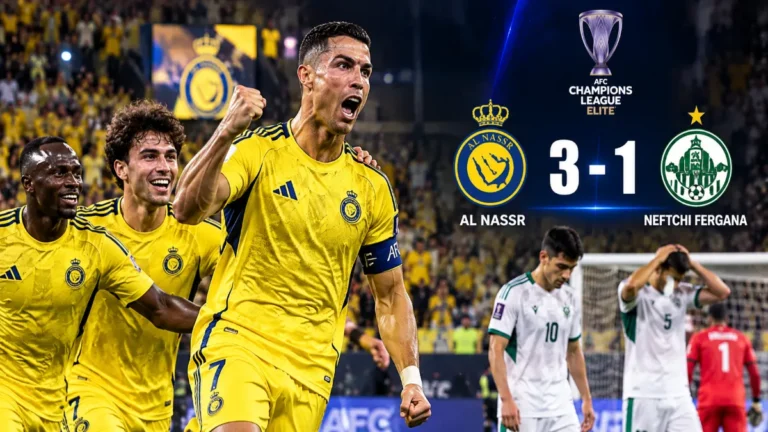
Cristiano Ronaldo’s December 2022 move to Al-Nassr, arriving as a free agent following his contentious departure from Manchester United, predates the PIF’s formal club ownership takeover but nonetheless functioned as the catalytic moment that set the league’s entire transformation in motion. Ronaldo’s continued elite-level performance in Saudi Arabia, including consecutive seasons finishing as the league’s top scorer, demonstrated to the broader football world that a genuine global superstar could remain competitive and commercially valuable while playing outside Europe’s traditional football power centers, directly paving the way for the wave of major signings that followed throughout 2023.
That wave arrived with remarkable speed once the PIF’s ownership restructuring was complete. Neymar joined Al-Hilal, Karim Benzema and N’Golo Kanté joined Al-Ittihad, and Riyadh Mahrez along with Roberto Firmino joined Al-Ahli, all within the space of a single transfer window, an unprecedented concentration of established global talent arriving in a single league simultaneously. The scale and speed of this transfer activity drew immediate comparisons to the Chinese Super League’s own earlier, ultimately unsustained spending spree during the mid-2010s, prompting genuine skepticism from some football analysts about whether Saudi football’s ambitions represented a similarly unsustainable financial bubble rather than a durable structural transformation.
On-Field Competition Amid the Spending
Despite the influx of established global stars, the Saudi Pro League’s actual title race during this transformative period proved considerably more competitive than some initial skeptics anticipated. Al-Hilal claimed a record-extending 19th league title during the 2023-24 season, completing the campaign unbeaten and setting a new league record for consecutive matches without defeat, a genuinely dominant performance built around the club’s deep roster of both international signings and established Saudi internationals. Al-Ittihad responded by claiming the following season’s title in 2024-25, their 14th championship, with Ronaldo once again finishing as the league’s individual top scorer despite his club falling short of the title in the season before.
The 2025-26 season produced perhaps the clearest evidence yet that the league’s competitive balance remained genuinely contested rather than simply following a predictable rotation among the four PIF-backed clubs, with Al-Nassr finally claiming a league title under Ronaldo, their first championship since his 2022 arrival and their first in several years overall, sealed fittingly through a direct derby victory over defending champions Al-Hilal. Notably, the season’s individual top scorer was Julián Quiñones rather than any of the league’s most globally recognized superstar names, a genuine signal that the broader quality and depth of the league’s playing talent, beyond its most famous individual signings, had meaningfully developed across the preceding several transformative seasons.
The Attendance Reality Behind the Headlines
Despite the enormous transfer fees and player salaries commanding global headlines throughout this period, the Saudi Pro League’s actual matchday attendance figures have told a more measured story, with average attendance across the league sitting in the range of seven to eight thousand spectators per match in recent seasons, considerably more modest than the crowds regularly drawn by Europe’s major leagues despite the individual star power on display. This gap between the league’s global commercial and media profile, driven substantially by its superstar signings and extensive broadcast rights deals, and its more modest domestic matchday attendance reality, has become a frequently cited point of skepticism among football analysts assessing whether the league’s transformation represents genuine, sustainable domestic football culture growth or primarily a top-down, state-directed commercial and geopolitical project layered on top of a domestic fan base that hasn’t yet grown to match the league’s dramatically increased global profile.
Building Toward 2034
The Saudi Pro League’s transformation cannot be fully separated from Saudi Arabia’s successful, uncontested bid to host the 2034 World Cup, awarded by FIFA in December 2024. That upcoming hosting assignment gives the kingdom’s broader football investment strategy, including the Pro League’s superstar transfer spree, an obvious long-term strategic rationale extending well beyond simply improving the domestic league’s immediate on-field product. Building a genuinely internationally credible domestic football competition, alongside the massive stadium and infrastructure investment already underway ahead of hosting duties, positions the Saudi Pro League’s current transformation as one component of a considerably longer-term national strategy culminating in the kingdom’s own home World Cup less than a decade from now.
A League Still Being Defined
Nearly fifty years after its modest 1976 founding, the Saudi Pro League finds itself in a genuinely unusual position within global football, simultaneously home to some of the sport’s most recognizable remaining global superstars while still working to build the kind of deep, sustainable domestic attendance culture that Europe’s major leagues developed across more than a century of organic growth. Whether the league’s current superstar-driven model eventually produces a lasting, self-sustaining football culture comparable to Europe’s established leagues, or whether it ultimately proves to be a shorter-term, state-funded transformation tied specifically to Saudi Arabia’s broader Vision 2030 and 2034 World Cup ambitions, remains one of the most closely watched open questions in global football’s current economic landscape, one that the league’s next several transformative seasons will likely go a considerable way toward finally answering.
How the Spending Spree Reshaped the Global Transfer Market
Beyond its direct impact on Saudi football itself, the Pro League’s 2023 spending spree sent significant ripple effects through the broader global transfer market that are still being felt years later. European clubs found themselves competing directly with Saudi clubs’ financial resources for the first time in a meaningful way, particularly when negotiating contract extensions and transfer valuations for established stars entering the later stages of their careers, since Saudi clubs’ willingness to offer salaries considerably beyond what most European clubs could reasonably justify gave players and their agents genuine new leverage in contract negotiations even when a move to Saudi Arabia never actually materialized. Several European clubs explicitly cited the emerging Saudi market as a factor in structuring more lucrative contract renewals for aging star players specifically to preempt the possibility of a Saudi departure, a dynamic that shifted negotiating leverage toward players across the broader European transfer landscape even beyond the specific individuals who ultimately made the move.
The Saudi Pro League’s summer transfer windows also began attracting increased scrutiny from FIFA and European football’s governing bodies regarding financial fair play implications, given the state-backed nature of the league’s four largest clubs and the difficulty of applying conventional financial regulation frameworks to a competition receiving this level of direct sovereign wealth fund investment. That regulatory uncertainty remains a persistent, unresolved thread in discussions about the Saudi Pro League’s long-term relationship with the broader international football governance structure, even as the league’s on-field product and individual transfer activity have continued to grow year over year.
The Women’s Game Follows a Similar Trajectory
Saudi Arabia’s football investment strategy has extended beyond the men’s professional game as well, with the Saudi Women’s Premier League launching in 2022 and expanding steadily in the seasons since, part of a broader set of social and sporting reforms within the kingdom that has included growing investment in women’s sports infrastructure more generally. The women’s league has followed its own accelerated development path, including a broadcast rights agreement extending its reach across the Middle East and North Africa region, and clubs affiliated with several of the same ownership groups behind the men’s Pro League’s biggest spenders have begun investing in their women’s programs as well, suggesting the kingdom’s broader football strategy increasingly encompasses both the men’s and women’s sides of the sport as part of the same long-term Vision 2030 sporting investment framework.
Domestic Talent Development Amid the Foreign Star Power
One of the more nuanced ongoing debates surrounding the Saudi Pro League’s transformation concerns its impact on homegrown Saudi player development. Critics have raised concerns that the influx of established international stars, occupying key attacking and creative positions at the league’s biggest clubs, could potentially limit playing opportunities and development pathways for young Saudi talent hoping to break into their national team’s biggest domestic institutions. League and federation officials have pushed back against this narrative, pointing to squad composition rules requiring a minimum number of domestic players in match-day lineups, alongside continued investment in youth academy infrastructure, as evidence that the league’s transformation has been designed with domestic player development considerations built in from the outset rather than treated as a secondary concern behind the pursuit of international star power and global media attention.
A Transformation Still Being Measured
Assessing the true long-term success of the Saudi Pro League’s transformation will likely require considerably more time than has currently elapsed since Ronaldo’s landmark 2022 arrival. Early indicators, including genuinely competitive title races across the four PIF-backed clubs, individual performances from emerging talents like top scorer Julián Quiñones during the 2025-26 season, and continued expansion of the league’s broadcast and commercial reach, all suggest a league in the midst of genuine, ongoing development rather than one that has already fully settled into its ultimate long-term form. Whether that development eventually produces the kind of deep, sustainable domestic football culture capable of supporting the league well beyond its current era of state-backed superstar spending remains the central question defining the competition’s next several years, one intrinsically tied to Saudi Arabia’s own broader trajectory as it builds toward hosting the World Cup on home soil in 2034.
What Other Emerging Leagues Have Learned Watching Saudi Arabia
The Saudi Pro League’s rapid transformation has also become a closely studied case for other ambitious footballing nations and leagues considering their own paths toward greater global relevance. Unlike MLS’s considerably more gradual, multi-decade approach to league-building, or the Chinese Super League’s ultimately unsustained spending spree during the mid-2010s, Saudi Arabia’s model has combined direct sovereign wealth fund ownership, a specific long-term hosting objective in the 2034 World Cup, and a broader national economic diversification strategy into a single, coordinated approach that few other nations currently possess the financial resources or institutional alignment to fully replicate. That combination of factors, rather than simply the scale of spending itself, is often cited by football economists as the key distinguishing feature separating the Saudi Pro League’s current trajectory from previous, less durable examples of state or ownership-driven football spending sprees elsewhere in the sport’s history.
▪️▪️ Follow us on Facebook ▪️▪️
2034 FIFA World Cup: Saudi Arabia’s Hosting, Explained
NBA Schedule 2026-27: Christmas Day Rivalries, Ring Night and the Games to Watch
About the Author