 The Full Story of the Bundesliga 2025-26 Season
Bayern shattered their own goalscoring record on the way to a 34th title, while reigning champions Leverkusen tumbled all the way down to sixth.
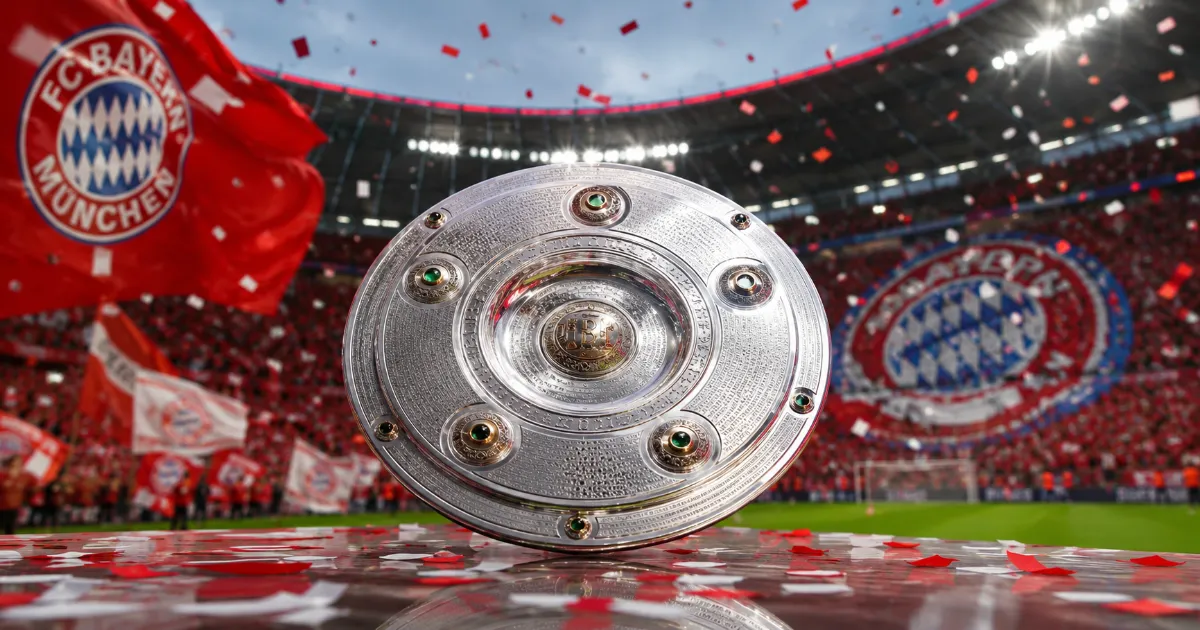
There was little genuine suspense at the top of the Bundesliga table by the time the 2025-26 season reached its business end. Bayern Munich secured their 34th league title, their 35th German championship overall, with four matches still to play, capping a campaign defined less by a genuine title race and more by exactly how emphatically the champions would break their own historical records along the way.
Bayern’s Coronation, Sealed Early
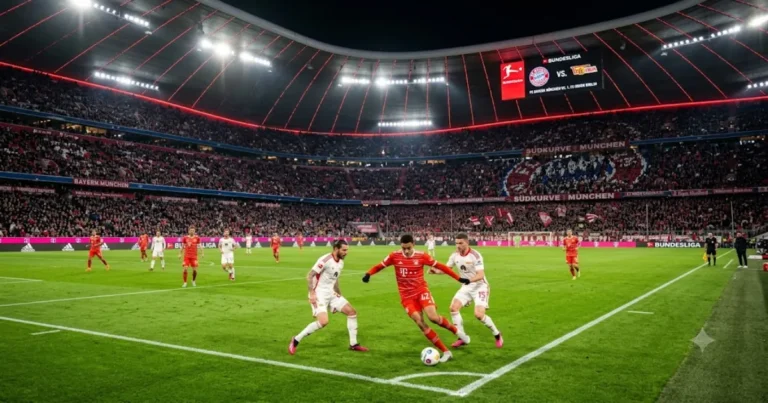
Bayern confirmed the championship on 19 April 2026 following a 4-2 win over VfB Stuttgart, a result that also pushed the club past their own longstanding single-season goalscoring record, a mark that had stood since the 1971-72 season. By the time the campaign concluded, Bayern had scored 122 league goals across their 34 matches, comfortably eclipsing that half-century-old benchmark and underlining just how one-sided the Bundesliga’s competitive picture had become at the very top of the table.
Harry Kane’s own contribution to that goal tally proved decisive, with the English striker finishing the campaign as the league’s top scorer for a fourth consecutive season with 36 goals, extending his own personal Bundesliga scoring record in the process. Kane’s continued prolific form since his 2023 move from Tottenham Hotspur has become one of the defining individual storylines of Bayern’s recent domestic dominance, and his latest tally cemented his status as one of the most clinical finishers the league has seen in its modern history.
Messi Retires: Inside the Rise, Falls, and Redemption of a Legend
Thiago Messi: Club Career, Playing Style, Lifestyle and Future Prospects
Leverkusen’s Stunning Fall
If Bayern’s title defense provided the season’s central storyline, the collapse of reigning champions Bayer Leverkusen offered its most surprising subplot. Just two seasons removed from their own historic unbeaten title triumph under Xabi Alonso in 2023-24, Leverkusen finished the 2025-26 campaign down in sixth place, missing out on Champions League qualification entirely and settling instead for a Europa League spot. The scale of that decline, from champions to mid-table Europa League qualifiers within the space of two seasons, stood as one of the most dramatic reversals of fortune the Bundesliga’s recent history has produced, a reminder of just how difficult sustaining a genuine title challenge against Bayern’s resources has proven for even the league’s strongest recent challengers.
The Battle for Champions League Places
Behind Bayern, the fight for the remaining Champions League qualification spots produced considerably more competitive tension than the title race itself. Borussia Dortmund, RB Leipzig, and VfB Stuttgart ultimately claimed the league’s three remaining Champions League places alongside champions Bayern, each securing qualification through a season that saw all three clubs trade positions repeatedly across the campaign’s second half. Stuttgart’s continued top-four consistency, following their own surprise title challenge in earlier seasons, reinforced the club’s status as one of the Bundesliga’s most reliably improving institutions over the past several years, even as their DFB-Pokal final defeat to Bayern denied them a genuine trophy to show for their strong league campaign.
TSG Hoffenheim’s own strong finish secured a Europa League place alongside Leverkusen, a genuinely impressive achievement for a club that has more typically occupied mid-table Bundesliga positions in recent seasons, while SC Freiburg’s seventh-place finish came with its own remarkable subplot, the club reaching the Europa League final itself despite a comparatively modest domestic league finish, illustrating the sometimes significant gap that can open up between a club’s league form and its form in cup and continental competition across a single demanding season.
The Relegation Fight
At the opposite end of the table, three clubs ultimately couldn’t avoid the drop back to 2. Bundesliga. FC St. Pauli and 1. FC Heidenheim were relegated directly, with Heidenheim enduring a particularly torrid campaign that included a 15-match winless run at one stage of the season, while St. Pauli’s own struggles included a nine-match losing streak that proved similarly costly to their survival hopes. VfL Wolfsburg suffered relegation via the promotion-relegation playoff, losing out to their 2. Bundesliga opponent after finishing 16th in the table, a genuinely painful conclusion for a club with considerably more recent Bundesliga pedigree than either of the two automatically relegated sides.
A Season of Extremes
Beyond the specific title race and relegation battle, the 2025-26 campaign produced several individually memorable results that captured just how wide the gap between the league’s strongest and weakest sides had become. Bayern’s 8-1 demolition of Wolfsburg stood as the season’s biggest single home win, while RB Leipzig’s 6-0 away triumph at Augsburg matched it for one-sidedness at the opposite end of the pitch. Perhaps the season’s single most chaotic individual match came in Mönchengladbach, where Eintracht Frankfurt emerged 6-4 winners in a genuinely wild, high-scoring affair that stood as the campaign’s highest-scoring match overall, a fitting individual snapshot of a season that saw goals flow more freely across the league as a whole than in almost any previous Bundesliga campaign on record, with the league’s total goal tally and per-match average both climbing compared to the previous several seasons.
Attendance Figures Remain Bundesliga’s Calling Card
Even amid Bayern’s overwhelming on-field dominance, the Bundesliga’s matchday atmosphere and attendance figures continued to underline the league’s reputation as the best-supported domestic competition anywhere in world football. The season drew a cumulative attendance of nearly 13 million spectators across all 306 matches, an average of well over 42,000 fans per game, figures that continue to outstrip every other major European league by a considerable margin. Borussia Dortmund’s Signal Iduna Park, home to the league’s famous standing-terrace “Yellow Wall,” once again recorded the season’s highest individual attendances, hosting crowds in excess of 81,000 on multiple occasions throughout the campaign.
What the Season Revealed About the League’s Balance
Taken as a whole, the 2025-26 campaign reinforced an increasingly familiar pattern in recent Bundesliga history: Bayern’s financial and squad-depth advantages over the rest of the division show little sign of narrowing, even in seasons immediately following a genuine disruption like Leverkusen’s 2023-24 title triumph. That Leverkusen could fall so dramatically from champions to a mid-table Europa League finish within just two seasons illustrates how difficult it remains for any single challenger to sustain a genuine multi-season push against Bayern’s resources, even when that challenger has already proven capable of a full title-winning campaign in the recent past.
At the same time, the genuinely competitive fight for the league’s remaining European qualification places, and Freiburg’s remarkable run to a Europa League final despite a modest seventh-place domestic finish, suggested the Bundesliga’s broader competitive depth outside the very top of the table remains considerably healthier than the one-sided title race alone might initially suggest. For a league whose defining recent storyline has increasingly become “can anyone stop Bayern,” the 2025-26 season offered a clear, record-breaking answer, even as the battle for everything below the very top of the table remained genuinely compelling throughout.
Individual Storylines Worth Remembering
Beyond the headline title race and relegation battle, several individual performances helped define the season’s broader narrative. Kane’s continued excellence aside, RB Leipzig’s Ivorian forward Yan Diomande emerged as one of the league’s most exciting breakout attacking talents, contributing significantly to Leipzig’s own Champions League qualification push across the campaign’s second half. Bayern’s summer signing Nathaniel Brown, arriving from Eintracht Frankfurt, settled into the club’s first-team rotation more quickly than many observers expected, while the continued development of young academy talents like Lennart Karl throughout the campaign offered further evidence of Bayern’s ability to blend expensive external recruitment with genuine homegrown development even during a season of such overwhelming collective success.
Manuel Neuer’s continued presence as Bayern’s first-choice goalkeeper throughout the campaign, extending into his late thirties, remained a notable subplot in its own right, with the veteran shot-stopper still commanding his position over younger deputy Jonas Urbig despite growing speculation about an eventual succession plan at the position, a debate that seems likely to continue shaping Bayern’s goalkeeping situation heading into the following campaign.
How This Season Fits the Bigger Picture
Zooming out, the 2025-26 campaign fits into a broader recent pattern stretching back across much of the past two decades of Bundesliga history: sustained Bayern dominance, interrupted only occasionally by a genuine challenger capable of assembling the kind of squad depth and tactical cohesion needed to seriously contest the title across a full season. Leverkusen’s rapid fall from champions to sixth-place finishers within two seasons stands as a particularly stark illustration of just how difficult that sustained challenge actually is to maintain, even for a club that had already proven itself capable of a genuinely historic, unbeaten title-winning campaign only two years earlier. Whether any club can mount a similarly serious challenge to Bayern’s dominance heading into the 2026-27 season remains one of German football’s most persistent open questions, one that pre-season transfer activity and squad planning across the rest of the division will likely go a considerable way toward answering once the new campaign gets fully underway later in August.
▪️▪️ Follow us on Facebook ▪️▪️
The History of the Premier League: 34 Years of the World’s Biggest Domestic League
The Man Who Invented the World Cup: The Jules Rimet Story 1930
About the Author