 Bundesliga 2026-27 Season Preview: Transfers, Favourites & What to Expect
Bayern enter the new campaign as overwhelming favourites once again, but the chasing pack has spent the summer trying to close the gap.
The Bundesliga’s new season has been kicked off on Friday, 28 August, with champions Bayern Munich hosting VfB Stuttgart in the campaign’s opening fixture, a week later than usual to accommodate the 2026 World Cup, which concluded in mid-July. Before then, Bayern face Borussia Dortmund at Signal Iduna Park on 22 August in the Franz Beckenbauer Supercup, the traditional curtain-raiser pitting the reigning league champions against the previous season’s DFB-Pokal runners-up. Here’s a full breakdown of the storylines, transfers, and contenders shaping the season ahead.
Messi Retires: Inside the Rise, Falls, and Redemption of a Legend
Thiago Messi: Club Career, Playing Style, Lifestyle and Future Prospects
Bayern Munich: The Familiar Favourites
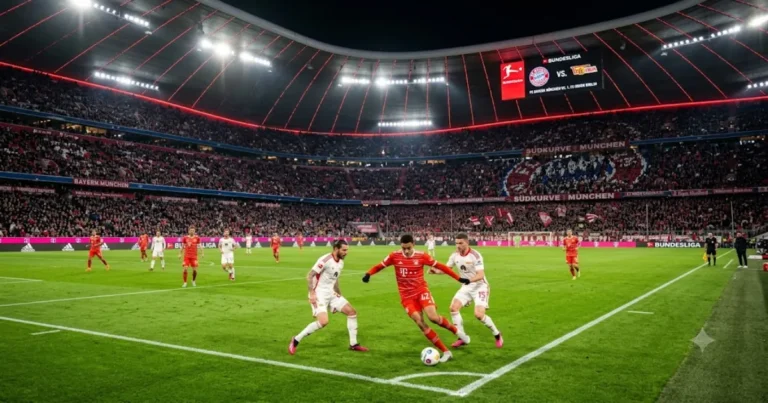
Fresh off a record-breaking 2025-26 campaign that produced their 34th league title and a new single-season scoring record, Bayern enter the new season as the overwhelming favourites once again, a status that has become almost the default expectation heading into nearly every recent Bundesliga campaign. The club moved quickly and decisively in the summer transfer market, bringing in Moroccan playmaker Ismael Saibari from PSV Eindhoven and full-back Nathaniel Brown from Eintracht Frankfurt, each deal reportedly costing in the region of €50 million, a clear signal that Bayern have no intention of easing off despite already possessing what was comfortably the league’s strongest squad the previous season.
Manuel Neuer remains Bayern’s first-choice goalkeeper heading into the new campaign after signing a further one-year contract extension, though younger deputy Jonas Urbig is expected to see increased playing time as the club continues managing the eventual transition at the position. Bayern also bid farewell to several established squad members over the summer, including Leon Goretzka, Raphaël Guerreiro, and Nicolas Jackson, changes that reflect the club’s ongoing squad refresh even amid sustained collective success. With Harry Kane once again expected to lead the line following his fourth consecutive Bundesliga Golden Boot, Bayern’s path to a 36th league title looks, on paper at least, relatively unobstructed.
Borussia Dortmund: Building for Sustained Contention
Dortmund’s summer business has centered on reinforcing a squad that finished among the Bundesliga’s Champions League places the previous season, with the club bringing in Belgian teenage winger Konstantinos Karetsas among their notable additions, part of a broader strategy of blending proven Bundesliga quality with promising younger talent recruited from across Europe’s developing academy pipelines. Hosting Bayern in the season-opening Supercup gives Dortmund an early opportunity to signal genuine title intentions, even if realistically closing the gap to Bayern across a full 34-match campaign remains a considerably taller task than winning any single showpiece fixture.
RB Leipzig and VfB Stuttgart: Consolidating Progress
Both RB Leipzig and Stuttgart enter the new campaign looking to build on genuinely strong 2025-26 seasons that secured Champions League qualification for each club. Leipzig’s continued development of breakout attacking talents like Ivorian forward Yan Diomande offers a genuine platform for further progress, while Stuttgart, fresh off their own recent run of sustained top-four consistency, will be looking to finally convert that steady league form into genuine silverware after falling short to Bayern in the previous season’s DFB-Pokal final. Both clubs represent the Bundesliga’s clearest examples of sustained, deliberate progress built through smart recruitment and coaching continuity rather than the kind of overwhelming financial firepower Bayern alone can consistently call upon.
Bayer Leverkusen: A Rebuild in Progress
Leverkusen’s task heading into 2026-27 looks considerably different from where the club stood just two seasons ago as reigning, unbeaten champions. Following a sixth-place finish in 2025-26 that saw the club fall out of Champions League contention entirely, Leverkusen have moved to rebuild their attacking options over the summer, bringing in Portuguese forward Afonso Moreira from Olympique Lyonnais for a fee in the region of €32 million after his productive Ligue 1 campaign. Whether that investment, along with continued squad adjustments elsewhere, proves sufficient to restore Leverkusen to genuine Champions League contention will be one of the season’s more closely watched storylines, particularly given how sharply the club’s fortunes declined following their historic 2023-24 title triumph.
The European Qualification Chase
Beyond the clubs already established in the Bundesliga’s upper tier, TSG Hoffenheim and SC Freiburg will both be looking to build on strong finishes to the previous campaign that secured European qualification. Freiburg’s run to the previous season’s Europa League final, achieved despite a comparatively modest seventh-place domestic finish, demonstrated the club’s continued ability to overperform in cup competition relative to their week-to-week league form, a pattern manager Julian Schuster’s side will hope to sustain across both fronts simultaneously heading into the new campaign.
Newly Promoted Sides and the Fight to Avoid an Instant Return
With FC St. Pauli and 1. FC Heidenheim relegated automatically, and VfL Wolfsburg dropping down via the promotion-relegation playoff, three fresh faces have earned their place in the Bundesliga for 2026-27. Each promoted side will enter the new campaign fully aware of just how unforgiving the gap between Germany’s top and second tiers can prove, with Bundesliga survival for newly promoted clubs never guaranteed regardless of how convincingly a club secured its promotion the previous season.
World Cup Fatigue: A Genuine Factor
One storyline likely to shape the season’s opening weeks specifically involves player fatigue and preparation time following the 2026 World Cup, which concluded on 19 July, leaving considerably less recovery and pre-season training time than clubs would typically have available before a new Bundesliga campaign. Several key players across the league’s biggest clubs featured deep into the World Cup’s knockout rounds, and managers across the division have already flagged genuine concerns about rotation and squad management during the season’s early fixtures, particularly for players returning from countries whose World Cup campaigns extended into the tournament’s final weekend. Bayern’s own compressed pre-season preparation, squeezed into barely a month before their Supercup curtain-raiser against Dortmund, reflects this broader scheduling challenge facing the entire league simultaneously.
What to Watch For
Beyond the individual club storylines, several broader themes seem likely to define the season as a whole. Bayern’s continued financial dominance over the rest of the division, a gap that shows no meaningful signs of narrowing regardless of how ambitiously other clubs spend in any given transfer window, remains the league’s defining structural reality heading into yet another campaign. Whether Dortmund, Leipzig, or Stuttgart can mount a genuinely sustained challenge across a full season, rather than simply securing Champions League qualification once again, will be the clearest measure of whether the gap at the very top is beginning to close even slightly. And Leverkusen’s rebuild, following such a dramatic fall from champions to mid-table Europa League qualifiers, offers one of the season’s more genuinely uncertain storylines, a club with recent proof of concept for beating Bayern trying to rediscover the specific formula that made their historic 2023-24 title run possible in the first place.
The Bottom Line
Barring a genuine surprise on the scale of Leverkusen’s own unbeaten title triumph two seasons ago, Bayern head into the 2026-27 season as such clear favourites that the more compelling storylines may well play out beneath them, in the fight for Champions League places, in Leverkusen’s attempt to rebuild, and in whichever newly promoted side manages to defy the odds and secure an unlikely top-flight survival. Whatever the specific results, the Bundesliga’s opening weekend on 28 August will offer the first genuine indication of how each of these storylines is likely to unfold across the campaign ahead.
Managerial Storylines to Follow
Beyond the transfer activity and title favourites, several managerial situations across the division deserve close attention heading into the new campaign. Continuity remains the theme at Bayern, where the coaching staff enters the season with essentially the same core tactical approach that delivered such overwhelming domestic success the previous year, a rare luxury in modern football where managerial change often follows even genuinely successful campaigns. Elsewhere, several mid-table clubs enter the season with relatively new coaching appointments still bedding in their own tactical systems, adding an additional layer of unpredictability to the race for Europa League and Conference League qualification places beyond the Bundesliga’s more settled upper tier.
Freiburg’s Julian Schuster, coming off a genuinely impressive Europa League final run the previous season despite a modest seventh-place league finish, faces his own particular challenge in trying to replicate that cup form while also improving the club’s more middling domestic league results, a balancing act that will test the squad depth of a club operating with considerably fewer resources than the division’s traditional Champions League contenders.
Fixture Congestion and Squad Depth
With the season’s later August start compressing preparation time following the 2026 World Cup, squad depth is likely to matter more than usual across the campaign’s opening months, particularly for clubs whose biggest stars featured deep into the tournament’s knockout stages. Bayern’s summer recruitment of both Saibari and Brown reflects this broader concern directly, giving Pep-style rotation options that should help manage fatigue across a squad that will simultaneously be competing on four fronts, domestic league, DFB-Pokal, Champions League, and the season-opening Supercup, without the usual extended pre-season buildup clubs typically rely on to build match fitness gradually. Clubs without comparable squad depth may find the season’s early weeks considerably more physically demanding than in a typical Bundesliga campaign, a factor that could meaningfully shape the table’s early shape before the season settles into its more familiar patterns by the winter break.
Early Predictions
While Bayern’s status as favourites remains essentially beyond serious debate, the more interesting question is which club emerges as their clearest challenger across the full campaign. Dortmund’s continued squad investment and home advantage in the season-opening Supercup offer an early platform to stake that claim, while Leipzig’s growing attacking talent pool and Stuttgart’s recent consistency both offer credible, if less flashy, paths toward another strong Champions League qualification campaign. Leverkusen’s rebuild remains the season’s most genuinely uncertain storyline, capable of either a rapid return toward the division’s summit or a longer, more gradual recovery process, depending on how quickly summer signings like Moreira settle into the club’s tactical setup across the season’s opening months.
▪️▪ Follow us on Facebook▪️▪
The Maracanazo: How Uruguay Silenced 200,000 Brazilians in 1950
Manchester City vs Bournemouth: Late Drama Seals Maresca’s Winning Start
About the Author