Senegal World Cup 2026 Journey, Performance and the Painful Exit That Defined a Generation
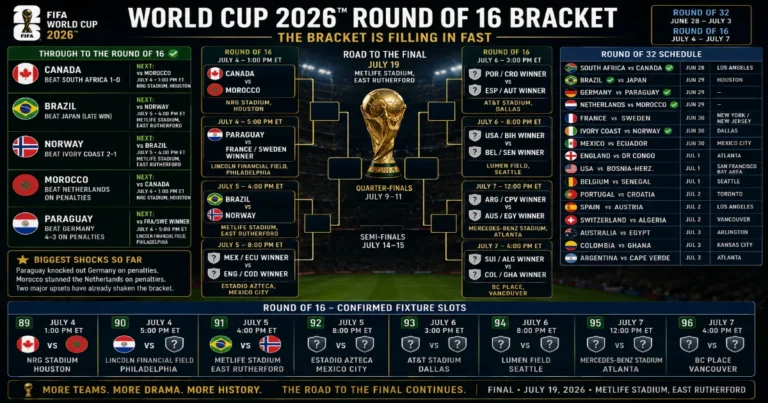
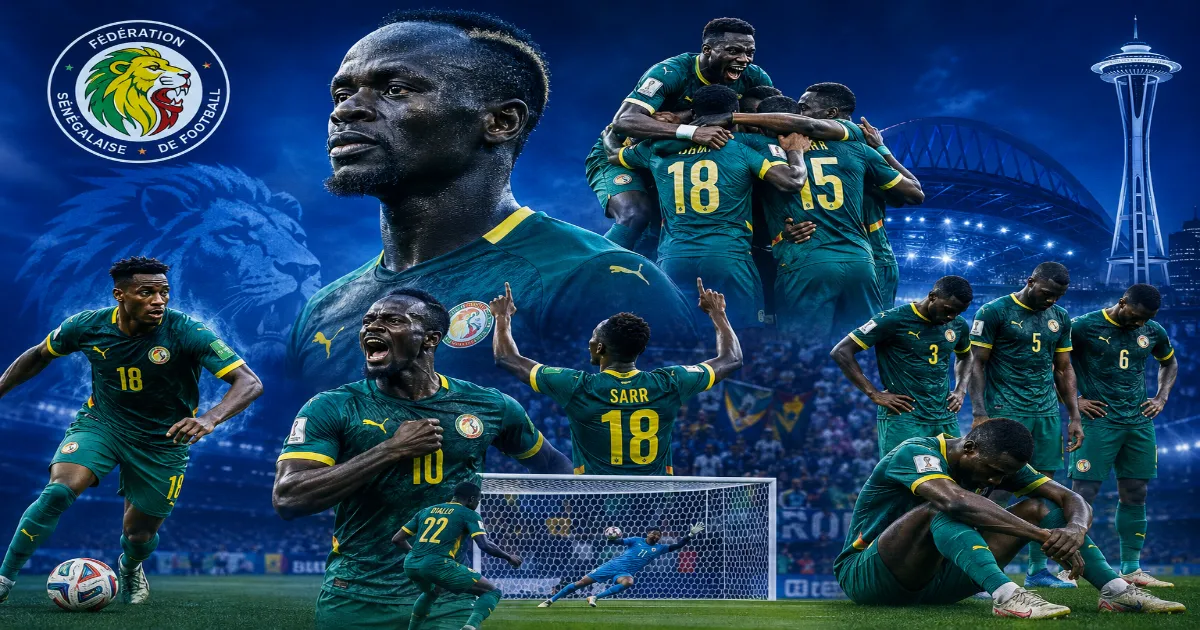
When Youri Tielemans stepped up and buried his penalty in the 125th minute at Lumen Field, the Senegalese players around him didn’t react with fury. Several of them simply stood still, looking at the ground, hands on hips, as if processing something they had already feared was coming. The Lions of Teranga had done everything right for eighty-six minutes of a World Cup Round of 32 knockout match. They had led 2-0. They had outplayed the sixth-ranked side in the world. They had defended well, attacked with purpose, and produced one of the goals of the entire tournament. And then, in four of the most cruel minutes that football can assemble, it was gone — followed by a VAR-awarded penalty that renewed every debate about spot-kicks in knockout football that Senegal knew all too painfully from their AFCON experience just months earlier. The Senegal World Cup 2026 story deserved a better ending. Understanding why requires going back to the beginning.
Expectations Heading Into the Tournament
Senegal arrived at World Cup 2026 as one of the most respected African nations on the planet, currently ranked 15th in the FIFA rankings and carrying genuine tournament pedigree from their Qatar 2022 campaign, where they reached the Round of 16 before losing narrowly to England. Aliou Cissé had stepped down as manager after that tournament, replaced by Pape Thiaw, whose task was to maintain the continuity that Cissé had built over a decade while transitioning to a slightly younger squad that blended the golden generation’s remaining stalwarts with a new wave of Premier League, Ligue 1, and Bundesliga regulars.
The expectation within Senegal — and among African football observers — was for a quarterfinal run at minimum. This was a squad with genuine quality at nearly every position: Édouard Mendy and Mory Diaw as experienced goalkeeping options; a backline anchored by the authoritative Kalidou Koulibaly; a midfield featuring the energy of Idrissa Gana Gueye alongside the creativity of Pape Matar Sarr; and an attacking line headlined by Sadio Mané and Ismaïla Sarr, with Nicolas Jackson providing additional Premier League quality up front. On paper, this was a team capable of beating anyone on a given day. The question, as it always is with Senegal at World Cups, was whether they could sustain that level across a full tournament rather than producing moments of brilliance between spells of inconsistency.
Group Stage: France, Norway and the Iraq Masterpiece
Group I looked unkind the moment the draw was made. France — the defending World Cup finalists and a side containing Kylian Mbappé in the form of his life — were almost certain group winners. Norway, with Erling Haaland available at a World Cup for the first time, represented a formidable second-placed challenge. Senegal’s realistic route through was as one of the eight best third-placed teams, which required results and performances to line up exactly right.
France 3-1 Senegal, June 16 — New York/New Jersey Stadium
The tournament opener was also the match that set the tone for everything that followed. The two teams had only met once prior, when Senegal defeated defending champions France 1-0 in a major upset at the opening match of the 2002 FIFA World Cup. There was no repeat upset this time, though Senegal made France work far harder than the scoreline suggests. Nicolas Jackson hit the post with a low shot from the left in the first half, and Ismaïla Sarr shot over the bar from six yards out after a low cross from Mané. The pivotal, infuriating moment arrived when Mané appeared to catch Mbappé inside the box but after a VAR review no penalty was given — a decision that dumbfounded even former officials and became the most discussed VAR call of the tournament’s opening weekend.Mbappé made it 1-0 in the 66th minute, Bradley Barcola added a second, before a substitute Ibrahim Mbaye scored a late consolation, and Mbappé grabbed his second from thirty yards to complete a 3-1 win. It was a defeat that could easily have been a draw, and perhaps more, had the penalty been given and Jackson’s first-half effort gone inside rather than into the post.
Norway 3-2 Senegal, June 22 — New York/New Jersey Stadium
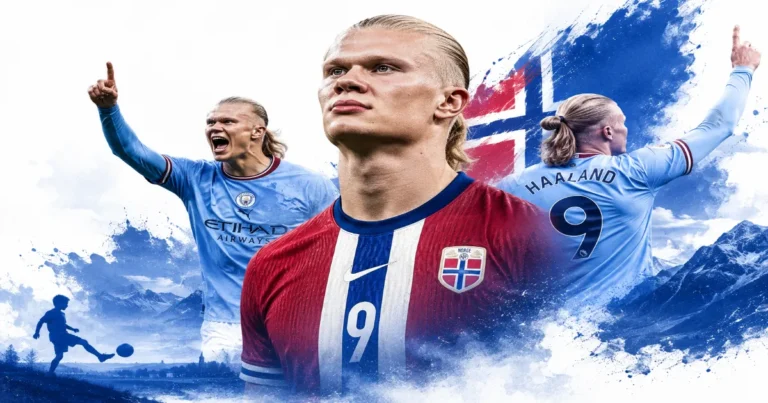
The second group match was Senegal’s most frustrating evening of the group stage in purely sporting terms. Haaland was the difference — irresistible in transition, clinical in front of goal — but Senegal’s own defensive errors contributed significantly to their downfall. Mendy allowed Pedersen’s low drive to creep under him after a dreadful mistake from Koulibaly, who gifted the ball to the replacement right-back on the edge of the box. Senegal found their footing through Ismaïla Sarr’s tidy finish after Mané’s clever flick into the area, but Haaland converted with a volley from Aursnes’ cross to make it 3-1 before Sarr’s second of the night set up a tense finish that Norway ultimately held on for. Koulibaly’s two costly errors in a single match were a reminder of the fine margins that separate a good performance from a disappointing result at this level.
Senegal 5-0 Iraq, June 26 — Toronto Stadium
And then came the moment that changed the Senegal World Cup 2026 story entirely. Needing a significant win against eliminated Iraq to qualify as one of the eight best third-placed teams, Senegal delivered the biggest victory at the FIFA World Cup by an African nation and became the first African team in history to score five goals in a men’s World Cup match. Habib Diarra scored in the fourth minute, Ismaïla Sarr added a second, Pape Gueye came off the bench to score twice, and Iliman Ndiaye added a stunning fifth 82 minutes in. Iraq’s Rebin Sulaka was sent off in the 13th minute after a VAR review upgraded a yellow card to red for preventing Mané from going in on goal alone, which opened the floodgates. Ismaïla Sarr became the outright top scorer for Senegal at the World Cup with four goals, and Pape Gueye became the second African player to score twice as a substitute at a World Cup match, after Roger Milla. Senegal finished the group stage with three points, the only third-placed team with that total to advance — qualifying on goal difference and goals scored ahead of other third-placed teams, meaning every single one of those five goals against Iraq turned out to matter.
Ismaïla Sarr: The Tournament’s African Star
No account of Senegal’s World Cup 2026 is complete without dedicated space for Ismaïla Sarr, who was simply one of the most electric attacking players of the entire group stage. The Crystal Palace winger finished the tournament as Senegal’s all-time leading scorer at World Cups — his four goals and one assist giving him five goal involvements, the most of any Senegalese player in the competition’s history. His ability to score in entirely different ways across the tournament — a curling top-corner finish against Norway, a stunning chest-controlled volley against Belgium — illustrated a player who had arrived at this World Cup at the peak of his powers.What Is the Ballon d’Or? History, Winners & How It’s Voted
Sarr also hit the woodwork twice against Belgium in the Round of 32, in moments that would ultimately prove symbolic. He was, across the tournament, Senegal’s most consistent performer and the clearest indicator of a new generation ready to carry the baton forward from Mané’s final World Cup chapter.
The Next Generation That Emerged
Beyond Sarr, the tournament gave real evidence that Senegal’s post-golden generation transition is in safe hands. Habib Diarra, the 20-year-old Sunderland midfielder, scored in both the Iraq thrashing and the Belgium match, ending the tournament with two World Cup goals at an age when most players are yet to feature in a senior international. Iliman Ndiaye added his typically incisive creativity from the bench at crucial moments. Pape Gueye proved from the bench against Iraq that he has the composure to change high-stakes matches instantly upon introduction — a quality that will matter enormously in whatever qualification campaign comes next. These weren’t cameo performers. They were players staking a genuine claim for the next World Cup cycle.
The Belgium Exit: Heartbreak in Four Minutes
The Round of 32 clash at Lumen Field, Seattle will be remembered as one of the great What Ifs of Senegal’s World Cup history. Sadio Mané curled a beautiful cross that picked out Sarr, whose headed effort beat Courtois but crashed back off the post, and Diarra was quickest to react, sweeping home the rebound in the 25th minute. Senegal doubled their advantage in the 51st minute with a moment of magic as Lamine Camara clipped a perfectly weighted diagonal ball over Belgium’s back line that Sarr settled off his chest in stride before lacing the ball past Courtois for one of the goals of the tournament.
For thirty-five minutes after that goal, Senegal looked entirely in control of a Round of 32 match and on course for a quarterfinal. With just four minutes remaining, the African nation were cruising to what was a deserved place in the last 16. Lukaku halved the deficit, flicking home at the near post from Thomas Meunier’s pullback, and Belgium’s surge in belief was obvious as they were soon level, with Diaw’s decision to come for Trossard’s inswinging delivery backfiring as Tielemans’ header looped into the net.
Extra time produced no further goals, and the match was heading to a shootout when referee Said Martinez ruled, following a VAR check, that Lamine Camara had fouled Tielemans — and Tielemans stepped up to complete one of the greatest comebacks in World Cup history. For Senegal, who were stripped of their Africa Cup of Nations title for leaving the field in the final in protest of a contentious Morocco penalty, it was a horrible case of déjà vu.
A Generation’s Farewell
For Sadio Mané, Kalidou Koulibaly, Idrissa Gana Gueye, and Édouard Mendy, this was almost certainly the final World Cup appearance of illustrious international careers. Mané, who inspired Senegal’s 2022 AFCON triumph and helped build the entire infrastructure of credibility that allowed this squad to arrive at 2026 as genuine contenders, was substituted in extra time against Belgium — replaced by Nicolas Jackson as Pape Thiaw desperately tried to find a way back into the tie. His final World Cup image will be that substitution, late in extra time, rather than a goal or a celebration. It feels like a moment the scoreboard didn’t adequately record.
That this generation leaves without a World Cup quarterfinal, despite clearly having the quality to reach one, is football’s particular cruelty dressed in its finest clothes. Koulibaly’s leadership across the tournament was authoritative even as his individual errors against Norway contributed to crucial moments. Gueye’s tireless pressing in midfield across five matches showed a player still operating at the highest level approaching his mid-thirties.
What This World Cup Means for Senegal’s Future
Strip away the pain of the exit, and the Senegal World Cup 2026 story contains real reasons for optimism about what comes next. The historic 5-0 win over Iraq — the biggest African victory in World Cup history — demonstrated a depth of squad quality that previous Senegalese generations didn’t consistently have. The emergence of Diarra, Ndiaye, and Pape Matar Sarr alongside the continued brilliance of Ismaïla Sarr suggests a transition in the works that won’t require a complete rebuild.
What the next cycle demands is the same thing it always has: closing the gap in the fine margins that separate third place in a group from second, and the composure in the final moments of knockout football that is the last quality a team develops at this level. Belgium’s equalizer in the 86th minute exposed the kind of late-game defensive fragility that Pape Thiaw’s staff will spend the next four years addressing. Had Senegal managed those last four minutes — which every elite team is built to do — the story ends completely differently.
They didn’t. But they came close enough, and brilliantly enough, that the story of Senegal at World Cup 2026 is one of the more compelling the continent has contributed to football’s greatest competition. The Lions of Teranga deserved more. They know it, everyone watching knows it, and the team that comes next will carry that knowledge as motivation rather than burden.
▪️▪️ follow us on facebook ▪️▪️
About the Author