 The Biggest Winner Even Before the Final: Why Messi Has Already Won This World Cup
Trophies are decided on a single afternoon. Records, once broken, belong to history forever. That distinction is why, with the 2026 World Cup final still to be played, one outcome has already been settled beyond any dispute: Lionel Messi is the biggest winner even before the final, and nothing that happens over the tournament’s closing weekend can take that away from him.
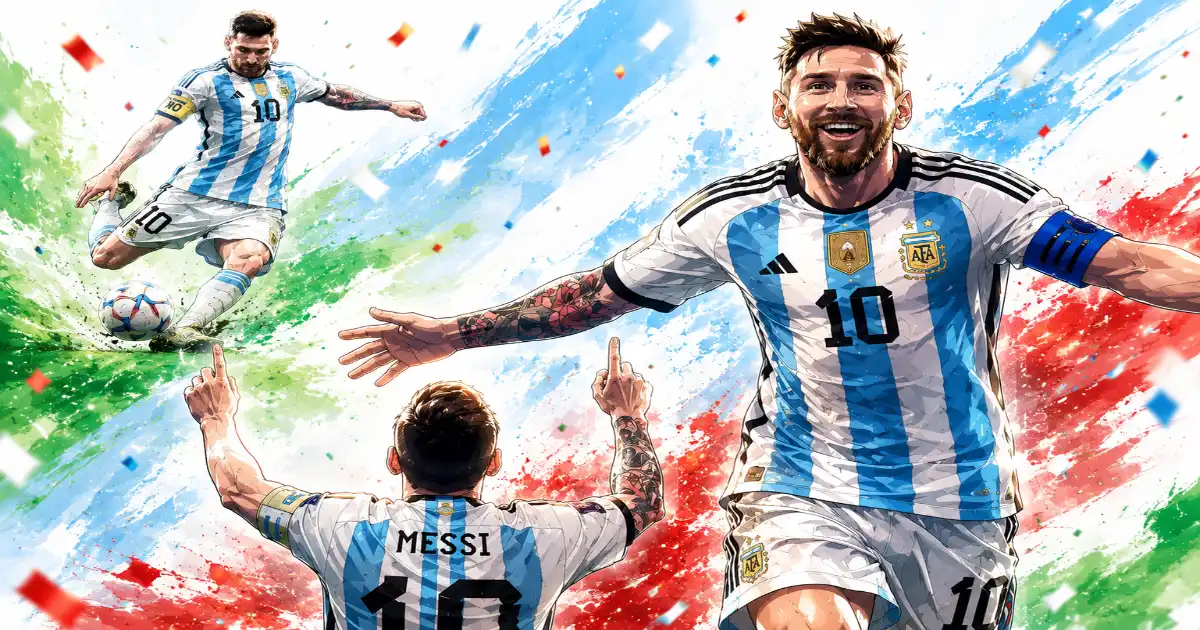
Messi arrived in North America level with Miroslav Klose atop the World Cup’s all-time scoring charts, sitting on 16 career goals after a career that has stretched across five previous tournaments. He leaves this group stage and knockout run with the record outright — 21 goals and counting, a tally he built with a hat-trick in Argentina’s opening match before adding two more against Austria to move clear of Klose for good. Whatever Argentina do in the final, that number is now the highest total any player has ever scored at football’s biggest tournament. It is, by any reasonable definition, the biggest individual prize of the entire competition, and Messi already has it in hand.
A Record That Outlasts Any Scoreline
There is something almost poetic about the timing of it. Klose’s record had stood since 2014, built patiently across four tournaments for Germany, and it had come to feel like one of those marks — similar to Just Fontaine’s 13 goals in a single 1958 World Cup — that belonged to a different footballing era, unlikely to be seriously threatened again. Messi’s pursuit of it wasn’t guaranteed to work out in his favour; had this been anyone else’s career arc, a player entering his fifth World Cup at 38 might reasonably have been expected to play a diminished, ceremonial role rather than an era-defining one.
Instead, Messi did what he has quietly done for two decades: he refused to follow the expected career trajectory. The hat-trick in Argentina’s opening match against Jordan didn’t just get the defending champions off to a perfect start; it pulled him level with Klose in a single afternoon, a feat that took Klose four World Cups to accumulate. The two goals against Austria that followed didn’t just help Argentina through the group stage — they made him the outright leading scorer in the 96-year history of the tournament, a record now separated from second place by a widening margin that will be extraordinarily difficult for any future player to close.
Why This Matters More Than the Final Itself
It might seem strange to argue that an individual scoring record matters more than the actual outcome of the World Cup final, but consider what each accomplishment represents. Winning the final is, in a very real sense, a team achievement — dependent on eleven players performing simultaneously, on refereeing decisions, on the bounce of a ball in a way that even the greatest individual talent cannot fully control. Messi discovered exactly how fragile even a two-goal knockout lead can be during Argentina’s Round of 16 escape against Egypt, when his side needed three goals in thirteen frantic minutes just to survive a fixture they had, by most measures, been losing for nearly 70 minutes.
The scoring record carries no such fragility. It was built goal by goal, tournament by tournament, and it cannot be undone by a single poor performance, a refereeing controversy, or a missed penalty — of which Messi has already suffered one this tournament, saved by Egypt’s Mostafa Shobeir in that same Round of 16 thriller. Even in a match where his own penalty was stopped cold, Messi still walked away from the tournament’s most dramatic 90 minutes having padded a record that had already been his for weeks. That is what makes him the biggest winner even before the final: his legacy is no longer contingent on what happens next.Messi’s World Cup Record Streak: Nine Straight Matches and the Milestones Still Falling
The Weight of What Came Before
To understand why this record carries the significance it does, it helps to remember what Messi was chasing. Ronaldo Nazário’s mark of 15 goals stood for years before Klose eclipsed it in 2014’s semi-final against Brazil. Records like this one tend to move slowly, accumulated across entire playing careers rather than single tournaments, which is precisely why breaking one outright — rather than simply equalling it — carries such weight. Messi has not just tied the greatest goalscorer in World Cup history. He has moved past him, and he has done it in the same tournament where questions about his age, his fitness, and his declining influence on Argentina’s attack were being asked openly by pundits before a ball had even been kicked.
Kylian Mbappé, sitting second on the all-time list with 18 goals and still very much active in this tournament, remains the player most likely to eventually challenge Messi’s new mark — but even Mbappé, at 27 and with what could be several more World Cups ahead of him, would need the kind of sustained excellence across multiple tournaments that only a handful of players in the sport’s history have ever managed. For now, and quite possibly for a generation, the record belongs to Messi alone.
A Record That Doesn’t Need a Trophy to Matter
None of this is to suggest Messi doesn’t want to win the tournament outright. Anyone who watched him in tears after Argentina’s stoppage-time escape against Egypt saw a player still desperately invested in this specific competition, not simply accumulating personal statistics on his way to retirement. His own words after that match — that his teammates “never give up,” that he remains proud to compete alongside this group — speak to a competitor still fully consumed by the team goal, not just his individual one.Argentina 2022: Messi, Mbappe and the Greatest World Cup Final Ever Played
But that emotional investment in winning is precisely what makes the scoring record such a remarkable parallel achievement. Messi has managed to chase, and secure, the most significant individual accolade the World Cup has to offer, without it ever appearing to distract him from the collective effort that has twice, now, dragged Argentina back from the brink of elimination. The record was not a farewell tour statistic padded onto a declining campaign. It was built in the middle of one of the most dramatic World Cup runs any defending champion has ever produced.
What the Number Actually Represents
It’s worth sitting with exactly how difficult a record like this is to build. Twenty-one goals across five World Cups means averaging roughly four goals per tournament over a stretch of football spanning 2006 to 2026 — two decades in which defensive tactics, video review, and opposition scouting have all become dramatically more sophisticated tools for shutting down elite attackers. Messi built this record in an era that made scoring at World Cups objectively harder than it was for many of the players below him on the all-time list, several of whom played in tournaments with looser offside interpretation, less physical marking, and far less tactical preparation devoted specifically to stopping one individual.
It also bears repeating that Messi did not build this record by feasting on weaker opposition in dead-rubber group games. His hat-trick against Jordan came in a tournament opener with genuine stakes attached, and the two goals against Austria arrived in a group-stage match that helped determine Argentina’s path through an increasingly unforgiving 48-team bracket, where even accomplished sides like Uruguay and Germany found themselves eliminated far earlier than their reputations suggested they should be. This was not a record padded in comfortable circumstances. It was built under exactly the kind of pressure that has already claimed several of the tournament’s traditional powers.
A Legacy Argument That No Longer Needs Litigating
For years, the “Messi versus Ronaldo” debate hinged partly on an uncomfortable asymmetry: Messi had the World Cup trophy from 2022, but Ronaldo held certain individual career numbers that Messi’s supporters had to explain away rather than simply point to. The all-time World Cup scoring record removes one of the last remaining categories where that kind of hedging was necessary. It is not a subjective argument about style, or influence, or which player made a bigger difference to a specific match. It is a number, on a leaderboard, that will not move unless someone eventually scores more World Cup goals than Messi has — a bar now set high enough that it may not be seriously challenged again in most fans’ lifetimes.
That is precisely why the record functions as the biggest win of the tournament regardless of the final’s outcome. A World Cup trophy, however prestigious, is contested and re-awarded every four years. Messi’s name at the top of the all-time scoring list is a fixed point that every future tournament, every future great striker, and every future GOAT debate will now have to reference. Even Kylian Mbappé’s teammates and rivals, chasing the same list from a very respectable second place, are chasing a mark Messi set — not one they can simply match by having one good afternoon in a final.
Why “Biggest Winner” Is the Right Description
Sports language tends to reserve the word “winner” for whoever’s name ends up on the trophy at the end of the tournament. But the biggest winner even before the final is a genuinely useful way to describe an achievement that exists entirely outside that binary outcome. Argentina could lose the final in devastating fashion, and Messi’s 21 goals would remain the standard every future World Cup scorer is measured against. Argentina could win it, and the record would simply become one more line in an already extraordinary tournament story, rather than the entire story itself.
That is the strange privilege of being the player who rewrites history mid-tournament rather than at its conclusion: the outcome of the final can add to the legacy, but it can no longer diminish it. Whatever happens in the coming days, Lionel Messi has already secured the one prize at this World Cup that no scoreline, no refereeing decision, and no late collapse can ever take back.
🔹🔹 follow us on facebook 🔹🔹
About the Author