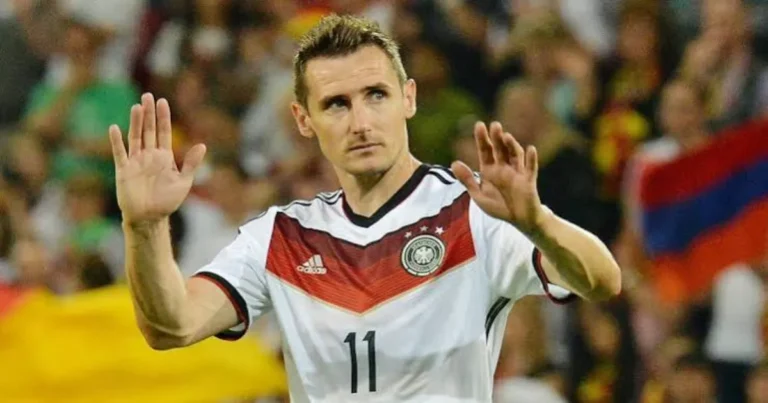
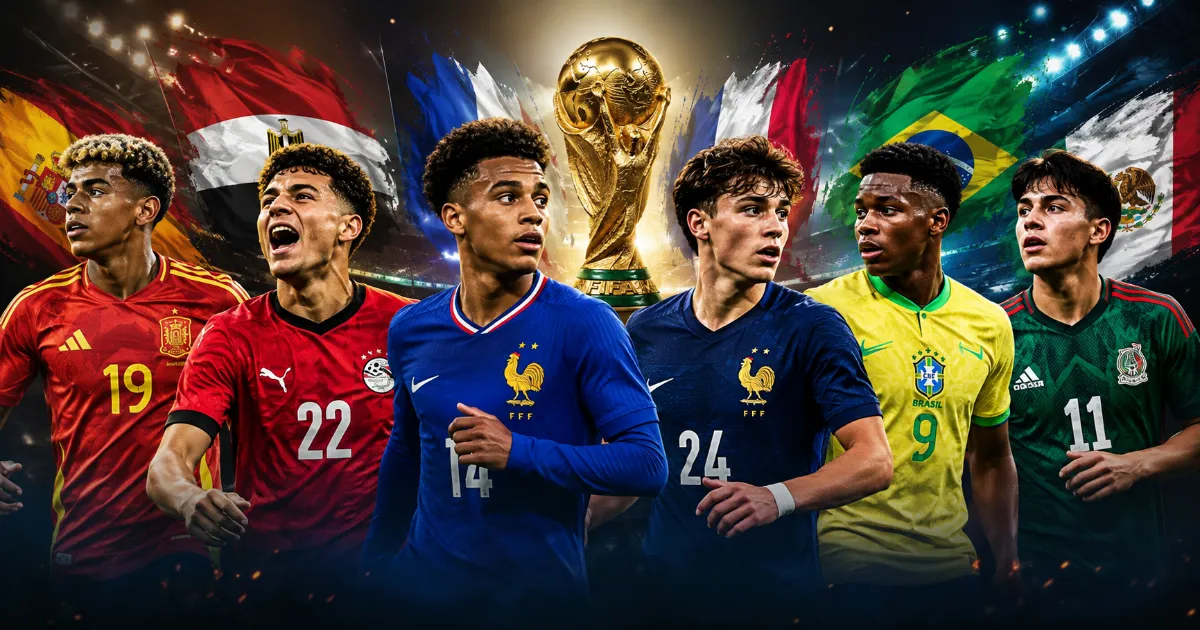
 Football’s New Generation made its mark at World Cup 2026, with Lamine Yamal, Désiré Doué, Endrick, João Neves and other rising stars showing why they could define football’s next era.
For almost two decades, the World Cup belonged to a remarkably consistent group of superstars. Lionel Messi, Cristiano Ronaldo and Neymar defined different parts of an era in which individual brilliance became almost inseparable from the biggest international stage. Their names were present at nearly every major tournament, and their performances shaped the expectations of an entire generation of football fans.
World Cup 2026 has finally provided the clearest evidence that the sport is moving into something new. Ronaldo’s Portugal were eliminated by Spain in the Round of 16, while Messi’s Argentina faced a younger Egyptian side led by 21-year-old Mostafa Zico. At the same tournament, 18-year-old Lamine Yamal established himself as one of the competition’s most dangerous dribblers.
Inside Lamine Yamal’s World Cup 2026: Every Record and Goal
Désiré Doué FIFA World Cup 2026: Profile, Stats & Career | StrikerReport
Endrick FIFA World Cup 2026: Brazil’s Prodigy Returns — Profile, Stats & Prediction
This is not simply another story about promising teenagers. Young players break through at every World Cup. What makes 2026 different is the level at which this generation arrived. Yamal had already won the European Championship, Désiré Doué had already won the Champions League with Paris Saint-Germain, João Neves had established himself at the highest European level, and Endrick had already been signed by Real Madrid.
The World Cup did not create these players. It gave them the one stage on which their reputations could be tested against the best players and teams in the world. And across the tournament, the evidence became increasingly difficult to ignore: football’s next generation is no longer waiting for the old generation to disappear. It is already competing with it.Jude Bellingham — FIFA World Cup 2026 Profile, Stats & Career
Lamine Yamal: The New Standard for Young Attackers
Lamine Yamal is the clearest symbol of this transition. At only 18, the Barcelona winger entered the 2026 World Cup carrying expectations that would have been extraordinary for a veteran, let alone a teenager. He wears Barcelona’s No. 10 shirt, a number historically associated with Lionel Messi, and his performances for Spain have increasingly suggested that the comparison is no longer merely a product of media hype.
Yamal’s most striking World Cup statistic was his 17 successful take-ons, the highest total in the tournament. That number captures the defining feature of his game: he actively seeks situations in which he can isolate a defender. Rather than relying entirely on movement away from the ball, Yamal wants possession at his feet, space in front of him and the opportunity to attack the first defender.Can Argentina Stop Lamine Yamal? The Biggest Tactical Challenge of the Final
His development has also followed a remarkable trajectory. He became Spain’s youngest senior international and had already played a decisive role in Spain’s Euro 2024 triumph before arriving in North America. The 2026 World Cup therefore represented not his introduction to elite football but another step in a career that is developing at an extraordinary speed.
Lamine Yamal — World Cup 2026 Record
| Category | Record |
|---|---|
| Age | 18 |
| Nation | Spain |
| Club | Barcelona |
| Position | Right Winger |
| World Cup role | Starter |
| Successful take-ons | 17 |
| Major previous achievement | Euro 2024 winner |
| Primary strength | 1v1 dribbling |
The tactical significance of Yamal’s dribbling goes beyond entertainment. When he receives the ball against a full-back, the defender has to respect his ability to cut inside, accelerate outside or combine with a teammate. If another defender moves across to help, Spain can exploit the space created elsewhere.
That is why Yamal already looks less like a prospect and more like a tactical centerpiece. His age remains extraordinary, but his role is increasingly mature. Spain are not simply giving him minutes to develop; they are asking him to influence important matches.
Mostafa Zico: Egypt’s Unexpected Breakthrough Star
Mostafa Zico entered the World Cup without anything approaching Yamal’s global profile. His rise had taken a more traditional route through Egyptian football, and he had only recently established himself at senior international level. That changed dramatically when Egypt faced Argentina in the Round of 16.Mostafa Zico: The Late Bloomer Who Took Egypt’s Winger Spot and Never Looked Back
Zico Scores on the Counter, But VAR Rules Out Egypt’s Second Goal vs Argentina
Zico scored against the defending champions and briefly gave Egypt genuine hope of one of the biggest surprises of the tournament. An earlier effort was also ruled out following VAR intervention, making his performance even more notable. Egypt eventually lost 3-2, but the match introduced Zico to an international audience that had barely known his name before the tournament.
His story is significant because it demonstrates how broad football’s new generation really is. The next wave is not limited to Barcelona, Paris Saint-Germain, Real Madrid or the traditional European academy system. Players can emerge from different football cultures and use one World Cup performance to accelerate their careers almost overnight.
Mostafa Zico — World Cup 2026 Record
| Category | Record |
|---|---|
| Age | 21 |
| Nation | Egypt |
| Position | Forward |
| World Cup status | Breakout player |
| Goal vs Argentina | 1 |
| Previous senior international goals | 0 |
| Tournament role | Attacking option |
| Primary strength | Direct attacking |
Zico’s biggest contribution may ultimately be what happens after the World Cup. His performance against Argentina has transformed his international profile and could create opportunities that previously seemed distant. His story also reinforces one of the most attractive qualities of the expanded World Cup: more nations now have the chance to place emerging players in front of a global audience.
Désiré Doué: France’s Next Attacking Star
France have spent the past decade producing elite attacking talent at an extraordinary rate, and Désiré Doué appears to be the latest player ready to continue that tradition. By the time he reached the 2026 World Cup, Doué had already experienced one of the most demanding environments in club football with Paris Saint-Germain.
His Champions League success before the tournament was particularly important. Doué had already demonstrated that he could perform under enormous pressure, meaning France did not need to treat him simply as a developmental prospect. His ability to operate as a winger or attacking midfielder gives the French team another creative option alongside its established stars.
Unlike players who depend almost exclusively on explosive speed, Doué often beats opponents through balance, body movement and close control. He can receive the ball between defensive lines, turn quickly and carry possession into dangerous areas. That versatility makes him particularly difficult to mark.
Désiré Doué — World Cup 2026 Record
| Category | Record |
|---|---|
| Age | 20 |
| Nation | France |
| Club | Paris Saint-Germain |
| Position | Winger / Attacking Midfielder |
| Major club achievement | Champions League winner |
| World Cup role | Rotation/attacking option |
| Primary strength | Close control |
| Secondary strength | Chance creation |
France’s long-term advantage is that Doué does not need to immediately become the team’s main star. He can develop alongside established players while gradually assuming more responsibility. That could make him one of the most important French attackers of the next decade.
The 2026 tournament was therefore less about announcing Doué’s arrival than confirming that his club-level rise was real. France now have another young attacker capable of changing games without relying entirely on the brilliance of one superstar.
João Neves: The Midfielder Behind France’s New Wave
Not every member of the new generation is defined by goals or dribbling. João Neves represents another important part of football’s future: the technically secure, physically aggressive modern midfielder capable of contributing in almost every phase.
Neves established himself at Benfica before moving to Paris Saint-Germain, where his energy and tactical intelligence made him an increasingly important player. His game is based on movement, ball recovery, short passing and relentless pressure rather than spectacular individual moments.
That makes him particularly valuable to France. A team filled with attacking talent still needs players capable of winning possession and moving the ball quickly enough to give those attackers opportunities.
João Neves — World Cup 2026 Record
| Category | Record |
|---|---|
| Age | 21 |
| Nation | France |
| Club | Paris Saint-Germain |
| Position | Central Midfielder |
| Previous club | Benfica |
| Primary role | Ball progression |
| Key strength | Work rate |
| Secondary strength | Pressing |
Neves is important to the generational argument because he demonstrates that the next era will not simply be built around superstar forwards. Modern elite football requires midfielders who can press, pass, cover ground and maintain possession under pressure.
His development also gives France another player capable of becoming a long-term foundation piece as older midfielders gradually move out of the international picture.
Endrick: Brazil’s Next Superstar Still Waiting for His Moment
Brazil’s 2026 campaign ended earlier than expected, with Norway eliminating them in the Round of 16. For Endrick, the tournament was therefore more of a glimpse into the future than a definitive breakout.
The 19-year-old had already experienced an extraordinary rise. Real Madrid had signed him as a teenager after his emergence in Brazilian football, and his subsequent loan spell at Lyon gave him valuable European experience. He entered the World Cup with significant expectations but found himself used primarily as a substitute.
That limited opportunity made it difficult for Endrick to establish himself as one of the tournament’s leading young players. Nevertheless, the underlying qualities that made him one of the most highly rated forwards of his generation remain obvious.
Endrick — World Cup 2026 Record
| Category | Record |
|---|---|
| Age | 19 |
| Nation | Brazil |
| Club | Real Madrid |
| Loan club | Lyon |
| Position | Centre-Forward |
| Lyon goal contributions | 16 |
| World Cup role | Substitute/rotation |
| Primary strength | Finishing |
Brazil’s early elimination also highlighted the pressure surrounding its next generation. Endrick is already being discussed as a potential long-term face of the national team, but Brazil must avoid turning potential into expectation too quickly.
There is still plenty of development ahead. His movement, finishing and penalty-box instincts are already impressive, but regular playing time and consistency will determine whether he eventually becomes the elite striker Brazil have been searching for.
Gilberto Mora: Mexico’s Emerging Talent
The generational shift has also been visible in the host nations, particularly through the emergence of Mexican teenager Gilberto Mora. His presence is important because Mexico’s development system has historically produced technically gifted players, but young talents have not always received the same global exposure as prospects coming through Europe’s biggest academies.
The expanded World Cup created a bigger platform for players like Mora. Instead of competing only for attention within domestic football, he entered a tournament watched by audiences around the world.
Gilberto Mora — World Cup 2026 Record
| Category | Record |
|---|---|
| Nation | Mexico |
| Age | Teenage |
| Position | Attacking Midfielder |
| World Cup status | Young breakthrough talent |
| Primary strength | Creativity |
| Secondary strength | Close control |
| Development stage | Emerging |
Mora’s long-term significance will depend on what happens after the tournament, but his emergence is another indication that football’s talent pool is becoming increasingly global.
The next generation will not come from one country or one academy system. It will emerge from different football cultures, with the World Cup providing the common stage where those players can be discovered by the wider football world.
The New Generation at a Glance
| Player | Nation | Age | Position | Defining Quality | 2026 Significance |
|---|---|---|---|---|---|
| Lamine Yamal | Spain | 18 | Winger | Dribbling | Tournament-leading take-ons |
| Désiré Doué | France | 20 | Winger/AM | Ball control | Established elite-level attacker |
| João Neves | France | 21 | Midfielder | Pressing | Midfield foundation |
| Endrick | Brazil | 19 | Forward | Finishing | Future No. 9 candidate |
| Mostafa Zico | Egypt | 21 | Forward | Direct attacking | Breakthrough vs Argentina |
| Gilberto Mora | Mexico | Teenage | AM | Creativity | Host-nation prospect |
The Fixture List Made the Generational Shift Impossible to Ignore
What made the transition particularly powerful at the 2026 World Cup was the way the tournament itself brought different generations together.
Spain’s elimination of Portugal was perhaps the clearest example. Cristiano Ronaldo represented one of the longest and most successful World Cup careers in modern football, while Yamal represented a player who was barely beginning his senior journey.
The symbolism was unavoidable, but the football mattered more. Spain’s victory meant the next generation was not simply sharing the stage with the old guard. It was capable of sending it home.
Argentina’s match against Egypt created another striking contrast. Messi, at 39, faced Zico, who was only 21. The age gap between the two players represented almost two decades of football history, yet both were influencing the same World Cup match.
That is what makes 2026 feel different from previous tournaments. The old generation has not suddenly disappeared. Instead, it is increasingly sharing the field with players who grew up watching them.
Why This Generation Feels Different
Every World Cup produces young stars, but the 2026 group arrived with unusually strong résumés.
Yamal was already a European champion before turning 18. Doué had already won the Champions League. Endrick had already moved to Real Madrid. Neves had already become an important player at PSG.
These players therefore entered the World Cup with experience that previous generations often did not possess until much later in their careers.
The modern football development system is partly responsible. Elite clubs are identifying talented players younger, exposing them to professional environments earlier and giving them access to advanced sports science, tactical coaching and high-level competition.
The result is that some teenagers now arrive at international tournaments with thousands of minutes of elite football already behind them.
The World Cup Did Not Create These Stars
That distinction is important.
The World Cup can create a player’s reputation, but it can also confirm one that already exists.
For Yamal, the tournament was confirmation.
For Doué, it was another stage in his development.
For Neves, it was evidence that his midfield maturity translates to international football.
For Endrick, it was an opportunity that remains incomplete.
For Zico, it was the beginning of a global story.
And for Mora, it was an introduction to a much larger audience.
The careers of these players will ultimately be judged by what happens over the next five to ten years, not by one tournament.
But their performances in 2026 have already changed the conversation.
The End of One Era Is the Beginning of Another
Messi and Ronaldo did not simply dominate football statistically. They shaped how an entire generation understood greatness.
For years, every young attacking player was compared with one of them.
Now the comparisons are beginning to change.
Young players are no longer being measured only against the stars of the previous era. They are beginning to establish their own identities, tactical profiles and expectations.
Yamal is not simply “the next Messi.”
Doué is not simply another French wonderkid.
Endrick is not simply Brazil’s next Ronaldo.
Neves is not another generic midfield prospect.
Their careers will eventually be judged on their own terms.
That is the real significance of the 2026 World Cup.
Final Verdict: Football’s Future Has Already Arrived
The 2026 World Cup did not suddenly create football’s next generation. That generation had already been developing in Barcelona, Paris, Madrid, Lisbon, Lyon and elsewhere for several years.
What the tournament did was remove the final question mark.
Can these young players perform when the entire football world is watching?
Lamine Yamal answered that question with elite dribbling numbers and another major tournament of responsibility. Désiré Doué demonstrated that his Champions League breakthrough was not a one-off. João Neves showed why he is viewed as a long-term midfield leader. Endrick offered glimpses of the striker Brazil hope he can become, while Mostafa Zico transformed an unexpected opportunity against Argentina into one of the tournament’s most memorable individual stories.
The most important point is that this is not a one-player transition.
It is a generation.
The era of Messi, Ronaldo and Neymar will remain one of football’s greatest chapters, but World Cup 2026 has provided the clearest indication yet that the next chapter is already being written.
The old legends are leaving the stage. The new generation is no longer waiting backstage. It is already playing the leading roles.
🔹🔹 follow us on facebook 🔹🔹
About the Author