 The Teams Who Controlled the Ball Most
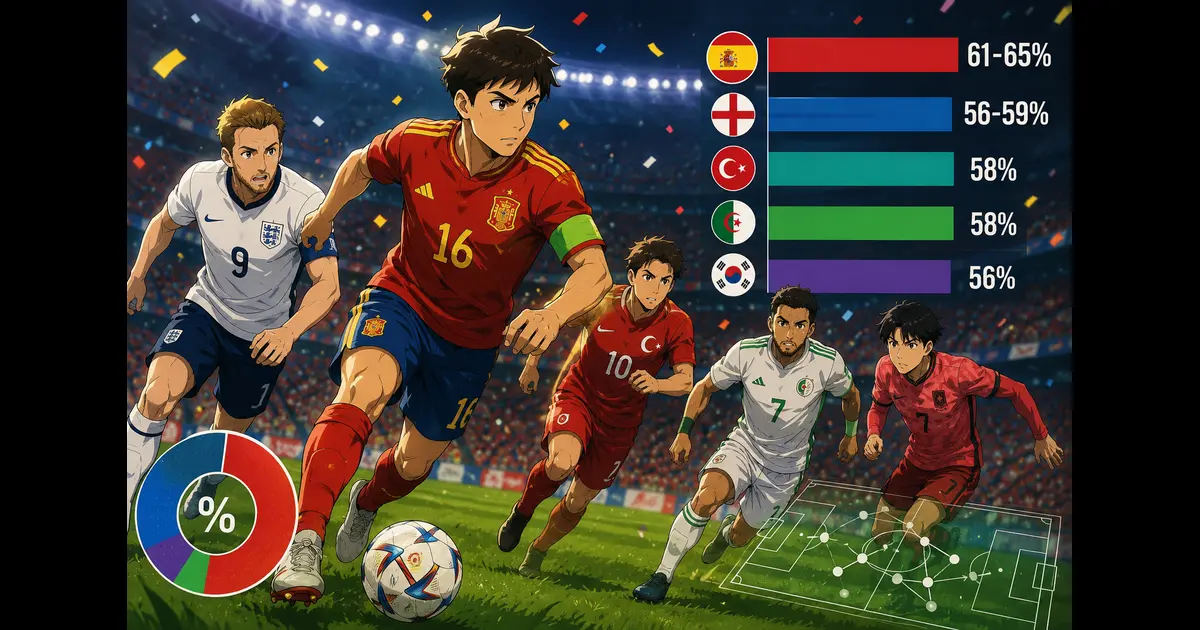
Possession statistics have a complicated relationship with actual World Cup success. Spain led the possession charts at both the 2018 and 2022 tournaments, averaging 69% and a staggering 76.3% respectively, and were eliminated before the quarterfinals both times. So when Spain topped the highest possession teams at World Cup 2026 for a third straight tournament — this time with a projected final average in the 61-65% range — it was fair to wonder whether it would end the same way. It didn’t, and the difference between this Spain side and its possession-dominant predecessors says a great deal about how the team actually won the tournament.
LaLiga 2026/27 Schedule: Fixtures, Dates & Times
Premier League 2026/27 Schedule: This Week and Next Week
NBA Schedule 2026-27: Christmas Day Rivalries, Ring Night and the Games to Watch
Spain: Less Possession, More End Product
Spain’s 2026 possession average was noticeably lower than their 2022 figure, and that’s very much by design rather than decline. Where the 2022 vintage racked up possession largely by patient, low-risk circulation — a style that repeatedly ran into trouble against opponents willing to sit deep and simply wait them out — this Spain side under Luis de la Fuente paired a still-dominant possession share with sharper underlying numbers everywhere it actually mattered: fewer shots on target conceded, a lower expected-goals-against total, and faster ball recovery after losing possession. Spain’s passing accuracy sat at an extraordinary 93% across the tournament, with Rodri alone completing 709 passes over the campaign — more than 101 per match — as the platform underneath everything Spain did going forward.Best Young Player FIFA World Cup 2026: Why Pau Cubarsi Was the Tournament’s Breakout Star
The distinction matters enormously. Analysts tracking the tournament’s possession data specifically noted that Spain’s control this time was serving a defensive purpose as much as an attacking one: by keeping the ball, Spain simply reduced the number of opportunities opponents had to attack them in the first place, contributing directly to a tournament defensive record of just one goal conceded in eight matches. Their previous possession-heavy campaigns hadn’t managed nearly as tight a defensive record, precisely because a high possession share alone doesn’t guarantee territorial or defensive control — it only does when the underlying quality of that possession is genuinely elite.
England: The Clearest Challenger
England finished as the tournament’s second-highest possession side among the teams that went deep into the knockout rounds, with a projected average in the 56-59% range. What set England apart statistically wasn’t raw possession share so much as what they did with it — England combined that possession with the tournament’s highest tally of “big chances” created among the sides that reached the later stages, a detail that lines up neatly with the attacking talent Thomas Tuchel had at his disposal throughout the tournament. Where Spain’s possession translated primarily into defensive security, England’s translated more directly into shot volume and clear-cut chances, a stylistic difference that shaped both team’s very different routes through the competition.
The Rest of the Field
Beyond Spain and England, a cluster of teams settled in around the high 50s: Türkiye and Algeria both finished with possession averages close to 58%, while South Korea rounded out the group near 56%. It’s a list that includes teams with very different tournament outcomes — some among the group stage’s more progressive, front-foot sides regardless of how far they ultimately advanced, underlining that possession share on its own was never a reliable predictor of how deep a team would go in this particular World Cup.
Why Possession Alone Doesn’t Win Tournaments
The wider story behind these numbers is worth sitting with. An average possession share above 55% generally signals a team that prefers to dictate matches with the ball rather than sit back and counter, but whether that translates into actual tournament success depends heavily on what that possession is actually generating — penalty-area entries, big chances, and defensive security, rather than simply safe, low-risk circulation. Spain’s 2018 and 2022 campaigns are the clearest cautionary tale available: both ended in shootout eliminations against teams that sat deep and content to let Spain have the ball, precisely because that possession wasn’t being converted into enough genuine goalscoring opportunities to break those defensive setups down.
What Changed for Spain This Time
The clearest evidence that Spain solved that specific problem came in the knockout rounds themselves. Rather than the sterile, low-shot-value possession that defined their exits in 2018 and 2022, this Spain side paired its ball control with far more direct verticality once possession had actually been won — releasing wide players like Lamine Yamal and Nico Williams into space quickly, rather than patiently recycling the ball through midfield until an opening eventually appeared. It’s the same evolution that delivered Euro 2024, and it’s the reason a possession share actually lower than Spain’s previous two World Cup campaigns still produced a far better tournament outcome than either of them.
The Bigger Picture
Possession remains one of football’s most misunderstood statistics — a number that can represent genuine territorial and tactical authority in one match, and largely harmless circulation in another, depending entirely on what a team does with the ball once it has it. Spain’s 2026 title, delivered on a lower possession average than either of their previous two World Cup campaigns, is as clean a demonstration of that distinction as international football has produced in years: less time on the ball, but far more purpose behind every second of it.
🔹🔹 follow us on facebook 🔹🔹
About the Author