 Where Spain’s 2026 Team Ranks Among World Cup Champions Ever
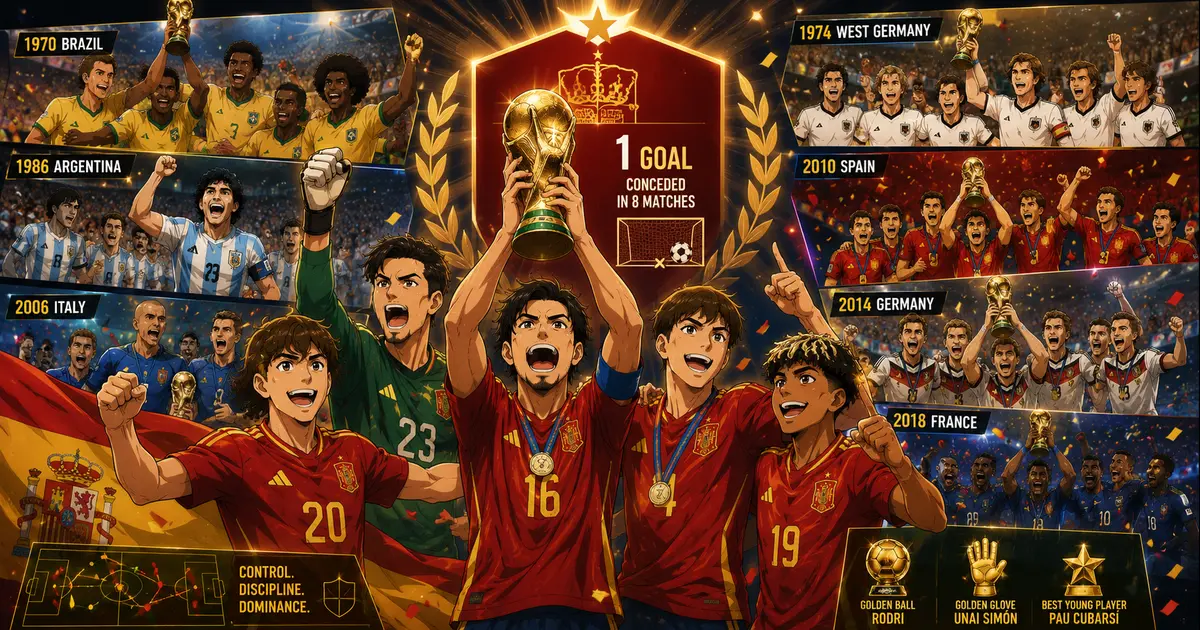
Every World Cup champion eventually gets slotted into football’s ongoing, unresolvable argument about the sport’s greatest-ever international teams, and Spain’s 2026 side arrives into that conversation with a genuinely rare calling card: the fewest goals conceded by any champion in the tournament’s history, a single goal allowed across eight matches. Figuring out exactly where Spain’s 2026 team ranks among World Cup champions requires weighing that historic defensive record against attacking sides that scored more freely, and against Spain’s own earlier triumph in 2010, a comparison this specific squad now can’t avoid.
The Case for Placing Them Near the Very Top
Start with what’s genuinely unprecedented about this specific title run. No team has ever won the World Cup while conceding as little as Spain did in 2026, a single goal across eight matches that included knockout ties against Portugal, Belgium, France, and Argentina, four sides with meaningfully different attacking identities. That record surpasses even Italy’s famously miserly 2006 championship run and Spain’s own historically stingy 2010 triumph, both of which are frequently cited among the most defensively disciplined title-winning campaigns in the sport’s history.Golden Ball Winner Rodri: The Case for Football’s Quietest Superstar
Beyond the raw defensive number, this Spain squad won the Golden Ball through Rodri, the Golden Glove through Unai Simón, and the Best Young Player award through Pau Cubarsí, a genuinely rare sweep of individual honors that reflects excellence distributed across multiple positions rather than concentrated in a single obvious superstar. Compare that to several previous champions whose greatness has often been narrated primarily through one or two transcendent individuals, and Spain’s 2026 case starts to look like one of the more genuinely complete title-winning squads the tournament has ever produced.
Where the Comparison Gets Complicated
Ranking discussions like this one inevitably run into a stubborn problem: greatness in football has never been measured by a single agreed-upon formula, and different eras reward fundamentally different qualities. Brazil’s 1970 team, still widely regarded by many historians as the greatest World Cup champion of all time, won playing an expansive, joyous attacking style built around Pelé, Jairzinho, and Tostão, scoring nineteen goals across six matches in a tournament with a considerably smaller field and, by modern standards, less tactically sophisticated opposition. Judging that Brazilian side by Spain’s 2026 defensive standard, or judging Spain’s 2026 side by Brazil’s attacking flair, both risk comparing two teams built with entirely different priorities in mind.
Germany’s 2014 champions offer a different kind of comparison, a squad that combined defensive solidity with devastating attacking moments, most famously the 7-1 semifinal demolition of Brazil on home soil, a result that remains one of the most stunning single matches in World Cup history. France’s 2018 title, built around a rampaging teenage Kylian Mbappé and a pragmatic Didier Deschamps game plan, offers yet another model entirely, one that prioritized efficient counter-attacking over sustained possession control.
Measuring Spain 2026 Against the Full Field of Champions
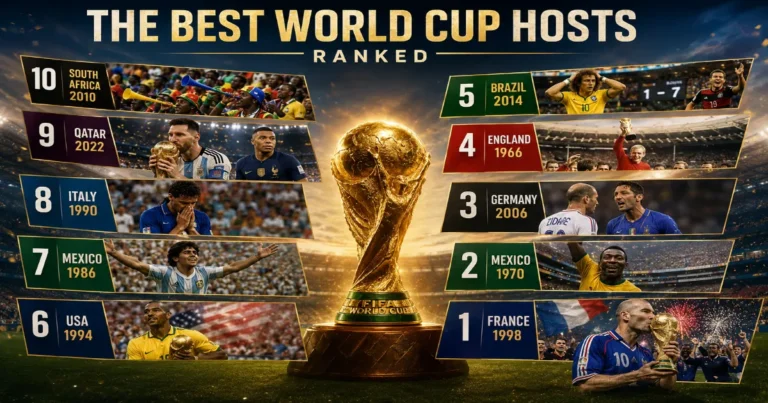
Placing Spain’s 2026 side into a genuine historical ranking requires acknowledging several tiers of previous champions. Brazil’s 1970 and 1958 squads, and arguably their 1962 title defense, sit at the very top of most historical rankings, combining individual genius with genuine team cohesion across multiple tournament cycles. West Germany’s 1974 champions and Argentina’s 1986 Maradona-inspired triumph occupy a similarly exalted tier, built around one or two individually transcendent performances layered onto a genuinely strong collective structure.
Spain’s 2026 title fits most comfortably alongside a slightly different group: champions defined primarily by defensive control and tactical discipline rather than pure individual spectacle, a group that includes Italy’s 2006 side and, most directly relevant to this specific discussion, Spain’s own 2010 champions. Within that particular tier, built on control rather than chaos, a strong argument exists that Spain 2026 sits at the very top, given the sheer scale of their defensive record and the individual quality, Rodri, Simón, Cubarsí, Yamal, distributed across their squad.
Why Longevity of Dominance Still Matters
One factor working against Spain’s 2026 case in the broadest possible historical rankings is simply the test of time. Brazil’s 1970 team has had over five decades of subsequent football history to cement its reputation, its highlights endlessly rewatched and its legend only growing with each passing generation of players who’ve failed to match its combination of style and substance. Spain’s 2026 triumph is, by definition, still fresh, and history has a way of either reinforcing or gradually eroding the reputation of even genuinely dominant title-winning squads depending on how the broader footballing conversation chooses to remember them in the years that follow.
That said, the specific nature of Spain’s achievement, a defensive record that may never be matched given how difficult it already was to produce even once, gives this squad a statistical claim to historical relevance that doesn’t depend entirely on subjective nostalgia. Numbers like “one goal conceded across an entire World Cup” tend to age extremely well in historical rankings precisely because they’re not vulnerable to the same shifting stylistic preferences that make comparing, say, Brazil’s flair to Italy’s defensive discipline such a genuinely difficult exercise.
The Fair Verdict
Placed honestly within the full sweep of World Cup history, Spain’s 2026 champions belong in the conversation among the tournament’s ten to fifteen greatest title-winning squads, without quite unseating Brazil’s 1970 side from the very top of most reasonable historical rankings. What elevates Spain’s case above many other champions in that broad tier is the specific, historically unprecedented nature of their defensive record, combined with a genuinely rare sweep of individual awards that reflects excellence spread across the entire squad rather than concentrated in one obvious star. Where exactly this Spain side ultimately settles in the sport’s broader historical memory will depend partly on how this specific generation of players, Rodri, Yamal, Cubarsí, and the rest, continues to perform in the tournaments still ahead of them. For now, they’ve already produced one of the most statistically dominant single tournament runs the World Cup has ever seen, and that alone guarantees them a serious, lasting place in this conversation.
Golden Glove Winner Unai Simon: The Historic World Cup Goalkeeping Masterclass
🔹🔹 follow us on facebook 🔹🔹
About the Author