Azteca Stadium World Cup 2026 Guide: The Return of Football’s Most Historic Venue
In 1970, Pelé lifted the World Cup here. In 1986, Maradona created the two greatest moments in football history here — four minutes apart. In 2026, this cathedral opens its arms to the world one more time.
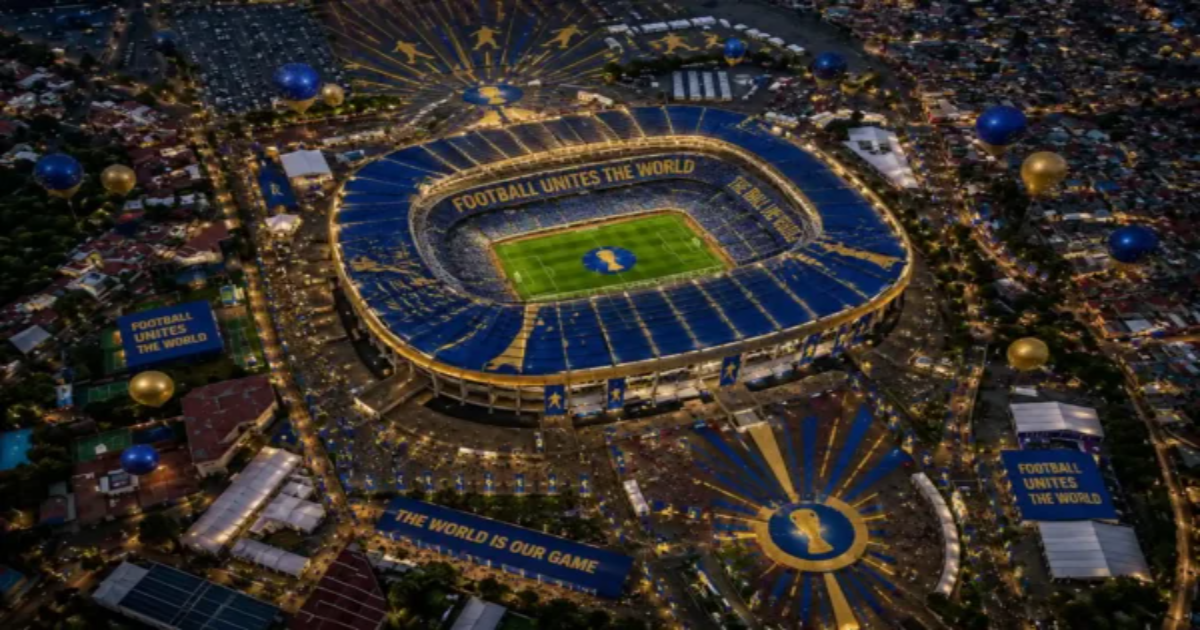 A Cathedral Does Not Need to Announce Itself
There are sixteen stadiums hosting matches at the 2026 FIFA World Cup. Fourteen of them are newer. Twelve of them are larger. Several are, by any objective architectural measure, more beautiful.
None of them is Estadio Azteca.
This is the building where football history was not merely made but permanently inscribed. Where Pelé — the greatest player of the 20th century — lifted his third World Cup trophy in 1970 and wept. Where Diego Maradona, sixteen years later, first punched the ball into the net with his left hand and called it God’s, then turned, slalomed through a half-dozen defenders, and scored what every poll in every country consistently rates as the greatest goal ever recorded on film.Where the Noise Never Stops: Ranking the Best Football Stadiums on Earth
2030 FIFA World Cup: Hosts, Format, Stadiums and Full Details
Cristiano Ronaldo Jr.: Club, Lifestyle, Career and Future Prospects
Both of those moments happened here. In this city, at this altitude, in this specific building.
And on June 11, 2026, the gates open again.
The Stadium in Numbers
| Official FIFA Name | Mexico City Stadium (Estadio Ciudad de México) |
| Known As | Estadio Azteca / Estadio Banorte |
| Location | Calzada de Tlalpan 3465, Ciudad de México |
| Opened | 1966 |
| Altitude | 7,200 feet / 2,200 metres above sea level |
| Capacity (post-2026 renovation) | 87,523 — largest stadium in Latin America |
| World Cup Matches | 5 |
| World Cups Hosted | THREE: 1970, 1986, 2026 — the only stadium in history |
| World Cup Finals Hosted | Two (1970 and 1986) — the only stadium in history |
| Renovation Cost (2024–26) | Approximately $75 million |
A History That No Other Venue Can Match
It is the only stadium in history to have hosted two World Cup finals (1970 and 1986) and will be the first stadium to host matches in three different World Cups with the upcoming 2026 tournament.
Let that number settle: three World Cups. The next closest is the Maracanã in Rio de Janeiro, which has hosted two.
The Azteca was built between 1962 and 1966, conceived by architect Pedro Ramírez Vázquez as a monument to the city of Mexico — circular, vast, sitting in the southern district of Mexico City like an ancient amphitheatre repurposed for the modern age. Its name references the Aztec civilisation that built Tenochtitlán, the great city on the lake that became Mexico City, on this very land.
In 1970, with Pelé and Brazil dancing through the tournament, the stadium witnessed football at its most beautiful — the great Brazilian side that many still consider the finest national team ever assembled. In 1986, with the 40-year-old ghost of the 1970 Mexico World Cup still wandering the stands, Maradona arrived and created two moments that football has spent four decades arguing about and loving simultaneously.
The Hand of God: a punch, a lie, a goal that stood. “A little bit the hand of God, a little bit the head of Maradona.”
The Goal of the Century: ten seconds, five defenders beaten, one goalkeeper humiliated, sixty yards covered at a pace that made the entire English defensive line look like furniture. Scored four minutes after the hand ball. By the same man.
Both goals: Estadio Azteca, June 22, 1986. Quarter-final. Argentina 2–1 England.
No other football venue on earth has two moments of that magnitude. And on June 11, 2026, this ground that has seen everything opens its gates for the third time.
The 2026 Renovation
Estadio Azteca closed for major renovation works in May 2024. The 2026 overhaul raised capacity to 87,523 and added a hybrid GrassMaster pitch, new video screens, LED lighting, a refurbished facade, new locker rooms, and a new player tunnel.
The renovation cost approximately $75 million. The building reopened in early 2026. It is, as it has always been, the largest stadium in Latin America — and it is ready.
The Match Schedule at Estadio Azteca
| Round | Date | Match |
|---|---|---|
| Group Stage — TOURNAMENT OPENER | June 11, 2026 | Mexico vs South Africa |
| Group Stage | June 17, 2026 | TBC (Mexico’s second fixture) |
| Group Stage | June 24, 2026 | TBC (Mexico’s third fixture) |
| Round of 32 | June 30, 2026 | TBC |
| Round of 16 | July 5, 2026 | TBC |
Estadio Azteca becomes the first venue in history to host three World Cup opening matches.
The opening match — Mexico vs South Africa on June 11 — is the single hardest ticket in the entire 2026 World Cup. 87,000 Mexican supporters, a home team playing in the most famous football stadium in the country, and the emotional weight of a nation that has never advanced beyond the quarter-finals of a World Cup.
They call it the Quinto Partido — the Fifth Match, the quarter-final — because Mexico has reached it and no further for so many consecutive tournaments. In 2026, playing in front of their own people, in their own stadium, at altitude that punishes opponents who are not prepared, Mexico will try again.
The Altitude Factor: Football’s Great Equaliser
Estadio Azteca sits at 7,200 feet (2,200 meters) above sea level. The thin air reduces stamina for players who aren’t acclimatised and changes how the ball flies, traveling farther with less swerve.
This is not a small detail. At 2,200 metres, the air contains approximately 25% less oxygen than at sea level. Visiting teams that arrive within 48 hours of a match and have not prepared for altitude will experience fatigue by the 60th minute that their coaches, watching at sea level, will struggle to understand from the touchline.
Mexico has known this forever. They have trained at altitude for generations. They schedule training camps in the mountains. Their players play domestic football at elevated grounds across the country. The Azteca is not simply their home — it is their weapon.
For fans: altitude affects visitors too. If you are travelling from sea level, drink significantly more water than usual, reduce alcohol on arrival, and allow yourself 24–48 hours to adjust. Headaches, shortness of breath, and fatigue are normal for the first day or two and pass without intervention.
Getting to Estadio Azteca
The fastest way to get to the World Cup stadium is public transportation. Metro Line 2 takes you to the Tasqueña station where you need to change to the light rail to the Estadio Azteca station.
The metro fare is approximately 5 Mexican pesos — around $0.30 USD. The public transit system is extraordinary value and will be heavily reinforced for the tournament. Arrive at least two hours before kick-off on match days; the lines build quickly.
Transport Options:
- Metro Line 2 → Tasqueña → Tren Ligero (light rail) → Estadio Azteca (Recommended)
- Metro Line 3 → Universidad → Electric bus to stadium
- Metrobús Line 1 stops near Dr. Gálvez
- Park-and-ride at designated venues
With a metropolitan area of some 23.1 million people, traffic congestion is quite intense during rush hours, especially in the area near Azteca Stadium. Metro is not just recommended — it is, on match days, the only rational choice.
Mexico City: One of the Great Cities of the World
Mexico City is the greatest secret in modern travel. Visitors who arrive expecting a polluted, chaotic megacity are stunned to find one of the most culturally rich, gastronomically extraordinary, architecturally beautiful capitals in the world. It has more museums than any other city on earth. It has a street food culture that UNESCO has officially recognised as an Intangible Cultural Heritage of Humanity. It has neighbourhoods — Coyoacán, Roma Norte, Condesa, Polanco — that feel like a different city entirely from one to the next.
And it has football. The Mexicans love football the way the English love football — desperately, passionately, constantly.
Must-Visit Landmarks
The Historic Centre (Centro Histórico): Mexico City’s downtown is built, literally, on the ruins of the Aztec capital Tenochtitlán. The Zócalo — the vast central plaza — is one of the largest city squares in the world, bordered by the Metropolitan Cathedral (begun in 1573) and the National Palace, whose interior Diego Rivera covered in world-renowned murals depicting Mexican history from the Aztec era to the Revolution.Hollywood Meets Football — The Complete SoFi Stadium World Cup 2026 Guide for Every Fan Heading to LA
Beneath the Zócalo, the Templo Mayor — the principal temple of Tenochtitlán — lies partially excavated. You can walk among 700-year-old ruins at the heart of a metropolis of 23 million people.
Chapultepec Park & the National Museum of Anthropology: The largest park in any Latin American city houses the greatest archaeology museum in the world. The National Museum of Anthropology holds the Aztec Sun Stone (misnamed the Aztec Calendar), the reconstructed tomb of the Red Queen from Palenque, and four floors of extraordinary Mesoamerican artefacts. Allow a full day.
Coyoacán: The bohemian southern neighbourhood where Frida Kahlo was born and lived. The Casa Azul (Blue House) is now the Museo Frida Kahlo — the most visited museum in the city. The cobblestone streets, plazas, cantinas, and weekend markets make Coyoacán the city’s most charming neighbourhood for unhurried exploration.
Roma Norte & Condesa: Tree-lined streets, art deco buildings, independent bookshops, café culture, and some of the city’s finest restaurants. This is where Mexico City’s creative class lives. The Parque México in Condesa is a perfect afternoon destination.
Teotihuacán (Day Trip): Forty-five minutes northeast of the city, the ancient city of Teotihuacán features the Pyramid of the Sun (the third-largest pyramid on earth) and the Pyramid of the Moon, connected by the Avenue of the Dead. Built by a civilisation whose name we do not know, abandoned by 550 AD, and still not fully understood. A world wonder an hour from your hotel.
Mexico City Food: FIFA’s Greatest Culinary Stage
Mexico City’s food culture deserves its own magazine, let alone its own section of a stadium guide. This is one of the five great food cities of the world, and for the fans arriving from 47 other nations in June 2026, it will be a revelation.
Street Food (Comida Callejera) — the Essential Foundation:
- Tacos de Canasta — steamed tacos filled with potato and bean, sold from bicycles and street carts. Two pesos each. The working person’s breakfast.
- Tamales — masa dough filled with chilli, pork, or cheese, wrapped in corn husks and steamed. Eaten standing, from plastic bags, at 7 AM outside metro stations.
- Tostadas de Ceviche — crispy tostadas piled with marinated seafood, available at Mercado Jamaica and Mercado de la Merced.
- Elote — street corn, either on the cob or in a cup, covered in mayonnaise, lime, chilli, and cotija cheese.
Market Dining:
- Mercado de San Juan — Mexico City’s great gourmet market. Japanese imports, Spanish jamón, extraordinary cheeses, fresh ceviche, oysters, and mezcal.
- Mercado Jamaica — flowers, fruit, and food stalls feeding thousands of locals daily.
Sit-Down Restaurants:
- Pujol (Polanco) — consistently ranked among the world’s top ten restaurants. Chef Enrique Olvera’s tasting menus are a meditation on Mexican culinary tradition. Book three months in advance.
- Contramar (Roma Norte) — the legendary tuna tostadas are eaten by everyone in Mexico City eventually. A lunch institution.
- El Cardenal (Centro Histórico) — traditional Mexican breakfast. Chiles en nogada, pambazos, and the finest atole in the city. Open since 1969.
Drinks:
- Mezcal — the smoky, complex cousin of tequila, made from agave roasted in underground ovens. Sip it slowly at any mezcalería in Roma Norte or Coyoacán. Do not mix it with anything.
- Michelada — beer, lime, hot sauce, and Worcestershire, served in a salt-rimmed glass. The match-day drink of Mexico City. Cold, savoury, and deeply refreshing.
- Horchata — rice water sweetened with cinnamon and vanilla. Sold from street carts. The perfect afternoon non-alcoholic respite from the heat.
Local Dress & What to Wear
Mexico City’s altitude of 2,200 metres means temperatures are mild by summer standards despite the city’s tropical latitude.
- Match Days: Temperatures around 65–75°F (18–24°C). Light layers. The evening chill after sundown can surprise visitors expecting Caribbean warmth — bring a jacket.
- City Exploring: Comfortable, smart-casual clothing. Good walking shoes — the Historic Centre involves extensive pavement walking on uneven colonial stones.
- Mexico Shirt: There is nowhere on earth you can wear a green Mexico jersey and receive a warmer reception than Mexico City during a home World Cup. If you support Mexico, wear the green. If you don’t, respect it.
- Sun: Despite the mild temperature, UV radiation at altitude is significantly more intense than at sea level. Sunscreen, a hat, and sunglasses are essential for daytime city exploration.
The Opening Match: June 11, 2026
On June 11, 2026, 87,000 people will fill Estadio Azteca. The pitch — hybrid GrassMaster, perfectly prepared — will glow emerald under the floodlights. The Mexican national anthem will roll out across 23 million people listening in a city that has been waiting for this for twelve years.
Mexico will take the field. South Africa will take the field. The referee will blow his whistle. And Estadio Azteca — the oldest venue at this World Cup, the only building that has done this three times — will roar in a way that only this stadium, in this city, at this altitude, can.
There is no other stadium in this tournament with this history. There is no other opening match with this weight. And there is no other city in the world that will host its World Cup games with this depth of passion, culture, and culinary generosity.
Mexico City does not just host the World Cup. Mexico City is the World Cup.
Bienvenidos.
Practical note: Mexico City’s altitude requires acclimatisation. Drink 3–4 litres of water per day on arrival. Avoid heavy alcohol in the first 48 hours. Carry cash (pesos) for street food and markets — many vendors do not accept cards. Metro rides cost 5 pesos. Taxis should be booked through the Cabify or InDriver app — never hail street taxis.
NBA Schedule 2026-27: Christmas Day Rivalries, Ring Night and the Games to Watch
PSG v Arsenal: How Paris Won the Champions League Final on Penalties
About the Author




1 thought on “Pelé Lifted the Trophy Here. Maradona Scored the Goal of the Century Here. Now Azteca Stadium Hosts World Cup 2026”