Lumen Field World Cup 2026 Guide: Inside the Loudest Stadium on Earth During Football’s Biggest Tournament
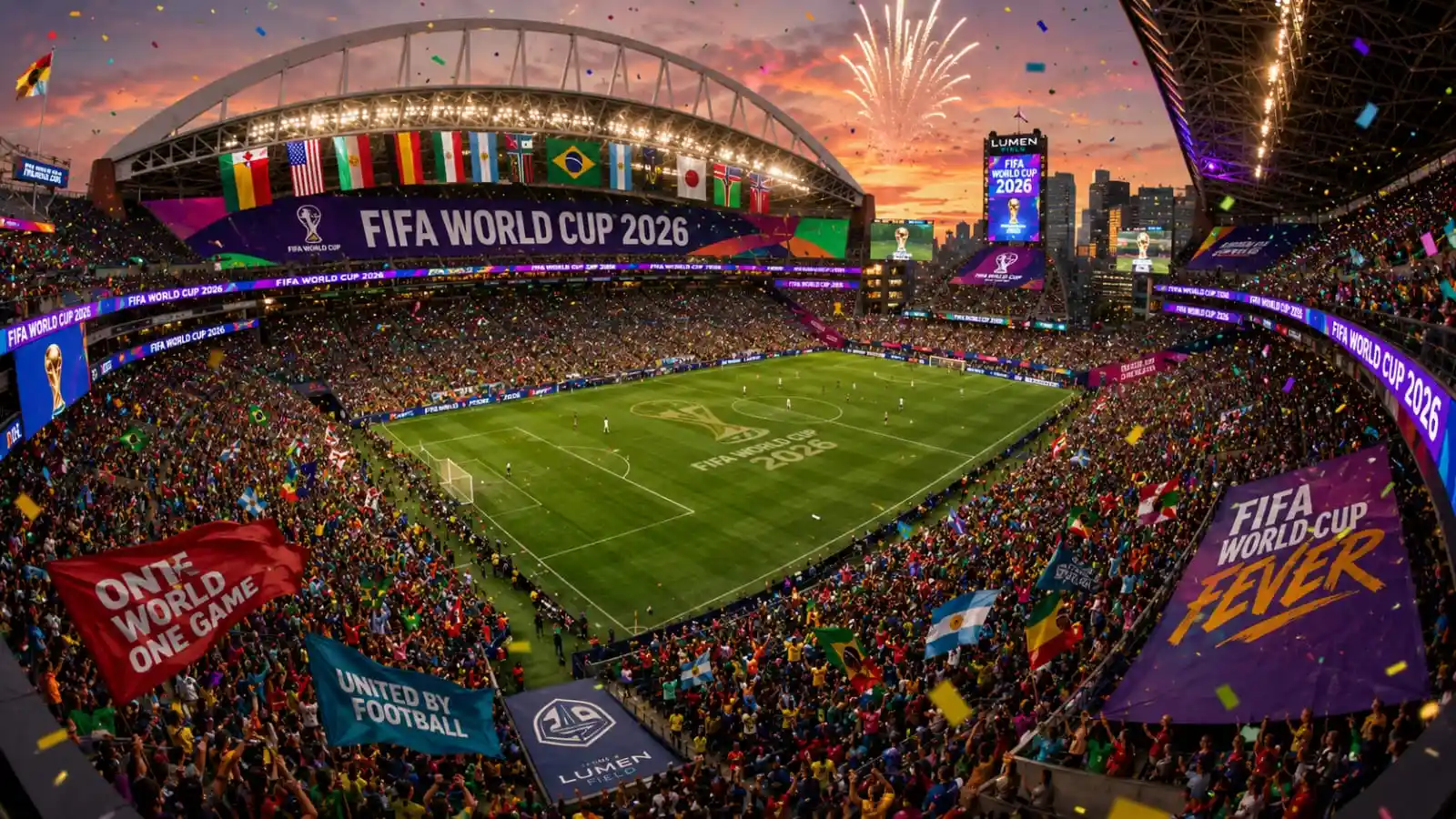
It is 11:58 AM on June 19, 2026. You are in your seat. The noise is already building. In two minutes, the United States of America will walk out onto a pitch in Seattle, Washington, and 69,000 people will do something that, according to the Guinness World Records, has never been done louder at any outdoor stadium on earth.
This is Lumen Field. Welcome.
The Record That Changes Everything
Before we talk about World Cup fixtures, travel logistics, or the best places to eat in the Pike Place Market area, let us begin with the one fact that defines this venue and every single experience inside it.
Lumen Field holds the Guinness World Record for loudest crowd roar at an outdoor stadium — Seattle Seahawks fans hit 137.6 decibels during a 2013 game against the New Orleans Saints.
One hundred and thirty-seven decibels. That is the volume of a jet engine at close range. That is the sound of approximately 69,000 human beings making the most noise a crowd has ever made at an outdoor sporting venue on planet Earth.
The Seahawks fans who set that record are called the 12th Man — a tribute to the idea that the crowd is as powerful as any player on the field. The Seattle Sounders fans who share this building are, if anything, even more vocal in their football devotion. The Emerald City is not a passive sports town. It is a loud, passionate, football-obsessed community that has been waiting for this World Cup since the announcement.
When 69,000 of them come together on June 19 to watch the United States play Australia — in a group-stage match that could define USA’s knockout prospects — what happens inside this building may be the single most electrifying ninety minutes of the entire tournament.
Stadium Snapshot
| Official FIFA Name | Seattle Stadium |
| Commercial Name | Lumen Field |
| Location | 800 Occidental Ave S, Seattle, WA 98134 (SoDo district) |
| Opened | 2002 |
| Home Teams | Seattle Seahawks (NFL), Seattle Sounders FC (MLS), Seattle Reign FC (NWSL) |
| Standard Capacity | 68,740 |
| World Cup Capacity | 69,000 |
| Upgrade Investment | $19.4 million for WC 2026 (natural grass, seating, security, lighting) |
| World Cup Matches | 6 — four group stage + Round of 32 + Round of 16 |
| Guinness Record | Loudest outdoor stadium crowd in history — 137.6 dB (2013) |
| Playing Surface | Temporary natural grass installed for World Cup 2026 |
The Match Schedule at Seattle Stadium
Here is the complete schedule of World Cup 2026 matches at Lumen Field:
| Round | Date | Time (PT) | Match |
|---|---|---|---|
| Group G | June 15, 2026 | 12:00 PM | Belgium vs Egypt |
| Group D | June 19, 2026 | 12:00 PM | USA vs Australia |
| Group B | June 24, 2026 | TBC | Bosnia and Herzegovina vs Qatar |
| Group Stage | June 26, 2026 | TBC | TBC |
| Round of 32 | TBC | TBC | TBC |
| Round of 16 | TBC | TBC | TBC |
Six matches. The USA’s home game against Australia is the centrepiece — but every fixture here will be extraordinary simply by virtue of the building they are played in.
The Architecture of Noise
Lumen Field was not built to be a football stadium. It was built to be a roar.
The architects — Ellerbe Becket — crafted the roof and seating layout specifically to keep fans close to the action and generate one of the loudest atmospheres in American sports. The stadium’s distinctive cantilevered roof traps sound inside the bowl rather than letting it escape skyward. The lower seating tiers angle steeply toward the pitch, putting fans physically close to the action in a way that NFL stadia rarely achieve.
For the World Cup, a temporary natural grass playing surface has been installed, and the venue has received seating improvements as part of the $19.4 million upgrade programme.
The result: a cauldron. An enclosed, steep-sided, noise-trapping cauldron where 69,000 people become something greater than the sum of their parts.
The stadium was built on the former site of the Kingdome, the city’s old domed stadium — destroyed in 2000 in what was the world’s largest concrete structure implosion, and more than half of the salvaged materials were recycled into Lumen Field itself. There is something poetic about a stadium built from the rubble of its predecessor — continuity in demolition, history literally embedded in the concrete.
Getting There: Seattle Does Transit Right
This is one of the easiest stadium transit stories at the entire World Cup.
By Light Rail (Best Option): Fans can travel to Lumen Field on the 1 Line of the city’s Link Light Rail system, which stops at International District/Chinatown and the conveniently named Stadium station. The Stadium station is a literal three-minute walk from the Lumen Field gates. From downtown Seattle hotels, the journey is under 10 minutes. From Seattle-Tacoma International Airport (Sea-Tac), the same Link Light Rail runs directly to Stadium station — a 35-minute journey that costs $3.25 each way.
This is the World Cup venue with the best airport-to-stadium transit link in the Pacific Northwest. Use it.
From Vancouver: Seattle is just a three-hour drive away from the Canadian host city of Vancouver — making a dual-city trip one of the most attractive options in the entire tournament. Fans attending matches in both cities should note the border crossing at Peace Arch (Highway 99) or Pacific Highway (Highway 15) can have significant delays during summer months. Allow 2–4 hours for the road journey on busy days. Amtrak Cascades also runs a scenic rail service between Vancouver and Seattle.
By Rideshare: Designated zones south of the stadium. Pre-book before entering.
The Matchday Atmosphere: A Moment-by-Moment Diary
9:00 AM — SoDo District awakens The neighbourhood around Lumen Field — South Downtown, known as SoDo — is a mix of industrial warehouses, breweries, and sports bars. By 9 AM on match day, it is already alive. Street vendors have set up outside the stadium’s outer plazas. Supporters in national colours from Belgium, Egypt, the USA, Australia — wherever today’s match takes teams from — are gathering at the handful of bars that opened at 8 AM.Pelé Lifted the Trophy Here. Maradona Scored the Goal of the Century Here. Now Azteca Stadium Hosts World Cup 2026
10:30 AM — Occidental Park fills up Occidental Park, one block north of the stadium, becomes an unofficial pre-match gathering point. Food trucks arrive. Someone has erected a screen and is showing match-day build-up coverage. A group of Australian supporters in their gold kits is doing a chant drill in the middle of the park.
11:30 AM — Gates Open The gates open 90 minutes before kick-off. The stadium begins to fill with extraordinary speed — this city knows football, this crowd does not dawdle. Inside, the new grass pitch shimmers green under the lighting. The sound system — updated with new Mitsubishi Diamond Vision video boards in 2022 — begins its pre-match show.
11:58 AM — The Moment The tunnel opens. The noise begins. By the time the last United States player has emerged from the dugout, 69,000 people have created something that the Guinness Book of Records might want to revisit on June 19, 2026.
Post-match: Pioneer Square and the waterfront Regardless of result, the post-match energy in Seattle filters outward into Pioneer Square — the city’s historic neighbourhood one block north — and toward the waterfront. On a summer evening in Seattle, with the Olympic Mountains visible across Puget Sound and the ferries moving slowly in the harbour, few post-match experiences at this World Cup will compare.
Seattle: The City Beyond the Stadium
Seattle is one of the great American cities — and one of the least understood by international visitors who have never been. It is not the rainy, grey city of stereotype. In June and July, Seattle is spectacular: warm, green, bright until nearly 10 PM, and blessed with mountain and water views that no other World Cup host city can match.
Must-Visit Landmarks
Pike Place Market The oldest continuously operating farmers’ market in the United States, founded in 1907. The fish-throwers are famous worldwide but that is only the beginning: stalls of Pacific Northwest berries, flowers, cheese, smoked salmon, and handmade crafts fill three floors of a market perched above Elliott Bay. The original Starbucks — opened 1971, still operating — is here. Queue for coffee in the building where the chain was born.
Space Needle The 605-foot icon of the 1962 World’s Fair. The observation deck was renovated in 2018 with glass floors and outward-tilting glass walls — not for the faint-hearted, extraordinary for everyone else. On a clear summer day, you can see Mount Rainier, the Cascades, and the Olympic Peninsula from the top.
Chihuly Garden and Glass Adjacent to the Space Needle: a stunning exhibition of Dale Chihuly’s monumental glass sculptures in a purpose-built garden. Particularly extraordinary at dusk when the light catches the coloured glass. One of the most genuinely beautiful indoor-outdoor art experiences in the United States.San Francisco Bay Area World Cup 2026 Guide — Levi’s Stadium, Golden Gate & 30+ Free Fan Zones
Museum of Pop Culture (MoPOP) Built inside a Frank Gehry-designed building of crumpled silver metal, MoPOP covers rock music, science fiction, horror films, and video game culture with exhibits that include Jimi Hendrix’s guitars, original science fiction props, and the history of grunge — the musical movement Seattle gave the world. Kurt Cobain, Eddie Vedder, and the entire generation of artists who changed music in the early 1990s: their story is here.
Kerry Park, Queen Anne Hill The single best view of the Seattle skyline available to the public. The Space Needle framed against downtown, with Puget Sound and the Olympic Mountains behind it. Go at sunset. Bring your camera. This is the photograph you will carry from Seattle.
The Waterfront & Olympic Sculpture Park Seattle’s renewed waterfront — currently being transformed by a multi-billion dollar tunnel project that rerouted an elevated highway underground — runs along Elliott Bay. The Olympic Sculpture Park at its northern end is a free outdoor museum of monumental sculpture with the water as its backdrop.
Day Trip: Mount Rainier A 14,411-foot active volcano, perpetually snow-capped, visible from the city on clear days. Mount Rainier National Park is a 90-minute drive and one of the great Pacific Northwest experiences — wildflower meadows, glaciers, and views that remind you how vast and dramatic the American landscape is.
Seattle Food: The Pacific Northwest Table
Seattle’s food culture is defined by the extraordinary natural larder of the Pacific Northwest — wild salmon, Dungeness crab, oysters, berries, mushrooms, and the produce of the fertile Willamette and Yakima valleys. It is a city that eats extraordinarily well.
Wild Salmon The Pacific Northwest’s defining ingredient. King salmon (Chinook), sockeye, and coho are available grilled, smoked, cured, and raw throughout the city’s restaurants. The Wild Salmon Seafood Market at Pike Place and Ivar’s Acres of Clams on the waterfront are the institutions. For a restaurant experience: Westward on Lake Union does whole roasted salmon with views to match.
Dungeness Crab The Pacific Northwest’s finest crustacean. Sweeter and more delicate than the East Coast blue crab, Dungeness is best eaten simple — steamed, cracked open, with drawn butter and sourdough. The Crab Pot near the waterfront does a theatrical “seafeast” where a pot of shellfish is dumped directly onto your table.
Oysters Washington State oysters — Kumamoto, Olympia, Pacific — are among the finest in the world. Taylor Shellfish Farms has two Seattle locations and charges approximately $3 per oyster for product that would cost three times as much in New York or London.
Teriyaki Seattle has its own style of teriyaki — marinated chicken or beef grilled and served over rice with a sweet, thick sauce. It is everywhere, affordable, and definitively Seattle. Toshi’s Teriyaki in Kirkland is considered the benchmark.
Pho and Vietnamese Food Seattle’s large Vietnamese community has given the city one of the finest pho cultures in the United States. The International District — right next to the Stadium light rail station — has dozens of pho shops serving rich beef broth noodle soups from breakfast onwards. Pho Bac has been the local favourite since 1982.
Coffee Seattle invented the modern American café culture. The original Starbucks is here (Pike Place). But for the city’s actual coffee community, the independents are what matter: Victrola Coffee Roasters in Capitol Hill, Lighthouse Roasters in Fremont, and Caffe Vita across multiple neighbourhoods.
Craft Beer Washington State has over 400 craft breweries. In Seattle specifically: Fremont Brewing, Georgetown Brewing, Elysian Brewing (try the Space Dust IPA — it is named for the Space Needle). The SoDo district has a cluster of taprooms within walking distance of the stadium.
What to Wear in Seattle
Seattle in June and July is genuinely one of the most pleasant climates at this World Cup — warm but not brutal, long daylight hours, and far less humidity than the Southern US venues.
- Typical June/July temperatures: 65–78°F (18–26°C), occasionally reaching 85°F
- Rain: Seattle’s reputation for rain is largely a winter phenomenon. June and July are the driest months. Rain is possible but unlikely on most days.
- Match Day: Light layers. Your team’s shirt. Comfortable shoes — the SoDo district and surroundings involve significant walking.
- Layer Rule: Seattle evenings can cool quickly, especially near the water. A light jacket or sweatshirt in your bag is always worth it — even in summer.
- The 12th Man Noise Tip: Bring ear protection if you are sensitive to sound. The stadium at capacity is genuinely, measurably, record-breakingly loud.
Fan Zones & Watch Parties
Victory Hall, next to Lumen Field, will be the home of “Seattle Matchday Live” — where fans can watch matches on a giant screen while hearing the actual roar of the crowds next door in real time.
Nine official fan zones have been announced across Washington State, in Bellingham, Bremerton, Everett, Olympia-Lacey, Spokane, the Tri-Cities, Tacoma at the Puyallup Tribal Headquarters, Yakima, and Vancouver, Washington.
The FIFA Fan Festival location will be announced closer to the tournament. Given Seattle’s existing football culture — the Sounders regularly sell out this stadium in MLS — expect the city’s existing network of supporter bars and football pubs to become World Cup institutions for the full 39 days of the tournament.
About the Author