Two of the sport’s greatest managers built their dynasties on pressing — here’s how their approaches to the high press actually differ
Ask a modern football fan to name the sport’s most influential tactical trend of the last fifteen years, and the answer is almost always the same: the high press. Rather than sitting deep and waiting for the opposition to make a mistake, pressing teams chase the ball aggressively the moment they lose it, often deep in the opponent’s own half, hunting for turnovers in the most dangerous areas of the pitch. Few coaches have shaped this idea more than Jürgen Klopp and Pep Guardiola — two managers whose teams press relentlessly, yet do so for subtly different reasons and in subtly different ways. Comparing their systems is the clearest way to understand how the high press actually works.
What Is a High Press, Exactly?
At its core, a high press is a defensive strategy in which a team pressures the opposition far from its own goal, usually starting in the opponent’s defensive or middle third of the pitch, rather than retreating into a compact defensive shape. The goal is twofold: force the opposition into rushed, inaccurate passes or dangerous turnovers, and — if the press succeeds — win the ball back in a position close enough to the opposition’s goal to immediately threaten it.
This differs sharply from a “low block,” where a team concedes possession and territory willingly, sitting deep and compact to protect the space in front of its own goal. A high press is inherently higher-risk: if the pressing team gets bypassed, the space left behind its forward line can be exploited quickly. That risk is precisely why pressing systems demand extraordinary fitness, coordinated movement, and split-second collective decision-making from every outfield player.
Klopp’s Gegenpressing: Turning Loss of Possession Into Attack
Jürgen Klopp didn’t invent pressing football, but he gave the modern version of it its most famous name: gegenpressing, German for “counter-pressing.” Developed during his time at Mainz and refined into a genuine trophy-winning system at Borussia Dortmund and later Liverpool, Klopp’s philosophy treats the moment immediately after losing the ball as the single best opportunity to win it back. His reasoning is simple but effective: an opponent who has just won possession is still mentally reorienting, has often expended energy in the challenge, and hasn’t yet organized their next pass.
Klopp has been explicit about the attacking logic behind this idea, once explaining that regaining the ball high up the pitch is often worth more than any individual playmaker, because it creates an instant scoring opportunity before the opposition can reset defensively. His Dortmund and Liverpool sides became renowned for what’s often referred to as a “five-to-six-second rule” — the idea that if the ball isn’t won back within roughly six seconds of losing it, the team should abandon the immediate press and retreat into a more organized defensive shape rather than continuing to chase in an unstructured way.
The influence traces back further than Klopp himself. Coaches like Arrigo Sacchi at AC Milan in the late 1980s pioneered zonal, high-intensity defending built around compact lines and coordinated pressing triggers, ideas that filtered through German coaching circles via figures like Ralf Rangnick before Klopp built his own version on top of them.
Guardiola’s Positional Press: Structure Before Chaos
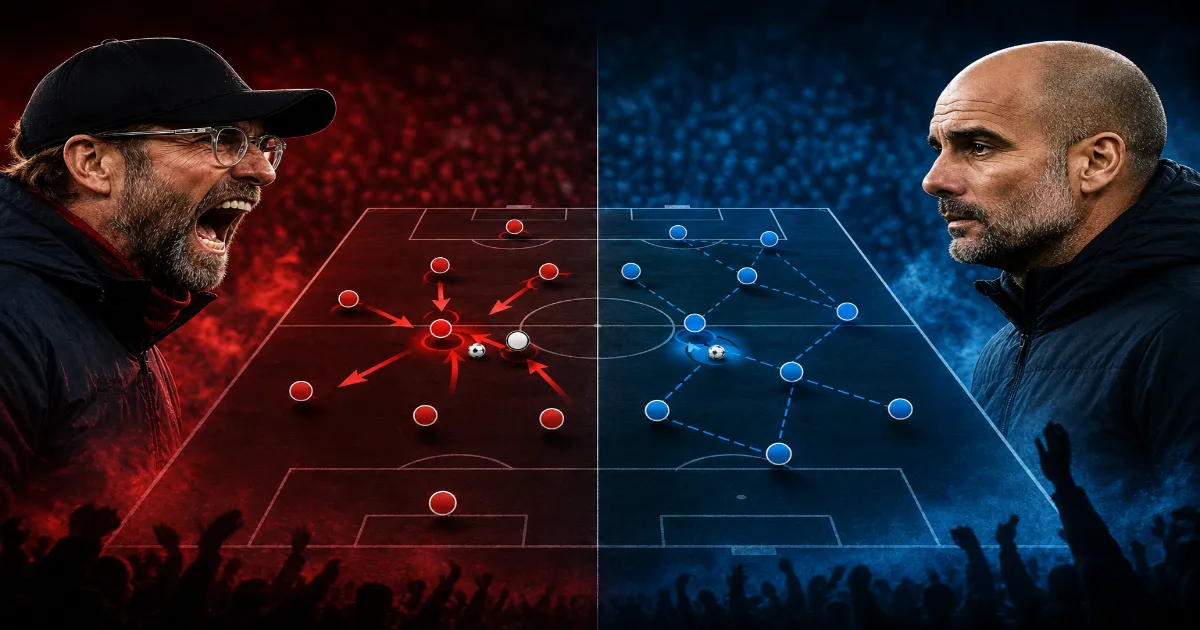
Pep Guardiola’s relationship with pressing looks, on the surface, similar to Klopp’s — his Barcelona, Bayern Munich and Manchester City sides have all pressed aggressively and won the ball back high up the pitch. But the underlying logic is different. Where Klopp’s gegenpressing is built around chaos and intensity — swarming the ball carrier the instant possession is lost — Guardiola’s approach is built around positional structure first, with pressing functioning as a natural extension of that structure rather than an isolated defensive trigger.
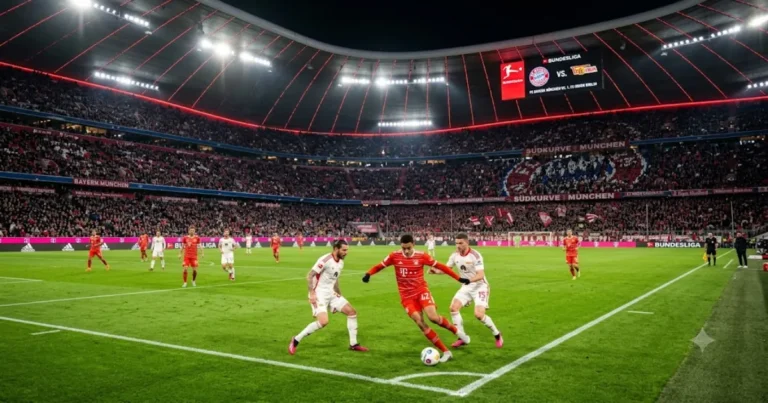
Guardiola’s teams are famously obsessive about their shape in possession, using rigid positional rules — players occupying specific zones of the pitch — designed in part to make losing the ball less costly in the first place. Because his players are already positioned close to the ball and to each other when possession turns over, a Guardiola team’s press often looks more calculated and less frantic than Klopp’s — closing passing lanes methodically rather than simply sprinting at the ball. Guardiola has also referenced a similar timeframe to Klopp’s rule, drilling his Barcelona sides to try to win the ball back within roughly six seconds of losing it, before falling back into their base defensive shape if the press doesn’t succeed.
Where the Two Philosophies Diverge
The clearest way to separate the two systems is to look at what each coach prioritizes when the press fails. Klopp’s version is built to accept some structural risk — his teams commit numbers forward aggressively both in possession and in the press that follows losing it, which occasionally leaves space in behind for a well-timed opposition counter-attack, something Liverpool have been caught out by against elite opposition on quick transitions. Guardiola’s teams, by contrast, are drilled to protect defensive structure even during the pressing phase, often described by pundits as more prepared to “let the opposition have the ball” in less dangerous areas rather than committing to a full team press in every situation.
Put simply: Klopp’s gegenpressing treats the press primarily as an attacking weapon, valued for how quickly it can turn a defensive moment into a chance on goal. Guardiola’s positional press treats defensive solidity as the priority, with attacking opportunity as a welcome byproduct rather than the primary aim.
The Physical and Tactical Demands of Pressing
Both systems place enormous physical demands on players, which is part of why pressing-heavy teams tend to rotate squads carefully across congested fixture schedules. Effective high pressing requires forwards and midfielders to sprint repeatedly over short distances, defenders to maintain a coordinated offside line further up the pitch than in traditional defensive systems, and every outfield player to read pressing triggers — cues like a poor first touch, a backward pass, or a player receiving the ball with their back to goal — that signal when to accelerate the press collectively rather than individually.
This collective element is crucial. A single player pressing alone is easily bypassed with one simple pass; an entire unit pressing in coordination, cutting off passing lanes as a group, is far harder to escape. That’s why both Klopp’s and Guardiola’s sides have historically relied on extensive, repetitive training-ground drilling to make pressing triggers feel instinctive rather than something players have to consciously think through during a match.
The Wider Influence on Modern Football
The success of both approaches has reshaped how football is coached at every level. Full-backs are now expected to defend far higher up the pitch than in previous generations, in part because pressing systems demand a compact team shape rather than a deep, spread-out defensive line. Goalkeepers have been pushed to become comfortable passing under pressure, since pressing teams often force opponents into rushed long clearances that a composed goalkeeper can help bypass. Even at youth and amateur levels, coaching curricula increasingly emphasize pressing triggers and defensive transitions far earlier than they once did, a direct byproduct of how visibly successful this style of play became at the elite level during the 2010s and into the 2020s.
Final Word
The high press is often talked about as a single tactical idea, but Klopp and Guardiola’s careers prove it’s really a family of philosophies rather than one fixed system. Klopp’s gegenpressing treats a lost ball as an attacking opportunity to be seized with controlled chaos and relentless intensity, while Guardiola’s positional press treats defensive structure as the foundation that makes pressing sustainable in the first place. Both approaches have won trophies at the very top of the sport, and both have fundamentally changed how football is coached — proof that there’s more than one way to make pressure the most dangerous weapon on the pitch.
How Football Clubs Make Money: Revenue Streams Explained
What Is Gegenpressing? Jurgen Klopp’s Counter-Press Philosophy Explained
How Do Football Agents Work? The Business Behind Every Transfer
▪️▪️ follow us on facebook ▪️▪️
About the Author