Inside the World Cup 2026 Golden Glove Race: Contenders, Selection, and Why It Gets Overlooked
 Inside the World Cup 2026 Golden Glove Race: Contenders, Selection, and Why It Gets Overlooked
Ask a casual football fan who’s leading the Golden Boot race at this World Cup and they’ll likely rattle off Messi, Mbappé, or Haaland without hesitation. Ask the same fan who’s favourite for the Golden Glove, and the silence tends to be considerably longer. That gap in awareness has nothing to do with the quality of goalkeeping on display this summer — it has been, by most technical measures, one of the strongest tournaments for shot-stoppers in years. It has everything to do with how football media, and football fans, are conditioned to watch the sport.
What the Golden Glove Actually Is, and How It’s Selected
The Golden Glove is awarded to the best goalkeeper of the World Cup, as judged by FIFA’s Technical Study Group — a panel of coaches, former players, and technical experts assembled by FIFA to analyse the tournament, rather than a stat leaderboard or a fan vote. The award was introduced at the 1994 World Cup under the name the Lev Yashin Award, honouring the legendary Soviet goalkeeper widely considered the greatest in the position’s history, before FIFA rebranded it the Golden Glove ahead of the 2010 tournament in South Africa.
Unlike the Golden Boot, which is a straightforward numerical count of goals scored, the Golden Glove is deliberately subjective. The Technical Study Group weighs clean sheets, but also save quality, shot-stopping under pressure, distribution and command of the penalty area, penalty-shootout heroics, and — perhaps most importantly — a goalkeeper’s overall contribution to their team’s run through the tournament. A keeper with fewer clean sheets than a rival can still win the award if their individual moments were judged more decisive, which is precisely why the award has never gone to a simple “most shutouts” leaderboard topper in isolation.
That last criterion, team success, matters enormously in practice. Since the award’s introduction, 75% of Golden Glove winners have come from teams that reached at least the semi-finals, and half have come from the eventual champions. Germany and Belgium are the only nations to have produced two different winners — Oliver Kahn in 2002 and Manuel Neuer in 2014 for Germany, Michel Preud’homme in 1994 and Thibaut Courtois in 2018 for Belgium — while Argentina’s Emiliano Martínez, the reigning holder from 2022, is the only winner from outside Europe. No goalkeeper has ever won the award twice, a distinction Martínez has a genuine chance to claim this summer if Argentina go deep again.
Who’s Actually in the Race Right Now
With the tournament into its quarter-final stage, the picture has sharpened considerably from the wide-open pre-tournament conversation that included names like Gianluigi Donnarumma and Yassine Bounou, both since eliminated alongside their nations.
Unai Simón (Spain) has emerged as the clearest favourite. Spain have not conceded a single goal through their opening rounds of the tournament, giving Simón a save percentage of 100% on the shots he has faced, an 87.6% passing accuracy that reflects his importance to Spain’s build-up play, and an average match rating of 7.71. Spain’s meeting with Belgium in the quarter-final finally saw that clean sheet run end, but Simón’s overall body of work — anchoring one of the tournament’s most defensively disciplined sides — has made him the bookmakers’ top pick heading into the semi-finals.
Mike Maignan (France) sits right behind him, and by some statistical measures ahead of him. Maignan holds the highest average match rating of any goalkeeper at the tournament, at 7.87, with an 84.2% save percentage and zero individual errors leading directly to a goal — a remarkable defensive reliability record given how far France have progressed. He was a penalty-shootout hero in France’s tense Round of 32 progression, and his continued excellence behind an attacking side that has scored heavily throughout the knockout stage has kept him firmly in the conversation.
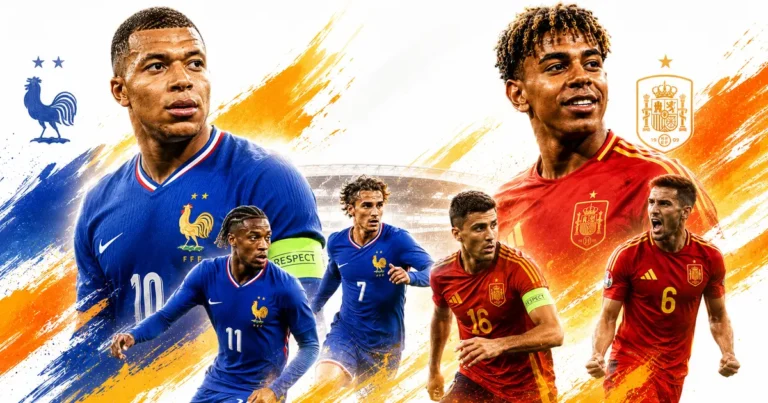
The symmetry here is difficult to ignore: Simón and France’s Maignan, the tournament’s two standout goalkeepers by underlying numbers, are set to face each other directly in the semi-final on July 14, guaranteeing that at least one of the two frontrunners will have his Golden Glove case complicated by a defeat before the final is even played.
Emiliano Martínez (Argentina) remains the most historically significant name in the race. The reigning Golden Glove winner from Qatar 2022, Martínez has the chance to become the first goalkeeper ever to win the award in consecutive tournaments. His path has been considerably bumpier this time around — Argentina conceded twice to Cape Verde in the Round of 32 and twice more to Egypt in the Round of 16, results that dent his clean-sheet numbers but have also produced the kind of high-stakes, high-drama saves that Technical Study Groups have historically rewarded, including his continued reputation as one of the game’s foremost penalty-shootout specialists.
Elsewhere, Jordan Pickford (England) and Ørjan Nyland (Norway) remain live contenders through England’s and Norway’s continued progress, while a standout Paraguayan goalkeeper’s penalty-shootout heroics against Germany in the Round of 32 — before his own team’s elimination — earned one of the highest average match ratings of the tournament’s group and early knockout stages, a reminder that the award’s panel-based selection can still recognise a goalkeeper on a team that didn’t ultimately go the distance.
Why the Golden Boot Dominates the Conversation and the Golden Glove Doesn’t
The imbalance in attention between these two awards isn’t an accident of this particular tournament — it’s structural, and it comes down to a handful of clear reasons.
Goals are simple. Great goalkeeping isn’t. A Golden Boot leaderboard is just a number next to a name, updated after every match, instantly shareable and instantly understandable to any fan regardless of tactical literacy. The Golden Glove has no equivalent leaderboard, because its criteria — shot-stopping quality, distribution, “impact on decisive moments” — resist the kind of simple, single-number tracking that makes the Golden Boot race so easy to follow and debate on social media.Which Team Plays the Most Entertaining Football at World Cup 2026?
The award itself is older and more established in the public imagination. The Golden Boot’s lineage traces back informally to the 1930 World Cup and was formalised in 1982; the Golden Glove wasn’t introduced until 1994, and didn’t even carry its current name until 2010. Sixteen additional years of cultural head start is a meaningful gap in an era where World Cup traditions and betting markets are built up gradually, tournament by tournament.
Goals are the point of the sport, structurally. Football’s entire scoring system is built around the attacking act of putting the ball in the net, which naturally elevates the profile of the players doing the scoring. A wonder strike gets replayed for years; a smart piece of goalkeeping positioning that prevents a goal from ever being a clear chance in the first place often isn’t even shown on the highlights reel, because the most effective goalkeeping frequently looks like nothing happened at all.
The Golden Glove’s selection process is opaque by design. Where the Golden Boot is decided by an objective, publicly verifiable count of goals (with assists and minutes played as tie-breakers), the Golden Glove is decided behind closed doors by FIFA’s Technical Study Group, with no public leaderboard update after each round. Fans and pundits can debate Golden Boot standings using freely available match data; debating the Golden Glove requires trusting a panel’s qualitative judgment, which is a considerably less engaging conversation for casual audiences and betting markets alike.Golden Boot Race Explained: Who Leads Right Now at World Cup 2026
Betting markets and fantasy football have reinforced the imbalance. Modern World Cup coverage is increasingly shaped by daily betting content and fantasy leagues, both of which are built around quantifiable outputs — goals, assists, shots on target — rather than qualitative defensive contributions. A goalkeeper’s clean sheet matters to a fantasy points tally, but it’s a team-level statistic shared by every defender on the pitch, diluting any individual narrative the way a striker’s goal never has to share credit.
A Race Worth Watching Anyway
None of this makes the Golden Glove race any less compelling on its own terms — if anything, the lack of a simple leaderboard is part of what makes it a richer story to actually follow. Simón and Maignan, the tournament’s two most statistically outstanding goalkeepers, are about to eliminate one of themselves from contention in the same match that decides who reaches the final. Martínez is one strong week away from becoming the first repeat winner in the award’s history. And whichever nation ultimately lifts the trophy will, if the award’s own history is any guide, have a roughly 50-50 chance of seeing their own goalkeeper walk away with the individual honour too.
The Golden Boot will keep dominating the pre-final headlines, and Messi’s record-breaking tournament all but guarantees that pattern holds this year as much as any other. But for anyone willing to look past the goal-scoring charts, the Golden Glove race — quieter, more contested, and considerably harder to predict — might be the more genuinely uncertain individual storyline left in this World Cup.
◾◾ follow us on facebook ◾◾
About the Author