 The 2014 World Cup in Brazil: A Tournament of Extremes and Unforgettable Moments
Few World Cups have swung between euphoria and devastation as violently as the 2014 tournament in Brazil. Hosted by a nation with football woven into its national identity more deeply than perhaps any other country on earth, the tournament produced moments of pure joy, genuine heartbreak, and one result so shocking it remains almost impossible to fully explain more than a decade later. This is the story of a World Cup defined not by consistency, but by extremes.
LaLiga 2026/27 Schedule: Fixtures, Dates & Times
Premier League 2026/27 Schedule: This Week and Next Week
Football League Structure Explained: Promotion, Relegation & Cups Made Simple
The Weight of Expectation on Home Soil
Brazil arrived at its own World Cup carrying a burden no other host nation has quite matched. As the most successful country in the tournament’s history, with five previous titles, and as the birthplace of some of the sport’s most legendary players, anything short of a sixth championship on home soil was always going to be viewed as a disappointment by a football-obsessed public. That pressure was compounded by lingering social tension, with widespread protests in the buildup to the tournament over the enormous public spending on stadiums and infrastructure at a time when many Brazilians felt basic public services were being neglected.
Manager Luiz Felipe Scolari, who had led Brazil to World Cup glory in 2002, was brought back specifically to recapture that earlier success, and his squad, built around the individual brilliance of a young Neymar alongside experienced figures like captain Thiago Silva and midfielder Fernandinho, entered the tournament as one of the clear favorites. For much of the group stage and early knockout rounds, Brazil’s campaign proceeded roughly as expected, if never quite as convincingly as many home fans had hoped.
A Star Injured, A Team Diminished
Brazil’s campaign took its first serious hit in the quarterfinal against Colombia, an increasingly physical match that saw Neymar, by far Brazil’s most important attacking threat, suffer a fractured vertebra following a rough challenge late in the game. The injury instantly ended his tournament, robbing Brazil of their most creative and dangerous player just as the competition reached its most critical stage. Compounding the disaster, captain Thiago Silva picked up a suspension for the semifinal due to yellow card accumulation, meaning Brazil would face their biggest test of the tournament without either their talisman in attack or their defensive leader marshaling the back line.
The Collapse: Brazil 1-7 Germany
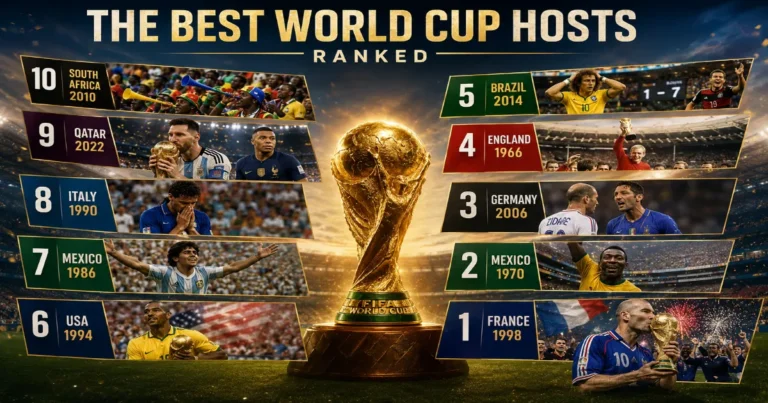
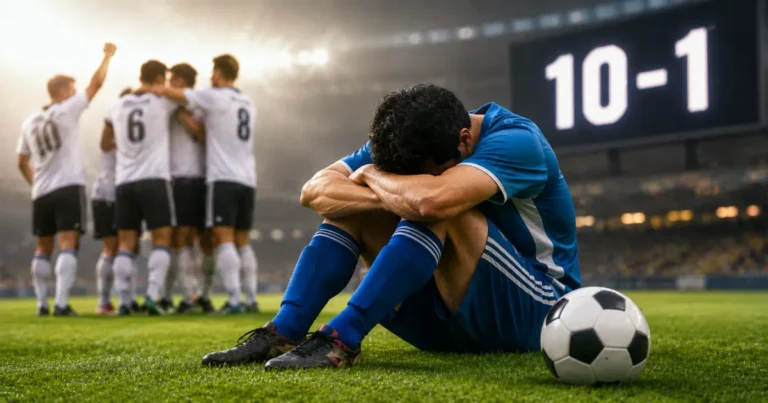
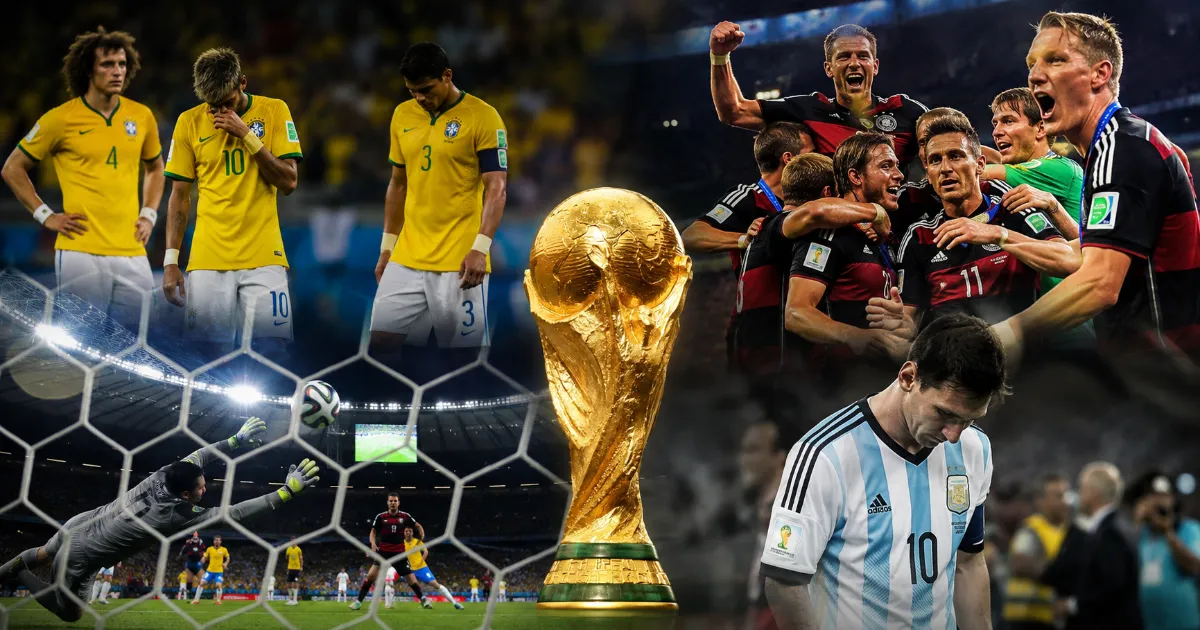
What followed remains one of the single most shocking results in World Cup history. Facing Germany in the semifinal in Belo Horizonte, with an entire nation’s championship hopes riding on the outcome, Brazil suffered a collapse so complete and so rapid that it defied almost any historical comparison. Germany scored four goals in a span of just six minutes during the first half, exploiting gaps in Brazil’s makeshift defense with ruthless, clinical efficiency, before adding further goals to complete a 7-1 demolition that left the host nation’s own supporters in visible shock and disbelief inside the stadium.
The scale of the defeat was almost impossible to process in real time. Television cameras captured Brazilian fans in tears, some laughing in stunned disbelief, others simply staring blankly at the pitch as if the match couldn’t possibly be real. It marked Brazil’s first competitive home defeat in over three decades, and the margin of the loss, seven goals in a World Cup semifinal, immediately entered football history as a byword for total, unimaginable collapse. Germany’s Miroslav Klose scored during the rout to become the World Cup’s all-time leading goalscorer, a historic personal achievement that was almost entirely overshadowed by the sheer scale of his team’s dismantling of the host nation.
Champions League 2026/27 Schedule: Fixtures, Dates & Times
PSG v Arsenal: How Paris Won the Champions League Final on Penalties
A Third-Place Match Nobody Wanted to Play
If the semifinal defeat wasn’t painful enough, Brazil’s World Cup ended with a further indignity in the third-place playoff against the Netherlands, a fixture few players on either side treated with much enthusiasm given the circumstances. The Netherlands won comfortably, 3-0, compounding Brazil’s misery with a second consecutive home defeat by an embarrassing margin and ensuring that the host nation’s own World Cup would be remembered less for any achievement on the pitch and more for the psychological unraveling that had defined its final week.
Germany’s Triumph and a Golden Final Moment
While Brazil’s tournament ended in catastrophe, Germany’s continued toward the ultimate prize. Joachim Löw’s squad, built on years of deliberate structural investment in German football’s youth development system following earlier tournament disappointments, faced Argentina, led by Lionel Messi, in the final at the Maracanã. The match remained goalless deep into a tense, tightly contested ninety minutes and extra time, with both sides creating limited clear-cut chances against well-organized defenses.
The decisive moment arrived in the 113th minute, when substitute Mario Götze controlled a cushioned chest pass from André Schürrle inside the penalty area and volleyed the ball first-time into the net with remarkable technical composure, a genuinely difficult finish executed perfectly under the highest possible pressure. The goal secured Germany’s fourth World Cup title and its first as a unified nation, since Germany’s three previous triumphs had come while the country was still divided into West Germany and East Germany during the Cold War era. Götze’s strike remains one of the most technically impressive winning goals in any World Cup final, a moment of individual quality settling a match that had otherwise been defined by defensive caution and mutual respect between two evenly matched sides.
Messi’s Bittersweet Tournament
For Argentina and Lionel Messi specifically, the final represented a genuine near-miss at the one major honor that continued to elude him throughout his career at that point. Despite winning the tournament’s Golden Ball as its best player, an award that drew some criticism given Argentina’s ultimate defeat, Messi’s inability to lift the World Cup itself added another chapter to the ongoing narrative questioning whether his club dominance could ever be replicated on the international stage. That particular storyline would eventually resolve itself in Messi’s favor at a later tournament, but in 2014 it remained an unresolved, painful subplot to Argentina’s runner-up finish.
Other Storylines That Defined the Tournament
Beyond its two most famous results, the 2014 World Cup produced a string of other memorable moments that added to its reputation as a tournament of extremes. The United States advanced from a genuinely difficult group featuring Germany, Portugal, and Ghana, with goalkeeper Tim Howard delivering a record-breaking performance of sixteen saves in a narrow round-of-16 defeat to Belgium that captured widespread attention even among casual American sports fans. Costa Rica produced one of the tournament’s most memorable underdog runs, topping a group that included former champions Uruguay, Italy, and England before eventually falling to the Netherlands on penalties in the quarterfinals.
The tournament also saw one of the most bizarre individual moments in World Cup history, when Uruguay’s Luis Suárez bit Italian defender Giorgio Chiellini during a group-stage match, an incident caught clearly on camera that led to a lengthy suspension and dominated international headlines for days, overshadowing much of the actual football being played around it. It was Suárez’s third biting incident in his career, and the scale of the media reaction turned what might otherwise have been a minor disciplinary footnote into one of the tournament’s most widely discussed storylines.
Why 2014 Still Resonates
More than a decade later, the 2014 World Cup remains one of the most frequently referenced tournaments in football history, almost entirely because of how starkly its extremes played out on the biggest possible stage. Brazil’s 7-1 collapse is still regularly cited as the benchmark for total footballing catastrophe, discussed and dissected whenever a heavily favored team suffers an unexpected defeat, while Götze’s winning goal remains held up as one of the finest individual finishes ever produced in a World Cup final.
For Brazil, the tournament triggered years of soul-searching about player development, tactical approach, and the psychological pressure of hosting a home World Cup, discussions that continued to shape Brazilian football policy for years afterward. For Germany, it validated over a decade of patient structural investment in youth academies and coaching education following earlier tournament disappointments, a blueprint other football federations would go on to study closely. Few tournaments in World Cup history have managed to combine such profound national humiliation with such a genuinely brilliant conclusion, and that combination is exactly why 2014 continues to be remembered as one of the most dramatic, and extreme, World Cups ever played.
A Tournament Measured in Contrasts
What makes 2014 so enduringly fascinating isn’t any single result in isolation, but the sheer distance between its highest and lowest points, a home nation’s total psychological collapse on one end, and a technically flawless, world-class finishing moment settling the final on the other. Few sporting events manage to contain both extremes within the same four-week window, and it’s that combination, rather than any single storyline alone, that explains why the 2014 World Cup remains such a frequently revisited chapter in football history whenever fans and analysts discuss the sport’s most dramatic tournaments.
How Germany’s Structural Investment Paid Off
Germany’s triumph in 2014 didn’t happen by accident, and understanding its roots requires looking back over a decade before the tournament itself. Following a disappointing group-stage exit at Euro 2000, German football’s governing body undertook a sweeping overhaul of its youth development system, mandating investment in academies, coaching qualifications, and a more technically focused style of play across every professional club in the country. That long-term restructuring produced the exact generation of players who lifted the trophy in Brazil, Thomas Müller, Mesut Özil, Toni Kroos, Manuel Neuer, and Götze himself all emerged directly from this reformed development pipeline, giving Germany’s 2014 triumph a sense of vindication that stretched back well over a decade before Löw’s side ever stepped onto the pitch in Brazil.
This context also explains why Germany’s specific tactical approach throughout the tournament, built on positional flexibility, technical quality across every outfield position, and a genuine willingness to rotate personnel between matches, felt so different from previous German World Cup-winning sides, which had often relied more heavily on physical directness and defensive organization. The 2014 vintage represented a genuinely new model for German football, one explicitly designed years in advance to compete with the technical, possession-based sides that had dominated the previous several major tournaments.NBA Schedule 2026-27: Christmas Day Rivalries, Ring Night and the Games to Watch
The Psychological Aftermath in Brazil
The scale of Brazil’s semifinal collapse triggered consequences that extended well beyond the tournament itself. Manager Scolari was dismissed shortly after the World Cup concluded, and Brazilian football underwent a period of genuine institutional reflection about player development, tactical philosophy, and the specific vulnerabilities exposed by Germany’s ruthless first-half execution. Several of the players involved in the defeat, including David Luiz and Fernandinho, faced years of ongoing criticism from Brazilian media and fans whenever the result resurfaced in football discussion, a reminder of just how deeply the collapse embedded itself in the national football consciousness.
There was also a broader cultural reckoning at play. Brazil’s defeat arrived amid a period of significant public skepticism about the enormous cost of hosting the tournament in the first place, and for many critics, the result on the pitch became an almost symbolic conclusion to a build-up already marked by protests over stadium spending and public services. The juxtaposition of a nation that had invested so heavily in projecting footballing greatness to the world, only to suffer its most humiliating result in decades on home soil, gave the defeat a resonance that extended well beyond typical sporting disappointment.
A Tournament That Shaped the Next Decade
The ripple effects of 2014 extended into subsequent tournaments in ways that are still discussed today. Brazil’s response to the 7-1 defeat involved years of tactical rebuilding, eventually contributing to a different set of priorities in how the national team approached subsequent competitions, with greater emphasis on defensive solidity following the exposed vulnerabilities of 2014. Germany, meanwhile, entered the years following their triumph as the clear benchmark for how deliberate, long-term structural investment in youth football could translate into sustained international success, a model other football federations, including several who suffered their own tournament disappointments in the years that followed, studied and attempted to partially replicate.
For neutral fans, 2014 remains frequently cited as a turning point in how football tournaments are discussed and analyzed, a reminder that even the most successful footballing nations in history remain vulnerable to a single catastrophic afternoon, and that meticulous, patient, long-term planning, as Germany demonstrated so completely, can produce success just as decisive and complete as any individual moment of brilliance on the pitch.
The Broadcast Numbers Behind the Drama
Part of why the events of 2014 became so deeply embedded in football’s collective memory comes down to sheer audience scale. The semifinal between Brazil and Germany drew one of the largest global television audiences of any single match in the tournament’s history, meaning the shock of the scoreline unfolded in real time in front of an audience of hundreds of millions of viewers worldwide, many of whom were watching specifically because of Brazil’s status as tournament favorites on home soil. That scale of shared, simultaneous viewership is part of why the match still functions almost as a cultural reference point independent of football itself, referenced in contexts far removed from the sport whenever commentators need shorthand for an unexpected, overwhelming collapse.
The final between Germany and Argentina drew similarly enormous global viewership, and Götze’s winning goal has since become one of the most replayed individual moments in World Cup history, frequently featured in retrospective countdowns of the tournament’s greatest goals. Together, these two matches, one defined by total collapse and the other by a single moment of technical perfection, gave the 2014 World Cup a pair of signature moments that few tournaments before or since have managed to match in terms of sheer dramatic weight and lasting cultural resonance.
🔹🔹 Follow Us on Facebook 🔹🔹
Brazil’s World Cup 2026 Ends in Heartbreak: What Comes Next for Neymar?
Neymar Lifestyle Comeback: The Fortune, the Fight, and the Final World Cup
About the Author