Arrowhead Stadium World Cup 2026: The World’s Loudest Stadium Hosts Argentina’s Opener — Complete Fan Guide
On September 29, 2014, 76,416 Kansas City Chiefs fans made 142.2 decibels of noise. The Guinness Book of Records arrived. The record was official. No crowd at any stadium on earth had ever been louder.
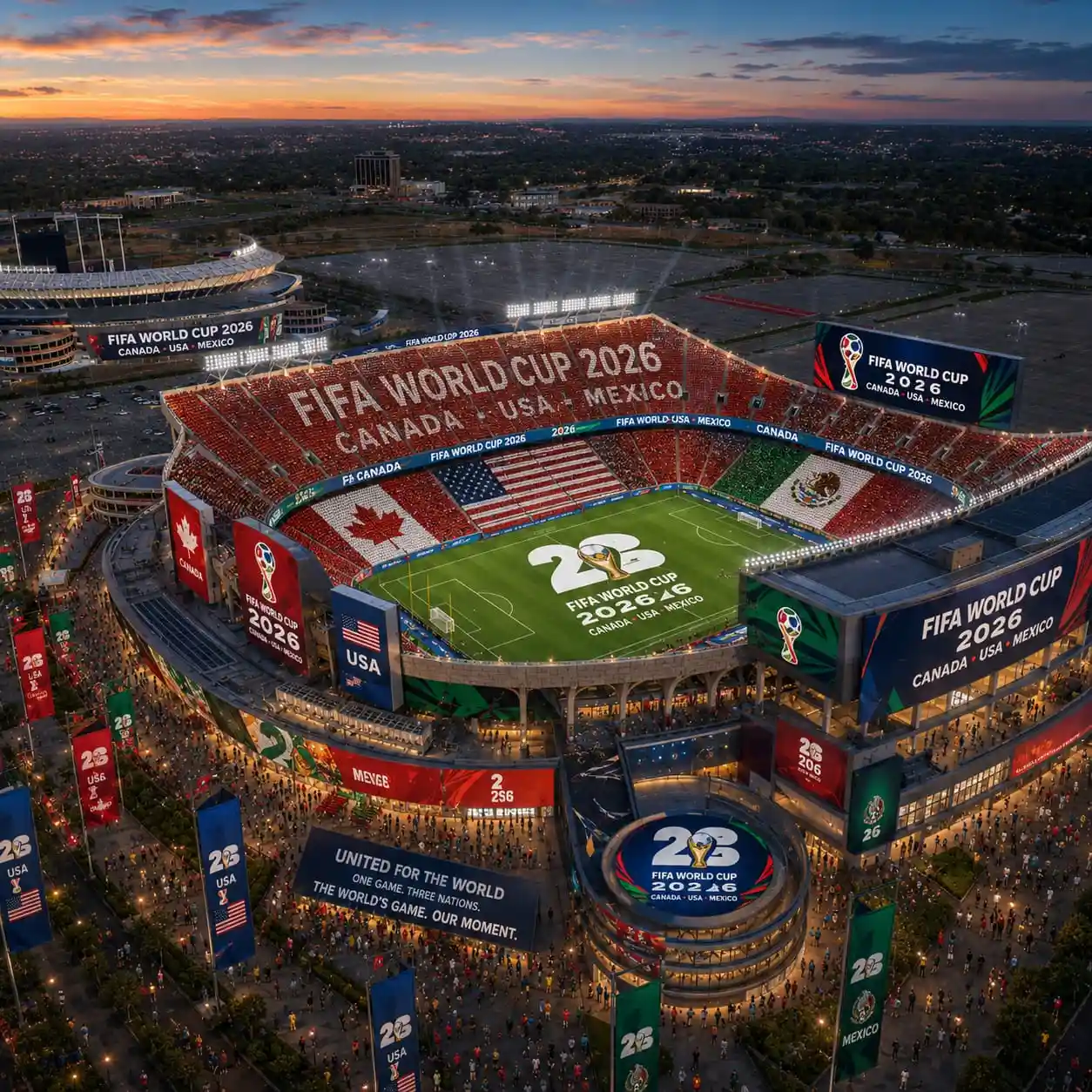
On June 16, 2026, those same stands will fill with football supporters from every corner of the world. And Lionel Messi — in what may be his final World Cup — will walk out into the noise.
The Record That Defines This Venue
Two stadiums at the 2026 FIFA World Cup hold the Guinness World Record for loudest outdoor stadium. Lumen Field in Seattle reached 137.6 decibels in 2013. Arrowhead Stadium set a Guinness World Record for the loudest crowd roar at 142.2 decibels on September 29, 2014, during a Chiefs game.
142.2 decibels. A decibel scale is logarithmic — 142 dB is not slightly louder than 137 dB. It is dramatically, physically louder. The difference is the gap between a jet engine and standing inside the engine.
Between 2013 and 2014, GEHA Field at Arrowhead Stadium broke the Guinness World Record for the loudest stadium in the world, twice. The stadium first hit 137.5 decibels, then surpassed its own mark with an incredible 142.2 decibels.
Arrowhead Stadium is not merely a loud football venue. It is the loudest sports venue ever documented on earth.
Now, for the first time, the World Cup comes here.
Stadium Snapshot
| Official FIFA Name | Kansas City Stadium |
| Full Official Name | GEHA Field at Arrowhead Stadium |
| Legacy Name | Arrowhead Stadium (universally used) |
| Location | 1 Arrowhead Drive, Kansas City, MO 64129 |
| Opened | 1972 — the oldest US stadium hosting World Cup 2026 |
| Home Team | Kansas City Chiefs (NFL) — back-to-back Super Bowl champions |
| Standard Capacity | 76,416 |
| World Cup Capacity | ~76,416 |
| Guinness Record | Loudest stadium in world history — 142.2 dB (2014) |
| Renovation for WC | $42 million — new natural grass, seating reconfiguration |
| World Cup Matches | 6 — four group stage + Round of 32 + Quarter-Final July 11 |
| Argentina Opens Here | June 16, 2026 — Argentina vs Algeria |
The Three Names of This Stadium (Read This)
This stadium operates under three names that fans will search, see, and hear during the tournament:
- GEHA Field at Arrowhead Stadium — the current naming rights name
- Arrowhead Stadium — the legacy name used universally by fans, media, and locals
- Kansas City Stadium — the official FIFA tournament name, per FIFA’s policy of city-based venue naming
All three names refer to the same venue at 1 Arrowhead Drive, Kansas City, MO 64129. When your match ticket says “Kansas City Stadium,” your GPS should say “Arrowhead Stadium.” When your taxi driver says “Arrowhead,” they mean the World Cup venue. This is the same building. Do not be confused.
The Match Schedule at Kansas City Stadium
The stadium is scheduled to host six matches in total, including four group-stage fixtures — including Lionel Messi’s Argentina vs Algeria and Tunisia vs the Netherlands — as well as one Round of 32 match and one Quarter-Final.
| Round | Date | Time (CT) | Confirmed Match |
|---|---|---|---|
| Group J | June 16, 2026 | 9:00 PM | Argentina vs Algeria |
| Group F | June 20, 2026 | TBC | Netherlands vs Tunisia |
| Group Stage | June 25, 2026 | TBC | TBC |
| Group Stage | June 27, 2026 | TBC | TBC |
| Round of 32 | July 3, 2026 | TBC | TBC |
| Quarter-Final | July 11, 2026 | TBC | TBC |
Argentina opens their World Cup campaign at the loudest stadium in world history — June 16, 9:00 PM CT. This is one of the most emotionally loaded fixtures in the entire tournament. The defending champions, on a summer night in Kansas City, with the record-holding crowd trying to prove that football supporters can match what NFL fans built.
The Chiefs Dynasty Context
To understand what Arrowhead Stadium means in 2026, you need to understand what the Kansas City Chiefs have done in recent years. Arrowhead Stadium — home of the back-to-back Super Bowl champion Kansas City Chiefs — will host its most significant sporting event since the Chiefs’ championship runs.
The Chiefs have turned Kansas City from a mid-sized Midwestern city that NFL fans respected but rarely visited into one of the great American sports destinations. The stadium’s renovation culture, the organised noise initiatives, and the identity built around creating the most hostile atmosphere in American football have made Arrowhead into something more than a venue — it is a brand, a reputation, a challenge to every visiting team and every visiting fan base.
Now that reputation meets the world’s most passionate football supporters. Argentine fans who sang through a tournament in Qatar. Dutch supporters who travel in orange walls. Algerian supporters who will fill whatever section they can find. The question is whether a football crowd — with its own drumming, singing, choreography culture — can touch what the Chiefs fanbase has built.
The answer will come on June 16.
Getting There: The Bus is Your Friend
Kansas City, like Dallas and Houston, is a car-centric American city. There is no direct light rail to Arrowhead Stadium. This is the most honest transport assessment in the entire batch.
Connect KC 26 buses run every 15–20 minutes from 15 regional hubs. This is the primary public transit solution — a network of coach buses connecting downtown hotels, the airport, and the major transit hubs to the stadium and back.
The Connect KC 26 Bus Network:
- Departures from Downtown Kansas City (Power & Light District), Union Station, Crown Center, and twelve other regional hubs
- Frequency: every 15–20 minutes from 2 hours before kick-off
- Post-match service: every 15–20 minutes for 90 minutes after final whistle
- Cost: included with match ticket on designated routes, or priced separately for other services
From Kansas City International Airport (MCI): KCI is approximately 20 miles northwest of the stadium. Rideshare (Uber/Lyft) is the most efficient option — approximately $25–35 each way in normal traffic, allow 45–60 minutes on match days. Connect KC 26 bus routes from airport will be confirmed closer to the tournament.
By Car: I-70 connects the stadium to downtown Kansas City (approximately 10 minutes in normal traffic). The stadium complex has extensive parking. Arrowhead Stadium is undergoing a $42 million renovation including reconfiguring the seating areas to accommodate the wider field used in soccer and the replacement of artificial turf with natural grass as required by FIFA.Vancouver World Cup 2026 — BC Place Stadium, 7 Matches & the Most Scenic FIFA Journey You’ll Ever Take
Kansas City: The Barbecue Capital of the World
Let us be direct about something. Kansas City is one of the finest food cities in the United States. Its barbecue culture is not merely good. It is, in the considered judgment of every serious American barbecue writer, critic, and obsessive, the most sophisticated, most varied, and most historically rich barbecue tradition in the country.Argentina vs France 2022 Final: Every Key Moment Relived — A Visual Guid
Kansas City barbecue is its own genre: beef brisket, burnt ends, pork ribs, smoked sausage, pulled pork, and chicken, all finished with a thick, sweet-and-spicy tomato-based sauce that is immediately recognisable. The slow-smoke method — 12–18 hours over hickory and oak at 225°F — produces meat that falls apart at a touch.
The Pillars of Kansas City BBQ:
Joe’s Kansas City Bar-B-Que (the former Gas Station) Widely considered the finest barbecue restaurant in the United States. The burnt ends — the crispy, caramelised outer pieces of the brisket point — are a Kansas City invention and Joe’s version defines the genre. The original location is inside a working gas station on 47th Street. Queue before it opens. The Z-Man sandwich (brisket with provolone, onion rings, and their signature sauce on a Kaiser roll) is the entry point.
Arthur Bryant’s The original. The ancestral home of Kansas City barbecue. In business since 1908 under various names, Arthur Bryant’s has been feeding the city (and visiting presidents, athletes, and journalists) since 1946. The sauce is different from Joe’s — tangier, vinegar-forward, less sweet. The brisket is extraordinary. President Obama ate here. Calvin Trillin, the great American food writer, called it “the single best restaurant in the world.”
Q39 The modern chapter of Kansas City barbecue — a competition-trained pitmaster running a restaurant-quality operation with the seriousness of a fine-dining kitchen. The short rib and the smoked chicken are benchmarks.
Gates Bar-B-Q Six locations across the city. The counter staff greet every customer with “Hi, may I help you?” — a tradition that has been part of the Gates experience since it opened in 1946. The burnt ends and the ham are Gates specialities.
Beyond BBQ: Kansas City’s Cultural Landscape
The National World War I Museum and Memorial The official national museum of the First World War in the United States — and by most accounts, the finest WWI museum in the world, with a collection rivalling the Imperial War Museum in London. The FIFA Fan Festival for the Kansas City area will be in the Power and Light District at the National World War I Museum and Memorial. The museum’s glass floor over a field of poppies — each representing 1,000 soldiers killed — is one of the most affecting museum installations in North America.
The Nelson-Atkins Museum of Art One of the great American art museums: a permanent collection of 42,000 works including an extraordinary Asian art gallery, European painting from medieval to Impressionist, and the famous giant badminton shuttlecocks on the outdoor lawn by Claes Oldenburg. Free admission.
18th and Vine Jazz District Kansas City invented its own style of jazz — Kansas City Jazz — in the 1930s and 1940s, centred around the clubs and venues of 18th and Vine. Charlie Parker, Count Basie, and Big Joe Turner developed their styles here. The American Jazz Museum documents this history with recording studios, interactive exhibits, and live performance spaces.
The Power and Light District Kansas City’s entertainment and dining district: 15 acres of bars, restaurants, and event spaces in downtown, anchored by the Sprint Center arena. This is where the FIFA Fan Festival lives during the tournament and where the city’s World Cup street-level energy will concentrate.
Crossroads Arts District Kansas City’s arts neighbourhood: galleries, studios, boutiques, and the First Fridays gallery walk (held on the first Friday of each month). The crossroads of the city’s creative community — murals covering entire building facades, coffee shops operating inside converted industrial spaces, and some of the best independent restaurants in the city.
What to Wear at Arrowhead
Arrowhead is an outdoor stadium. There is no roof, no retractable cover, no climate control. Kansas City in June and July is warm but not as extreme as Houston, Dallas, or Miami.
- Typical temperatures: 82–92°F (28–33°C) during the day, cooling significantly after sunset. The June 16 Argentina match is at 9:00 PM CT — the evening air will be warm but manageable.
- Noise protection: This is genuine advice. 142 decibels is above the threshold at which hearing damage can occur with prolonged exposure. Consider bringing ear protection for long stretches inside the bowl.
- Rain: Kansas City summer afternoons can bring thunderstorms. The evening Argentina match is lower risk but check forecasts. The stadium has covered seating sections — check your seat designation.
- The Argentine kit: If you are attending the Argentina match, consider bringing a scarf or banner. The Argentine fans’ visual culture — blue-and-white striped flags, choreographed mass movements, the full-stadium chanting — at the world’s loudest outdoor stadium is a combination that has never occurred before in football history.
The Quarter-Final: July 11, 2026
Arrowhead Stadium’s six-match allocation includes four group stage contests, one Round of 32 knockout match, and a quarter-final on July 11 — one of only four matches at this tournament stage worldwide, making it Kansas City’s most significant sporting event in history.
Four quarter-finals. The entire tournament reduced to eight teams. At the loudest outdoor stadium ever built. On an American summer night.
“With Arrowhead being outdoors, it will create a whole different experience,” the co-chair of the Kansas City host committee said, adding that he believes the stadium to be among “the loudest in the world” with a passionate fan base.
He is not wrong. And he is underselling it.
The quarter-final at Arrowhead Stadium on July 11 will be, by every acoustic measure ever recorded, the loudest outdoor football match in history.
About the Author