 From a World Cup winner’s stunning new chapter to homegrown breakouts, these are the MLS best players 2026 shaping the league’s biggest season yet.
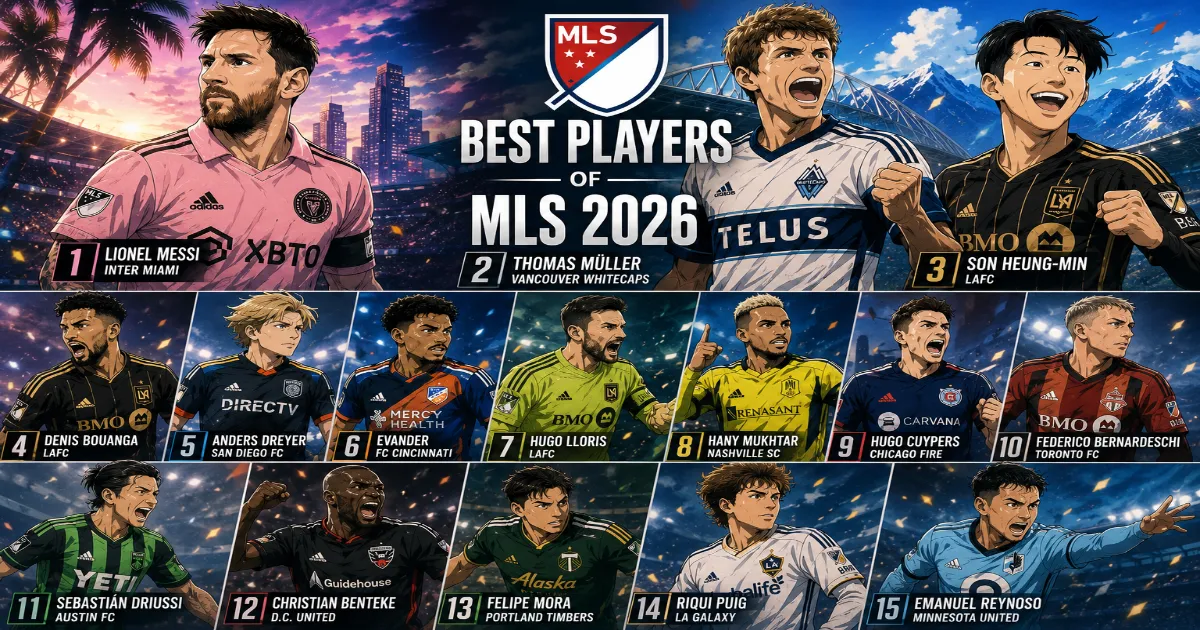
MLS’s 2026 season, played out against the backdrop of the league’s own World Cup co-hosting duties, has featured one of the most talent-rich rosters of individual quality the competition has ever assembled. From a still-brilliant Lionel Messi to a genuine World Cup winner making an unexpected new home in Vancouver, here are the fifteen players who have defined the league’s most significant season yet.
Messi Retires: Inside the Rise, Falls, and Redemption of a Legend
Thiago Messi: Club Career, Playing Style, Lifestyle and Future Prospects
Cristiano Ronaldo Jr.: Club, Lifestyle, Career and Future Prospects
1. Lionel Messi (Inter Miami)
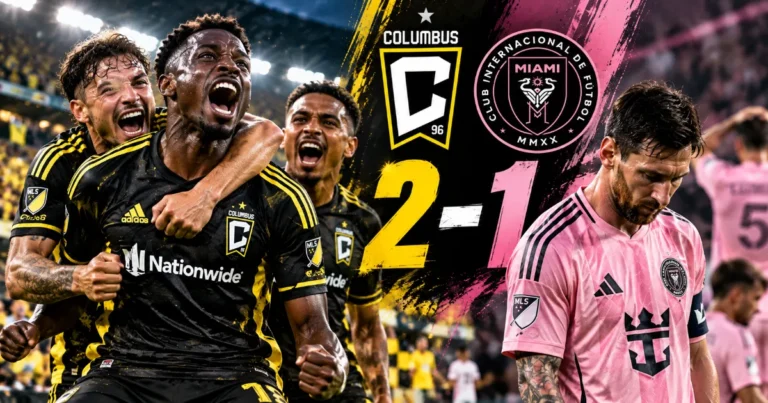
Even years after his transformative 2023 arrival, Messi remains the single most important individual player in MLS, his continued brilliance powering Inter Miami’s strong Eastern Conference campaign and christening the club’s new Nu Stadium with performances befitting the sport’s most decorated living player.
Messi Retires: Inside the Rise, Falls, and Redemption of a Legend
Football’s Greatest Transfers of All Time: From Pele to Neymar to Mbappe
Cristiano Ronaldo Jr.: Club, Lifestyle, Career and Future Prospects
2. Thomas Müller (Vancouver Whitecaps)
Müller’s stunning arrival following his legendary Bayern Munich career instantly transformed Vancouver’s global profile, and his continued individual quality has helped power the Whitecaps into genuine Western Conference title contention throughout the season’s opening months.
3. Son Heung-min (LAFC)
Son’s move to LAFC paired him with fellow attacking star Denis Bouanga in one of the league’s most individually talented strike partnerships, and his continued technical quality and finishing remain among the most dangerous individual threats anywhere in MLS.
4. Denis Bouanga (LAFC)
Bouanga’s sustained goalscoring excellence for LAFC, now further supported by Son’s arrival, has kept him among the league’s most consistently dangerous attacking players across multiple consecutive seasons.
5. Anders Dreyer (San Diego FC)
San Diego’s talismanic Danish forward has anchored the expansion club’s attack across both its historic 2025 debut season and its continued strong 2026 campaign, cementing his status as one of the league’s most complete attacking players.
6. Evander (FC Cincinnati)
Cincinnati’s Brazilian playmaker continues to rank among MLS’s most creative attacking midfielders, his vision and set-piece delivery central to the club’s sustained Eastern Conference playoff contention.
7. Hugo Lloris (LAFC)
The French World Cup winner’s continued excellence between the posts has made him one of the league’s most statistically dominant goalkeepers, his experience and shot-stopping quality anchoring LAFC’s title ambitions.
8. Hany Mukhtar (Nashville SC)
Mukhtar’s sustained individual quality has played a central role in Nashville’s surprising rise to the top of the Eastern Conference, his combination of creativity and clinical finishing embodying the collective, well-organized approach that has defined the club’s breakout campaign.
9. Hugo Cuypers (Chicago Fire)
Emerging as one of the league’s most prolific individual scorers this season, Cuypers’s finishing has powered Chicago Fire’s own strong Eastern Conference playoff push, establishing him as one of the campaign’s most pleasant individual surprises.
10. Federico Bernardeschi (Toronto FC)
The Italian international’s continued technical quality and experience have made him a consistent creative threat for Toronto FC, helping keep the club within reach of the Eastern Conference’s playoff positions across the season.
11. Sebastián Driussi (Austin FC)
Driussi’s sustained goalscoring output remains central to Austin FC’s attacking identity, his continued individual quality a rare consistent bright spot during a more challenging collective campaign for the club.
12. Christian Benteke (D.C. United)
The veteran Belgian striker’s continued physical presence and finishing ability have made him one of the more individually reliable attacking threats in a Eastern Conference season otherwise defined by considerable team-level unpredictability.
13. Felipe Mora (Portland Timbers)
Despite Portland’s broader struggles across the campaign, Mora’s continued goalscoring output has offered a rare consistent individual bright spot for a club otherwise searching for collective form under new head coach Phil Neville.
14. Riqui Puig (LA Galaxy)
Puig’s technical creativity remains one of the more compelling individual storylines within LA Galaxy’s otherwise disappointing title defense, his passing range and vision offering genuine hope for a Galaxy side needing a significant second-half turnaround.
15. Emanuel Reynoso (Minnesota United)
Reynoso’s continued individual quality as a creative playmaker has kept Minnesota United competitive across a Western Conference season defined by genuine depth beyond the conference’s most heralded individual superstars.
What This List Reveals About Modern MLS
Looking across this ranking, the clearest pattern is just how genuinely varied the profile of MLS’s best players has become. Messi and Müller represent the continued willingness of genuine global superstars, whether still near their peak or in the twilight of legendary careers, to view MLS as a genuine destination rather than simply a retirement paycheck. Son and Bouanga’s LAFC partnership reflects the league’s growing ability to attract individually elite talent still operating near the height of their international careers. And players like Mukhtar, Cuypers, and Dreyer illustrate MLS’s continued development of genuinely world-class individual talent through its own domestic ecosystem, whether via smart international recruitment of less globally famous but individually excellent players or through sustained development within specific club systems.
The World Cup Connection
This season’s individual talent pool carries particular significance given MLS’s role co-hosting the 2026 World Cup itself, with several of the league’s biggest individual stars, Messi and Son included, having also featured prominently at the tournament during the season’s mid-year break. That overlap between MLS’s own on-field product and the sport’s biggest global event gave this specific season’s individual storylines an added layer of significance, with casual fans drawn to the World Cup’s coverage of players like Messi and Son given an immediate, accessible opportunity to continue following those same players’ club form once MLS action resumed following the tournament’s conclusion.
Looking Ahead
As the 2026 season moves toward its playoff conclusion, several of the players on this list will play direct roles in determining which clubs ultimately advance furthest in the postseason, from Müller’s continued influence on Vancouver’s Western Conference push to Mukhtar’s central role in Nashville’s surprising Eastern Conference campaign. Whichever combination of established superstars and emerging individual talents ultimately proves most decisive when the stakes are highest will likely go a long way toward defining how this genuinely talent-rich MLS season is remembered once the playoffs conclude in December, a fitting individual showcase for a league that used its own World Cup hosting year to demonstrate just how far its overall talent level has developed since the days of a single marquee Designated Player serving as the primary attraction for an entire club.
How the Designated Player Rule Shaped This List
Nearly every player on this list arrived in MLS through some version of the league’s Designated Player mechanism, the roster rule first introduced in 2007 specifically to allow clubs to sign individual talent whose true market value would otherwise be impossible to fit under the league’s standard salary budget. That mechanism, which enabled David Beckham’s original landmark 2007 signing, remains the structural foundation underpinning MLS’s ability to attract the caliber of talent represented across this entire ranking, from Messi’s transformative Inter Miami arrival through to Müller’s more recent, equally surprising move to Vancouver. Understanding that structural continuity helps explain why MLS has been able to sustain, and arguably even accelerate, its ability to attract genuine global stars across nearly two decades since the rule’s introduction, even as the specific profile of players choosing the league has shifted considerably from Beckham’s era toward the current mix of still-prime internationals like Son and legendary late-career arrivals like Müller.
Homegrown Talent Still Has Its Place
While much of this list’s attention understandably centers on international arrivals, it’s worth emphasizing that several entries, Cuypers and Reynoso among them, reflect MLS’s continued development of individually excellent talent through pathways that don’t rely purely on marquee international transfers. That blend, genuine homegrown and smart mid-market international recruitment alongside headline-grabbing superstar arrivals, reflects a healthier overall talent ecosystem than a league relying purely on aging global stars for its primary appeal, suggesting MLS’s continued growth rests on a broader foundation than any single player’s individual drawing power, however significant Messi’s or Müller’s specific contributions to the league’s global visibility during this particular World Cup hosting season have proven to be.
A Snapshot of MLS at a Turning Point
This particular list, assembled during MLS’s most significant single season in the league’s history, offers a genuine snapshot of a competition at a turning point, no longer simply a retirement destination for fading international stars but a league capable of attracting talent across a genuinely broad spectrum of career stages and individual profiles. Whether that trend continues accelerating in the seasons following this landmark World Cup-hosting campaign, or whether 2026 proves to be an unusually star-studded outlier season, remains one of the more significant open questions shaping MLS’s own institutional trajectory as the league continues building toward its planned fall-to-spring calendar transition and whatever comes next in its ongoing three-decade evolution from a fragile ten-team experiment into a genuine global co-host of the sport’s biggest tournament.
🔹🔹 Follow us on Facebook 🔹🔹
The Indian Super League Story: A Football Revolution in South Asia
Manchester United’s 1999 Treble: The Greatest Season in English Football History
About the Author