All 48 Teams — Full Stats Breakdown
StrikerReport.com | World Cup 2026 | Live Tournament Analysis
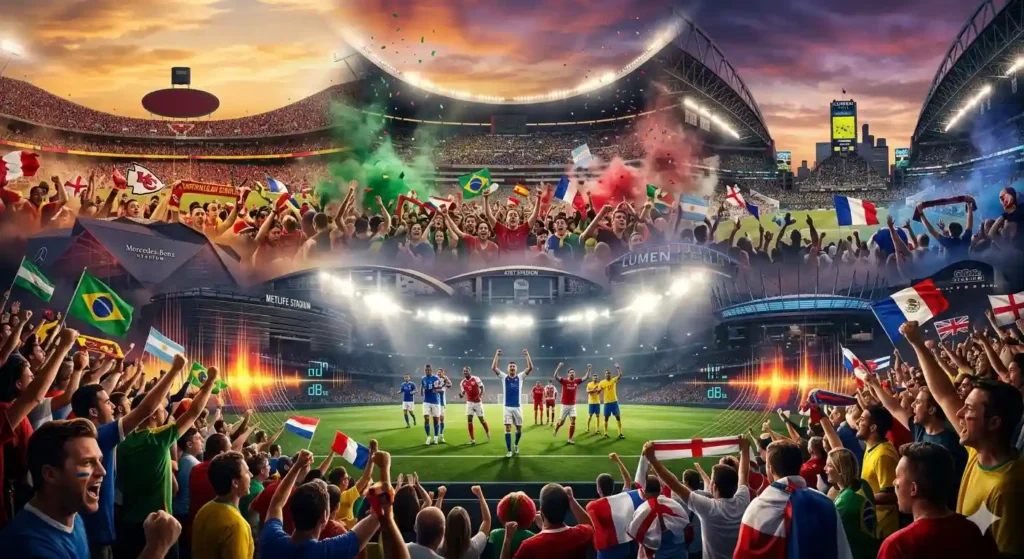
It happened. Every single one of the 48 nations competing at the largest World Cup in history has now played at least one match across the United States, Mexico, and Canada. From Mexico’s tournament-opening win in front of a raucous Estadio Azteca crowd to the final round-one fixtures completing across all twelve groups, the picture is starting to form — and it’s already throwing up records, drama, and a handful of results nobody saw coming.
Here’s the complete breakdown: who’s sitting pretty, who’s already staring at an early flight home, and every individual stat worth knowing after the opening round of fixtures.
The Group Stage Format, Quickly Explained
Before diving into the numbers, a reminder of how this works. The 48 teams are split into 12 groups of four. Every team plays three group matches. The top two finishers in each group advance automatically to a newly created Round of 32 — alongside the eight best third-placed teams across all twelve groups. That means, for the first time in World Cup history, a third-place finish can still be enough to survive.
It also means the calculation for survival is more forgiving than it used to be, but the maths is more complicated — and a few points dropped in round one can already be putting certain nations under serious pressure.
The Headline Results From Round One
The opening round produced some genuinely stunning scorelines.
Germany 7–1 Curaçao was the standout demolition of the round — Germany’s biggest-ever World Cup group stage win, delivered against a Curaçao side playing in their first-ever World Cup finals. The result was so emphatic it sparked a wider conversation about whether the expanded 48-team format is producing the gulf in quality some critics warned about.
Canada 6–0 Qatar wasn’t far behind. The co-hosts dismantled Qatar in Vancouver behind a Jonathan David hat trick, with Cyle Larin and Nathan Saliba also on the scoresheet, plus a Mohamed Manai own goal compounding Qatar’s misery. The afternoon turned ugly off the back of a reckless Assim Madibo challenge on Ismael Kone that left the Canadian midfielder with a suspected serious injury — Madibo was given a straight red card, and tempers flared both on the pitch and after the final whistle.
Argentina 3–0 Algeria delivered the moment of the tournament so far. Lionel Messi scored a hat trick — his first ever at a World Cup finals — to put the seal on Argentina’s group opener. The opening goal in particular, picked up at the top of the box before a sharp shift onto his left foot, was vintage Messi. There was late controversy too: replays suggested Messi may have escaped a red card challenge earlier in the match, a decision that — had it gone the other way — would have ended his night with just one goal and triggered a suspension that could have delayed his pursuit of Miroslav Klose’s all-time World Cup goalscoring record.
Netherlands 2–2 Japan produced one of the round’s best comeback stories, with Japan fighting back twice to snatch a draw against the Dutch — instantly marking themselves out as one of the tournament’s dark horses.
Mexico became the first nation to officially qualify for the knockout rounds, beating South Korea 1–0 behind a Luis Romo goal (heavily assisted by a goalkeeping blunder from Kim Seung-Gyu) to wrap up Group A’s automatic qualification spots with matches still to play.
Goals, Hat Tricks and Round-One Records
Round one alone produced two hat tricks — a genuinely remarkable return for a single round of group fixtures:
- Lionel Messi (Argentina) — 3 goals vs. Algeria, June 16
- Jonathan David (Canada) — 3 goals vs. Qatar, June 18
Messi’s effort was historically significant beyond the hat trick itself: it was his first-ever World Cup hat trick across five tournament appearances, adding to his case as the greatest player to ever play the competition and pulling him further into the conversation around Klose’s record of 16 career World Cup goals.
Doubles (two goals in a match) were recorded by several players across the opening round, with Germany’s emphatic win over Curaçao producing the round’s most eye-catching individual performance outside the headline hat tricks — Germany came agonisingly close to a “Scorigami” (a previously unseen exact scoreline in World Cup history) in the process.
Own goals: Mohamed Manai’s own goal in Qatar’s 6–0 defeat to Canada was round one’s clearest example, compounding what was already a chastening afternoon for the Qatari defence.
Goals per game: Several round-one fixtures produced high-scoring affairs (Germany 7–1, Canada 6–0, Sweden 5–1 over Tunisia), suggesting the expanded format’s broader talent gap between traditional powers and newer qualifiers may be reflected on the scoreboard early in the tournament — though plenty of tighter, low-scoring matches (Spain 0–0 Cape Verde, several 1–1 draws) have balanced the picture.
Draws and Surprising Results
The round produced a healthy share of draws that immediately complicate group permutations:
- Canada 1–1 Bosnia and Herzegovina
- Qatar 1–1 Switzerland
- Brazil 1–1 Morocco
- Belgium 1–1 Egypt
- Saudi Arabia 1–1 Uruguay
- Iran 2–2 New Zealand
- Netherlands 2–2 Japan
- Spain 0–0 Cape Verde
The Spain result in particular sent shockwaves through the tournament’s title-contender conversation. A goalless draw against World Cup debutants Cape Verde — with Cape Verdean goalkeeper Vozinha producing a string of saves that turned him into an overnight social media star, gaining millions of new followers in the hours after the final whistle — means one of the pre-tournament favourites now needs Lamine Yamal fit and firing to avoid a nervy finish to their group campaign.
Brazil’s draw with Morocco was similarly eyebrow-raising. Morocco took a brilliant early lead through a slick team move finished by Ismael Saibari, and only a Vinícius Júnior intervention bailed Brazil out of what would have been a deeply uncomfortable result for a nation entering the tournament under serious pressure, 24 years removed from their last World Cup title.
Disciplinary Picture: Red Cards So Far
Round one’s most significant disciplinary moment came in Vancouver, where Assim Madibo (Qatar) was shown a straight red card for a reckless challenge on Canada’s Ismael Kone during the 6–0 defeat. The incident soured what was already a one-sided contest and will likely see Madibo suspended for Qatar’s remaining matches, compounding an already difficult tournament for the 2022 hosts.
There was also significant debate — though no card shown — around a Messi challenge during Argentina’s win over Algeria, with replays suggesting the Argentine captain may have escaped a sending-off that would have dramatically altered the complexion of his hat trick night.
Expect the disciplinary picture to sharpen considerably as round two and three fixtures complete, with several teams already carrying yellow card accumulations that put key players in danger of suspension for the final round-robin matches or the knockout rounds.
Group Stage Standout Storylines
Scotland’s 28-year wait ends in style. Scotland’s 1–0 win over Haiti marked their first World Cup appearance since 1998 — and they made the most of it with a disciplined, hard-fought victory that has the Tartan Army daring to dream.
Australia’s new star emerges. A Socceroos win over Türkiye introduced the wider football world to a breakout performer, with Australian football enjoying a rare moment in the global spotlight.
The USMNT make a statement. A 4–1 demolition of Paraguay, led by a Folarin Balogun and Christian Pulisic-driven attacking display, has American football pundits already discussing whether this is the most dominant World Cup opener in USMNT history — and whether it points to a genuinely deep run on home soil.
Iraq and Jordan’s historic bow. Both nations are competing in unfamiliar territory, with Jordan recording their first-ever World Cup goal via a stunning long-range solo effort — a moment that will be replayed in Amman for years regardless of how the rest of the tournament unfolds.
Who’s Already in the Danger Zone?
With round one complete across all groups, a clearer picture is forming of who’s already under pressure heading into matchday two. Remember: under the new format, even a third-place finish can be enough to survive if results elsewhere fall the right way — but starting with zero points from round one, particularly after a heavy defeat, puts a team’s goal difference in a deep hole that’s difficult to recover from across just two remaining matches.
Highest alert:
- Qatar — A 6–0 defeat with a red card and an own goal involved is about as bad a start as is possible. Their goal difference (-5) puts immense pressure on their remaining fixtures against Switzerland and Canada.
- Curaçao — A 7–1 defeat to Germany on debut is a brutal way to begin a historic first World Cup appearance. Survival now likely requires results against Ecuador and Ivory Coast that exceed pre-tournament expectations significantly.
- South Africa — Defeat in the tournament opener to co-hosts Mexico leaves Bafana Bafana needing results against Czechia and South Korea just to stay alive in Group A’s third-place qualification race.
On notice:
- Tunisia — A 5–1 defeat to Sweden, on top of a turbulent off-field period that saw their manager sacked mid-tournament, leaves them needing a response against Netherlands and Japan.
- South Korea — Defeat to Mexico despite a strong underlying performance (more possession, more shots, better xG) is a cruel reminder that World Cup football punishes moments rather than control. They’ll need to beat South Africa and take something from Czechia to survive.
- Algeria — The Messi masterclass leaves Algeria with zero points and a difficult goal difference to repair against Austria and Jordan.
Comfortable for now (but nothing is decided):
- Mexico — Already through to the knockout rounds, the first team to achieve that landmark at World Cup 2026.
- Germany, Canada, Argentina, USA, Brazil — All sitting on positive results and healthy goal difference cushions heading into their second matches.
What Comes Next
With round two of group fixtures now underway and round three to follow, the picture will sharpen considerably over the coming days. Several groups remain wide open — Group H (Spain, Uruguay, Saudi Arabia, Cape Verde) and Group F (Netherlands, Japan, Sweden, Tunisia) in particular look set for tense, closely-fought finishes.
What’s already clear after round one: the expanded 48-team format is delivering exactly the mixture of spectacle, shock, and storyline that FIFA hoped for when the decision was made to grow the tournament. Record-breaking scorelines, historic hat tricks, World Cup debuts, and danger-zone drama — and we’re still only one round into the group stage.
Quick Reference: Round One Stats Summary
| Category | Detail |
|---|---|
| Hat tricks | Lionel Messi (Argentina vs Algeria), Jonathan David (Canada vs Qatar) |
| Biggest win | Germany 7–1 Curaçao |
| Red cards | Assim Madibo (Qatar) vs Canada |
| Notable own goal | Mohamed Manai (Qatar) vs Canada |
| Shock draw | Spain 0–0 Cape Verde |
| First qualified team | Mexico (Group A) |
| Historic returns | Scotland (first WC since 1998) |
| World Cup debuts | Curaçao, Cape Verde, Jordan |
StrikerReport.com | World Cup 2026 Live Coverage | Updated after Round One of Group Stage
About the Author