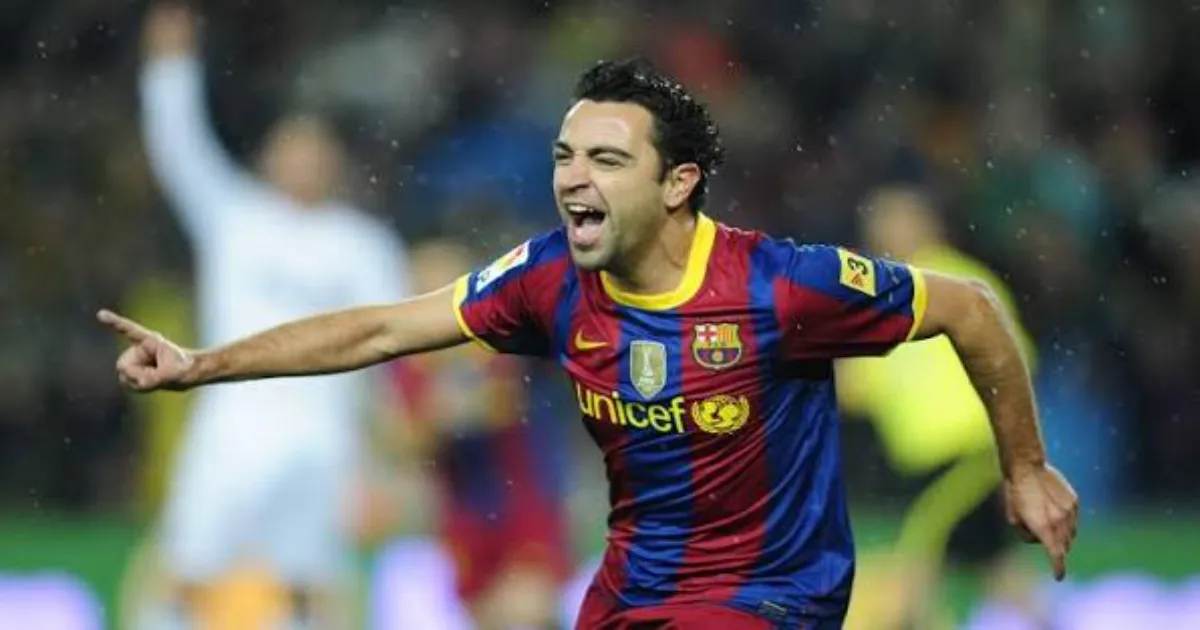
 Xavi Hernandez: The Metronome — How One Player Changed Positional Play Forever
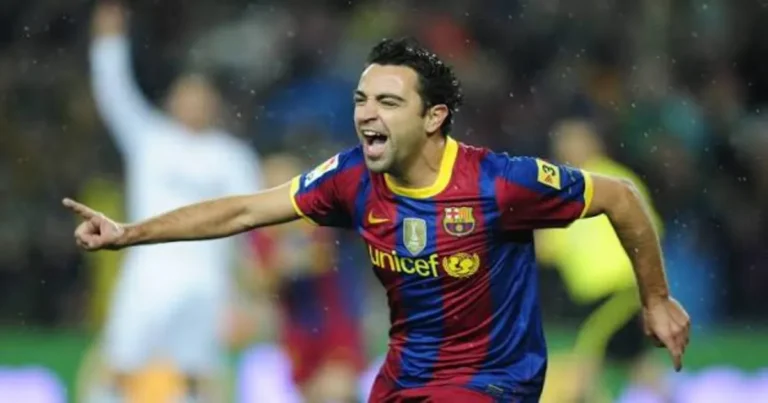
Few players in football history have controlled the tempo of a match quite as completely, or with such quiet, understated mastery, as Xavi Hernández. Nicknamed “the Metronome” for his uncanny ability to dictate the pace of an entire game through sheer positional intelligence and pass selection, Xavi became the beating heart of the finest Barcelona side the club, and arguably the sport, has ever produced, a player whose influence on how modern football is coached and played extends well beyond his own considerable trophy collection.
The Indian Super League Story: A Football Revolution in South Asia
Saudi Pro League History: From Regional Competition to Global Superstar Destination
The Purest Product of La Masia
Xavi’s football education began at Barcelona’s famed La Masia academy, which he joined as an eleven-year-old, spending nearly his entire footballing life within the club’s specific developmental philosophy before he ever made his senior debut. That academy system, built around principles of positional intelligence, quick, precise passing, and constant spatial awareness, found in Xavi arguably its purest and most complete individual product, a player whose entire game seemed to embody every principle the academy had been specifically designed to instill in its young players.
Xavi made his senior Barcelona debut in 1998, gradually establishing himself within the first team over the following several seasons before eventually becoming one of the club’s most important and indispensable players by the mid-2000s, a transformation built on his exceptional ability to read the game several passes ahead of his opponents and his remarkable consistency in executing the correct pass under pressure, match after match, season after season.
The Guardiola Revolution
Xavi’s career reached its absolute peak during Pep Guardiola’s tenure as Barcelona manager, beginning in 2008, when the club’s possession-based tactical philosophy, built around rapid, precise passing and coordinated positional interchange, found its perfect on-field conductor in Xavi’s specific skill set. Playing alongside fellow midfielder Andrés Iniesta and a rapidly emerging Lionel Messi, Xavi became the central organizing presence of a Barcelona side that would go on to redefine what possession-based football could achieve, winning an extraordinary fourteen trophies across Guardiola’s four seasons in charge, including two Champions League titles and three La Liga championships.
Xavi’s specific role within this system involved receiving the ball constantly, often in tight spaces under considerable defensive pressure, and using his exceptional close control and passing range to keep Barcelona’s possession moving with a rhythm and precision that opposing teams found almost impossible to disrupt. His completion rates for passes attempted during this period remain among the most statistically remarkable in football history, a reflection of both his technical quality and his positional intelligence in consistently finding himself in space where he could receive and distribute the ball safely and effectively.
International Glory With Spain
Xavi’s influence extended directly to the Spanish national team, where his central midfield partnership with Barcelona teammate Andrés Iniesta and Real Madrid’s Xabi Alonso formed the tactical foundation for Spain’s unprecedented run of three consecutive major tournament titles between 2008 and 2012. Xavi was named player of the tournament at Euro 2008, Spain’s first major title in 44 years, and his continued excellence powered Spain to the 2010 World Cup and Euro 2012 titles as well, making him a central figure in what remains the most statistically dominant sustained international tournament run any national team has ever produced.
That international success mirrored his club achievements almost exactly, built on the same fundamental tactical principles, patient possession, positional discipline, and relentless pressing to win back the ball immediately after losing it, principles that Xavi embodied as completely for Spain as he did for Barcelona, given that so much of the national team’s core personnel and tactical approach during this era was directly drawn from Guardiola’s Barcelona system.
The Numbers Behind the Metronome
Xavi’s statistical output throughout his peak years remains genuinely remarkable by any measure. He is widely regarded as one of the most prolific passers in football history, with some seasons seeing him complete well over 90 percent of his attempted passes despite operating in some of the most pressured, heavily marked central midfield areas anywhere on the pitch. His ability to sustain that level of technical precision while also contributing significant creative output, including numerous assists and a genuine eye for the incisive, defense-splitting pass, made him one of the most statistically dominant central midfielders the sport has ever produced, even as his individual style prioritized understated efficiency over the kind of highlight-reel individual brilliance that often attracts more immediate mainstream attention.
A Deliberately Understated Superstar
What made Xavi such a fascinating figure within Barcelona’s star-studded squad was the deliberate, understated nature of his individual brilliance. Unlike teammates such as Messi, whose genius was immediately, visually spectacular, Xavi’s influence often only became fully apparent through careful tactical analysis, watching not simply where the ball went but where Xavi consistently positioned himself before receiving it, anticipating exactly where space would open up several seconds before it actually did. That specific quality, genuine footballing intelligence expressed through positioning and timing rather than pure individual skill moves, made him somewhat less immediately celebrated by casual fans than some of his more visually spectacular teammates, even as football purists and opposing coaches consistently identified him as the single most important tactical piece in Barcelona’s entire system.
Later Playing Career in Qatar
Xavi’s Barcelona career concluded in 2015, after which he moved to Qatar’s Al Sadd, extending his playing career in a considerably less demanding competitive environment while also beginning to take on informal coaching and mentorship responsibilities within the club. That Qatari chapter, while representing a clear step down from his Barcelona peak in terms of pure competitive level, gave him valuable early exposure to coaching principles and squad management that would directly inform the next major chapter of his professional football journey.
Returning Home as Manager
Xavi’s appointment as Barcelona manager in 2021 represented a genuinely significant homecoming, returning to the club that had shaped his entire footballing identity, now tasked with rebuilding a squad and institution that had fallen into genuine financial and competitive difficulty in the years following his own playing departure. His tenure produced a genuine highlight in the form of Barcelona’s 2022-23 La Liga title, delivered through a pragmatic tactical approach that, while still rooted in positional principles familiar from his own playing career, reflected a somewhat more defensively structured philosophy than the free-flowing attacking football that had defined Guardiola’s earlier Barcelona sides.
Xavi’s managerial tenure ultimately concluded in 2024, amid a period of continued institutional rebuilding at the club, bringing to a close a chapter that had seen him transition from the sport’s most celebrated tactical conductor as a player into a managerial role carrying its own distinct set of challenges and pressures, considerably different from simply executing a system as one of its most gifted individual performers.
Why He’s Called the Metronome
The nickname that has followed Xavi throughout his career, “the Metronome,” captures something genuinely essential about his specific footballing genius. Just as a musical metronome maintains a steady, consistent tempo that allows an entire orchestra to stay coordinated, Xavi’s passing and positional discipline provided the steady rhythmic foundation that allowed Barcelona’s entire possession-based system to function with such remarkable coordination and control. That role, less individually glamorous than a prolific goalscorer’s contribution but arguably just as essential to the collective system’s overall success, is precisely why football historians and tactical analysts continue to rank him among the most influential midfielders the sport has ever produced, regardless of how his individual statistical output compares to more traditionally celebrated attacking players.
A Lasting Tactical Influence
Xavi’s broader influence on football’s tactical evolution extends well beyond his own considerable trophy collection. The specific style of positional play he embodied so completely during his Barcelona peak has directly influenced how a generation of subsequent coaches, many of whom either played alongside him or studied his specific role within Guardiola’s system closely, approach midfield recruitment and tactical structure. Central midfielders across world football are now frequently evaluated using metrics and principles directly traceable to the specific role Xavi perfected, positional intelligence, progressive passing under pressure, and the ability to dictate a match’s tempo without necessarily producing the kind of individually flashy statistics that dominate more traditional player evaluation.
A Career Defined by Substance Over Spectacle
Xavi’s career ultimately stands as a compelling reminder that football’s greatest influence isn’t always measured in goals or highlight-reel individual moments. His genius lay in something considerably harder to fully quantify: an almost supernatural understanding of space, timing, and tempo that allowed him to control entire matches through sustained positional intelligence and technical precision rather than isolated moments of individual brilliance. For a player whose entire footballing education took place within a single club’s specific developmental philosophy, Xavi’s ultimate legacy as the purest embodiment of that philosophy’s tactical principles, and as one of the most quietly influential midfielders the sport has ever produced, remains a genuinely fitting testament to both his individual talent and the broader footballing culture that shaped him from the age of eleven through to the very peak of the sport.
How Modern Coaches Still Study His Game
Coaching education programs across Europe continue to use footage of Xavi’s positioning and passing decisions as instructional material for developing young midfielders, particularly when teaching the specific concept of “playing between the lines,” finding and exploiting space in the gaps between an opponent’s defensive and midfield units. That his specific movements and decision-making continue to serve as a genuine teaching tool for coaches working with entirely new generations of players, many of whom never watched him play live, speaks to just how foundational his particular brand of positional intelligence has become to how modern football is taught and understood at every level of the sport, from academy training grounds through to the very highest levels of professional coaching education.
The Partnership With Iniesta
No account of Xavi’s career is complete without acknowledging his remarkable central midfield partnership with Andrés Iniesta, a pairing widely regarded as one of the finest central midfield combinations the sport has ever produced. While Xavi’s game centered on controlling tempo and dictating possession from slightly deeper positions, Iniesta’s more dynamic, dribbling-oriented style complemented him perfectly, the two players developing an almost telepathic understanding of each other’s movement and decision-making built through years of shared development within La Masia and countless matches played together at the very highest level. That partnership became so central to both Barcelona’s and Spain’s tactical identity during their respective golden eras that opposing coaches frequently built entire defensive game plans specifically around trying, usually unsuccessfully, to disrupt the connection between the two players.
Individual Recognition Despite a Team-First Game
Despite his fundamentally team-oriented, understated playing style, Xavi’s individual quality did receive substantial formal recognition throughout his career, including multiple top-three finishes in Ballon d’Or voting during Barcelona’s most dominant seasons, even as the award ultimately went to teammate Messi in most of those specific years. His trophy cabinet, including eight La Liga titles, four Champions League triumphs, and the aforementioned international success with Spain, places him among the most decorated players in the sport’s entire history, a reflection of just how consistently his specific brand of understated tactical excellence translated into genuine, sustained team success across both club and international competition.
The Broader Legacy of Tiki-Taka
Xavi’s career remains inseparable from the broader tiki-taka movement that defined an entire era of Spanish football, both at club and international level, and his specific individual contribution to that tactical philosophy’s success deserves recognition as foundational rather than simply supportive. While Guardiola is often credited as tiki-taka’s primary tactical architect, and while Messi’s individual brilliance provided the system’s most spectacular attacking output, it was Xavi’s sustained ability to actually execute the system’s underlying passing and positional principles, match after match, at an almost flawless level of technical consistency, that made the entire philosophy practically achievable on the pitch rather than simply a compelling tactical theory. That distinction, between designing a system and being the player capable of actually executing its most demanding technical requirements with sustained excellence, is precisely why Xavi’s specific individual contribution to tiki-taka’s success remains so significant within football’s broader tactical history, a genuinely essential piece of a footballing philosophy that reshaped how the sport is played and coached at every level for more than a decade.
A Metronome That Never Stopped Setting the Tempo
Even now, years removed from his playing peak and his subsequent managerial tenure at Barcelona, Xavi’s specific style continues to serve as the reference point whenever football discourse turns to genuine positional mastery. Young midfielders emerging from academies across Europe are still regularly compared to him, not for their goal tallies or their highlight-reel skill moves, but for their spatial awareness, their patience in possession, and their ability to make a difficult pass under pressure look almost effortlessly simple. That specific comparison, invoked so consistently across such a wide range of leagues and playing styles, is perhaps the clearest evidence of just how thoroughly Xavi redefined what it meant to be a truly complete central midfielder, a legacy built not on spectacle, but on the quiet, relentless mastery of football’s most fundamental rhythm.
🔹🔹 Follow us on Facebook 🔹🔹
13 Best Korean Dramas Ever Made — From Romance to Revenge Thriller
About the Author