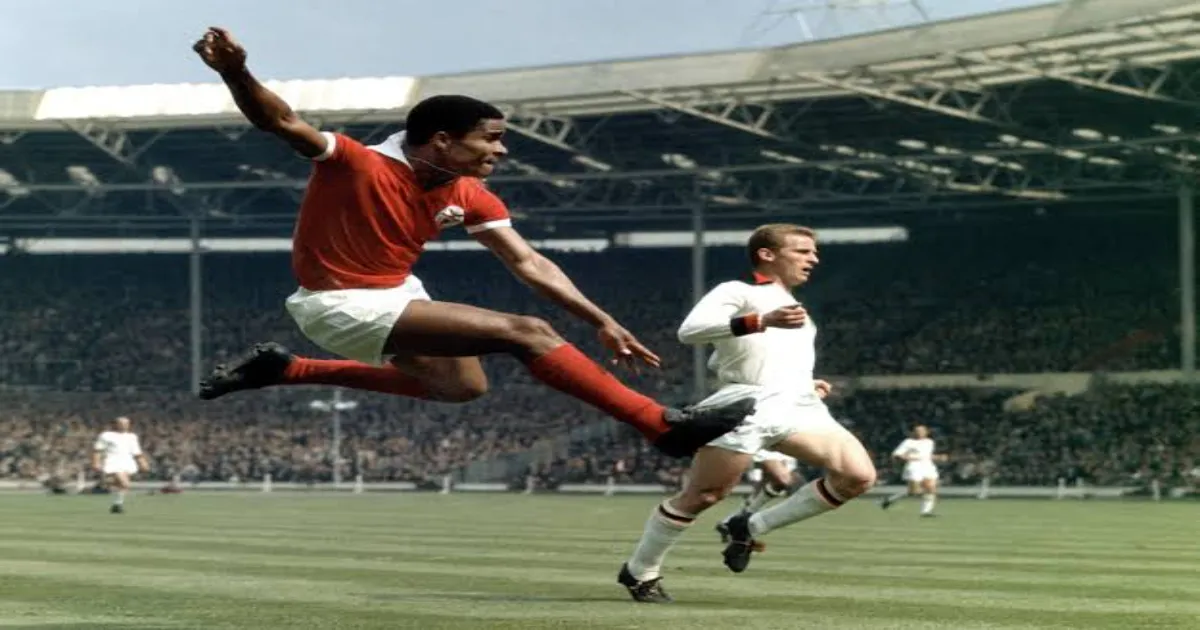
 How a Four-Goal Comeback Defined a Legend
Down 3-0 and staring at elimination, Eusébio scored four goals in one half to drag Portugal to its greatest-ever World Cup finish.
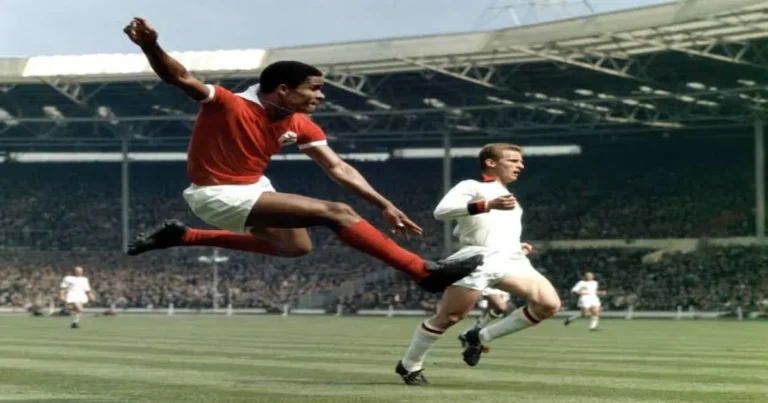
Long before Cristiano Ronaldo became the face of Portuguese football on the global stage, there was Eusébio, a player whose combination of blistering pace, ferocious shooting power, and sheer competitive will made him one of the finest forwards of his generation and remains, more than half a century later, the standard against which every subsequent Portuguese footballing icon has been measured.
The Andres Iniesta Story: One Goal, One Generation, One Legacy
The Didier Drogba Story: A Footballer Who Helped Stop a War
Born in Colonial Mozambique
Eusébio da Silva Ferreira was born in 1942 in Lourenço Marques, now Maputo, the capital of what was then Portuguese East Africa, a Portuguese colony that would later become the independent nation of Mozambique. His early life was shaped by considerable poverty, his father dying when Eusébio was still young, and his football education developed largely through informal street games played barefoot or with makeshift balls, a common developmental path for talented young players across much of colonial and post-colonial Africa during this era. His natural talent was evident early, and he began playing for a local Mozambican club affiliated with Sporting Lisbon before a genuinely contentious transfer saga would eventually determine which major Portuguese club would secure his signature.
A Contested Signing
Eusébio’s move to Portugal in 1960 became the subject of one of football’s more colorful transfer controversies, with Sporting Lisbon believing they held first claim to his signature given his affiliation with their Mozambican partner club, only for rival Benfica, under the guidance of legendary Hungarian manager Béla Guttmann, to move decisively and secure his signature first. The saga reportedly involved genuine subterfuge, with Benfica said to have kept the young player hidden from Sporting’s representatives during the delicate negotiation period, a story that has become part of the broader folklore surrounding his eventual emergence as one of the finest players in Benfica’s history.
An Immediate Impact at Benfica
Eusébio’s arrival at Benfica coincided with one of the most successful periods in the club’s history, and he wasted little time establishing himself as a first-team regular and increasingly the focal point of the club’s attacking approach. His combination of searing pace, powerful shooting from both open play and set pieces, and a genuine eye for the spectacular made him an instant sensation within Portuguese domestic football, and his individual brilliance played a direct role in extending Benfica’s dominance of both Portuguese football and, increasingly, the European continental stage.
European Cup Glory
Eusébio’s first major European triumph arrived in the 1962 European Cup final, where Benfica faced a Real Madrid side built around the legendary Alfredo Di Stéfano and Ferenc Puskás, the very players whose own sustained continental dominance had defined the competition’s earliest years. In a genuinely thrilling 5-3 victory, the young Eusébio scored twice, including the decisive fourth goal that helped secure Benfica’s second consecutive European Cup title, announcing his arrival on the biggest possible stage against opposition that included some of the finest players the sport had ever produced. That performance, delivered by a player still only nineteen years old at the time, offered an early glimpse of the sustained excellence that would come to define the remainder of his career.
The Ballon d’Or and Individual Recognition
Eusébio’s individual brilliance received its most significant formal recognition in 1965, when he was awarded the Ballon d’Or, becoming just the second African-born player, following Portugal teammate-adjacent conversations about the award’s broader international recognition, to claim European football’s most prestigious individual honor. That award reflected years of sustained excellence at Benfica, where he had established himself as one of the most feared and prolific goalscorers anywhere in European football, his combination of pace and shooting power making him a matchup nightmare for even the most well-organized defenses of his era.
The 1966 World Cup: Portugal’s Greatest Chapter
Eusébio’s individual legend reached its absolute peak during the 1966 World Cup in England, where he inspired Portugal, appearing at the tournament for the very first time in the country’s history, to a genuinely remarkable third-place finish, still widely regarded as the greatest achievement in the history of the Portuguese national team until the country’s Euro 2016 triumph decades later. Eusébio finished the tournament as its top scorer with nine goals, an individual haul that placed him among the most statistically dominant single-tournament performances in World Cup history.
The signature moment of that entire campaign, and arguably of his entire career, arrived in the quarterfinal against North Korea, a genuine surprise package that had already eliminated Italy earlier in the tournament. North Korea raced to a stunning 3-0 lead inside the match’s opening 25 minutes, threatening one of the greatest upsets in World Cup history and leaving Portugal facing a genuinely humiliating elimination. What followed was one of the most remarkable individual comebacks the tournament has ever witnessed, with Eusébio single-handedly dragging his team back into the match, scoring four goals across the remainder of the contest, including two penalties, before a further goal from José Augusto completed a stunning 5-3 comeback victory that remains one of the most celebrated individual performances in World Cup history.
A Nation’s First Football Hero
Portugal’s subsequent semifinal defeat to host nation England, and their eventual third-place playoff victory over the Soviet Union, cemented what remains the country’s best World Cup finish for decades, and Eusébio’s role throughout the entire tournament established him as Portugal’s first genuine global footballing icon, a status that gave the small European nation a level of footballing prestige and international recognition it had never previously experienced on the sport’s biggest stage. His performance throughout the tournament, and specifically his individual brilliance against North Korea, remain foundational moments in Portuguese football’s broader national identity and self-conception, referenced regularly whenever Portuguese football’s history and greatest moments are discussed even decades later.
The Black Panther
Eusébio’s nickname, “the Black Panther,” sometimes rendered as “the Black Pearl,” reflected both his explosive athleticism and, inevitably, the specific racial and colonial context of his emergence as one of the first prominent Black African-born stars in major European football during an era when such representation remained genuinely rare. That his emergence occurred while Mozambique remained a Portuguese colony, and while broader questions of colonialism and racial representation in European sport were considerably less examined or discussed than they would become in subsequent decades, adds a layer of genuine historical complexity to how his career and legacy are understood today, a pioneering figure whose specific path to stardom was inseparable from the colonial relationship between Portugal and Mozambique during this particular period.
Continued Excellence at Benfica
Beyond his World Cup heroics, Eusébio’s club career at Benfica continued to produce sustained individual excellence throughout the 1960s and into the early 1970s, with the club reaching multiple further European Cup finals during his tenure, though without matching the specific triumph of 1962. His continued goalscoring dominance within Portuguese domestic football made him the definitive figure of an entire era of Benfica’s history, and he remains, to this day, the club’s all-time leading goalscorer, a record that has stood for decades despite the club’s continued success and the emergence of numerous subsequent talented forwards throughout the following generations.
A Late-Career Chapter in America
Like several of his legendary contemporaries, Eusébio’s later career included a spell in North America’s fledgling professional soccer scene, playing for various clubs in the North American Soccer League during the 1970s. That chapter, while considerably less prestigious than his Benfica peak, offered American audiences an opportunity to witness, even in the twilight of his career, the individual brilliance that had made him one of the most feared forwards in world football during his prime years, part of a broader wave of established European and South American stars who used the NASL to extend their careers while helping introduce the sport to a new American audience.
Life After Playing and Lasting Honors
Following his retirement, Eusébio remained closely associated with Benfica throughout the rest of his life, serving in various ambassadorial and honorary capacities for the club that had defined his entire career. His continued presence at the club’s matches and official functions made him a beloved, constant figure within Portuguese football culture for decades after his playing career concluded, and his death in 2014 prompted genuine national mourning in Portugal, with the country observing an official period of mourning and thousands of fans paying tribute at Benfica’s Estádio da Luz, where a statue of Eusébio stands as a permanent tribute to the player widely regarded as the finest in the club’s, and arguably the nation’s, entire history.
A Legacy That Predates Modern Portuguese Football
Understanding Eusébio’s legacy is essential to properly understanding the broader trajectory of Portuguese football’s development as a genuine international force. Decades before Cristiano Ronaldo’s own emergence as one of the finest players of his generation, Eusébio had already established that Portuguese football, and specifically Portuguese-affiliated talent from the country’s African colonial territories, could produce players capable of competing with and defeating the finest teams and players Europe and South America had to offer. That pioneering role, both in terms of pure footballing achievement and in establishing Portugal’s broader footballing identity and self-confidence on the international stage, makes Eusébio a genuinely foundational figure whose influence extends well beyond his own individual statistics and trophies.
Why His Story Deserves Wider Recognition
Despite his considerable achievements, Eusébio’s specific story, spanning colonial Mozambique, a contested transfer saga, European Cup glory, individual Ballon d’Or recognition, and one of the greatest individual World Cup performances in the tournament’s history, remains somewhat less globally discussed today than the legacies of contemporaries like Pelé or the subsequent generation of Portuguese stars his own success helped inspire. That relative underappreciation, particularly among younger football fans less familiar with the sport’s pre-television-dominance era, makes his story genuinely worth revisiting in full, a reminder that Portugal’s footballing greatness didn’t begin with Ronaldo, Figo, or any of the country’s more recent global stars, but with a player from colonial Mozambique whose four-goal comeback against North Korea remains, more than half a century later, one of the single greatest individual World Cup performances the tournament has ever produced.
The Playing Style That Defined an Era
Eusébio’s specific combination of physical attributes set him apart from many of his contemporaries during an era when football’s tactical and physical demands looked considerably different from today’s game. His shooting power, in particular, became legendary among teammates and opponents alike, with numerous accounts from the era describing shots struck with such force that they reportedly damaged goal nets and, on occasion, injured goalkeepers attempting to make saves. Combined with genuine top-tier sprint speed for the era and a relentless work rate that saw him contribute defensively as well as in attack, Eusébio represented a genuinely complete forward whose physical gifts were matched by a fierce, evident competitive determination that opposing defenders found almost impossible to contain across a full ninety minutes.
How Guttmann’s Benfica Shaped His Development
Béla Guttmann’s tactical approach at Benfica, built around quick transitions and direct, incisive attacking play, proved perfectly suited to maximizing Eusébio’s specific talents, giving him license to exploit space in behind opposing defenses with his exceptional pace rather than asking him to operate within a more possession-focused, patient system. That tactical fit, similar in spirit to how later managers would eventually find the perfect systems to unlock other legendary forwards’ specific gifts, played a significant role in Eusébio’s rapid emergence as one of the finest players in European football almost immediately following his arrival at the club, a reminder that even the most naturally gifted players still require the right tactical environment to fully realize their potential.
A Colonial Legacy Still Being Reassessed
In more recent decades, football historians and cultural commentators have increasingly revisited Eusébio’s specific story through a more critical lens regarding the colonial context of his emergence, examining how Portugal’s colonial relationship with Mozambique shaped both his path to stardom and the broader public narrative constructed around him during his playing career. These reassessments don’t diminish his genuine footballing brilliance, but they do add important historical context to how his story is understood today, situating his individual triumph within the broader, more complicated history of colonial-era sport and the ways young African talent was often absorbed into European football institutions during this specific period of history, a conversation that has become increasingly central to how football historians discuss several pioneering Black African-born stars of his generation.
A Name That Still Opens Doors
Eusébio’s continued significance within Portuguese and broader Lusophone football culture extends well beyond nostalgic reminiscence. Benfica continues to actively invoke his name and legacy in youth development and club marketing, and Mozambican football institutions have similarly worked to claim and celebrate his legacy as a source of national pride, a reflection of how his specific story continues to resonate across both the country that developed him athletically and the nation of his birth. That dual claim on his legacy, celebrated simultaneously in Portugal and Mozambique, speaks to just how significant and historically complex his particular footballing journey actually was, a genuinely foundational figure whose influence extends across multiple nations and continues to shape football culture in both countries decades after his playing career concluded.
About the Author