 Why Lionel Messi World Cup 2026 Inspiration Still Matters
There’s a version of this story that would focus purely on goals, and Lionel Messi’s World Cup 2026 tally would tell you plenty on its own — he remains in contention for the Golden Boot heading into the final. But the more accurate account of what Messi has meant to this Argentina team over the last month has almost nothing to do with a stat line, and everything to do with the moments where a team that looked beaten found a way to not be.Thiago Messi: Club Career, Playing Style, Lifestyle and Future Prospects
From Legend to Lightning Rod: Why Messi Is Being Criticized Now
How Spain Stopped Lionel Messi | StrikerReport
A Different Kind of Influence at 39
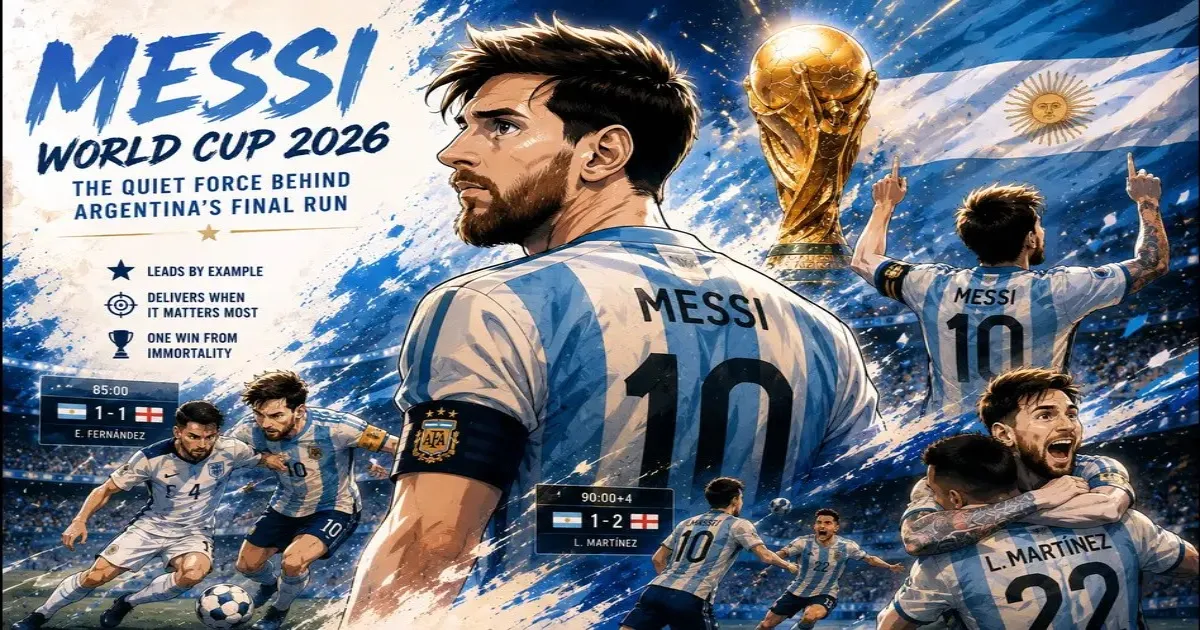
Messi turns 39 later this year, and the player leading Argentina’s line at this World Cup is not the same explosive dribbler who tore apart defenses a decade ago. What he’s become instead is arguably just as dangerous in a different way — a player whose value now shows up less in the moments before a goal and more in the goal itself. Against England in the semifinal, with Argentina trailing and time running out, it was Messi who produced the pass that Enzo Fernández turned into an 85th-minute equalizer, and Messi again who found Lautaro Martínez for the stoppage-time winner four minutes later. Two assists, in the two moments that mattered most, in the biggest match of the tournament so far.
That pattern hasn’t been an isolated incident. Across Argentina’s four knockout matches this World Cup, the team has needed a rescue act in every single one — extra time against Cape Verde, a fightback from 2-0 down against Egypt, a red-card-assisted turnaround against Switzerland, and the late comeback against England. In each case, Messi has been the player Argentina’s system is built to funnel the ball toward when a match needs deciding, whether that means a direct contribution or simply the gravitational pull he exerts on defenses trying to account for where he might drift next.
Leading Without Needing to Say Much
Teammates and coaching staff around this Argentina squad have spoken consistently about Messi’s influence in the dressing room being less about vocal leadership and more about example — an intensity in training and preparation that sets the tone for a squad built around a mix of World Cup winners from 2022 and a newer generation of players like Fernández and Alexis Mac Allister who grew up idolizing him before they ever played alongside him. For a player who has spent two decades being scrutinized for supposedly lacking the vocal, commanding presence of a “traditional” captain, the alternative version of leadership he’s shown throughout this tournament — calm under pressure, present in the biggest moments, demanding of himself before demanding of anyone else — has become its own kind of blueprint for how this Argentina squad carries itself.Messi vs Ronaldo: The Definitive Statistical Comparison — Every Number, Every Record, One Verdict
That calm has been particularly visible in how Argentina have responded to adversity this tournament. Falling behind against Egypt or Switzerland, or trailing England for the better part of an hour, would rattle plenty of squads. This Argentina side hasn’t shown much sign of panic in any of those moments, and it’s difficult to separate that composure from having a 39-year-old talisman on the pitch who has, quite literally, seen and won it all before.
The Symbolism of a Second Straight Final
There’s a version of Messi’s career arc that makes this final almost impossible to script better. He lifted the World Cup for the first time in Qatar at 35, closing what was widely described as the last gap in his trophy cabinet. That a second consecutive final appearance has followed, at an age when most elite footballers have long since retired from international tournament football, adds a layer of legacy-building that goes beyond even what he accomplished in 2022. A win on Sunday would make Argentina only the third nation since the 1930s to retain the World Cup, joining Italy and Brazil — and it would do so with Messi, in what is very likely his final World Cup appearance, at the center of it.Erling Haaland Baby Names Peru: Why Hundreds of Newborns Are Being Named After the Norway Star
That context has shaped how this tournament is being discussed well beyond Argentina’s own fanbase. Neutral supporters and rival federations alike have leaned into the narrative of a fitting send-off, and Spain’s own players have spoken with evident respect about facing him one more time on this stage — the kind of professional reverence usually reserved for a small handful of era-defining figures.
What Comes Next Won’t Diminish What Already Happened
Whatever happens in the final itself, the story of Messi’s influence on this specific Argentina run has already been told in the moments that got them there. A team that has needed rescuing in every single knockout match found, every single time, that the players around Messi kept believing there was a way through — and more often than not, it was Messi himself who found it. That’s not a stat that shows up prominently on a Golden Boot leaderboard, but it’s the difference between an Argentina side that exits in the quarterfinals and one that stands one win away from immortality.
For a player who has spent the better part of two decades being measured against an impossible standard of his own making, inspiring one more generation of teammates to believe a match isn’t over until it’s actually over might be the most fitting way of all for this chapter of his career to be remembered — regardless of what the scoreboard reads when Sunday’s final finishes.
Every Own Goal at FIFA World Cup 2026: A Record-Breaking Tournament
🔹🔹 follow us on facebook 🔹🔹
About the Author