 Sixteen years after their first triumph, Spain won the Fifa World Cup 2026 in extra time, denying Lionel Messi’s Argentina back-to-back titles
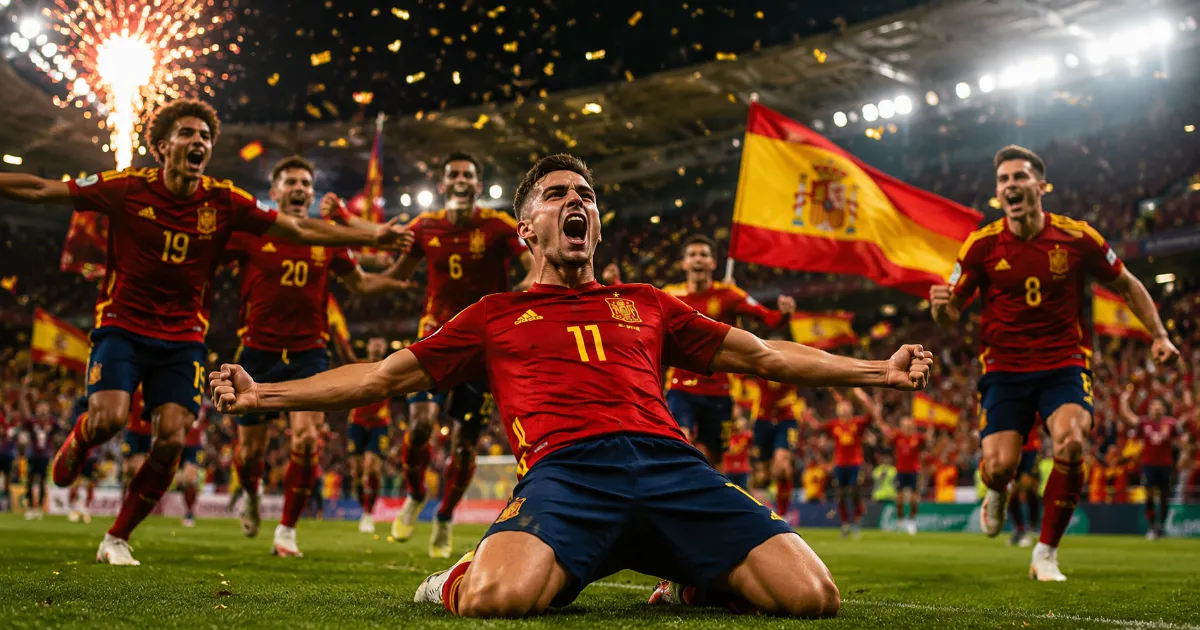
For 120 minutes, football’s biggest match refused to give either side anything. Then Ferran Torres met a header knockdown from Nico Williams and buried it into the roof of the net, and sixteen years of waiting ended in an instant. Spain won the World Cup 2026, beating Lionel Messi’s Argentina 1-0 after extra time at New York/New Jersey Stadium, denying the defending champions a shot at history and confirming Luis de la Fuente’s side as the finest international team of this generation.
We Called It: How Our Spain World Cup Prediction Came True
Why Spain Are Favorites to Win the FIFA World Cup 2026 Final
A Final That Took Its Time to Ignite
For long stretches of normal time, this looked like exactly the tense, cagey affair both nations’ knockout-stage form suggested it might be. Spain, unbeaten and having conceded just once across their entire tournament heading into the final, controlled possession patiently, probing for openings without ever fully breaking Argentina down. Argentina, for their part, sat compact and organized, content to absorb pressure and wait for the kind of late opening that had defined their entire run to this final, dramatic comebacks against Cape Verde, Egypt, Switzerland, and England all decided in exactly this kind of patient, low-event fashion.
Neither approach produced a goal inside ninety minutes. Both sides created half-chances, Lamine Yamal weaving past defenders on Spain’s right, Julián Álvarez probing in behind for Argentina, but neither goalkeeper, Unai Simón for Spain or Emiliano Martínez for Argentina, was seriously tested until the closing stages. The match went to extra time level at 0-0, setting up a finish that would ultimately turn on a moment of individual quality and a costly Argentine mistake.Inside Lamine Yamal’s World Cup 2026: Every Record and Goal
The Fernández Sending-Off That Changed Everything
Argentina’s task became dramatically harder in the second half of normal time when Enzo Fernández, already booked earlier in the match for simulation, picked up a second yellow card for a reckless challenge on Pau Cubarsí, reducing Argentina to ten men deep into a World Cup final they were still hoping to win outright. Fernández protested the decision from referee Slavko Vinčić and was slow to leave the pitch, a moment of frustration that reflected just how costly the dismissal threatened to be. Argentina, so reliant throughout this tournament on late attacking substitutions and fresh legs changing the complexion of matches, now had to navigate extra time with a numerical disadvantage against a Spain side built specifically to exploit exactly that kind of opening through patient, possession-based pressure.
To Argentina’s enormous credit, they very nearly held out anyway. Emiliano Martínez produced save after save as Spain poured forward in search of the breakthrough, at one stage making ten stops across the match, marshaling a defense that had lost Lisandro Martínez to injury earlier in the game, forcing Nicolás Otamendi into an unplanned introduction, and later saw Cristian Romero require treatment for a knock of his own. Spain camped in Argentina’s half for long stretches of the first period of extra time, Mikel Merino glancing a header narrowly wide and Yamal forcing another smart save from Martínez, but the Argentine wall held until the second period of extra time began.Erling Haaland: The Goal Machine Rewriting Football’s Record Books
Kylian Mbappé Golden Boot Prediction: Can Anyone Stop Him in 2026?
Ferran Torres Writes His Name Into History
The breakthrough finally arrived in the 106th minute. Nico Williams, introduced from the bench, dug out a cross that Merino couldn’t quite convert with a glancing flick, but the loose ball found its way back into play, and moments later Williams provided a header knockdown that Ferran Torres met with a first-time finish, rifling the ball into the roof of the net to send the Spanish end of the stadium into delirium. It was the goal an entire nation had waited sixteen years for, and it came from a player whose own career had been defined more by promise and versatility than singular, iconic moments, until suddenly, in the 106th minute of a World Cup final, it was.
Spain nearly doubled their advantage moments later when Torres broke away for a second time, only for the offside flag to deny him a second goal. It didn’t matter. Argentina, already down a man and chasing an equalizer they simply couldn’t find, never seriously threatened a response, and Spain saw out the remaining minutes to confirm their second World Cup title, their first since that memorable triumph in South Africa back in 2010.
What This Means for Argentina and Messi
For Argentina, the defeat ends, for now, their hopes of becoming the first nation to defend the World Cup since Brazil managed the feat in 1958 and 1962. It’s a genuinely painful way for this campaign to end, given how many times this specific Argentina squad had found a way through adversity across the tournament, extra-time wins over Cape Verde and Switzerland, stoppage-time comebacks against Egypt and England, only to finally run out of answers in the one match with the highest possible stakes.
For Lionel Messi, at 39 and playing in what’s now almost certainly his final World Cup, the result means his remarkable individual tournament, eight goals, a record-breaking scoring and assisting streak stretching across eleven consecutive matches, ultimately ends without a second World Cup title to match his historic 2022 triumph. Messi was kept quiet by a Spanish defense that had shut down every other elite attacking threat put in front of it this tournament, and while he’ll leave this World Cup with his legacy as the sport’s greatest player almost certainly intact regardless of Sunday’s result, the specific chance to become a back-to-back champion, a feat matched by only a handful of nations in the tournament’s history, has now passed him by.The 10 Highest-Paid Footballers in the World
A Complete, Deserved Triumph for Spain
Whatever heartbreak Argentina and their fans feel, there’s little argument that Spain’s triumph was anything other than thoroughly deserved. Luis de la Fuente’s side conceded just a single goal across the entire tournament, a defensive record built on Rodri’s positional discipline, the settled central pairing of Aymeric Laporte and Pau Cubarsí, and Unai Simón’s historic run without conceding. Their attack, spread across contributions from Mikel Oyarzabal, Pedro Porro, Mikel Merino’s habit of scoring decisive substitute goals in consecutive knockout rounds, and now Ferran Torres’s title-clinching extra-time strike, never depended on a single individual the way some of their rivals did.
And then there’s Lamine Yamal, just 19 years old, playing in his first-ever World Cup and already lifting the trophy. The teenager’s dribbling and creativity were central to Spain’s attacking approach throughout the tournament, and while he didn’t get his name directly on the scoresheet in the final itself, his presence, still overcoming a spring hamstring injury that threatened to derail his tournament entirely, forced Argentina’s defense to account for him all match, indirectly creating the space Torres and Williams eventually exploited.
The Full Journey to New Jersey
Sunday’s triumph was the culmination of a tournament run that started with a genuine scare. Spain’s opener ended in a goalless draw against Cape Verde, a result that briefly raised eyebrows given the gulf in resources and pedigree between the two nations, before Luis de la Fuente’s side settled into the ruthless, controlled form that would define the rest of their campaign. A 4-0 win over Saudi Arabia and a narrower victory over Uruguay secured top spot in their group, and the knockout rounds saw Spain dispatch Austria, Portugal, Belgium, and France in turn, the Portugal win notably ending Cristiano Ronaldo’s international career via a dramatic stoppage-time Mikel Merino goal, and the France win, a comprehensive 2-0 semifinal victory, silencing any lingering doubts about whether this Spanish side could handle the very best opposition the tournament had to offer.
Across that entire run, the pattern remained consistent: control possession, deny space, and let individual quality settle matches at the margins. Fabián Ruiz’s quarterfinal goal against Belgium, arriving in his first-ever World Cup appearance at 30 years old, and Merino’s habit of scoring decisive goals from the bench against both Portugal and Belgium, reflected a squad with match-winners scattered across the depth chart rather than concentrated in one or two obvious places.
The Trophy Presentation and What Comes Next
As confetti fell across New York/New Jersey Stadium and the Spanish players embraced on the pitch, the scenes echoed 2010, when a similar generation of Spanish stars lifted the trophy in South Africa following Andrés Iniesta’s own extra-time winner against the Netherlands. This time, the celebration belonged to a new generation built around Yamal, Torres, Rodri, and a settled defensive core, proof that Spanish football’s ability to produce world-class talent capable of winning the sport’s biggest prize hasn’t diminished in the years since that first triumph.
For Luis de la Fuente personally, Sunday’s win adds a World Cup title to the European Championship he already delivered in 2024, cementing his position as one of the most successful managers currently working in international football, having now won back-to-back major tournaments with the same national team, a feat matched by very few coaches in the sport’s modern history. Questions about the depth of this Spanish generation, about whether talents like Yamal could handle the pressure of a World Cup final at just 19 years old, about whether a squad built on patient control rather than individual chaos could hold up against Argentina’s proven knack for late drama, have all now been answered in the most emphatic way possible: with the trophy itself.
A Final Worth Remembering
Tournament finals are frequently anticlimactic, tight, cautious affairs where both sides play not to lose rather than to win, and for much of Sunday’s ninety minutes, this final threatened to follow exactly that script. What ultimately elevated it was the accumulation of subplots packed into its closing stages: a costly red card, a wounded but resilient Argentine defense somehow holding for twenty extra minutes with ten men, a series of Emiliano Martínez saves that briefly suggested a shootout might be inevitable, and finally, a moment of individual quality from a player whose career had been defined more by steady contribution than singular brilliance. Add the broader context, Messi’s likely final World Cup appearance, Yamal’s emergence as a genuine generational talent at just 19, and Argentina’s pursuit of a historic repeat title, and Sunday’s final earned its place among the more genuinely memorable World Cup deciders of the past several tournament cycles, even without the highest goal tally or the most fluid attacking football on display.
The Bigger Picture for Spanish Football
This triumph confirms Spain as the defining international team of this football generation, adding a World Cup title to the European Championship they won in 2024, an extraordinary run of sustained excellence across multiple tournament cycles under de la Fuente’s patient, possession-based system. Where some had wondered whether Spain’s history of underperforming at World Cups relative to their dominance at continental level would repeat itself yet again, this specific generation, built around Rodri’s midfield control, Yamal’s individual brilliance, and a defense that shut down everyone put in front of it, has emphatically answered that question.
For a Spanish federation that watched this same core of players struggle at times to translate domestic dominance into deep World Cup runs across previous cycles, Sunday’s triumph in New Jersey represents genuine vindication. Spain didn’t simply survive this tournament on moments of individual brilliance the way Argentina so often did. They controlled it, round after round, match after match, conceding almost nothing and finding just enough going forward to advance every single time, right up until the moment Ferran Torres delivered the goal that mattered most of all. Sixteen years after Andrés Iniesta’s extra-time winner beat the Netherlands in South Africa, Spain are once again champions of the world, and this specific triumph, built on defensive control rather than moments of chaos, may prove to be remembered as the more complete of the two.

About the Author