 World Cup 2026’s Best Managers: The Teacher and the Student
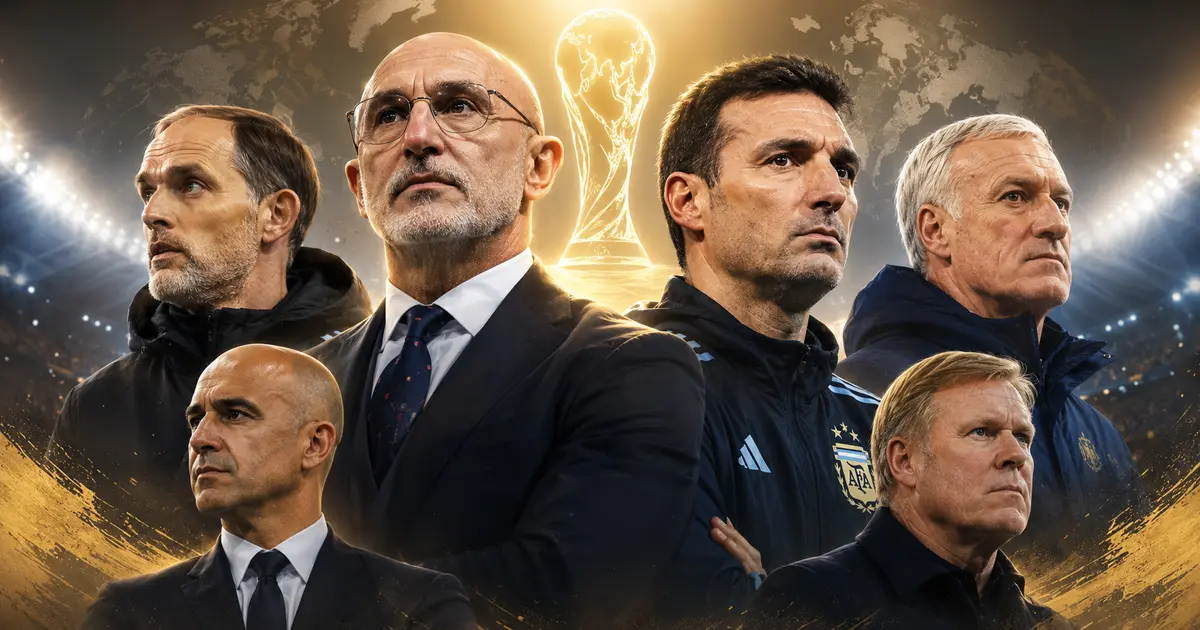
While the individual awards ceremony went to players, this World Cup was every bit as defined by the coaches who built the systems behind them. And in a tournament that reached its climax with two understated, humility-first managers facing off in the final, the story of this World Cup’s best managers doubles as a genuine lesson in what modern international coaching actually rewards.
What Does a Football Manager Actually Do? The Job Behind the Tactics Board — A Full Week in the Life
10 Football Documentaries Every Fan Needs to Watch at Least Once
1. Luis de la Fuente (Spain)
De la Fuente’s World Cup triumph completed an extraordinary run of consecutive silverware: the 2023 Nations League, Euro 2024, and now the 2026 World Cup, a treble that instantly places him among the most successful international managers in the sport’s history. What makes the achievement even more remarkable is his route there — De la Fuente never managed a top-flight club before taking the senior national team job, having instead built his reputation entirely through Spain’s youth setup, leading the country’s Under-19, Under-21 and Under-23 sides to their own respective titles before ever coaching a full international squad. His Spain side didn’t just win the World Cup; they did it with the tightest defensive record of the tournament, conceding just once in eight matches, built on a structural, rest-defence approach that solved the exact problem — converting overwhelming possession into actual goals — that had eliminated Spain from the previous two World Cups.
2. Lionel Scaloni (Argentina)
Scaloni’s run to a second consecutive World Cup final, even in defeat, cements his standing as one of the most successful managers in Argentine football history — a treble of his own, having already won the 2021 Copa América, the 2022 World Cup, and the 2024 Copa América before this summer’s runner-up finish. Like his final opponent, Scaloni had never managed a top-flight club before taking the Argentina job, arriving instead from a background on Jorge Sampaoli’s coaching staff and a stint with Argentina’s youth teams. His Argentina side’s defining trait across this tournament was resilience under pressure — needing extra time against Cape Verde, coming from 2-0 down against Egypt, and scoring twice in the final six minutes to beat England in the semifinal — a pattern of composure under adversity that speaks directly to the culture Scaloni has built within the squad since 2018.
The Teacher and the Student
What makes the De la Fuente-Scaloni story genuinely remarkable is the personal history connecting them. Nearly a decade before facing off in a World Cup final, Scaloni enrolled in a coaching course at Spain’s Las Rozas training center, where De la Fuente — already respected for his work with Spain’s youth teams — was one of the instructors teaching tactics, game systems and player management. The two have spoken openly and warmly about that relationship ever since. De la Fuente has called himself “a big admirer” of how Scaloni’s coaching has evolved, while Scaloni has credited conversations with his former mentor for shaping his own development as a manager. Both have consistently emphasized the same underlying coaching philosophy — leadership built on humility, dressing-room harmony, and collective identity rather than a reliance on individual brilliance alone — a shared approach that arguably explains why both men’s teams proved so difficult to beat across this tournament’s exhausting, expanded format.
Thomas Tuchel (England)
England’s run to the semifinal, their best World Cup showing since 1966, represented a genuinely strong first major tournament for Thomas Tuchel since taking the job. His willingness to trust Anthony Gordon over more established options in the biggest knockout matches, and his squad’s turnaround from a shaky group stage into four consecutive knockout wins before the semifinal defeat to Argentina, both reflect a manager who found his footing with this specific group as the tournament progressed. The manner of England’s semifinal exit — sitting on a one-goal lead for the final half hour rather than continuing to press for a second — will likely be the clearest tactical lesson Tuchel takes into the next cycle.
Didier Deschamps (France)
Deschamps’ France reached the semifinal before falling to Spain and then losing a wild 6-4 third-place playoff to England, a finish that, while short of the final, still represented a respectable campaign built almost entirely around Kylian Mbappé’s individual brilliance. Deschamps, already a World Cup-winning manager from 2018 and a runner-up in 2022, added a fourth-place finish to his own extraordinary tournament résumé, continuing one of the most sustained periods of success by any international manager of the modern era, even if this particular campaign fell short of what his squad’s overall talent level suggested was possible.
Cristiano Ronaldo Jr.: Club, Lifestyle, Career and Future Prospects
Thiago Messi: Club Career, Playing Style, Lifestyle and Future Prospects
The Dark Horse Manager: Ståle Solbakken (Norway)
Few managers enhanced their reputation more this tournament than Norway’s Ståle Solbakken, who guided a nation with no recent history of deep World Cup runs to the quarterfinals — eliminating five-time champions Brazil along the way in one of the tournament’s biggest shocks. Solbakken’s Norway played with a clear, organized structure that got the very best out of Erling Haaland while never appearing overly reliant on him alone, and their run stands as one of the clearest examples this tournament of a well-drilled tactical plan outperforming a talent gap on paper.
Roberto Martínez (Portugal) and Ronald Koeman (Netherlands)
Not every notable managerial performance ended in a deep run. Roberto Martínez’s Portugal reached the quarterfinal before falling to Spain, continuing the Belgian-born coach’s reputation for getting organized, tactically disciplined performances out of squads with genuine individual quality — a trait he first built his international coaching reputation on with Belgium’s own golden generation. Ronald Koeman’s Netherlands, by contrast, suffered one of the tournament’s biggest disappointments, eliminated by Morocco in the round of 32 despite a talented squad including Cody Gakpo and Virgil van Dijk — a result that will likely prompt serious questions about the Dutch federation’s direction heading into the next cycle, regardless of how well individual players performed within the system.
Why Coaching Continuity Mattered More Than Ever
This tournament’s expanded format — 104 matches, an entirely new knockout round, and physically demanding travel across three host nations — placed a premium on squads that already understood their manager’s principles intuitively, rather than sides still adapting to a newly appointed coach’s methods under tournament pressure. Both De la Fuente and Scaloni had years of continuity with their core squads heading into this World Cup, a stability that shows up clearly in how calmly both sides navigated moments of real adversity — Spain’s disciplined response to Belgium’s goal in the quarterfinal, and Argentina’s repeated ability to find late solutions in matches that looked lost. Coaches parachuted in more recently, even talented ones like Tuchel, generally needed the tournament itself to finish building that same level of trust and tactical fluency with their squads.
What Connects This Tournament’s Best Coaching Performances
Looking across the managers who got the most out of their squads this summer, a clear pattern emerges: none of them fit the modern mould of the celebrity, headline-grabbing club manager. De la Fuente and Scaloni in particular built their entire coaching careers through youth systems and backroom staff roles rather than high-profile club jobs, and both have spoken about leadership in strikingly similar terms — trust, humility, and collective belief over individual reputation. In a tournament expanded to 104 matches and an entirely new knockout round, that kind of quiet, structural coaching approach proved more durable than star power alone, and it’s arguably the clearest managerial lesson this World Cup leaves behind for the cycles that follow — a reminder that in international football, where preparation time is scarce and squad continuity is everything, the manager who best understands his players may ultimately matter more than the manager with the biggest reputation.
NBA Schedule 2026-27: Christmas Day Rivalries, Ring Night and the Games to Watch
From Tunisia to Spain: Every World Cup 2026 Team Ranked
🔹🔹 follow us on facebook 🔹🔹
About the Author