An analytical look at the structural, tactical and geopolitical shifts this tournament leaves behind for the sport’s next cycle
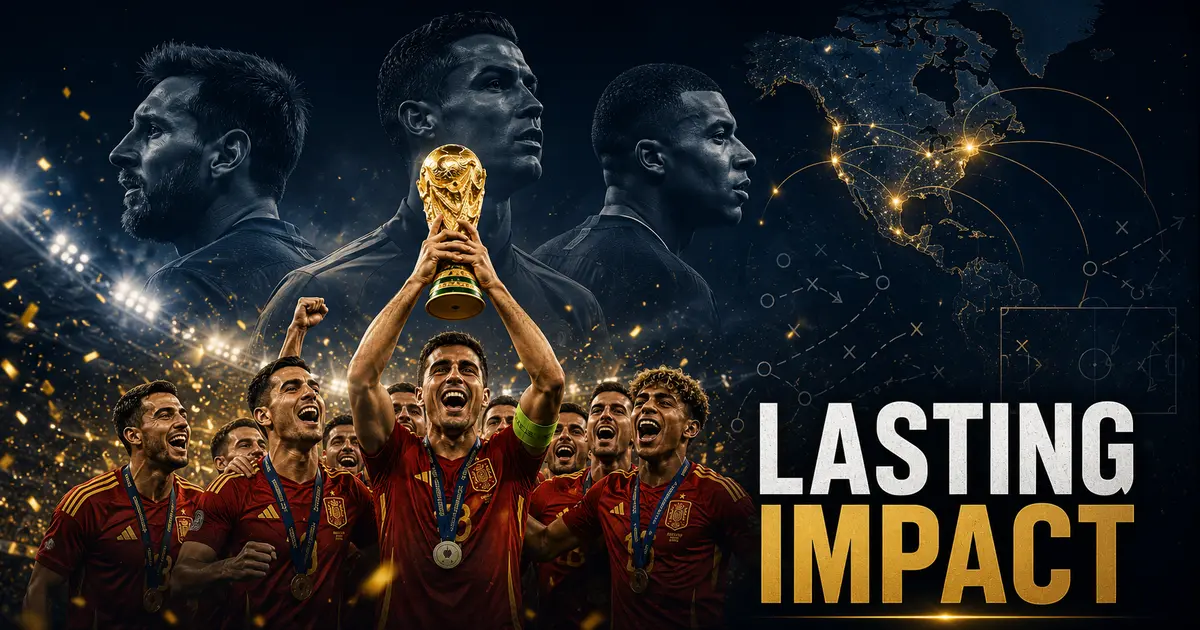 An analytical look at the structural, tactical and geopolitical shifts this tournament leaves behind for the sport’s next cycle
Some World Cups are remembered mainly for a single match or a single goal. Others quietly reshape the sport’s underlying structure in ways that only become fully visible years later. FIFA World Cup 2026 changed international football in both senses — it produced an unforgettable final, and it also tested, validated, and in some cases fundamentally altered assumptions about tournament format, competitive balance, and what a title-winning identity actually looks like heading into the next cycle. Here’s a deeper look at the lasting structural impact of this tournament.
The 48-Team Experiment Passed Its First Real Test
FIFA’s decision to expand the World Cup from 32 to 48 teams was the most consequential structural change to the tournament since the current group-stage format was introduced. The expansion was not without its skeptics, who worried that adding 16 additional nations — many appearing at a World Cup for the first time — would produce a glut of lopsided group-stage mismatches and dilute the tournament’s overall competitive standard.
That fear did not materialize in any meaningful way. Cape Verde, a nation of roughly 500,000 people making their World Cup debut, reached the Round of 32 and pushed defending champions Argentina to extra time before finally being eliminated. Jordan and Uzbekistan, also debutants, competed credibly rather than simply making up the numbers. Morocco became the first African nation in history to reach back-to-back World Cup quarterfinals, while Norway’s run to the last eight, in their first appearance since 1998, produced one of the tournament’s most compelling storylines. The expanded format didn’t just add matches to the calendar — it fundamentally widened the pool of nations capable of producing a genuine deep run, a structural validation that FIFA will likely point to heading into future expansion conversations.
A New Template for Co-Hosting
Played across the United States, Mexico and Canada, this was the first World Cup jointly hosted by three nations, and the logistical model it established — spreading matches across a vast geographic footprint, with teams and fans traveling extensively between wildly different climates and time zones — will likely serve as a direct template, or cautionary tale, for future multi-nation hosting bids. The travel and scheduling demands were real: several matches in the knockout rounds needed extra time, and fatigue became an increasingly visible storyline as the tournament progressed, particularly for teams like Argentina that were repeatedly forced into 120-minute contests. Future organizing committees will need to weigh the clear benefits of a wider hosting footprint — more venues, larger overall audiences, distributed economic impact — against the physical toll such travel places on players competing in the tournament’s most demanding matches.
The Balance of Power Shifted, Even Within Europe
Spain’s title, secured through defensive discipline and distributed goal-scoring rather than reliance on a single transcendent star, offers a meaningfully different blueprint than the individual-driven approaches that have defined recent tournament cycles. It’s a template built on continuity: the same core group of players who won Euro 2024 carried that identity through to a World Cup title two years later, suggesting a growing premium on long-term squad continuity over rapid, star-driven rebuilds.
At the same time, traditional footballing powers experienced real structural strain. Germany’s Round of 32 elimination to Paraguay — their first-ever World Cup penalty shootout loss — triggered the swift dismissal of manager Julian Nagelsmann and the surprise appointment of Jurgen Klopp, a managerial change that will reshape German football’s direction for years regardless of how it plays out. Brazil’s Round of 16 exit to Norway ended Neymar’s international career and raised fresh questions about the country’s next generation of attacking talent. Portugal’s exit alongside Cristiano Ronaldo’s retirement, and the accompanying departure of manager Roberto Martinez, closes out an era for a nation that will now need to define its footballing identity without its most influential player in two decades.
Individual Award Races Became More Competitive Than Ever
The Golden Boot race between Mbappe and Messi, decided only in the tournament’s final match via a third-place playoff brace, and the Golden Ball race that saw Rodri denied Messi a record third career award, both point to a broader trend: individual excellence at the top level of international football has become more evenly distributed than in previous cycles, where one or two players often pulled clear of the field by the tournament’s midpoint. That kind of sustained competitive tension around the sport’s biggest individual honors is likely to increase media and fan engagement with these races in future tournaments, now that this edition has demonstrated how compelling a genuinely contested Golden Boot and Golden Ball race can be right through to the final whistle. [link to: Every record broken and threatened at the World Cup 2026 final]
The Sport’s Relationship With Set Pieces and Fine Margins Deepened
Spain’s tournament-record 17 converted penalties and the sheer frequency of extra-time and shootout-decided knockout matches throughout this edition both point to a broader tactical trend that’s likely to influence coaching methodology going forward: as elite defenses become more organized and open-play chances scarcer, the ability to consistently convert from dead-ball situations and manage penalty shootout pressure has become a genuinely differentiating skill rather than a peripheral concern. Expect national federations to invest more heavily in specialized set-piece and shootout-preparation coaching as a direct consequence of how decisive these moments proved to be throughout this tournament.
Football’s Political Dimension Was Impossible to Ignore
The “Las Malvinas son Argentinas” banner unfurled by Argentina’s players following their semifinal win over England forced FIFA into an uncomfortable, still-unresolved reckoning with its own political-neutrality regulations. The organization’s Stadium Code of Conduct explicitly prohibits political messaging, yet enforcing that rule against a jubilant national team celebrating a World Cup semifinal win — over a banner reportedly passed to players by their own supporters — exposed real practical limits to FIFA’s enforcement capacity. That tension is unlikely to disappear, and how FIFA ultimately handles the episode may shape its broader approach to political displays at future tournaments involving nations with unresolved historical disputes. [link to: Las Malvinas banner controversy explained]
A Generational Handoff, Formalized on the Biggest Stage
Beyond any single tactical or structural shift, this tournament will likely be remembered as the moment international football’s landscape formally transitioned away from the Messi-Ronaldo era that has defined the sport for nearly two decades. Ronaldo’s retirement from World Cup competition, Neymar’s international retirement, and the continued emergence of teenage stars like Lamine Yamal, Pau Cubarsi, Warren Zaire-Emery and Desire Doue collectively mark this tournament as a genuine hinge point — the last World Cup featuring several of the sport’s defining 2010s-era stars, and the first to feature significant, tournament-shaping contributions from players who grew up idolizing those very same stars.
What Comes Next
The structural questions this tournament raises will shape planning for the next World Cup cycle in meaningful ways. FIFA will need to weigh the clear success of the 48-team format’s competitive depth against the physical toll of an expanded, geographically sprawling tournament on player fitness. National federations will be reassessing whether Spain’s continuity-based, system-over-stars model offers a more sustainable long-term path to major tournament success than rapid, star-centric rebuilds. And the sport’s relationship with its own unresolved political tensions, laid bare by the Malvinas banner controversy, remains an open question FIFA has yet to fully resolve.
Final Word
FIFA World Cup 2026 didn’t just crown a champion — it stress-tested an expanded format, validated a genuinely different template for tournament success, and forced uncomfortable but necessary conversations about football’s relationship with player workload, individual legacy and unresolved political history. Whatever gets remembered first about this tournament, its structural fingerprints on how international football is organized, coached and understood are likely to outlast the specific scoreline from MetLife Stadium.
🔹🔹 follow us on facebook 🔹🔹
About the Author