 The History of MLS: From Struggling League to World Cup Host in 30 Years
How a league that nearly folded within its first decade grew into a genuine global competitor, just in time to help host the 2026 World Cup.
Major League Soccer’s story is, at its heart, a survival story. Born out of a commitment made to secure the 1994 World Cup, the league spent its first decade fighting simply to stay alive, contracting rather than expanding, and searching for a sustainable business model in a country where professional soccer had already failed once before. Three decades later, MLS enters 2026 as a co-host of the World Cup itself, home to the sport’s biggest global star, and a league whose most valuable franchise is now worth well over a billion dollars. This is the complete history of that unlikely transformation.
Messi Retires: Inside the Rise, Falls, and Redemption of a Legend
What World Cup 2026 Means for MLS: A Host Country’s Football Revolution
A Record Number: MLS Players at World Cup 2026 and What It Means for the League
Born From a World Cup Promise
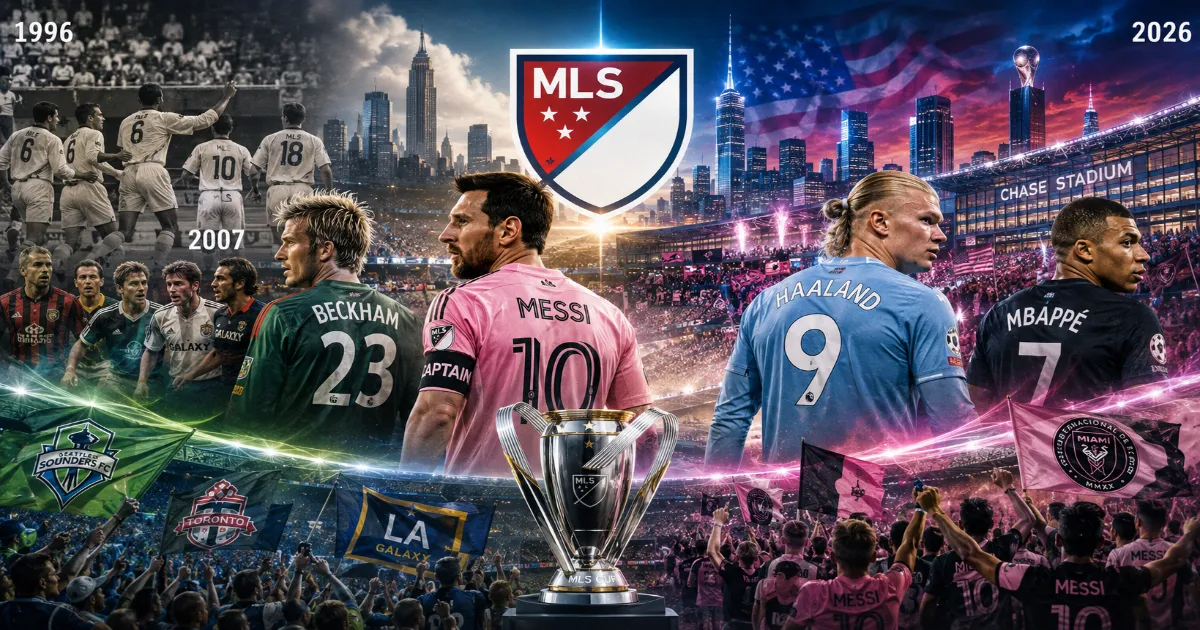
MLS exists today largely because of a commitment U.S. Soccer made in order to secure hosting rights for the 1994 World Cup. As a condition of that hosting agreement, the federation promised FIFA it would establish a genuine, sustainable top-flight professional league in the tournament’s aftermath, a pledge made necessary by the collapse of the earlier North American Soccer League a decade before. MLS launched its inaugural season in 1996 with ten founding clubs, adopting a distinctive single-entity ownership structure specifically designed to prevent the kind of runaway spending and financial instability that had contributed to the NASL’s earlier demise, with the league itself, rather than individual club owners, holding player contracts and centrally managing key financial decisions.
That cautious, deliberately conservative structure reflected genuine institutional trauma from watching the NASL’s spectacular collapse just over a decade earlier, when a league that had briefly attracted global superstars like Pelé and Franz Beckenbauer folded entirely after overextending itself financially. MLS’s founders were determined not to repeat that mistake, even if it meant sacrificing some of the star power and immediate excitement that had defined American soccer’s brief earlier moment in the spotlight.
A League on the Brink
Despite that cautious structural approach, MLS’s first several years proved genuinely precarious. Attendance figures in several markets fell well short of expectations, and the league operated at a significant financial loss throughout its early seasons, prompting serious internal discussion about whether the entire venture was sustainable. Matters came to a head in 2001, when MLS contracted from twelve teams down to ten, folding both the Tampa Bay Mutiny and the Miami Fusion in a stark demonstration of just how fragile the league’s finances remained five years into its existence. For a period during the early 2000s, MLS’s long-term survival was a genuinely open question rather than a foregone conclusion, a reality that stands in sharp contrast to the league’s considerably more secure financial position today.
The Beckham Rule and a Turning Point
MLS’s fortunes began to shift meaningfully in 2007, when the league introduced what became widely known as the “Designated Player” rule, a mechanism allowing clubs to sign a limited number of players outside the league’s otherwise strict salary cap structure, explicitly designed to help MLS attract genuine international star power without abandoning the broader financial discipline that had kept the league solvent. The rule earned its popular nickname after the LA Galaxy used it to sign global superstar David Beckham later that same year, a genuinely landmark moment that brought unprecedented mainstream media attention to a league that had, until that point, struggled to break through beyond its existing, still relatively modest fanbase.
Beckham’s arrival didn’t singlehandedly transform MLS’s finances overnight, but it established a template that other clubs would go on to replicate with increasing frequency and success throughout the following decade, using the Designated Player mechanism to bring in aging but still genuinely elite international talent capable of drawing significant new fan interest and media coverage to their respective markets.
Steady, Sustainable Expansion
Throughout the 2010s, MLS pursued a deliberate, carefully managed expansion strategy, adding new franchises at a steady pace while charging increasingly substantial expansion fees that reflected the league’s growing financial stability and commercial appeal. Markets like Seattle, Portland, and Atlanta, in particular, demonstrated genuine grassroots soccer-specific fan enthusiasm, with several new franchises quickly establishing attendance figures that rivaled or exceeded some of the league’s original founding clubs. This period of expansion fundamentally reshaped MLS’s financial position, growing the league from its original ten teams toward what would eventually become one of the largest first-division professional leagues by club count anywhere in the world.
The Messi Effect
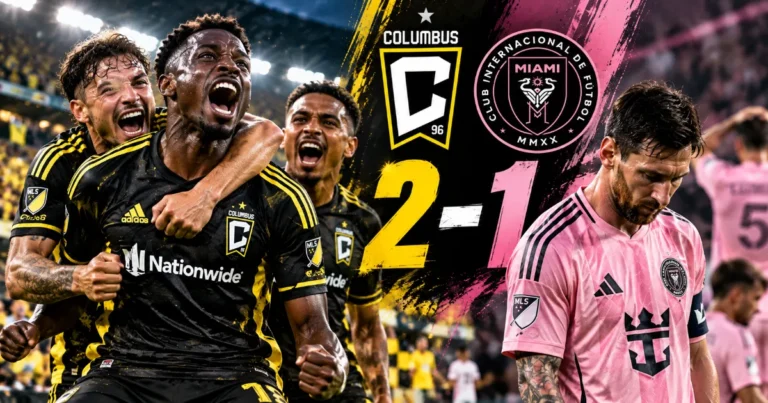
No single moment in MLS history generated quite the same seismic global impact as Lionel Messi’s 2023 arrival at Inter Miami. Messi’s decision to join MLS following the expiration of his contract at Paris Saint-Germain, rather than pursuing a move to one of Europe’s traditional football powers or the increasingly lucrative Saudi Pro League, instantly transformed the league’s global media profile in ways no previous Designated Player signing had managed to replicate. Messi’s debut, a dramatic stoppage-time winner in his very first Inter Miami appearance, sparked immediate, sustained global interest, driving significant surges in ticket prices, merchandise sales, and subscriptions to Apple’s MLS Season Pass streaming service, the league’s dedicated broadcast partnership launched specifically to grow the competition’s direct-to-consumer streaming presence worldwide.
The Messi effect proved considerably more durable than a single-season novelty. By 2025, Messi had led Inter Miami to their first-ever MLS Cup championship, personally claiming both the league’s Most Valuable Player award and its Golden Boot as top goalscorer in the same season, while Inter Miami itself became the league’s single most valuable franchise, with a valuation exceeding one billion dollars and continued year-over-year growth that outpaced every other club in the league. Messi’s subsequent contract extension through 2028 ensured his continued presence would carry directly through the 2026 World Cup and well beyond it, cementing his impact as one of the most consequential individual signings in the history of American professional sports, not just MLS specifically.
A League Reshaping Its Own Calendar
Even amid this sustained growth, MLS has continued to evolve structurally heading into its fourth decade. The league has committed to transitioning away from its traditional February-to-November calendar toward a fall-to-spring schedule beginning with the 2027-28 season, a change designed explicitly to align MLS’s calendar more closely with the major European leagues and international transfer windows, potentially easing player transfers between MLS and clubs abroad while also avoiding direct competition with the NFL season for domestic sports media attention. That transition required a specially shortened bridging season to manage the calendar shift, a genuinely significant structural undertaking reflecting just how seriously the league’s leadership now views its position within the broader global football calendar, a level of institutional ambition that would have seemed almost unimaginable during the league’s precarious early years.
Hosting the World Cup
MLS’s growth over three decades reached perhaps its most symbolically significant milestone with the United States, alongside Mexico and Canada, co-hosting the expanded 2026 World Cup, the tournament that had directly led to the league’s creation in the first place three decades earlier. Several MLS-affiliated stadiums and markets played host roles across the tournament, and the sustained growth in domestic soccer interest that MLS had spent decades carefully cultivating provided organizers with a considerably stronger foundation of engaged, informed American soccer fans than existed even during the country’s original 1994 hosting duties. In a genuine sense, MLS’s entire three-decade history can be read as the long, occasionally precarious middle chapter connecting American soccer’s first World Cup hosting experience to its second, a story of institutional patience and careful financial discipline eventually paying off in ways the league’s earliest, financially struggling seasons could scarcely have predicted.
New Stadiums and Continued Investment
The league’s growing financial confidence is perhaps most visible in its current wave of new, purpose-built stadium construction. Inter Miami’s new 25,000-seat venue, New York City FC’s forthcoming Etihad Park, and Chicago Fire’s planned downtown stadium collectively represent a wave of significant infrastructure investment that stands in sharp contrast to the shared, often ill-fitting NFL stadiums many MLS clubs were forced to rely on during the league’s earlier decades. This shift toward dedicated, soccer-specific venues reflects a broader maturation in how MLS ownership groups now approach long-term franchise value, treating stadium infrastructure as a genuine strategic investment rather than a cost to be minimized during a period when the league’s long-term survival remained a genuine open question.
A Transformation Three Decades in the Making
Looking back across MLS’s full history, from a league contracting franchises just five years into its existence to one hosting the World Cup and boasting a billion-dollar franchise built around the sport’s biggest global star, the scale of the transformation is genuinely difficult to overstate. That growth didn’t happen through a single dramatic breakthrough moment, but through three decades of deliberate, often cautious institutional decision-making, learning directly from the NASL’s earlier collapse, gradually building credibility through steady expansion, and eventually leveraging that accumulated stability to attract the kind of transformative global star power that had once seemed entirely out of reach for American professional soccer. As MLS enters its fourth decade alongside a home World Cup, that hard-won foundation looks considerably more durable than the fragile, uncertain league that very nearly didn’t survive its own first decade at all.
The Business Model That Kept the League Alive
MLS’s single-entity structure, often misunderstood by newer fans as simply an unusual bureaucratic quirk, deserves particular credit for the league’s long-term survival, especially when compared against the fully independent club ownership models used across nearly every major European league. By centrally controlling player contracts and enforcing strict salary budget rules across every franchise, MLS avoided the kind of runaway individual club spending that had directly contributed to the NASL’s collapse in the early 1980s, when several clubs signed aging international stars for enormous fees the league’s overall revenue simply couldn’t support. That centralized financial discipline meant MLS grew considerably more slowly than fans eager for immediate world-class talent might have preferred during the league’s first decade, but it also meant the league never faced the kind of sudden, catastrophic financial collapse that had ended its predecessor’s existence so abruptly.
The gradual loosening of that strict financial structure, first through the 2007 Designated Player rule and later through additional roster mechanisms like Targeted Allocation Money, reflected the league’s growing confidence that it could introduce greater individual club spending flexibility without repeating the NASL’s mistakes, having by that point built a considerably more stable overall financial foundation across the league’s full membership than existed during American soccer’s earlier professional experiment.
Canadian Clubs and a Truly Continental League
An often overlooked chapter in MLS’s broader history involves the league’s gradual expansion beyond the United States entirely, with the Vancouver Whitecaps, Toronto FC, and CF Montréal all joining as full MLS members in the years following the league’s original founding, transforming MLS into a genuinely continental competition spanning two nations well over a decade before the 2026 World Cup’s own trinational hosting arrangement. Toronto FC’s 2017 MLS Cup and Supporters’ Shield double, in particular, stands as one of the clearest examples of a Canadian franchise achieving genuine sustained success within the league, helping build the broader domestic soccer interest in Canada that would later feed directly into the country’s own historic 2026 World Cup breakthrough on home soil.
This continental structure has also shaped MLS’s relationship with Liga MX, Mexico’s own well-established top-flight league, through joint ventures like the Leagues Cup, an annual tournament pitting MLS and Liga MX clubs directly against one another that has grown into a significant midseason event since its modern relaunch, further cementing the increasingly interconnected nature of top-flight professional soccer across the entire North American continent heading into the shared 2026 World Cup hosting arrangement.
Lessons From MLS’s Growth for Other Emerging Leagues
MLS’s three-decade trajectory, from near-collapse to a billion-dollar flagship franchise and World Cup co-host, has increasingly become a reference case study for other emerging football leagues around the world attempting to build sustainable domestic competitions in markets without deep pre-existing football infrastructure. The league’s emphasis on centralized financial control during its fragile early years, followed by a gradual, carefully sequenced loosening of those restrictions only once genuine financial stability had been firmly established, offers a genuinely different model than the more common approach of allowing individual club owners full financial autonomy from a league’s very founding. Whether that specific sequencing, patience first, star power later, could be successfully replicated by other developing football markets remains a subject of ongoing debate among football administrators, but MLS’s own survival and eventual transformation stands as compelling evidence that the approach can work, given sufficient time, institutional discipline, and, as Messi’s arrival ultimately demonstrated, the right transformative signing at exactly the right moment in a league’s development.
For a competition that once contracted two entire franchises just to stay financially viable, arriving at a home World Cup as a co-host nation, with the sport’s biggest global star still actively playing in the league and a wave of new, purpose-built stadiums under construction, represents about as complete a transformation as any professional sports league has managed anywhere in the world over a comparable thirty-year window.
▪️▪️ Follow us on Facebook ▪️▪️
From Roberto Carlos to Messi: Ranking the Best Free Kicks in History
15 Champions League Players to Watch in 2026/27: Superstars & Young Guns
About the Author