The Early Favorites for FIFA World Cup 2030, Ranked
 The Early Favorites for FIFA World Cup 2030, Ranked
Bookmakers Have Already Made Their Call, Barely a week After the Final Whistle
Football doesn’t wait long to look ahead, and neither do sportsbooks. Barely a day after Spain lifted the trophy in New Jersey, bookmakers had already released opening odds for the next tournament. Here are the early favorites for FIFA World Cup 2030, and the reasoning behind where every major contender currently sits.
We Called It: How Our Spain World Cup Prediction Came True
Spain: The Clear Favorites, and for Good Reason
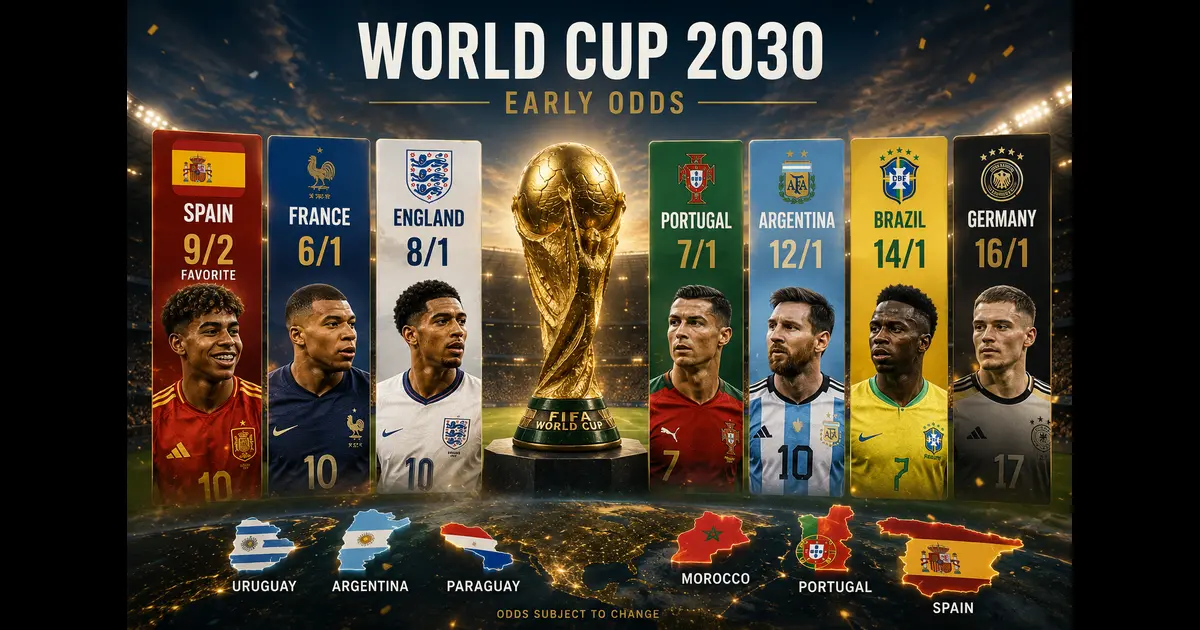
Spain open as the outright favorite to defend their title, priced around 9/2 by most major sportsbooks. The logic behind that pricing isn’t sentiment — it’s genuinely structural. Unlike most World Cup champions, whose squads typically skew older and face an inevitable rebuild, Spain’s title-winning core is remarkably young. Lamine Yamal, already one of the most talked-about players on the planet at 19, will be just 23 when the 2030 tournament kicks off. Pau Cubarsí, this year’s Best Young Player award winner, will also be only 23. Add Pedri, Gavi and Nico Williams — none of whom will be older than 26 by 2030 — and Spain’s argument for entering the next cycle even stronger than this one is difficult to dismiss.
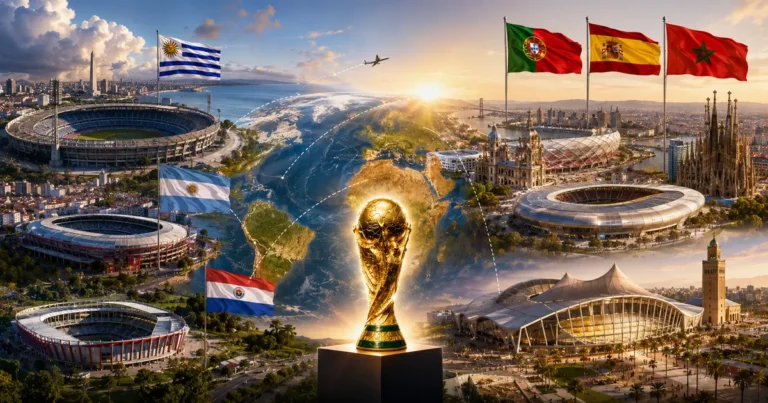
There’s also the small matter of hosting. Spain will co-host the 2030 tournament alongside Portugal and Morocco, making them the first defending World Cup champion in the competition’s history to also host the following edition. Home advantage combined with a young, in-their-prime core is about as strong a starting position as any team could realistically hope for four years out.
France: The Perennial Second Favorite
France sit just behind Spain in most early markets, priced around 6/1. It’s a familiar position for Les Bleus, who have now finished as either champions, finalists or semifinalists in four of the last five major tournaments. With Kylian Mbappé still only 31 by 2030 and a deep pipeline of talent — Michael Olise, Désiré Doué and Warren Zaïre-Emery among them — France’s case rests on the same argument it always does: an embarrassment of individual quality that seems to replenish itself no matter which generation ages out.
England: Waiting for the Wait to End
England come in third in most early pricing, around 8/1, a position that will feel painfully familiar to a fanbase still waiting for a first major men’s trophy since 1966. This summer’s semifinal exit to Argentina — a match England led before collapsing late — extends a run of near-misses across recent tournament cycles. With Jude Bellingham still only 27 by 2030 and continued questions about whether Thomas Tuchel’s project can finally convert individual talent into a genuine trophy run, England once again enter an early-favorites conversation without the hardware to match the hype.
Portugal: A Changing of the Guard
Portugal sit as co-hosts alongside Spain and Morocco, and their odds — hovering around 7/1 — reflect genuine optimism about life after Cristiano Ronaldo’s international retirement. With manager Roberto Martínez’s future also uncertain following this tournament, Portugal’s 2030 campaign is shaping up as a genuine reset for a golden generation that has underachieved relative to its talent for the better part of a decade. Hosting on home soil, without the shadow of Ronaldo’s individual narrative dominating every storyline, could paradoxically be exactly what this squad needs.
Argentina: Priced Out by Messi’s Absence
Perhaps the most telling number in the entire early market belongs to Argentina, who have drifted out to around 12/1 — a significant slide from where a two-time-defending-champion contender would typically sit. The reasoning is straightforward and, frankly, unavoidable: Lionel Messi’s international retirement is now widely expected, and even bookmakers who spent the last decade underestimating him at their peril seem to have accepted that no 43-year-old, however historically great, changes that calculation. Argentina remain a genuinely talented side without him, but the odds reflect a hard truth every dynasty eventually faces — even the most transcendent individual careers do, eventually, end.
The Rest of the Field
Brazil and Germany round out the group of nations considered serious contenders in most early markets, both carrying the kind of squad depth and tournament pedigree that keeps them within touching distance of the favorites regardless of any single cycle’s specific storylines. Further down the board, Colombia have been flagged by some analysts as a credible long-term outsider, having shown real defensive quality and midfield athleticism in reaching the Round of 32 this summer before narrowly exiting to Switzerland on penalties — with young talents like Jhon Durán and Yaser Asprilla tipped to become the faces of that team as more experienced names like James Rodríguez move toward international retirement.
The Dark Horses Worth Watching
Beyond the traditional powers, this summer’s tournament produced at least two nations whose long-term trajectory deserves a mention in any early 2030 conversation. Morocco, co-hosts of the 2030 tournament, reached the quarterfinals this year on the back of a genuinely talented core led by 18-year-old Ayyoub Bouaddi, and hosting on home soil alongside Spain and Portugal gives them a structural advantage similar to the one boosting Spain’s own odds. Belgium, despite bowing out in the quarterfinals to Spain, showcased enough quality across their run — including in a tense, ultimately unsuccessful battle against the eventual champions — to suggest their so-called “golden generation successor” wave is further along than many expected heading into this tournament.
Why These Odds Matter, and Why They’ll Almost Certainly Change
It’s worth being honest about what “early favorites” actually means four years out from a tournament: very little, in any concrete sense, beyond a snapshot of current form and roster age curves. Injuries, generational talents emerging from nowhere, managerial changes and simple bad luck in qualifying groups will all reshape this picture repeatedly between now and 2030. What these opening odds do capture accurately, though, is the structural reality facing each of these federations right now — Spain’s genuinely enviable age profile, Argentina’s unavoidable post-Messi transition, England’s continued search for a trophy to match their talent, and France’s remarkable knack for reloading no matter who departs. Four years is a long time in football. But as starting points go, this is about as informative a snapshot as the sport can offer this early.
It’s also worth remembering just how much these early boards tend to move. Four years ago, in the immediate aftermath of Argentina’s 2022 triumph, plenty of early markets had Messi’s side as strong contenders to defend their crown — a projection that, while not entirely wrong given how far Argentina actually went in New Jersey, ultimately missed just how central his specific decline in influence would become to the story of this year’s final. Whatever the current board says today, expect it to look meaningfully different by the time qualifying draws actually get underway.
About the Author