Inside the 2030 FIFA World Cup: A Complete Guide
 Inside the 2030 FIFA World Cup: A Complete Guide
Barely had the confetti settled on Spain’s triumph in New Jersey before attention turned to the next edition. The 2030 FIFA World Cup will be unlike anything the tournament has ever attempted — a genuinely unprecedented format spanning six host nations across three continents, built specifically to honor the tournament’s 100th anniversary. Here is a complete guide to everything currently known about it.The Road to FIFA World Cup 2030 Officially Begins
The Basics: Who’s Hosting, and Why It’s So Unusual
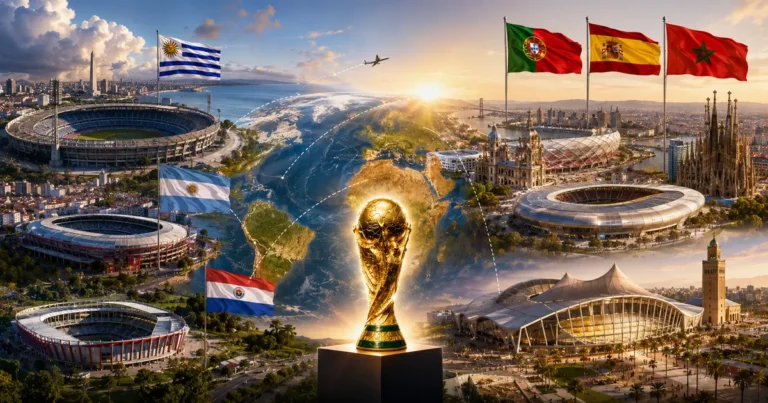
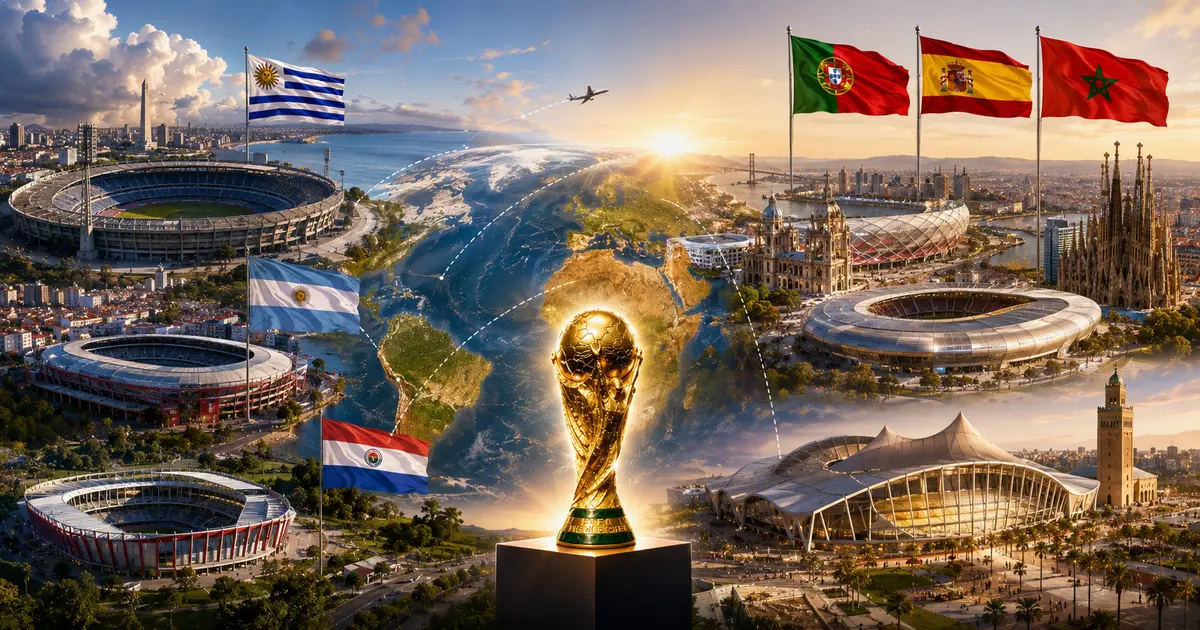
The 2030 World Cup will be the 24th edition of men’s football’s global tournament, and its hosting arrangement has no precedent in the competition’s near-century of history. Morocco, Portugal and Spain will serve as the primary hosts, staging the overwhelming majority of matches, including the entire knockout stage and the final itself. But to mark the tournament’s centenary, three additional nations — Uruguay, Argentina and Paraguay — will each host a single celebratory match at the very start of the tournament.
The reasoning behind that arrangement is entirely symbolic, and deliberately so. The first-ever FIFA World Cup was staged in Uruguay in 1930, with the hosts going on to beat Argentina in the final at Montevideo’s Estadio Centenario. A full century later, that same stadium will host one of 2030’s opening centenary matches, explicitly linking the tournament’s origin point to its hundredth anniversary. FIFA president Gianni Infantino described the arrangement as “a celebration of football’s history and its future,” and the symbolism clearly played a significant role in the bid’s approval — this will be the first World Cup ever to span three continents in a single edition, following the first-ever three-nation single-continent hosting model used by the United States, Canada and Mexico in 2026.
The hosting decision was formally confirmed at FIFA’s Extraordinary Congress on 11 December 2024 in Zürich, Switzerland, where all 211 FIFA member associations took part in the vote. Morocco, Portugal and Spain were approved by acclamation as the primary 2030 hosts, with Uruguay, Argentina and Paraguay separately confirmed as the centenary celebration hosts in the same session. Notably, that same Congress also confirmed Saudi Arabia as the host of the following tournament in 2034 — meaning both of the next two World Cups were locked in during a single meeting.
The Schedule: When It All Happens
According to FIFA’s current planning, the tournament is set to run from approximately 8 June through 21 July 2030, following the traditional World Cup summer window. The opening structure is where things get genuinely unusual. On Saturday 8 June and Sunday 9 June, a dedicated centenary ceremony will take place, followed immediately by the first matches for Uruguay, Argentina and Paraguay on their home soil. The tournament then effectively relocates: the official opening ceremony and the beginning of the main event shifts to the primary hosts, with Morocco, Portugal and Spain’s own opening matches played on 13 and 14 June. Any other teams drawn into groups alongside the three South American centenary hosts will play their own opening fixtures that same weekend, on 15 and 16 June.
The final is provisionally scheduled for Sunday 21 July 2030, though FIFA has been clear that the complete match calendar and specific venue assignments remain subject to change as planning continues. It’s worth noting the tournament’s total window — roughly 44 days from the centenary ceremony to the final — would make this among the longest World Cups ever staged, a direct consequence of the logistical complexity involved in starting a tournament on one continent before shifting the remainder of the competition to another.
The Format: Same Size, Same Structure — For Now
As things currently stand, the 2030 World Cup is expected to retain the 48-team format introduced at the 2026 tournament, structured into 12 groups of four teams, with the top two finishers from each group advancing alongside the eight best third-placed teams to a Round of 32 — the same expanded knockout structure used this past summer. That would put the total match count at 104, matching 2026’s historic total.
However, this is genuinely still an open question. FIFA president Gianni Infantino sparked considerable debate in July 2026 — almost immediately after the 2026 final — by floating the possibility of expanding the tournament even further, to as many as 64 teams, specifically citing the centenary tournament’s historic significance as justification for a landmark further expansion. Some South American football officials have also floated similar expansion proposals of their own. Nothing has been formally adopted, and FIFA has not announced a final decision either way, but the fact that serious expansion discussions are already underway this early suggests the 48-team format used in 2026 should be treated as a baseline rather than a certainty.
Who’s Already Qualified
Six nations have already secured automatic qualification for 2030, without needing to navigate a single qualifying match. Spain, Portugal and Morocco qualify automatically as the tournament’s three primary co-hosts. Uruguay, Argentina and Paraguay qualify automatically through their centenary hosting roles. That leaves 42 remaining places — assuming the 48-team format holds — to be contested through each confederation’s standard continental qualifying process over the next several years, following broadly the same regional allocation used for 2026: 16 guaranteed places for European nations, nine for Africa, eight for Asia, six each for North and South America, and one for Oceania, plus two additional places decided through intercontinental play-offs.
Of particular note for storylines heading into the tournament: Spain arrives as the reigning World Cup champion, having beaten Argentina 1-0 after extra time in the 2026 final. That sets up a genuinely rare subplot — Spain will have the opportunity to defend their title while also serving as co-hosts on home soil, attempting to become the first nation to successfully defend a World Cup since Brazil managed it in 1958 and 1962.
The Stadiums: A Genuinely Historic Venue List
While the final stadium list won’t be formally ratified until closer to the tournament — expected around December 2026 according to several reports — the bid proposals submitted by all three primary hosts paint a picture of an extraordinary venue collection. Across Spain, Portugal and Morocco combined, the bid includes roughly 20 stadiums, with Spain proposing around 11 venues, Morocco six, and Portugal three, plus the three separate South American centenary venues, bringing the total proposed count to approximately 23 stadiums.
Among the standout submissions: Barcelona’s Camp Nou, currently undergoing renovation, is expected to become the largest World Cup stadium on the European continent with a planned capacity approaching 105,000 once redevelopment is complete. Real Madrid’s Santiago Bernabéu and Atlético Madrid’s Metropolitano are also included in Spain’s proposal, alongside Portugal’s Estádio do Dragão and Benfica’s Estádio da Luz. Morocco’s flagship venue is an entirely new build: the Hassan II Stadium in Casablanca, which multiple reports suggest could become one of the largest football stadiums on the planet, with a proposed capacity reportedly approaching 115,000 — a genuine statement of intent for a nation hosting its first-ever World Cup.
The opening centenary match is confirmed for the Estadio Centenario in Montevideo, Uruguay — the same ground that hosted the sport’s very first World Cup final back in 1930, adding a direct, physical link between the tournament’s origin and its hundredth anniversary. It’s worth flagging clearly, though: none of these venues are formally locked in yet. Everything listed above remains part of each host nation’s official bid proposal rather than a signed, ratified commitment, and the final list — including which specific stadium hosts the final itself — is expected to be confirmed only as the tournament draws closer.
The Contenders: Who’s Being Talked About Already
Even four years out, early conversations about genuine contenders have already begun, largely shaped by how the 2026 tournament concluded. Spain enter as clear early favorites in most sportsbook markets, a status built on a title-winning core that skews remarkably young — Lamine Yamal and Pau Cubarsí will both be just 23 by 2030, still comfortably inside what’s historically been considered a player’s competitive prime. France sit as the most commonly cited second favorites, continuing a run of finishing among the final four in four of the last five major tournaments. England round out the traditional top tier of contenders in most early conversations, still searching for a first men’s trophy since 1966.
Argentina’s position is more complicated. Lionel Messi’s international retirement is now widely expected following the 2026 final, and with the bulk of Argentina’s title-winning core — including Julián Álvarez, Lautaro Martínez and Enzo Fernández — entering the back half of their careers by 2030, the two-time defending finalists face a genuine rebuilding question heading into this cycle rather than simply reloading around a settled core.
The Ticket Timeline: What to Expect
FIFA has not yet formally announced a ticketing schedule for 2030, but based on the pattern established across recent tournaments — including 2026 — a broad timeline can reasonably be anticipated. FIFA typically opens an initial ticket registration and random-draw application window somewhere between 18 and 24 months before kickoff, meaning the first phase for 2030 could plausibly open sometime in late 2028. A first-come, first-served general sales window would then likely follow once the group-stage draw is conducted, expected sometime in late 2028 or early 2029, with final release windows and FIFA’s official resale marketplace becoming most active in the three to six months immediately preceding the tournament itself.
Why This Tournament Matters Beyond the Football
It’s worth stepping back from the logistics to appreciate what FIFA is actually attempting here. No previous World Cup has ever been staged across three continents in a single edition, and few international sporting events of any kind have attempted to link a tournament’s modern staging so directly and symbolically to its founding moment a century earlier. Whether the format proves to be a genuinely inspired celebration of the sport’s history or an unwieldy logistical experiment that strains player welfare and fan travel will only become clear once the tournament actually happens — traveling from South America to North Africa and southern Europe within the same event is a genuinely significant undertaking for players, broadcasters and traveling fans alike.
What’s already clear is the scale of ambition involved. Six nations, three continents, a stadium potentially larger than any that has previously hosted a World Cup match, and a direct symbolic thread connecting 2030 back to 1930. For a sport that prides itself on being a genuinely global game, the 2030 World Cup is shaping up as the most literal expression of that idea the tournament has ever attempted to stage.Why So Much of the World Wanted Argentina to Fail
The Young Players Set Up to Dominate World Cup 2030
All 48 FIFA World Cup 2026 Teams in Alphabetical Order: Complete Squads & Schedule
🔹🔹 follow us on facebook 🔹🔹
About the Author